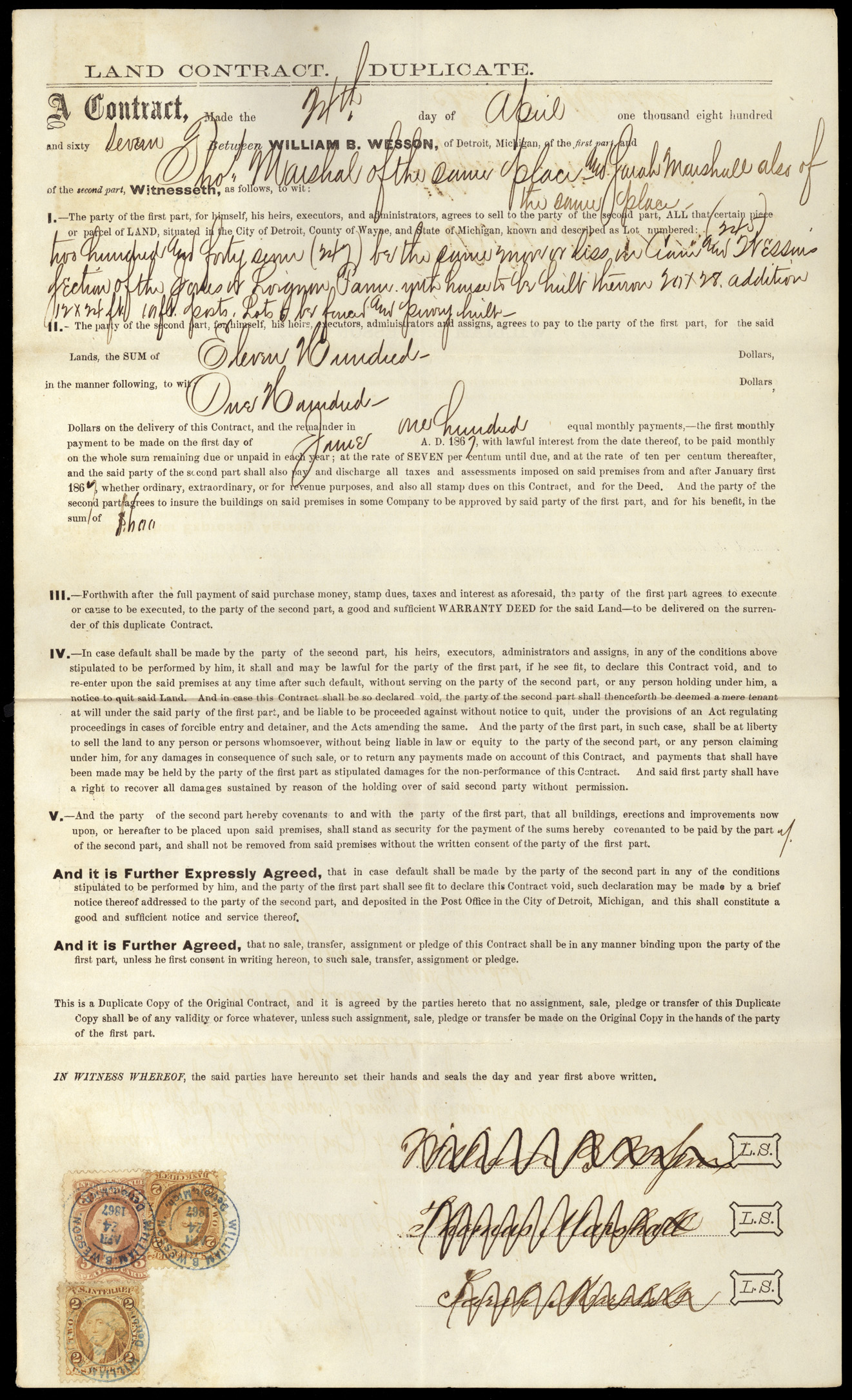
This one is a bit of a head-scratcher. It's a duplicate land contract, executed in 1867, with a total of 9 cents tax affixed, which is an odd number. I bought it because it has a 5-cent Playing Cards improperly used as a documentary.
Looking at the dates, it appears that the 9 cents tax were affixed on 2 different dates:
7 cents on April 24, 1867 (date of execution of the contract)
2 cents on June 1, 1867 (date the first payment was made)
Looking at the tax rates:
https://revenue-collector.com/civil...xrates.shtmlThe rates under "contract" pertain to broker's contracts and sales of bullion, so even though this is called a contract, those aren't the applicable rates.
"Agreement" would have the rate at 5 cents per sheet of paper (1862) or per transaction (1864 onwards). The document is complete as shown. The back has preprinted information, but nothing filled out that would indicate a secondary transaction, so 5 cents should have been the tax rate.
The only thing I can come up with is the following:
1. 5 cents paying agreement tax on April 24.
2. 2 cents paying receipt tax for the $100 payment made on April 24 when the contract was executed.
3. 2 cents tax paying receipt tax for the June 1 payment.
Does that sound plausible? What about the remaining 9 $100 payments? Presumably 2-cents tax was due on each of those payments. Individual receipts not part of this document?
But if the single-sheet document (agreement) comprised 2 transactions (down payment plus first payment), shouldn't the tax have been 10 cents per the Agreement schedule since there were 2 transactions on the same document?





 Posted 12/31/2020 2:37 pm





