|
This page may contain links that result in small commissions to keep this free site up and running.

Welcome Guest! Registering and/or logging in will remove the anchor (bottom) ads. It's Free!
To participate in the forum you must log in or register.
| Author |
 Replies: 16 / Views: 5,774 Replies: 16 / Views: 5,774 |
|
Pillar Of The Community
United States
1162 Posts |
|
|
|
Years ago, I would print docs that I wanted to keep a hard-copy. After some time of sitting, they would 'stick' together - I ASSUME this was the laser toner acting as a slight adhesive over time (a couple of years). I have hesitated to make my own album pages because of this issue.
Two questions: Is this still an issue with modern laser printers / toner? Do you use anything (matte finish, or something else) on your printed pages to 'seal' them??
|
|
Send note to Staff
|
|
|
|
|
Pillar Of The Community
1361 Posts |
|
|
It will be tempting for people to anecdote about how their brand of printer, or their brand of printer ink, or their particular type of paper prevents the problem of printed pages from sticking together. But the truth is that today, unlike your experience in the past, pages printed on a printer or photocopy machine should not stick together period. Now, if you intentionally use the cheapest ink you can find, and so forth, maybe you'll have a problem, but I've printed thousands of my own album pages, and I've never once had that problem. So I doubt it. But people seem to have an almost unlimited capacity for finding some way to create problems for themselves, so you never know.
I print mainly using photocopy ("xerox") machines at Fedex using "originals" which are Steiner page layouts I've printed out at home. To create a much nicer-looking page, I copy them (borderless) onto Scott Specialty blank pages, carefully centering the layout inside the border, of course. I have never had a page stick to another page.
I think you can expect the same results unless there is some real oddity in your printing method like really excessive printer heat that melts the ink but leaves it sticky for awhile. In that case, a different printer might solve the problem -- or you could leave the pages to cool for a bit before stacking them up (though that seems tiresome to me). But, as I say, I've never had a problem. |
Send note to Staff 
|
| Edited by DrewM - 01/08/2021 12:03 am |
|
|
Pillar Of The Community
Spain
518 Posts |
|
|
Hello.
From my own experience, with tonner they always stick sooner or later, with ink not.
Regards. |
|
Send note to Staff
|
|
|
Moderator

United States
12330 Posts |
|
|
Like discussion regarding stamp colors, the topic of self-printing album pages is frustrating. Let's face the facts, a significant percentage of stamp collectors who are printing their own pages are motivated by 'saving money'. A much smaller number of collectors are printing their own pages in an effort to build an archival heirloom that will be around for a few centuries. Economy based decisions and 'archival' do not mix well; cheaping out on materials is just about the opposite of buying archival materials.
Many discussions on 'archival' and the opinions contained within them ignore the fact that whatever the experiences may be they are based upon the poster's storage environment. Maintaining a great environment allows many collectors to dodge the consequences of their false economy purchases but as far as I can tell many folks who make economy material decisions tend to also make economy environmental decisions. Even costly archival materials break down faster in poor environmental conditions.
No matter how much discussion there might be about true archival paper, many self-printers are going to buy 'acid free' cheap paper. In the same way, few folks are going to bother with expensive archival inks. Most cheap inkjet ink is comprised of dyes. Dye based inks are not considered archival but they are cheap. Pigment based inkjet inks are costly but are archival and costly. In general inkjet printing is consider more archival than laser printing. Laser prints are more susceptible to fading with UV light exposure than inkjet prints (more environmental condition dependencies).
But what makes any discussion about laser vs. inkjet prints difficult is that it is the combination of paper/ink (or toner) that determines how fast it dries, how light fast it is, if the toner will 'crack', if the ink will smudge, if the ink is moisture sensitive, if the toner will stick. So the take away here is that the interaction between the ink/toner and the paper surface is critical to durability. Paper manufacturers have had a field day with various paper coatings that make home printer pages look sharper and better. Many of the paper coatings are not good in terms of archival properties; some costings can cause toning and acidic conditions as they age. Good luck with trying to dig up the data sheets or testing info on paper/inks/toners; these are highly competitive, low margin, consumer commodities.
The marketing hype surrounding the paper/ink/toner industry is deep; this makes it very easy for a consumer to make false economy decisions but feel good about 'being clever' in their buying. If the package says 'acid free' than they feel good about their paper decision. Pick up some sheet protectors, even through not a single library or archival organizations recommends them, and a collector feels even better about how their decisions. Hey, 'protectors' is right in the name so of course it is a good decision. Buy whatever inkjet inks are on sale, never mind that it voids the warrantee on the printer, and you save money. Save money on some cheap toner even if it coats the drum and rollers in your printer for years to come. Sticking toner could be due to contaminates from previous print jobs, paper costings or low quality toner can creep back onto print jobs for months or years after the fact.
You cannot get a quality meal at McDonalds but you certainly can fill your belly for little money. Folks can easily print their own pages cheaply if desired. The environment will largely determine how long they will get away with any false economy decisions they might make. Buying archival materials is going to give folks 'sticker shock' and cost a bundle. But even more difficult is investing the time required to understand the ink/toner/paper combinations and the impact on quality and longevity; you will end up spending a lot of time on 'art' websites since digital artists are really the trail blazers for archival home printing.
Don
|
|
Send note to Staff
|
|
|
|
Pillar Of The Community
United States
8956 Posts |
|
|
Thanks Don! I have been making my own pages but for totally different reasons - as far as I know pages for my interests do not exist.
Since I abandoned collecting regular issues of both the Netherlands and the USA. I now concentrate on Plate Number Coils and in particular the Transportation Coils. I specialize highly - not just gaps, tagging, but also varieties. The strips I have in my collection are all the way from a PS1 ( Plate Strip of 1 ) to long gap strips and even complete rolls. No commercial albums exist for this.
Peter |
|
Send note to Staff
|
|
|
Pillar Of The Community
United States
623 Posts |
|
|
Quote:
Let's face the facts, a significant percentage of stamp collectors who are printing their own pages are motivated by 'saving money'. A much smaller number of collectors are printing their own pages in an effort to build an archival heirloom that will be around for a few centuries. I am probably in the minority of collectors who print pages for both an archival heirloom collection AND as a way to collect the stamp varieties that interest me. When I started seriously collecting way back in the 1980s, I used Scott National and Scott Plate Number Coil pages. Over time, I found the spaces provided were inadequate for the many different areas and varieties that I was drawn to collect. My approach has been more pragmatic in order to find what works best for me rather than collecting "the Scott way." Starting in 2009, I began to design and print my own pages out of necessity. For me, it was never about "saving money" as I want a collection that will outlast my own life. I have no illusions about what will happen to my collection. I'm sure that when I'm gone, it will change hands and all the pages that I've carefully put together for more than a decade will be thrown out by whatever dealer or collector acquires my collection. In the meantime, I get joy through the process of making page layouts and printing and scanning and uploading every page in my collection to my website. While anyone can view my pages and (hopefully) appreciate what I've collected and put out there in the Internet, I do it for myself and nobody else. Having said all that, I won't evangelize as to which method works best or how to select a printer or which software to use when laying out pages. I know from experience what works best for me and don't plan to change unless and/or until something significantly better (and easier) comes along. Just my 2¢. Scott |
|
Send note to Staff
|
|
|
|
Pillar Of The Community
United States
1162 Posts |
|
|
Thank you, all, for your input! I would be printing my own pages for layout purposes. I collect early USA and would like, for example, an album section of annotated pages of red cancels, blue cancels, green, etc. Another section of plate varieties, another for shades, another for cancels (WAY, STEAM, etc)
No matter how safe the album page printing process has become over the years, I would. without question, mount all my items with Showgard/ Scott/ Hawid / etc types of mounts so there would (should) never be direct contact between stamp and toner/ink. Still, my intent is to avoid borders and annotation from sticking/offsetting to the page above. I would probably also have interleaving between each page which should help, too.
It sounds like my concerns are mostly rooted in the past and those past issues have been resolved. Thanks! |
|
Send note to Staff
|
|
|
Pillar Of The Community
United States
4479 Posts |
|
|
I think many of us want to collect our way not a printed albums way. Printed albums are no panacea given storage environment is the trump card.
I doubt many have dreams of "archival heirloom" of alnums that will be around for centuries and really do not think pages printed on "acid free paper" is the even close to the biggest risk. You can add environment, split back mounts, hinges, etc. to the list.
|
|
Send note to Staff
|
Al |
| Edited by angore - 01/08/2021 5:02 pm |
|
|
Pillar Of The Community
1361 Posts |
|
|
As Don suggests, it seems that laser printers are one source of 'sticky ink syndrome'. So perhaps inkjet printers are a better choice.
As for paper, I have a number of 70-100 year old Scott Publishing Company albums whose paper still looks nearly as good as new. I also have some old 19th century newspapers that look like they were printed yesterday the paper and ink are so good. So, it's possible to use good quality paper and not be too worried about it, and it's even possible to buy good paper for modest prices. I use Scott Specialty blank pages and Schaubek blank pages. Both seem to be extremely good quality. But who really knows? Right?
You don't need to spend a lot of money, but you do need to make common sense decisions. I'm guessing that my inkjet-printed pages printed on blank Scott Specialty paper will still look good long after I'm gone and might even survive in decent shape into the next century. If someone doesn't remove all the stamps long before that -- which is probably going to happen and that is fine with me. What happens after I'm gone is none of my business. |
|
Send note to Staff
|
| Edited by DrewM - 01/09/2021 01:13 am |
|
|
Pillar Of The Community

United States
3046 Posts |
|
|
I think people need to understand the difference between laser printers and inkjet printers. Laser printer toner is essentially super-fine plastic that is melted onto the paper. That may be why it had a tendency to "stick" over time. That being said, modern toner formulations are very different from those that were made decades ago. So, perhaps toner has improved in this area. One thing toner was known for is sticking to the inside of vinyl binders. I believe this is still the case now.
Toner is also fused onto the surface of the paper. Will it still be sticking to the paper 100 years from now is unknown. I know really old toner (like from photo copiers in the 80s), would at some point start to flake off the page after a decade or two.
Inkjet printers are another matter. There are two different types of ink: pigmented inks and dye based inks.
Pigmented inks are, as the name suggests, pigments suspended in a liquid. When the ink dries on the paper, the pigments adhere to the surface of the paper. This makes them very versatile for use on almost any kind of paper. Pigmented inks tend to come out of the printer a little wet, and need a few seconds to dry.
Dye based ink (which is what MOST inkjet printers are), inject a liquid ink with dye in it directly on the page. This type of ink usually requires a coated paper for optimal results. If the paper is not coated, then the ink can get into the paper fibers and begin to feather, which will lead to fuzzy text and images.
From my own experience, I have been laser printing pages since 2009, when a re-entered the hobby and none of those pages are sticking together.
Something else to consider is paper cost. I am a huge advocate for 100% cotton paper. It is acid and lingen free and is considered archival. You can laser print onto 100% cotton paper without any issues. You just need to set your driver to print to "cardstock" or "bond," which will apply more heat to the fuser, making sure the toner really sticks to the paper.
You cannot use 100% cotton paper in a dye-based inkjet printer. The ink will seep into the cotton fiber and feather out and lead to fuzziness. Technically, you CAN use it, but it will never look as good as laser printer output. Pigment-based inkjet printers are fine with 100% cotton paper, though the areas where ink is put on the page will look a little "warped" when they come out of the printer, since the carrier liquid for the pigments gets absorbed into the fiber. Once it dries, the paper straightens out and looks fine.
So, can you ever use 100% cotton paper in inkjet printers? Yes, yes you can. But you need to buy coated cotton paper, which is really expensive. On a laser printer, you can just go into Staples and buy a pack of 32 lb. 100% cotton resume paper and go print on it. You can even buy 80lb. 100% cotton paper if you really want to get fancy. It's more expensive, but it's still way cheaper that coated cotton paper.
And a note on pigment vs dye ink printers...
The new trend in inkjet printers are these new "tank" printers, that use bottles of ink and large tanks in the printers to hold the ink. These have a pretty big cost savings for consumers. All of these are dye based ink printers. All the pigment based ink printers I have ever seen all use cartridges.
And a note on durability...
Since I have been back in the hobby in 2009, I have gone through AT LEAST 7 inkjet printers. The printer I own is an Epson EcoTank ET-2750. I'm on my third printer now under warranty. Prior to this, I had another Epson printer that was pigment based. That was replaced TWICE under warranty. When the third one died, I was no longer under warranty and tossed. I've had two HP inkjets die also.
I had inkjet printers back in the 90s, one Epson and one HP. I gave both of them to family members to "upgrade" my printer, and both of those are still working without issue.
When it comes to Inkjet printers there was definitely a "race to the bottom" to make the cheapest printer possible, and make up the difference by selling ink.
Now my Brother Laser Printer was bought back in 2010-2011 and it's still chugging along with no issues. The one time I thought it had an issue, it turns out it was a bad toner cartridge.
One thing about laser printers is consumables. A laser printer has 3 consumables: toner, fuser, and the rubber rollers that move the paper around. The rollers and the fuser usually last a long time. They'll last way longer than the production life of the printer. We had laser printers at work (mostly HP) that got to a point where they needed new rollers, because paper kept jamming. You reach out to HP and they tell you the part has been discontinued, but they still have it in stock. But because it's discontinued, it costs twice as much. Same with the fusers, which are expensive to begin with. When they're discontinued they cost a fortune. And once the discontinued stock is gone, they're gone forever. If a third party isn't making OEM-like parts for it, then you SOL. |
|
Send note to Staff
|
|
|
|
New Member
United States
3 Posts |
|
|
Been thinking about this for 6 months: think I will just use a ruler and archival pen/pencil on my blank pages that fit my album, like I always have.  I'm sure I will change my mind again soon.  |
|
Send note to Staff
|
|
|
Pillar Of The Community
United States
568 Posts |
|
|
angore: You are spot on! I don't do it to save money but that's a nice side benefit. I started making my own pages ~20 years ago because I was tired of making due with preprinted albums that didn't fit my collecting needs. These pages represent a lot of work but they give me total control and flexibility to change things any time I want. I also enjoy writing the content for it. At least for me, it's not about "cheap'ing out" it's about control and flexibility as a convenience to me - period. Off the top of my head, I have around 8,000 or so pages in use with more still coming out as I transition from old albums, glassines, dealer cards, stock books etc... and of course as my collection grows. The only time I've had laser printed pages stick together is when they had been subjected to heat and humidity. And those weren't stamp albums. I have never had a problem with my stamp album pages sticking to each other or anything else. As for printers, in my experience most new printers are in the toner and ink business. They drink it like it's going out of style. I have tried several from Epson, HP and Brother who didn't even come close to their ink coverage specs. That's fodder for another topic. I currently use a HP 4700 color laser and a HP 4 Plus (B&W), both are very old and both are unstoppable workhorses. HP used to make great machines. I print on Archival (tested) light ivory paper/card stock bought in bulk for consistency and put them in piano hinged 3 ring binders. I make my own binder dividers out of the same card stock, again not to save money but to get what I want and be able to change it when I want or need to. I print intro info on the divider page for each section. Don is right about the overuse and marketing's abuse of the term Archival... You need to know what you're buying and if possible, test it. I use black mounts for most things, but I do hinge some. The border I use was something I cobbled together and modified out of a collection of royalty free graphics I bought a long time ago at a computer show (remember those?). I tend to gravitate towards Victorian and filigree. I've described all of this elsewhere on this board and others but... For software I use a number of packages most of which I already had and was well acquainted with them: To design the album pages I use MS Publisher. There are now several good packages and if starting out fresh I might have settled on one of those. MS Publisher took a while to train and get the kinks worked out. I have a large library of objects built up for it now, frames, boarder parts. text boxes for various features, templates, etc. So I have not seen anything that would be be worth changing to, at this point. For file and graphic manipulation I also use Adobe CS4 and CS6 Master Suite (Photoshop for the most part), "Bulk Rename Utility", DupDetector, A-PDF PageCut, A-PDF Thumbnailer, MS Picture manager resurrected from a previous version of Office, (MS Office in general) and a few other odds and ends. These are all tools I bought and use for other things but work nicely for this as well. 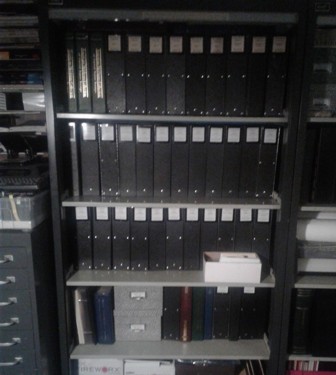 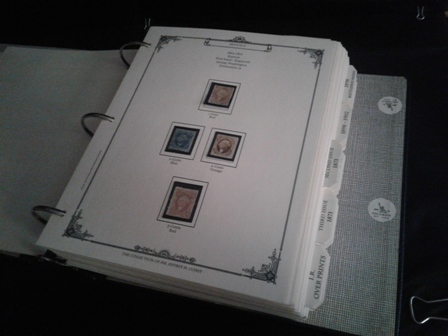  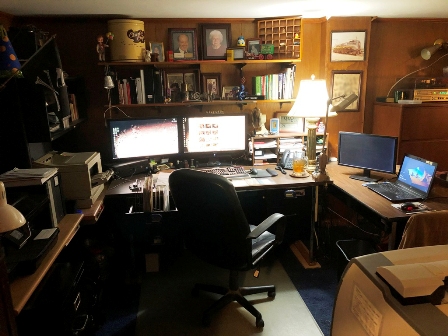 All of this work is PART of my hobby. I enjoy it. |
|
Send note to Staff
|
|
|
Pillar Of The Community
United States
890 Posts |
|
|
Quote:
As for paper, I have a number of 70-100 year old Scott Publishing Company albums whose paper still looks nearly as good as new. I also have some old 19th century newspapers that look like they were printed yesterday the paper and ink are so good. So, it's possible to use good quality paper and not be too worried about it, and it's even possible to buy good paper for modest prices. I use Scott Specialty blank pages and Schaubek blank pages. Both seem to be extremely good quality. But who really knows? Right? I recently bought a second-hand 1969 Scott National Album which was never used. A lovely album which looks and feels (and smells) like it was printed yesterday. Not bad for a 52 year old album. The binder has some shelf wear but that's it. The slipcase, purchased separately (brand new), cost more than the album. My intention was to start a postally used side collection for fun - hopefully with a lot of SON cancels (a guy can dream, right?). I am so fond of this album I made it my primary, with black mounts. I am not worried one bit about it. I am worried about trying to fill the inverted Jenny page. Or, maybe I'll just take that page out - do you think anyone would notice? There is nothing that warms the soul like a quality printed album. Especially one obtained at a discount... John |
|
Send note to Staff
|
| Edited by johnsim03 - 08/29/2021 06:12 am |
|
|
Moderator
United States
12330 Posts |
|
|
Old pages/binders may only look like they are in good condition because they were extremely well kept in very stable environmental conditions. Changing the environment can kick-start the acidification process. The only way to know if any paper, album, slip case is not currently acidic is to test it. We have been mentioning the Lineco ph pen for paper for the last 6 years in various threads but here it is for those who might not have seen it before  It is inexpensive (around $7) and easy to use. Note: the vender on Amazon who has been selling them is down to a few left and has jacked up their price ($16). Do not pay this much, these are often found at Walmart and other places online. Buying one each year and spending an hour testing your pages and albums will give you peace of mind. Waiting until you notice visible deterioration (light toning) will be too late. Don |
|
Send note to Staff
|
|
|
Pillar Of The Community
United States
568 Posts |
|
|
In addition, I also use one of these for testing water before soaking stamps. My city water tends to be alkaline. They can be picked up at Walmart, most pet stores (for aquariums), pool supply and online for under $10. 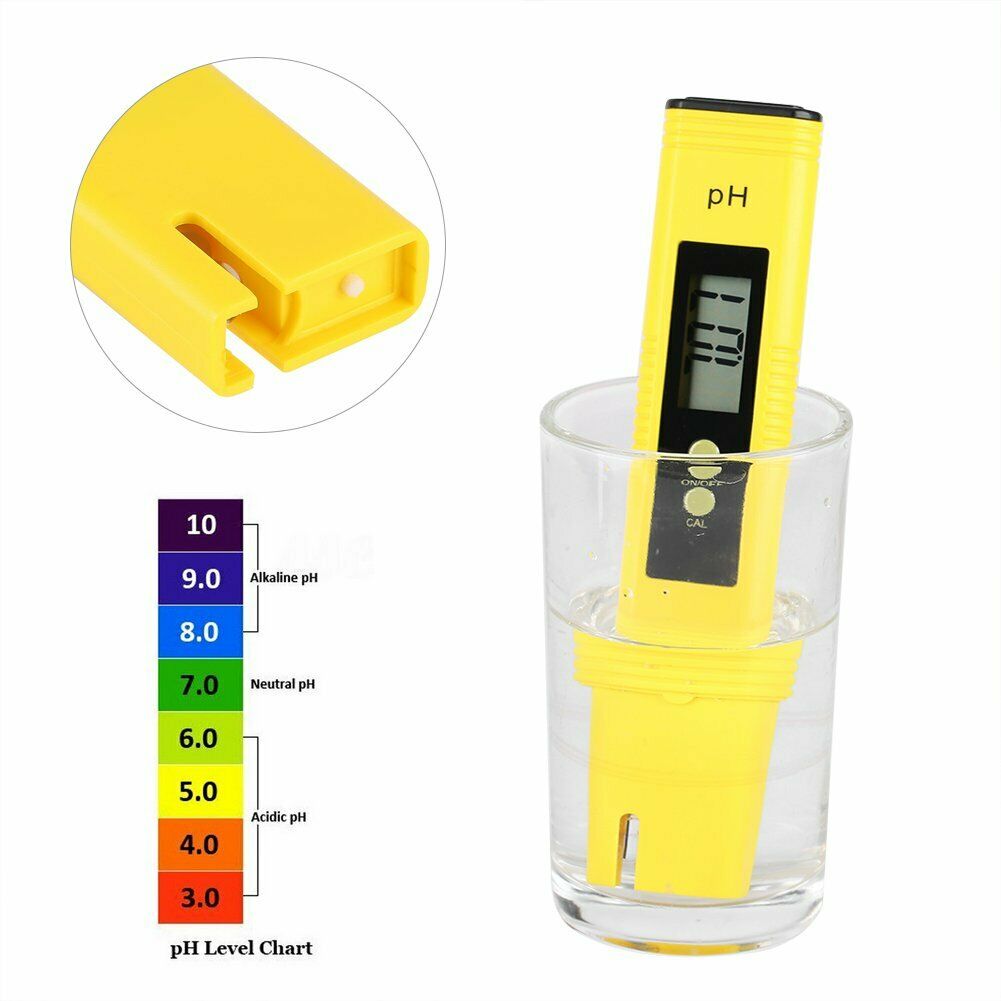 |
|
Send note to Staff
|
|
|
Pillar Of The Community
United States
568 Posts |
|
|
johnsim03: If it supports your collection style/needs, it's the right album. And yup, it's always better at a discount :) |
|
Send note to Staff
|
|
|
Replies: 16 / Views: 5,774 |
|
|
To participate in the forum you must log in or register. | |
 1857 Uspo Bid Request For Postal Stationery Cover Calendar For Month And Day -Pics Feigenbaum/Format/Questa And Other Bogus Stamps Linn's To Return To Printed Issues Please Identify - USSR Stamps Postmarks.day By Day 1904 St. Louis Worlds Fair Postcards If You Have A Design You Like, Might As Well Stick With It! Show Your US 1851-57 Imperforate Stamps Information Needed On Canada Scott 34 With No Perferations On 2 Sides N. S. W. 1d Shield - The Types And Varieties Of The New South Wales One Penny Diamond Jubilee NSW Alaska Postcard Collectors: I've Started A New Group Just For You. Soviet Union Stamp Engravers Statues On Stamps History And Usage Of Usir "silver Tax" Stamps Show Us Geology On Stamps. Geologic Formations, Etc Optical Instruments: Microscopes, Binoculars, Sextans, Theodolits, Hand Scopes Walls And Fortresses 1920 Ukraine Stamps 3gr Farmhouse - Unissued But Used Example? Canada 3 Cent 1870 With Back Print Great Grandfather's US Stamp Collection Pottery, Ceramics, Porcelain, And Other Clayware Minkus Supreme Global Albums (The Big Red Thread) Children On Stamps Bridges, Bridges, Bridges! On Stamps 1857 Uspo Bid Request For Postal Stationery Cover Calendar For Month And Day -Pics Feigenbaum/Format/Questa And Other Bogus Stamps Linn's To Return To Printed Issues Please Identify - USSR Stamps Postmarks.day By Day 1904 St. Louis Worlds Fair Postcards If You Have A Design You Like, Might As Well Stick With It! Show Your US 1851-57 Imperforate Stamps Information Needed On Canada Scott 34 With No Perferations On 2 Sides N. S. W. 1d Shield - The Types And Varieties Of The New South Wales One Penny Diamond Jubilee NSW Alaska Postcard Collectors: I've Started A New Group Just For You. Soviet Union Stamp Engravers Statues On Stamps History And Usage Of Usir "silver Tax" Stamps Show Us Geology On Stamps. Geologic Formations, Etc Optical Instruments: Microscopes, Binoculars, Sextans, Theodolits, Hand Scopes Walls And Fortresses 1920 Ukraine Stamps 3gr Farmhouse - Unissued But Used Example? Canada 3 Cent 1870 With Back Print Great Grandfather's US Stamp Collection Pottery, Ceramics, Porcelain, And Other Clayware Minkus Supreme Global Albums (The Big Red Thread) Children On Stamps Bridges, Bridges, Bridges! On Stamps
Disclaimer: While a tremendous amount of effort goes into ensuring the accuracy of the information contained in this site, Stamp Community assumes no liability for errors. Copyright 2005 - 2026 Stamp Community Family - All rights reserved worldwide. Use of any images or content on this website without prior written permission of Stamp Community or the original lender is strictly prohibited.
Privacy Policy / Terms of Use Advertise Here |
| Stamp Community Forum |
© 2007 - 2026 Stamp Community Forums |
| It took 0.28 seconds to lick this stamp. |
 |
|
|
|


 Posted 01/07/2021 9:20 pm


