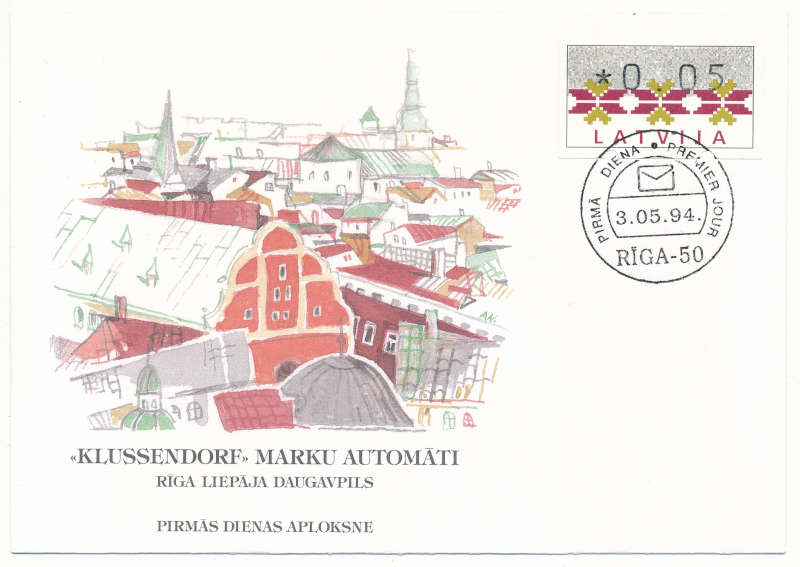
On May 3, 1994 vending machine stamps were introduced by Latvijas Pasts (Latvian Post) to Latvia. They were of the Klüssendorf type manufactured in Germany.
Even though postage stamp vending machines are supposed to be accessible to the public, the machines introduced by Latvijas Pasts were not. They were special desk models and were only operated by postal clerks. Vending machines were placed at the Riga-47, Riga-50, Riga-51, Daugavpils and Liepaja post offices and one at the philatelic department in Riga.
Since it was possible to create postage stamps with very high face values using the vending machines (99.99 Latvian lati is approximately 142 euro), it was only allowed to use them for postage at the post office where they were purchased. This was usually done by the clerk. In case a customer purchased vending machine stamps and then left the post office with the vending machine stamps, they were regarded as collector's items, since they could not be used as postage for a shipment when sent from a mailbox or another post office.
The Michel postage stamp catalogue indicates that the Klüssendorf vending machine stamps were valid until 2004, but I have yet to see a cover or a used one postmarked this millennium.
5 santims Klüssendorf vending machine stamp on a first day cover postmarked at the Riga-50 post office
13 santims Klüssendorf vending machine stamp as solo franking on postal picture postcard to the United States, postmarked January 25, 1995 at the Riga-51 post office

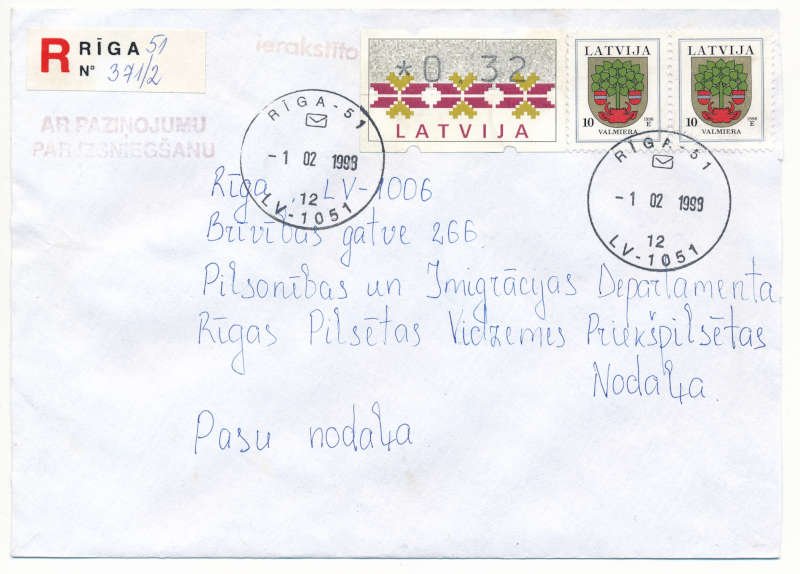
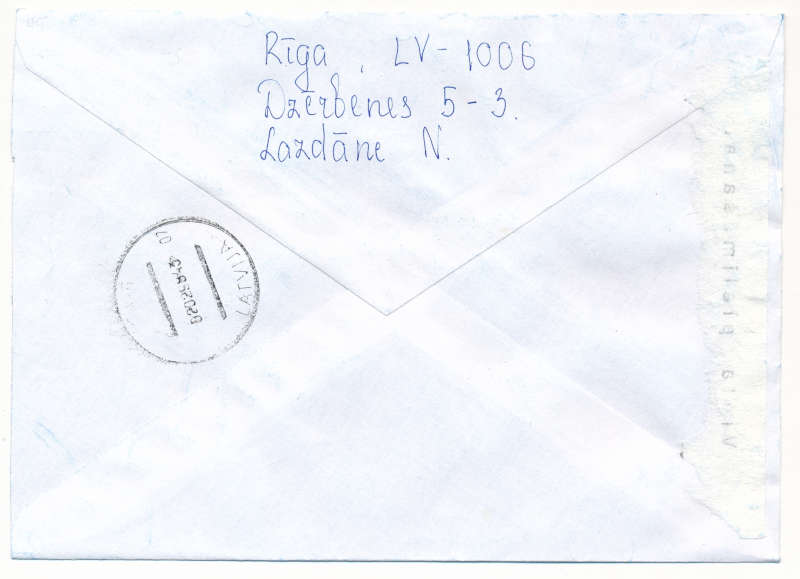
Registered domestic letter of the 1st weight class (<=20g) with return receipt (remnants to the backside of the cover). Franked amongst others with a 32 santims Klüssendorf vending machine stamp. Postmarked February 1, 1998 at the Riga-51 post office.
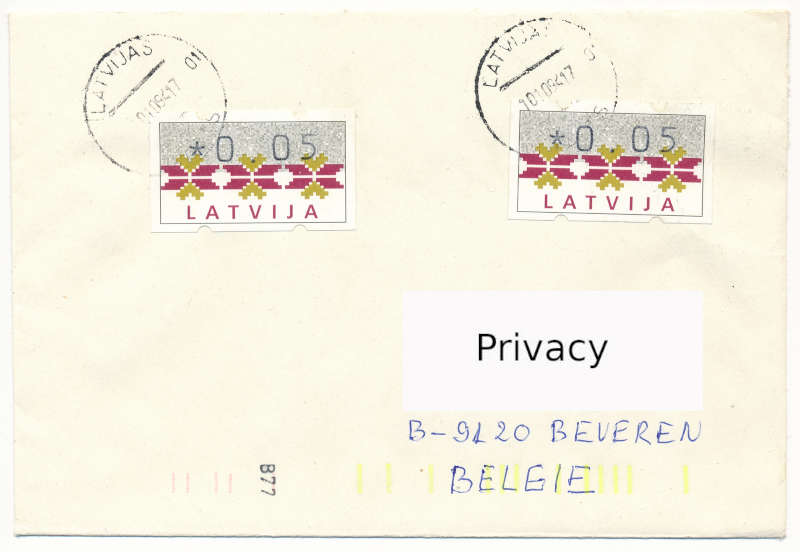
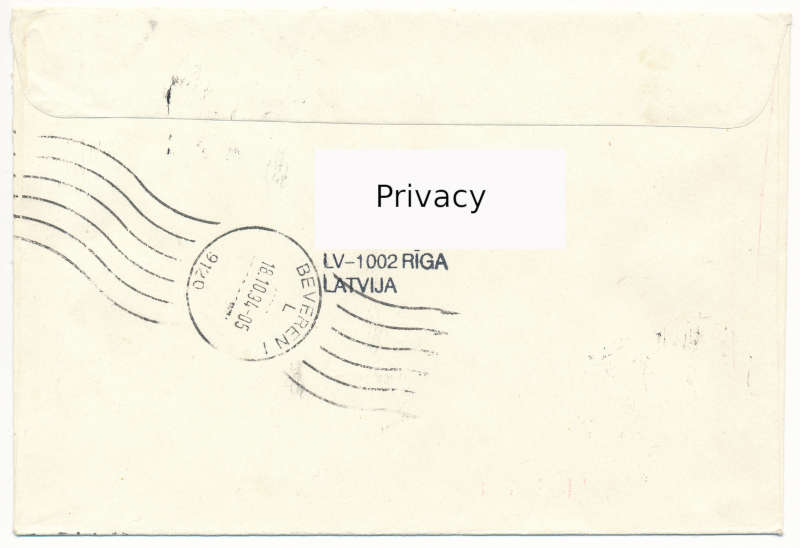
Oddball cover franked with two 5 santims Klüssendorf vending machine stamps and most likely left in a mailbox for shipping. The cover was postmarked at a sorting centre on October 10, 1994 with a generic Latvijas Pasts cancel. Even though sender's address is present, the cover was not returned. The OCR-code of the Belgian postal service along the lower edge shows that the cover actually traveled to Belgium.





 Posted 07/03/2023 4:33 pm