It's very nice to see these.

I've collected a few of these over the years but don't know much about them and would be keen to learn more.
Here are the ones I have:
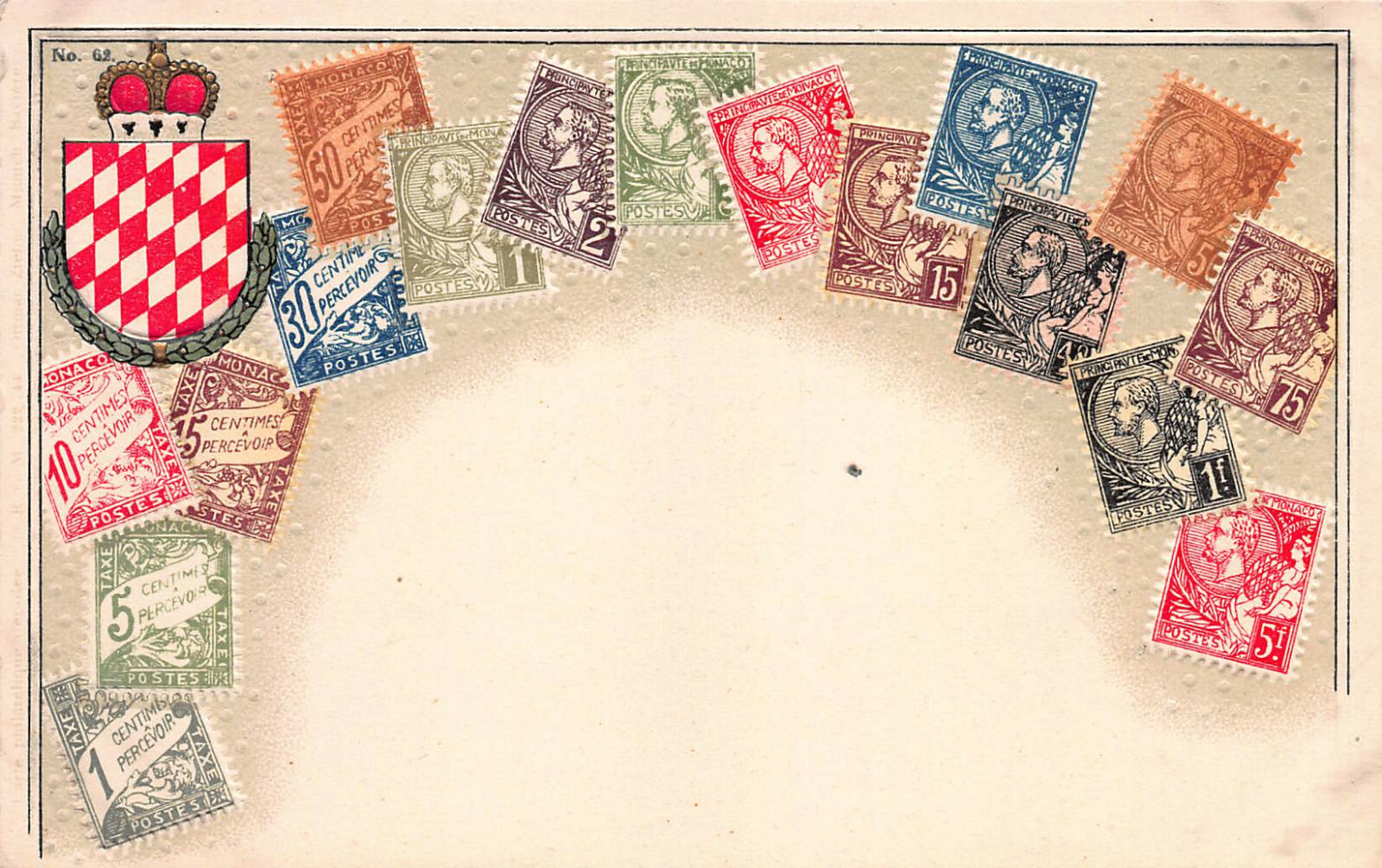
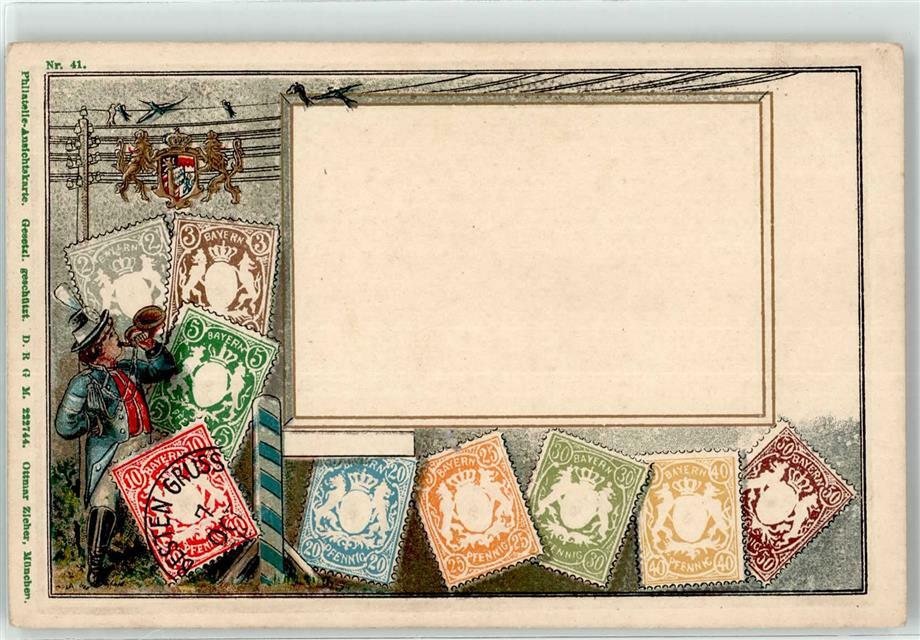
13 - Germany - Zierer
15 - Queensland - ?
16 - Hungary - Zieher
23 - Luxembourg - Zieher
39 - Switzerland - Zieher
50? - Egypt - Zieher
57 - German Post Offices in Morocco - Zieher
59 - New Zealand - Zieher
63 - Congo - Zieher
69 - Bosnia & Herzegovina - Zieher
88 - Mauritius - Zieher
I don't see a publisher's name on the Queensland card but the style is very much the same.
It looks as though the publisher's information was added in a separate step, usually in a very faint grey colour saying something like:
"Philatelie-Ansichtscarte Gesetzl. geschützt. D. R. G. M. 222744. Ottmar Zieher, München"
or essentially,
"Philatelic picture postcard. Legally protected... Ottmar Zieher, Munich"
and maybe this step was missed on my card or it has simply faded away.
From a website on toy saxophones (!) I found out that D.R.G.M. referred to the "Deutsches Reichsgebrauchsmuster" (which is sometimes split into more words).
This site stated that:
"The D.R.G.M. was a way for inventors to register a product's design or function in all states within Germany.
From 1891 to 1952, products manufactured in Germany might have been stamped with this D.R.G.M. designation, if the manufacturer opted not to pay the outrageous patent fees that Germany was charging, but instead chose to copyright their product's intended way of use, or design.
This copyright was initially for a period of 3 years, with an option to extend it for another 3. This gave the copyright owner a maximum of 6 years protection."
So I guess this was basically an assertion that was a registered design.
The publisher details on my cards vary a little with my Swiss card saying:
"Carte philatelie deposé. D. R. G. M. 222 744. O.Z.M."
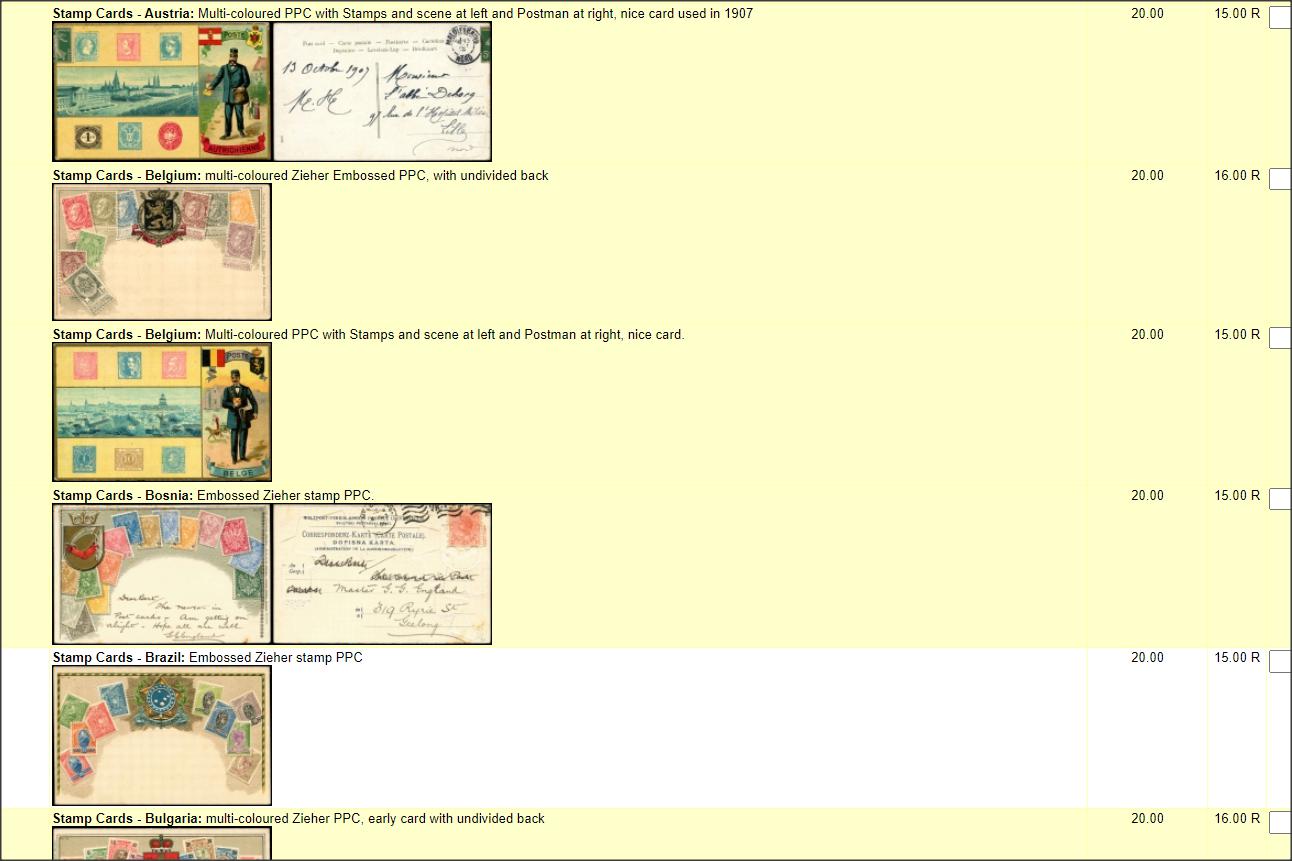
Most have the other side printed in the style of the country of the stamps along with the country name.
Unusually my Queensland card has the instruction, "For Postage in the United Kingdom only."
I wonder if this reflected its printing around the date when the UK started to permit divided back cards?
All of mine have a divided back apart from the Egyptian one which is undivided.
I guess that the original designs were created for undivided back cards leaving a blank area below the stamps for a message.
I suspect the Egyptian one is from an earlier series, as apart from layout of the back, the design involves a fair amount of embossing which I don't see on my other cards.





 Posted 04/28/2021 8:43 pm