| Author |
 Replies: 37 / Views: 4,639 Replies: 37 / Views: 4,639 |
|
|
|
Moderator

United States
12330 Posts |
|
|
Standard disclaimer for lurkers and others...
None of these glue sticks and other modern adhesives have been tested as archival other than the anecdotal experiences in this thread; no one knows for sure what happens years down the road (in terms of outgassing, staining, etc.). While the personal experiences posted above are welcome, there is no way to know if your environment is the same as those who have posted in this thread. This means that your results may not be the same and may in fact be damaging to your stamps, covers, and albums.
Don |
Send note to Staff 
|
|
|
Valued Member
Canada
304 Posts |
|
|
What am I missing? Am I the only person that uses the glue provided on the back of the mount to do its job? How much of the glue you activate is each person's prerogative. So what is the difference of activating 3 spots of the mount adhesive versus adding 3 drops from a glue stick, other than additional cost and as Don points out, no idea what affect the glue stick glue will have in future years. |
|
Send note to Staff
|
|
|
Pillar Of The Community
United States
1106 Posts |
|
|
PMstamp, The OP was asking about the ease of removal of mounts from a page. Some of us find using a dab of glue stick makes removing mounts from a page easier. I can't argue with Don's astute observations. I've been using a glue stick for over ten years with no apparent problems. So what? My stamps are in a walk-in closet that is temperature/humidity controlled and no sunlight. Other environments may affect the mounts and glue differently. Heck, we don't even know the very long-term effects of the mounts and their adhesives without using additional glue. Can anyone say "crystal mounts"? We all do the best we can within our budgets to keep our stamps safe and secure. Some of us may learn a hard lesson in the future. Dan  |
|
Send note to Staff
|
Experienced stamps need a home too. I'd rather have an example that is imperfect than no example.
I collect for enjoyment, not investment.
APS Member #223433
Postmark Collectors Club Member #6333
Meter Stamp Society Member #1409 |
|
|
Pillar Of The Community
United States
4492 Posts |
|
|
Risks to stamps are everywhere. Even the simple hinge leaves a lasting impact on stamps. |
|
Send note to Staff
|
Al |
| Edited by angore - 07/05/2021 07:29 am |
|
|
Bedrock Of The Community
12705 Posts |
|
|
IMO mint stamps need some exposure to the World at large. They were born to travel and yet we collectors want to shelter them from the realities of life and in turn are doing them a disservice. Sitting pretty in their comfy lairs is the easy route but they need to develop some character. Feel the sun on their face, the wind brushing across their perforations, the moisture activating their gum just a tad. Toughen up a bit is what they need. It will not always be cushy mounts and perfectly tempered climate. No indeed, tough times will come knocking and these stamps need some street smarts. Set them free! |
|
Send note to Staff
|
|
|
Valued Member
United States
192 Posts |
|
|
Quote:
What am I missing? Am I the only person that uses the glue provided on the back of the mount to do its job? How much of the glue you activate is each person's prerogative. So what is the difference of activating 3 spots of the mount adhesive versus adding 3 drops from a glue stick, other than additional cost and as Don points out, no idea what affect the glue stick glue will have in future years. If I am fairly certain that a particular album page layout will be permanent I have been using the adhesive provided on the back of the mount. If those mounts every needed to be (re)moved there will be some "missing skin" from the album page, still adhered to the back of the mount. With split back mounts the mount could be turned over to reuse, but I use mostly top load mounts now, so a new adhesive would need to be applied to reuse the mount. I confess that I've tended to moisten a strip the entire width of the mount, and probable just moistening a couple of spots would be adequate. I'm still doing a lot of organizing with my collection, so I've often used a hinge on the mount and this has worked well for me. |
|
Send note to Staff
|
|
|
Pillar Of The Community
United States
571 Posts |
|
|
Danstamps54: well said. you beat me to the same answer.
angore: That' is true and we've all see it.
Since staring this thread I've been interested n the glue stick option. Several say they are archival safe but I think I'll do some reading first. Maybe see what archival guru's on the web think. I've had dealing with the Smithsonian a few years ago on archival storage, different purpose but I still have contact info. Maybe I'll see if they have thoughts on this. Other than chemical activity that can cause deterioration such as acidity, lignin and PVC I'm not 100% sure what other attributes they look for when determining "archival safe". |
|
Send note to Staff
|
|
|
Pillar Of The Community
United States
713 Posts |
|
|
I can't help with how you affix your mounts but I can say that it only takes a few moments to clean a previously used mount of any attached paper with a cotton swab/paint brush and a little water. I find most are reusable with the gum left on them. Of course, you can use a glue stick on those, as well.
|
|
Send note to Staff
|
|
|
Moderator
United States
12330 Posts |
|
|
The term 'archival' is meaningless in the marketplace and used by manufacturers to hype their product; you will not find actual testing behind the claims (or if it was done it is not made public by the manufacturers)**. In fact, you cannot even find much 'archival' testing data on a commodity like paper, never mind things like sheet protectors and/or various adhesives. Beside the manufacturers the only other folks I have heard tout the 'archival' term are those who are using it and have bought into the marketing. (Anytime someone says 'I use archival paper' or 'archival sheet protectors' ask them for a link to the testing data or other evidence beyond 'it is marked on the label and I believe them'.) I like your suggestion about asking Smithsonian (wonder if they would be willing to share info/links/resources on any accelerated aging test data) or other quality library; please let know what they say. Don ** From the Society of American Archivists Quote:
The use of 'archival' in commercial advertising to describe products suitable for materials and implying an infinite life span has made this use of the word nearly meaningless; some products so described would never be used by most archivists for such purposes. |
|
Send note to Staff
|
|
|
|
Pillar Of The Community
6358 Posts |
|
|
A challenge to those using glue sticks: 1. What brand are you using? 2. Can you find a detailed ingredient list of that product? 3. If not, why use it? The longest list of MSDS documents on glue sticks I readily found was at the Staples website, but they deal more with health/toxicity than archival qualities. http://sds.staples.com/MSDSSearch.d...category=kwd |
|
Send note to Staff
|
| Edited by John Becker - 07/05/2021 3:18 pm |
|
|
Pillar Of The Community

United States
890 Posts |
|
|
I've been working on the design for a new issue for my local post: 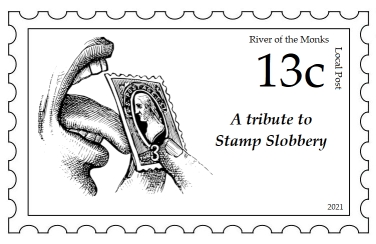 Apologies to anyone who might be offended.  John |
|
Send note to Staff
|
|
|
Pillar Of The Community
United States
571 Posts |
|
|
Pillar Of The Community
United States
1162 Posts |
|
|
Quote:
A challenge to those using glue sticks:
1. What brand are you using?
2. Can you find a detailed ingredient list of that product?
3. If not, why use it?
You should be equally interested in asking the same questions of the mounts (and of the gum added to the reverse of them), or the hinges, and the paper of the albums. While you are at it, how about the wood that makes the cabinets that collection are stored in? And the adhesives used on those cabinets, and the varnish and polish used to make them pretty? I keep my stamps in a safe deposit box - should I ask the same of the lube that the bank uses in order to keep the hinges on the box from squeaking? And how often should we chase down this info? After all, formulas change over time for various reasons. I use what I use because I have used it for about 50 years with no complaints on my part. It works. Good enough for me. Back to contaminating my collection... |
|
Send note to Staff
|
|
|
Moderator
United States
12330 Posts |
|
|
Quote:
You should be equally interested in asking the same questions of the mounts (and of the gum added to the reverse of them), or the hinges, and the paper of the albums. While you are at it, how about the wood that makes the cabinets that collection are stored in? And the adhesives used on those cabinets, and the varnish and polish used to make them pretty? I keep my stamps in a safe deposit box - should I ask the same of the lube that the bank uses in order to keep the hinges on the box from squeaking? And how often should we chase down this info? After all, formulas change over time for various reasons.
I use what I use because I have used it for about 50 years with no complaints on my part. It works. Good enough for me. Back to contaminating my collection... Your absurdum ad reductio serves no purpose other than to come across as snarky. In fact the issue of album manufacturers not providing specifications on the archival properties has been raised here numerous times. It make no sense to argue that because they don't, good stewardship is not important. And the argument 'it works for me so... ' is fine if you are talking to yourself in your own living room. The point here is that we have hundreds, sometimes even thousands, of views in threads like this. Posting anecdotal observations is welcome (as I mentioned above) but so is posting stewardship concerns. I have run across hundreds of stamps in old Crystal Mounts that are in great condition. But it would be not be wise for me to post this without recognizing that other factors are at play and may end up causing harm other's stamps and covers. Don |
|
Send note to Staff
|
|
|
Pillar Of The Community
United States
1162 Posts |
|
|
To be fair, Don, I was not aiming for absurdum ad reductio nor was I shooting for snarky. OK, maybe the lube on the safe deposit box hinges. So, for that I apologize. Seriously, though, if we are looking at one type of glue being used to mount stamps to the point of asking the manufacturer their list of ingredients and chasing down MSDS's for each of those ingredients, I don't think that asking the same of the mounts and album pages are at all out of line. I am intimately acquainted with MSDS's and their purpose is more safety- and health-oriented than they are geared towards determining archival appropriateness. Knowing what an MSDS is good for, and not good for, I was responding to a post that ***I*** took to be snarky. If we were concerned with the propensity that glue sticks would harm our health, or burn, or explode, then the MSDS's would be just what we need. You speak of outgassing of the glue in glue sticks. Should we not be concerned with other volatiles used in close proximity to our collections? Serious questions, all. If you took it otherwise, hopefully this clears that up.
Topic: I have occasionally seen mounts hinged into albums. My concern with them would be that if they are being used to temporarily hold a mount in place (for whatever reason) that the hinge used would be able to hold it securely AND come away cleanly when the time for something else comes along. I suspect the older truly pealable hinges would be fine, but that new hinges would not come free so easily from the album page. On the upside, if you use the new hard-stuck hinges to mount a mount (as opposed to mounting directly to the stamp) you don't have to worry about the hinge 'welding' to the stamp, as long as you can live with it 'welding' to the album page. |
|
Send note to Staff
|
|
|
Replies: 37 / Views: 4,639 |
|




 Posted 07/04/2021 09:46 am


