| Author |
 Replies: 97 / Views: 9,608 Replies: 97 / Views: 9,608 |
|
|
|
Pillar Of The Community

United States
1838 Posts |
|
|
I think the problem with scraping ebay sales data is that any metadata available as to condition, centering, or faults is mostly missing or objectively incorrect. I can imagine some good data scientists could put in rules to exclude a lot of lots because or the unreliability - maybe exclude certain problematic dealers for example. But I wonder just how much decent metadata would be left. How many stamps on ebay are listed as XF or Gem, that look more like Fine? Having a lot of data is great, but if the metadata is a jumble of opinions, exaggerations, and lies, it would take more than a little data science to get a decent result. |
Send note to Staff 
|
|
|
Pillar Of The Community
United States
6469 Posts |
|
|
Quote:
By daily hand collection — perfectly appropriate for the specialist collector of a stamp, issue, or country — he created immensely useful data that enable him both to verify the extant population of various issues compared to open-market catalogue reports, and to understand market pricing for items of interest. Emphasis added. All of these solutions require manual vetting/selection. |
|
Send note to Staff
|
|
| Edited by revenuecollector - 09/24/2021 1:06 pm |
|
|
Pillar Of The Community
United States
4183 Posts |
|
|
"For sites like psestamps, I always wondered how much data supports each price by grade."
If they are strictly using sales of stamps with graded certs, for many issues there is a fairly limited number of stamps in each grade and only some of those are sold in any year and of those only some are sold in the public light where PSE could see them. So, limited data and undoubtedly a certain amount of massaging and interpolating takes place. |
|
Send note to Staff
|
|
|
Pillar Of The Community
United States
4518 Posts |
|
|
I think there is a lot of interpolating with data such for VG C1's. It is likely that most VG (graded or not) fall under the radar and not seen traded. |
|
Send note to Staff
|
Al |
|
|
Pillar Of The Community
United States
8611 Posts |
|
|
I think your all missing the boat about data and information on stamp pricing . I grew up in a time when dealers had establish business, many dealers had been around for decades . It was these big name dealers who had a business and who put out printed price list of their inventory for the whole world to see . The catalog publishers would get these pricelist and talk to other more general dealers about prices trends and get their input before they print and establish a catalog price in print .
You guys are talking about harvesting prices from every Tom ,Dick and Harry , that is not the same as getting information from experience dealers who made a living selling their inventory . |
|
Send note to Staff
|
|
|
Bedrock Of The Community
12769 Posts |
|
|
Quote:
You guys are talking about harvesting prices from every Tom ,Dick and Harry , that is not the same as getting information from experience dealers who made a living selling their inventory . Exactly. Tom, Dick and Harry make the market now. The few dealers left do not. |
|
Send note to Staff
|
|
|
Pillar Of The Community
United States
6469 Posts |
|
|
Quote:
Tom, Dick and Harry make the market now. The few dealers left do not. Mmmmmm.... not so fast. Tom, Dick, and Harry make the market in certain strata. Above certain quality thresholds and in specializations, it still is traditional dealers and auction houses with the lion's share of data; a bifurcation of data sources. |
|
Send note to Staff
|
|
|
|
Moderator

United States
12330 Posts |
|
|
Pillar Of The Community
723 Posts |
|
|
I think it depends. Auction houses are one thing and a dealer in their own right. But if you are talking about individual dealers, there is little that separates them from Tom, Dick, and Harry and are often indistinguishable. I see many dealers buying faulty stuff at auction, and trying to push it on ebay omitting the fault data, and marking up 50%. One who I buy with and compete with. Do I think some have above average knowledge in areas, yes. But I am in rogdcam's camp on this one |
|
Send note to Staff
|
|
|
Pillar Of The Community
United States
716 Posts |
|
|
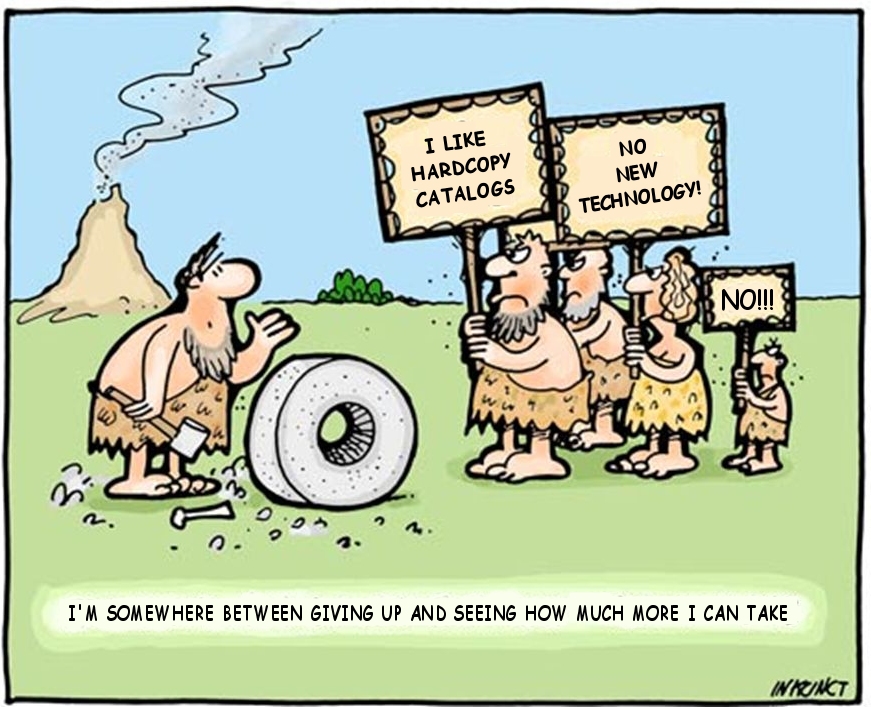
Morning Don and all,  Another version of the first biggest sign the cave men are holding up clearly states, "If God wanted us to roll then he, she, or it would have given us rounder feet."  |
|
Send note to Staff
|
| Edited by hoosierboy - 09/25/2021 09:58 am |
|
|
Pillar Of The Community
United States
6469 Posts |
|
|
Quote:I think it depends. Auction houses are one thing and a dealer in their own right. But if you are talking about individual dealers, there is little that separates them from Tom, Dick, and Harry and are often indistinguishable. I see many dealers buying faulty stuff at auction, and trying to push it on ebay omitting the fault data, and marking up 50%. One who I buy with and compete with. Do I think some have above average knowledge in areas, yes. I do agree that there can be huge differences between dealers in terms of both knowledge and ethics when it comes to selling. I would personally lump Posner and Aldrich in with the Noblespirits and NYstamps of the ebay world throwing sh*t against the wall and hoping for suckers, but draw a distinction between them and Richard Friedberg, Eric Jackson, Labron Harris, and others that are true knowledgeable specialist dealers. |
|
Send note to Staff
|
|
|
|
Pillar Of The Community
United States
4183 Posts |
|
|
Bedrock Of The Community
12769 Posts |
|
|
My comment regarding Messiers Tom, Dick and Harry (Harold) was geared toward all of the material that auction houses don't really touch on a singles/set basis which is to say most of the cataloged stamps. Those sets and singles that sell at SAN houses are small parts of the market. I was speaking to the huge number of transactions for singles and sets in the under $300 +/- cv range that you will not see at most if not all traditional auction houses. |
|
Send note to Staff
|
|
|
Pillar Of The Community
United States
772 Posts |
|
|
As rodgcam points out, for the vast majority of the stamps ever issued that have catalogues value at say under US$500, the main purpose of the published catalogues is less about valuation than identification. A quick 10-minute search at various internet retail sites will give you a fairly good idea of the current market value of most low and mid-level value items, and very often that value will bear little reflection to that published in the catalogues. A search on ebay, Hipstamp and Delcampe will give you a better idea of the pricing on Switzerland's PAX set of 1945 than the current published valuations in Scott, Michel or Zumstein. Combine that reality with the reality that today there are plenty of online resources (and for full disclosure I am heavily involved with with the development of one of those resources) that allow for identification of stamps without having to crack open a hard-copy catalogue. In the end, if for the vast majority of stamps ever produced you can use the internet to both identify the stamps you have, and get a good idea of the market price of those stamps, then the question becomes what is the purpose of published catalogues in the increasingly online-based world of philately going into the next decade or two. For myself as a youngish GenXer with (fingers crossed) another 25-30 or more years of collecting still to experience, this is a question worth thinking about. In the end, I think the main reason for the continued existence of the current hard-copy catalog publishers is that they are the "language" of collectors so that when two collectors meet to talk about stamps, they have a common vocabulary to refer to when talking about specific items (provided they speak the same "lanuguage". If one speaks "Scott" and the other speaks "Michel" then you need translators). This is likely not to change in the forseeable future - I do not see a new stamp identification/numbering system easily replacing the current bable of national idenfications developed over the past century and more by Scott, Michel, Gibbons et al. They are simply too embedded into the hobby. But as the philatelic marketplace moves beyond the Boomer generation to younger generations who have grown up basically connected online 24:7 (and I admit to being guilty of that!) it will be interesting to see if and how the current catalogue publishers will remain relevant. Of course, some publishers have bigger issues to face in the short term that could endanger their very survival, but that is another topic completely. |
|
Send note to Staff
|
APS #173088
|
| Edited by DJCMHOH - 09/25/2021 9:10 pm |
|
|
Pillar Of The Community
United States
772 Posts |
|
|
Just taking a peek on Delcampe, there were a couple dozen PAX sets on offer in various conditions.
Mint NH complete sets could be had for less than US$250, against a Scott 2021 CV of US$525, or Michel Online CV of €450. Sounds to me like the "softness" floortrader noted in his first post is more due to the catalogues overvaluing the set compared to where the marketplace is today, given the demographic changes occurring in the hobby that are affecting the market for Continental European stamps. |
|
Send note to Staff
|
APS #173088
|
|
|
Replies: 97 / Views: 9,608 |
|




 Posted 09/24/2021 12:06 pm