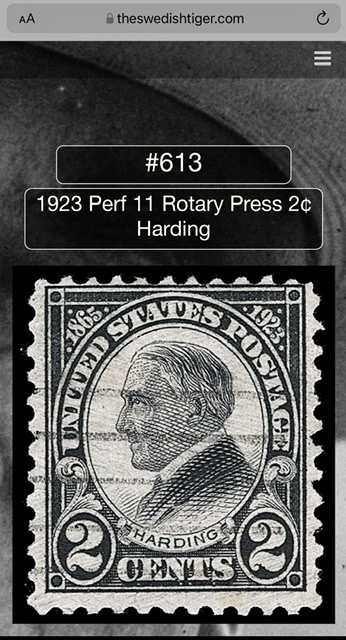
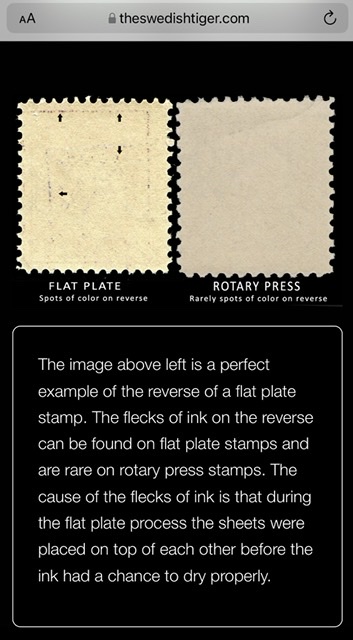
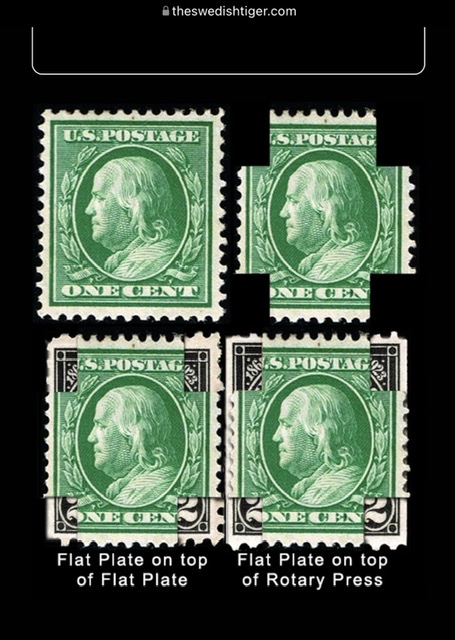
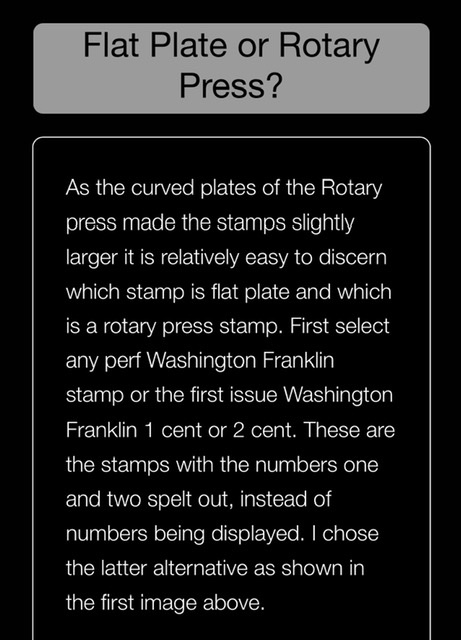
What might be cheaper than a cert would be acquiring another 2-cent Harding. Either a flat plate perf 11 Scott 610 ... or a slightly more expensive rotary press perf 10 Scott 612. Or better yet, get one of each so that you can see for yourself the height difference between the flat plate & rotary designs. If your stamp is a Scott 613, it, like 610, would be perf 11 ... and it should also be the same height as 612. The difference in height between a flat plate (610 or 611) design and a rotary (612 or 613) design can easily be seen by simply laying one stamp atop the other. But do NOT attempt to measure the dimensions. While the height difference between a flat plate & rotary press Harding can be seen with the naked eye, actually trying to measure that difference is fraught with difficulty. Many have tried and thereby convinced themselves that they have the rarity ... and they have been universally wrong. Added: I noticed that you used a 1-cent Franklin as a template. Presumably, it is a flat plate Franklin. Be forewarned that the low denomination in this series were issued in both panes of 100 & booklet panes of 6. What many fail to realize is that the dimensions on the pane & booklet flat plate stamps are themselves slightly different. You want to avoid using a booklet flat plate stamp for your template.
rogdcam does make a valid point. Hmmm ... that would make it only about 25 times rarer than a C3a. I suspect one would have a better chance at hitting on two consecutive power ball lotteries.
Disclaimer: While a tremendous amount of effort goes into ensuring the accuracy of the information contained in this site, Stamp Community assumes no liability for errors. Copyright 2005 - 2026 Stamp Community Family - All rights reserved worldwide. Use of any images or content on this website without prior written permission of Stamp Community or the original lender is strictly prohibited. Privacy Policy / Terms of UseAdvertise Here





 Posted 10/10/2021 8:09 pm