Sorry, but I haven't given up. I have been looking for clear forgeries with available time without success. I disposed of any I had long ago since they were common enough and often badly done. Those might have been the shiny overprint forgeries on the Numeral issue only, though.
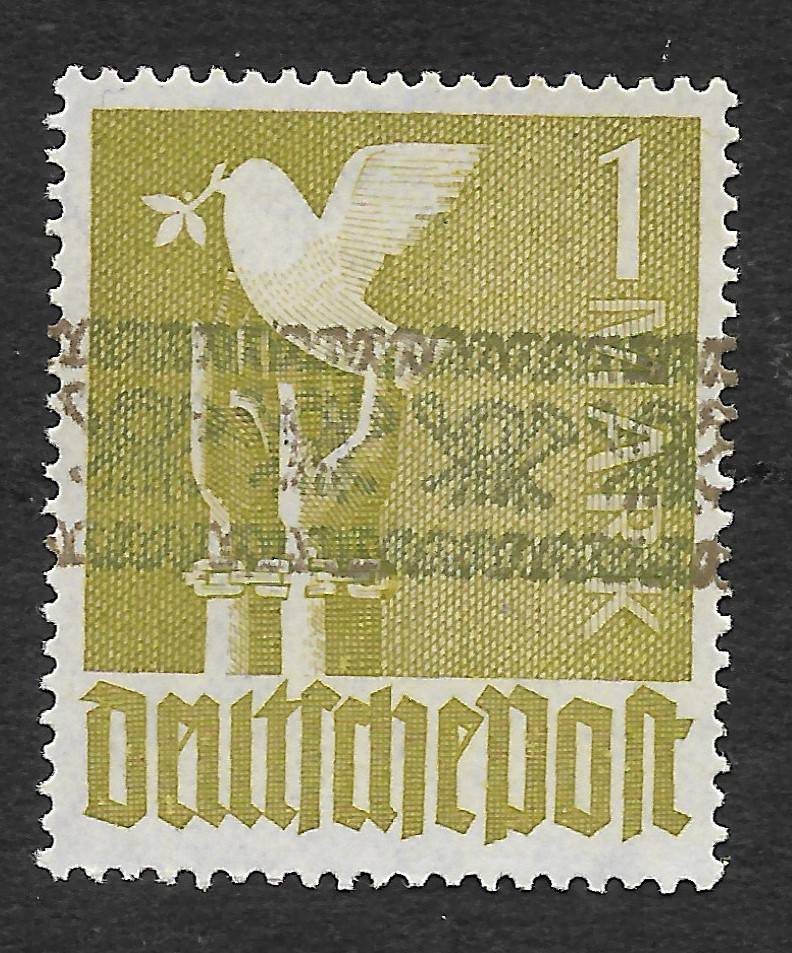
The currency reform control overprints on the Workers stamps are generally very cheap stamps. There are forgeries of the Worker overprints, but we should be more concerned about the forgeries on the Numeral issue with the same overprints plus varieties and errors on the Workers issue.
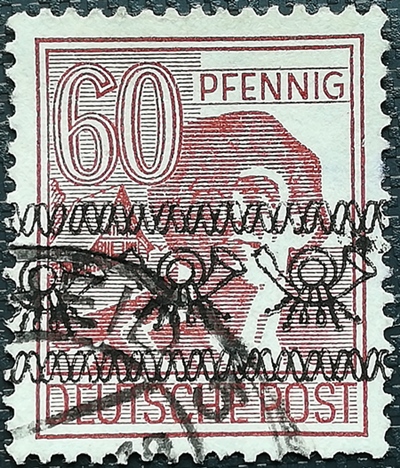
Here's the used key value of the Workers found online (Mi 49I):
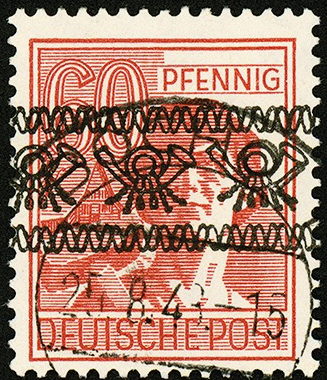
reported signed by Schlegel. This is one of the carmine/red shades and not a cheap brown shade.
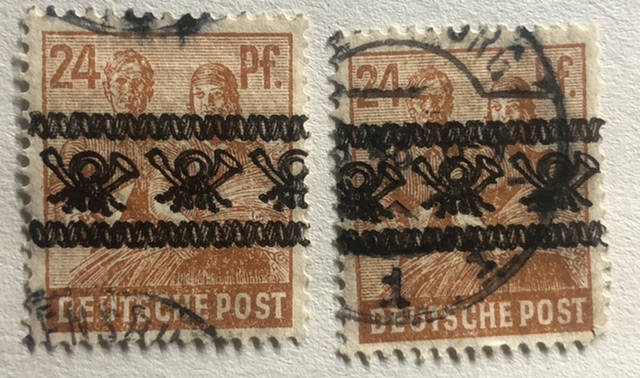
For the Workers issue overprints, there is a great variety of impressions, ranging from being overstruck to being rather dry and missing tiny details. Mint stamps often show impressions in the paper, but with forgeries also existing typographed, it's not a reliable characteristic to use. Further, the impression flattens out on genuine used stamps often enough.
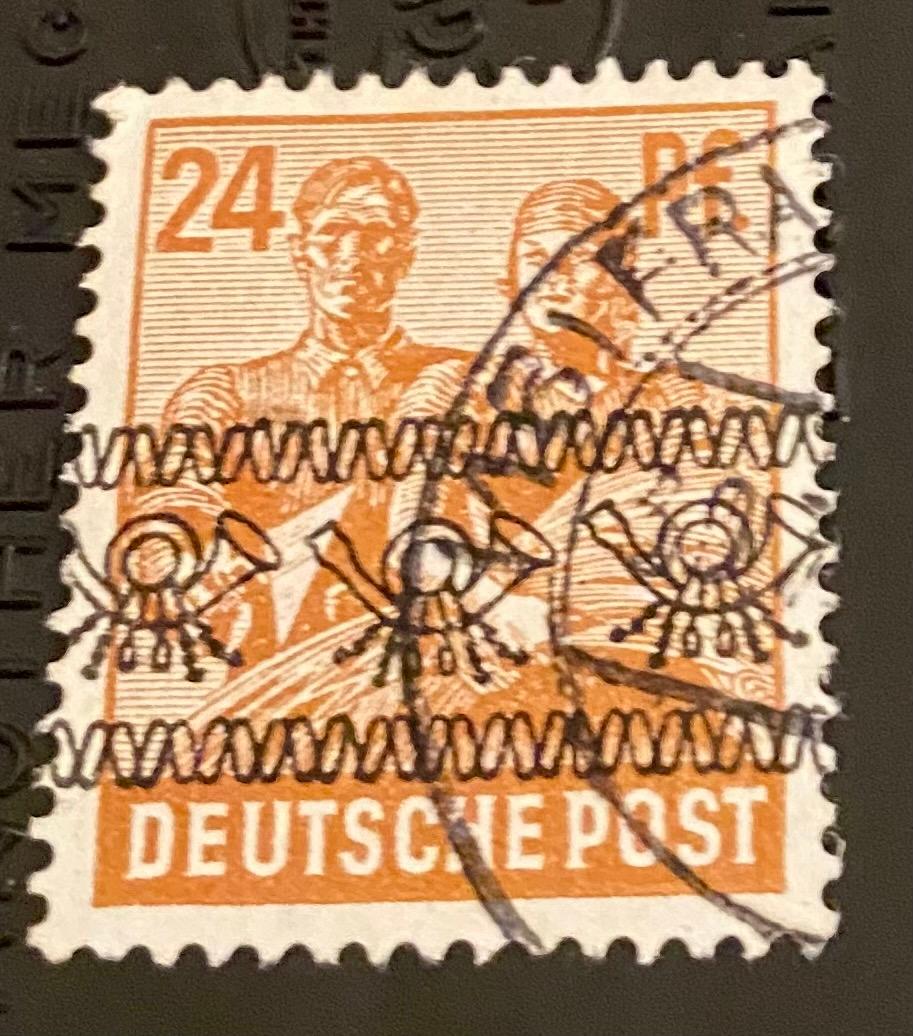
The genuine band overprint is not always perfectly aligned with the stamp or stamp design but is pretty close. It also can be high, low or in the middle of the stamp. There are errors where the band runs vertically.
If the band design doesn't go all the way across the stamp, it's a forgery.
There all kinds of genuine varieties and errors, like printed on gum side, double overprints, and on and on. It suggests that the overprints were done hastily to meet the release date for the currency reform.
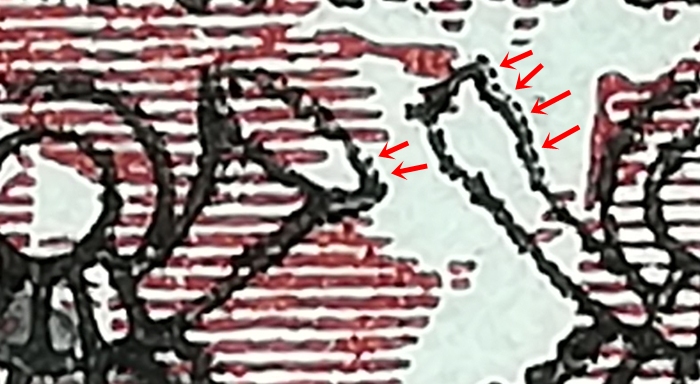
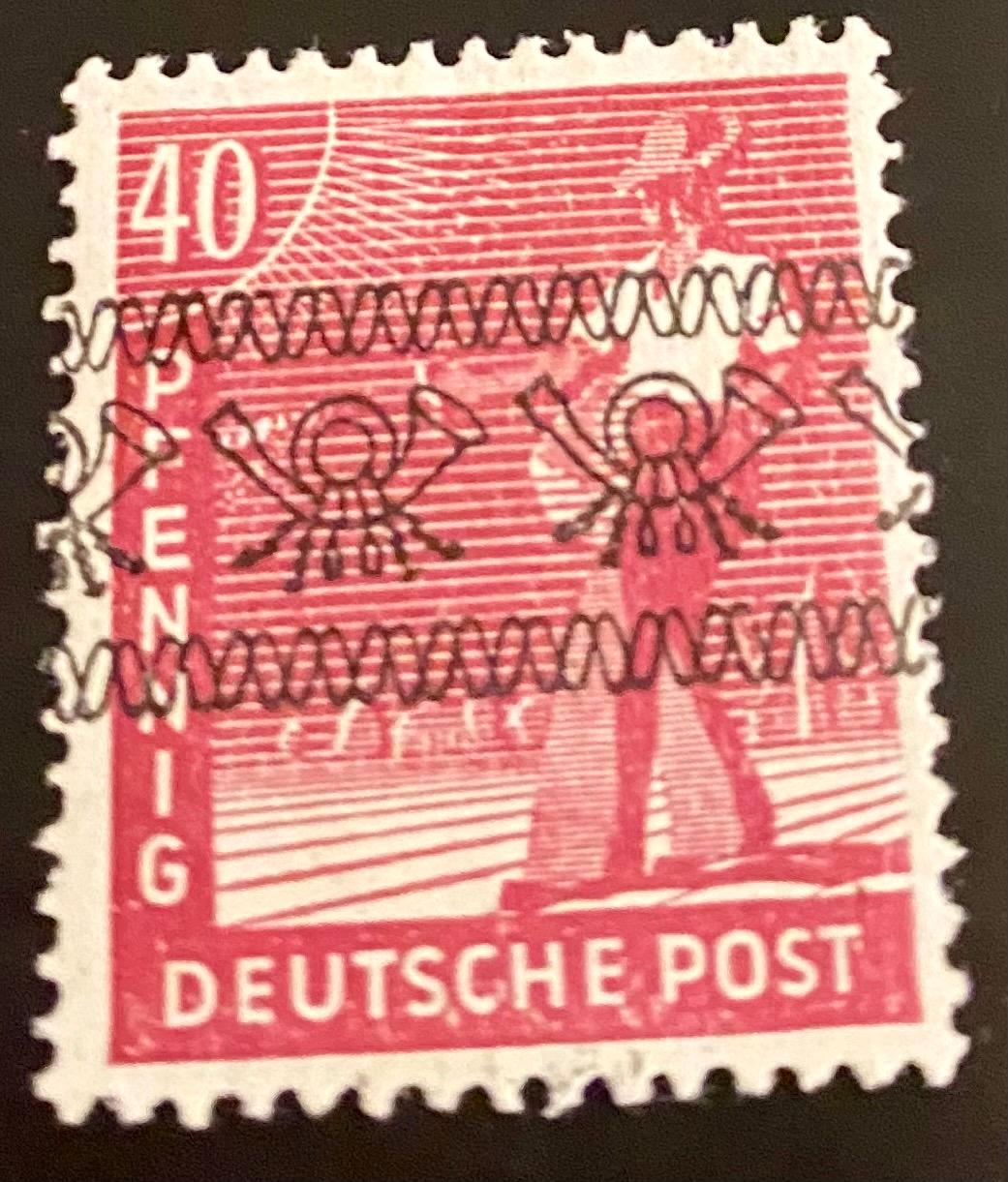
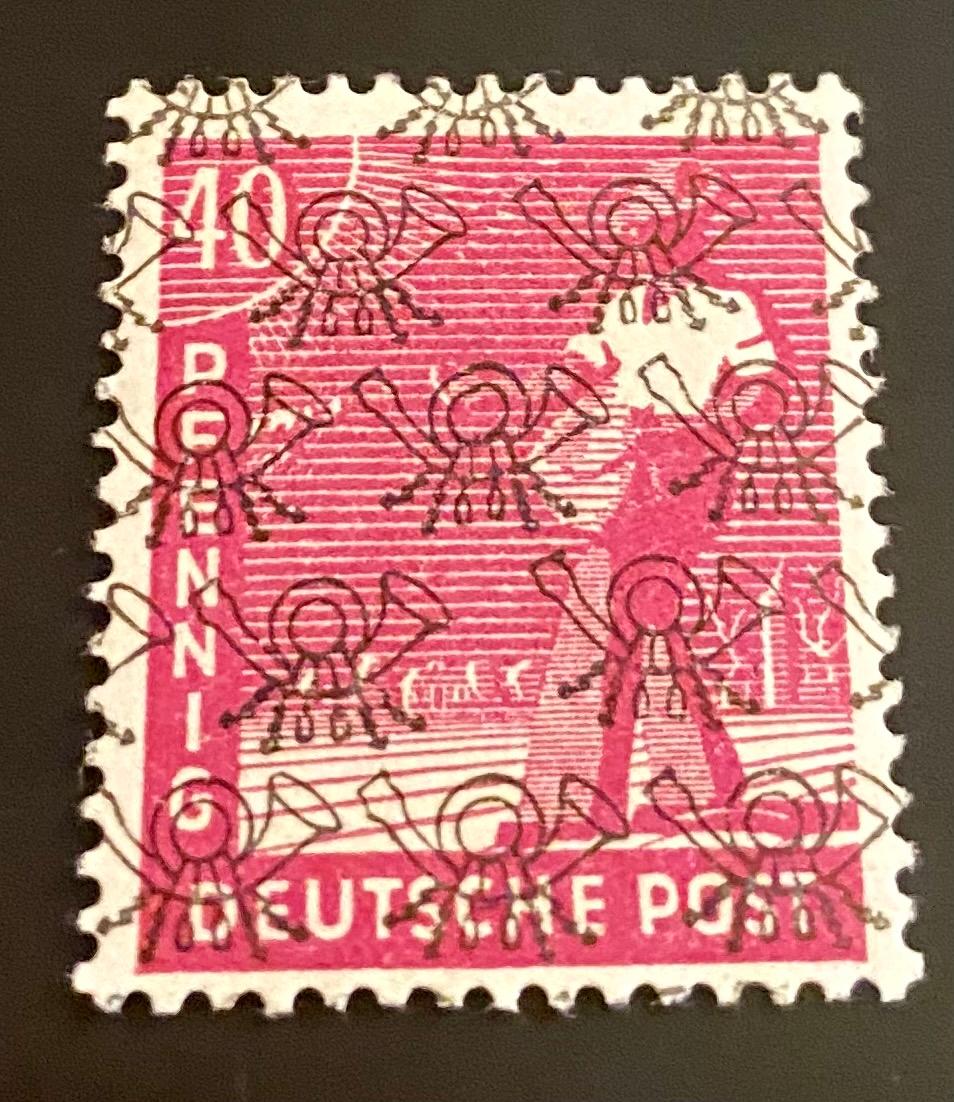
But from my written notes, for whatever you think that's worth, the forgeries I encountered were rather poorly done, probably photographic reproductions of the genuine but with distortion and lack of detail. The posthorn ring often does not have even thickness. As cupram notes, the lightning bolts are more dots than jagged shapes, but see the 60pf above. So we must consider the print quality of the overprint, too.
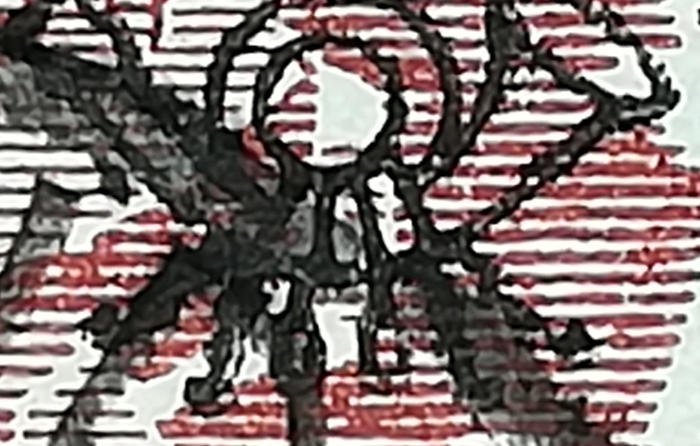
The two dongles below the posthorn ring are tassels, and are more uneven from posthorn to posthorn on forgeries vs. the originals. The genuine have some variability, too. The genuine tassels are not ovals but are typically flattened at the bottom. But now note Mrita's 40pf network overprint. The tassels are skewed because the ring is elongated (apparently on two posthorns). This is a known variety type but not listed in my old Michel for this value(?) The elongated rings are known in various plate positions, are different and I believe do not always have tassels skewed like this.
I think Mrita's examples are genuine, too.





 Posted 12/15/2021 5:19 pm