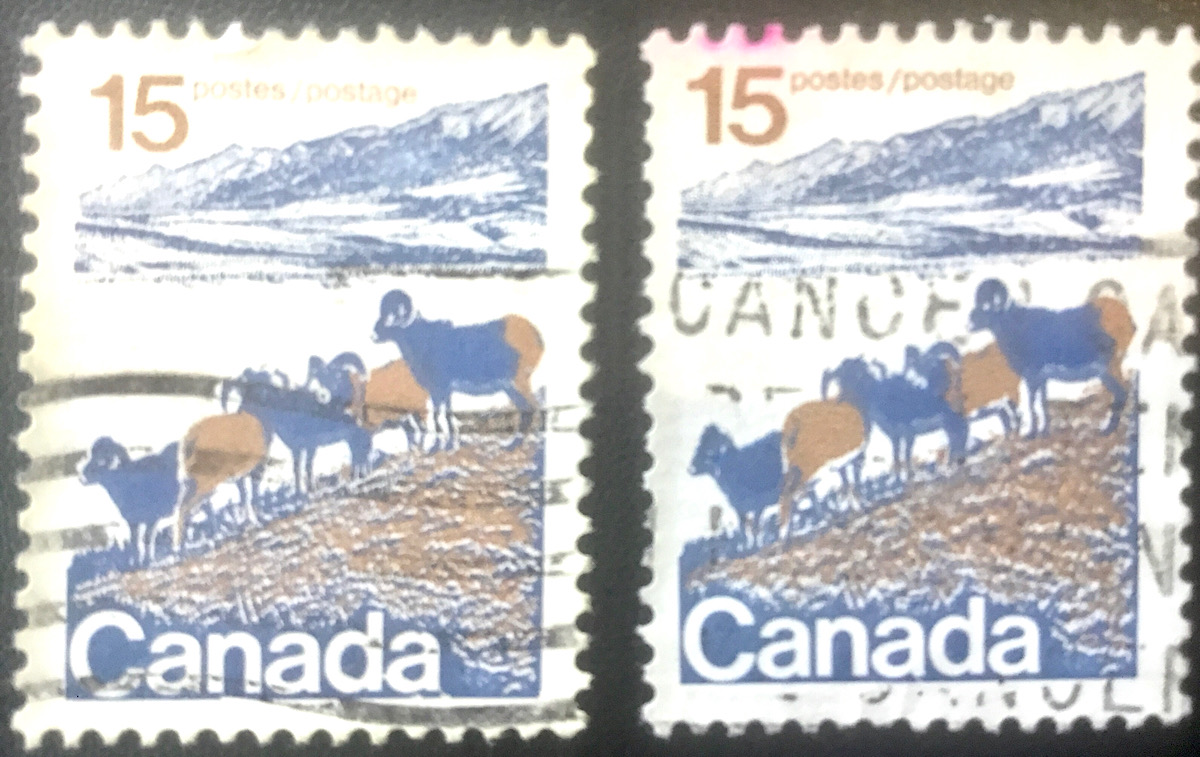
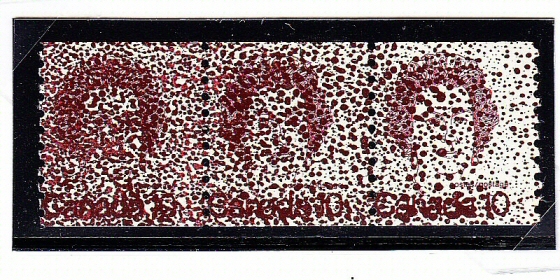
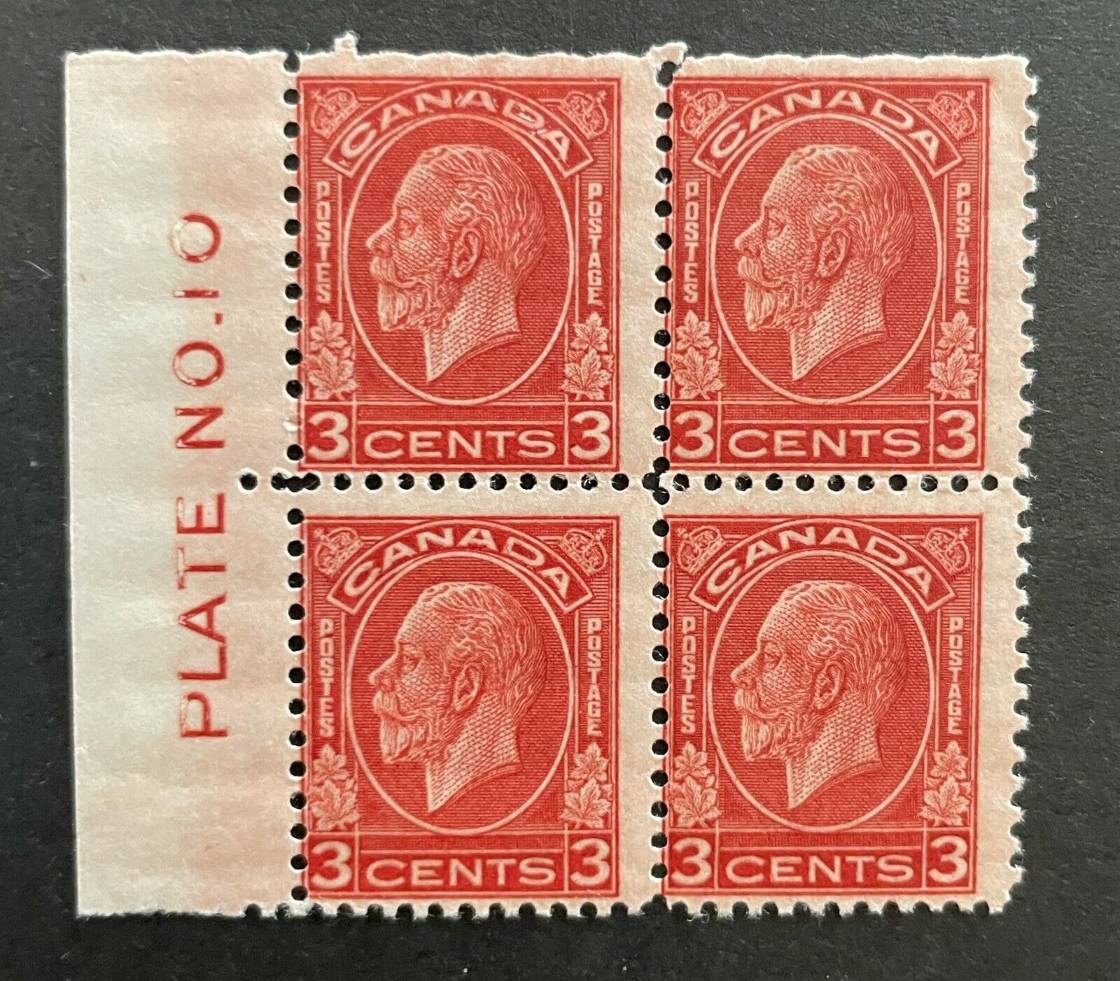
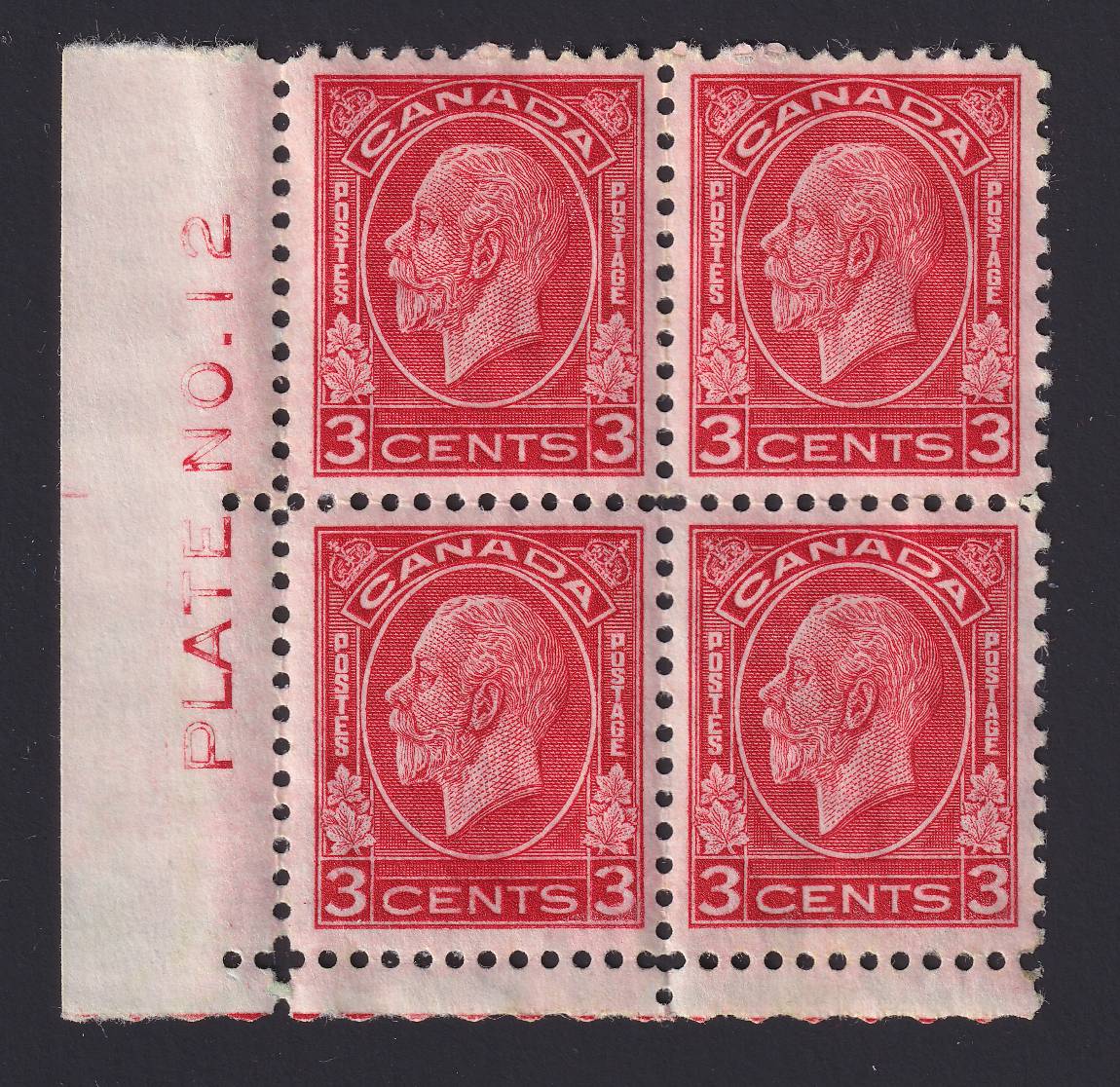
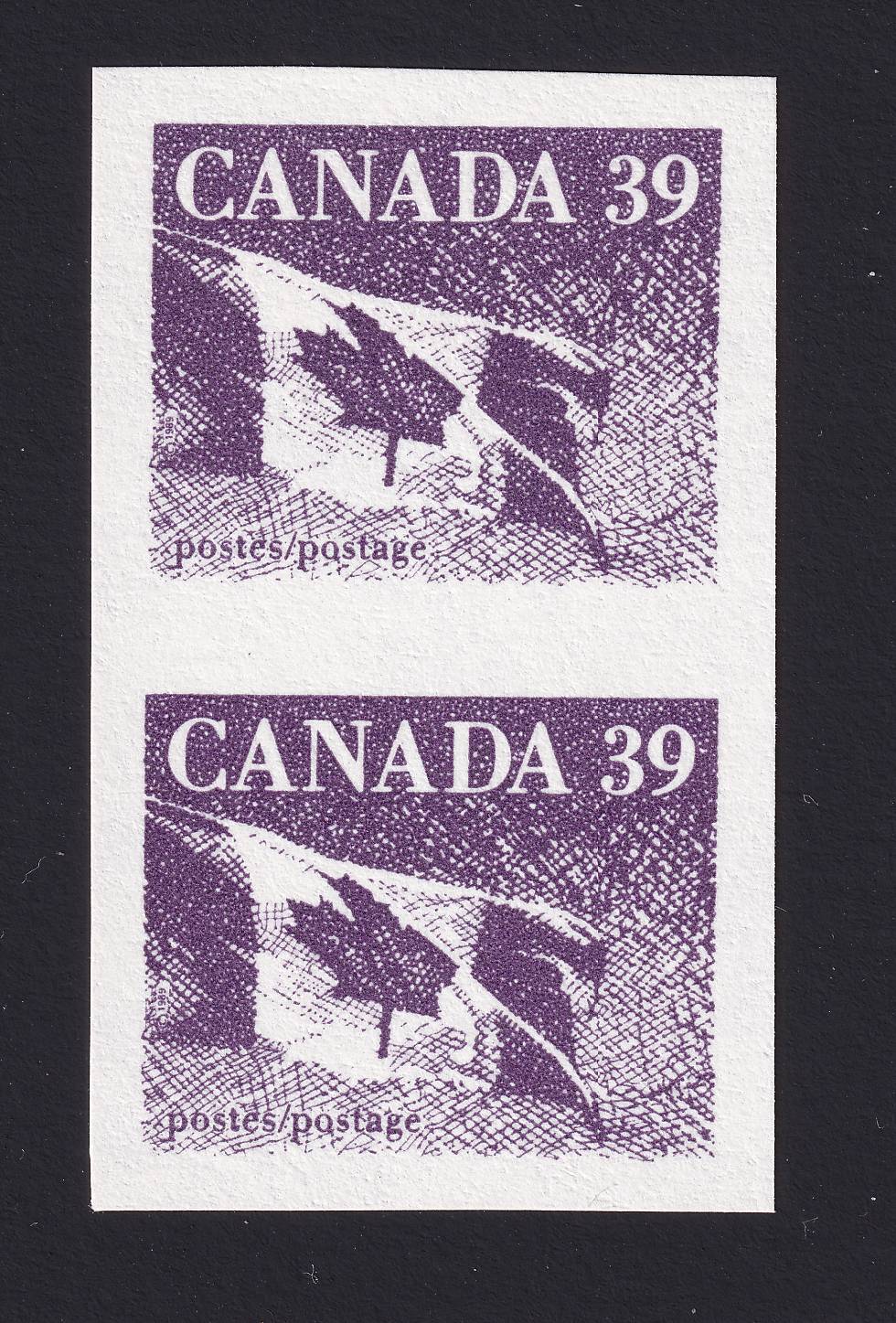
Here is an example of "pulled ink" on Canada #800.
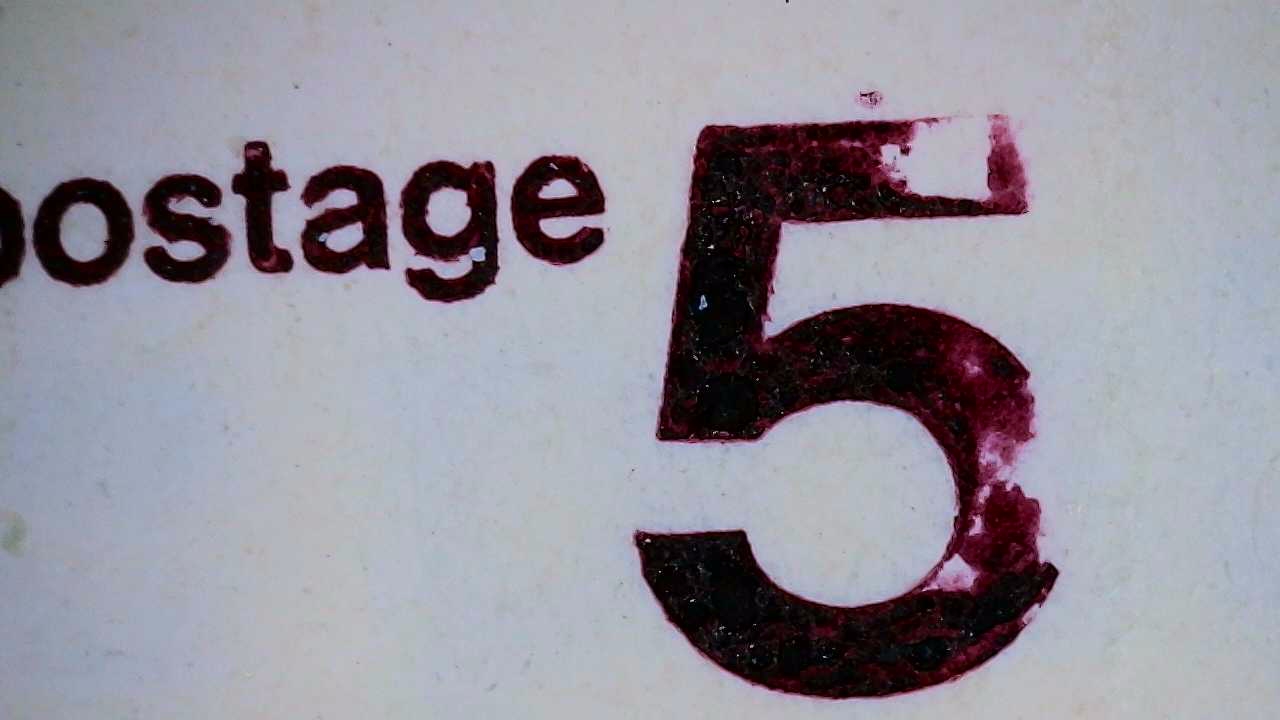
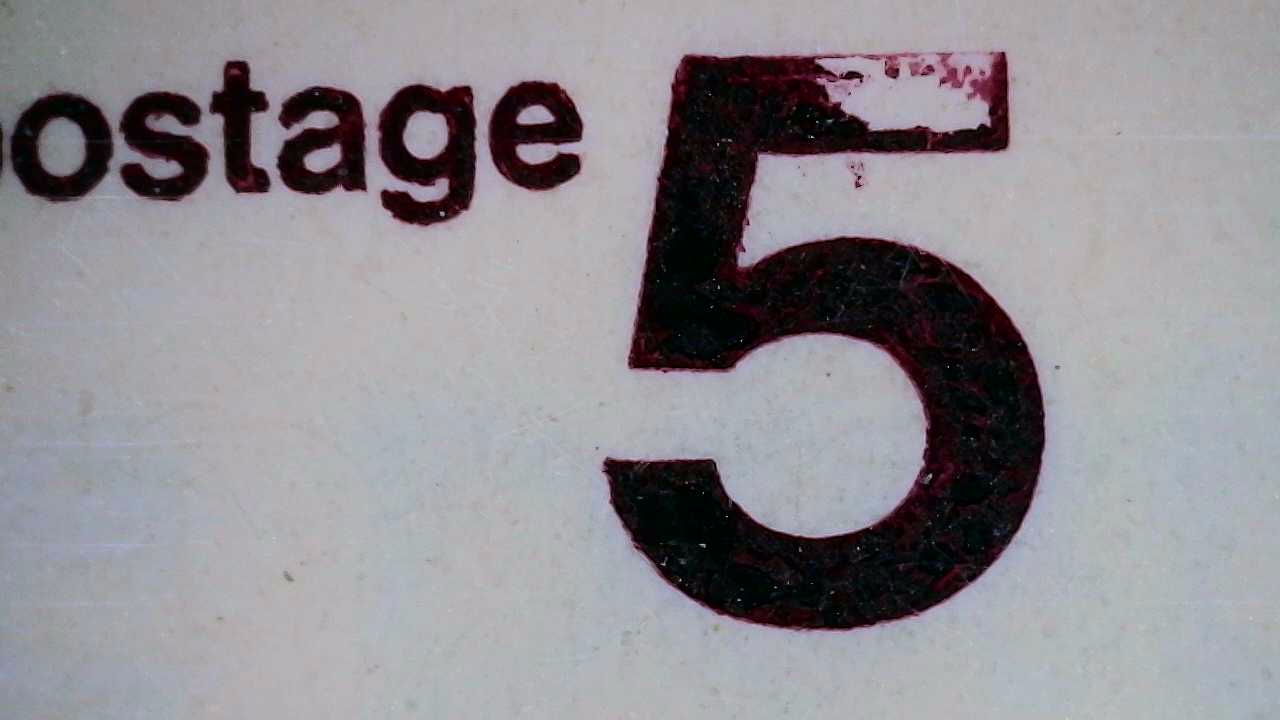
The way these are printed explains in some way how this is possible. They are printed on a continuous web of paper so they are not put directly on another sheet of printed stamps. Rather the continuous web is printed and dried "on the run" and at the other end of the big printing machine are re-wound unto another large cylinder before the next operation.
Think about this for a moment. The roll of paper is continually unrolled as it prints and re-rolled on itself fully printed.
This means that the glue of the following stamps will eventually touch the top of the already printed roll of paper. (Think roll of toilet paper being attached to a printer then re-wound on another cardboard roll on the other side.)
The evidence for this is on the glue side of the Canada Booklet 80. The number 5 and other parts of the stamp ink often show up and always on a different part of the back. Simply, the re-wound roll keeps changing size so the set-off of the number 5 on the glue changes position vertically.
As you can see on this number 5, the ink is pulled away from the paper and leaves a blank area, usually jagged. There are areas where the ink is not completely pulled off.
This is different from "unprinted areas" we can sometimes find on stamps. (donuts and such)
I hope this is understandable. If you disagree, please let me know. I'm not all knowing and I can certainly be wrong.





 Posted 03/14/2022 08:29 am