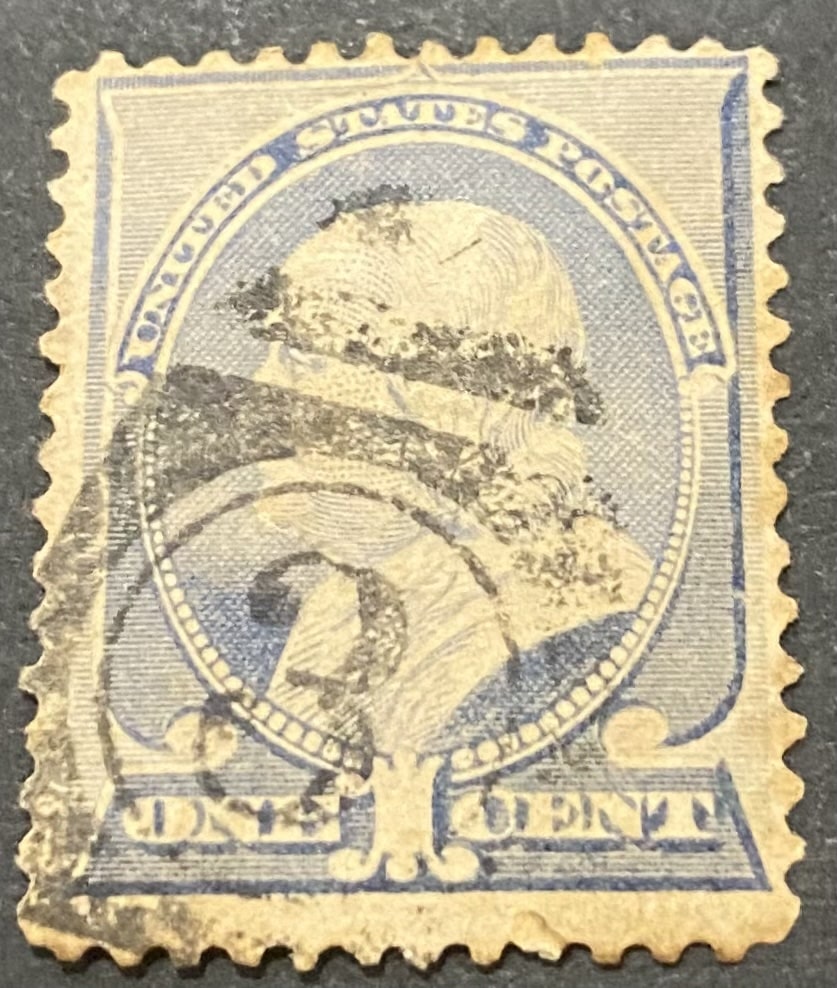
rogdcam said:
Quote:
Not an unusual look for this issue, Scott 206. The color, soft paper and worn dies
The idea that the dies were worn was first suggested in the 1887 PMG report as expressed by 3rd assistant PMG Harris. That idea was incorrect. Harris had equated postage stamp production with the printing of postal stationary which
was printed from "hub dies". However, for intaglio printing of stamps there is nothing about the process to cause wear on the die, which is used to make the cylinder dies, aka transfer rolls, for plate production. Both the original die and the rolls are case hardened prior to use. Like the rolls, a die may crack, but it does not wear. The original die for #206 still exists and was used in 1904 to make the small die proofs for the Roosevelt albums. The impressions are just as good as the original die proofs pulled when these stamps were current.
The problem you point out, shallow impressions, were not the result of die wear, nor even due to plate wear per se. This problem was due to complexities in plate wiping during printing, coupled with the use of a soft porous paper that made serious demands on plate pressure as the ink was transferred to the paper. Part of that was due to the way the designs had been engraved, and when steam presses (with automatic wipers) were required in 1885 the problem got so out of hand the 1c stamp of 1882 (206) had to be completely redesigned. This problem is briefly discussed in the 2022
U.S. Specialized essay section in an article introducing the listing for #212-E, the stamp that was designed to deal with this problem.
The pics in this discussion have too much light and make the problem appear worse. But it was a bad problem all the same. All too often the vignette of Franklin came out as but a silhouette.





 Posted 03/19/2022 07:12 am