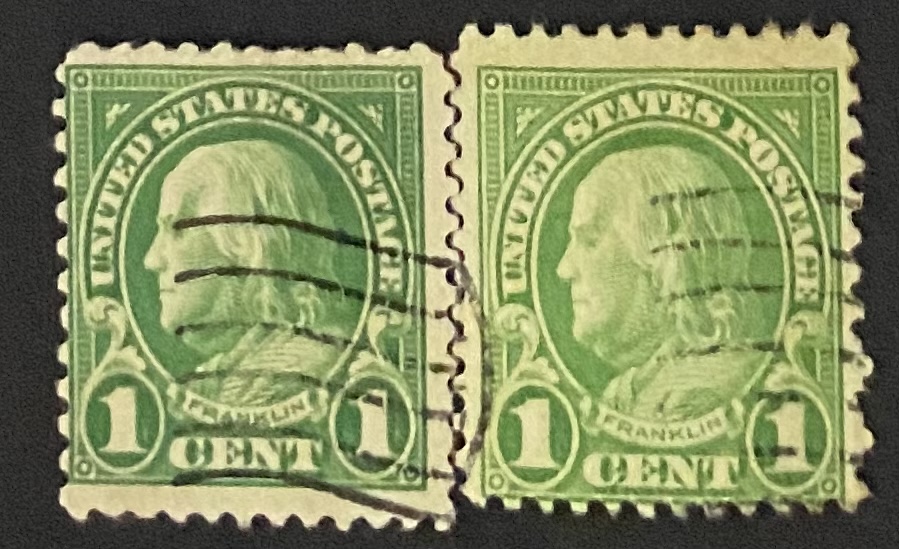
Pshann,
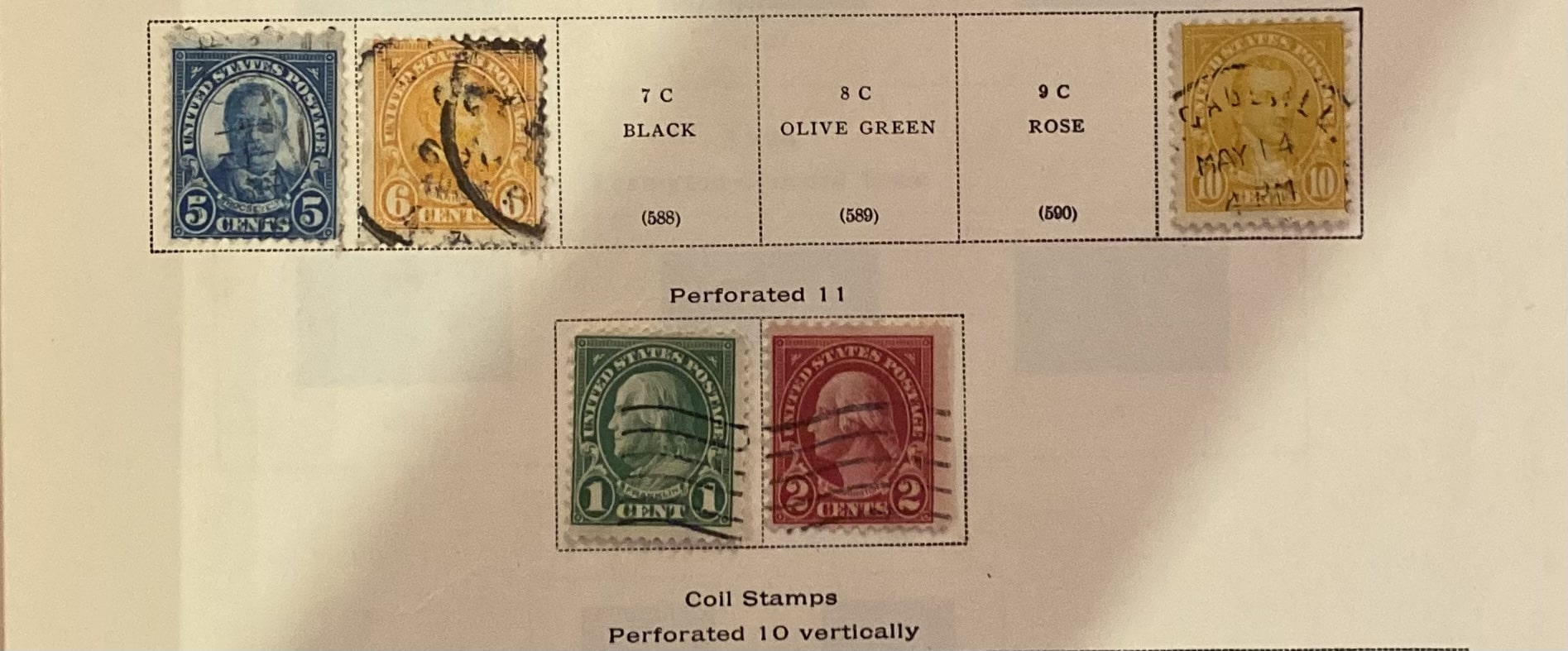
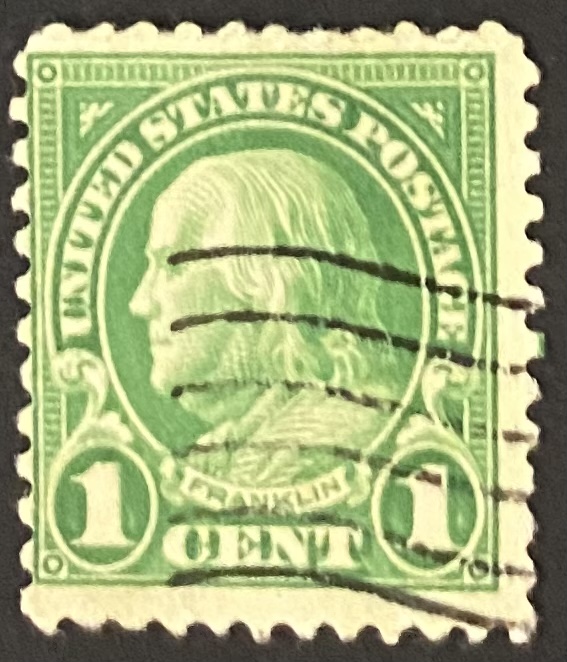
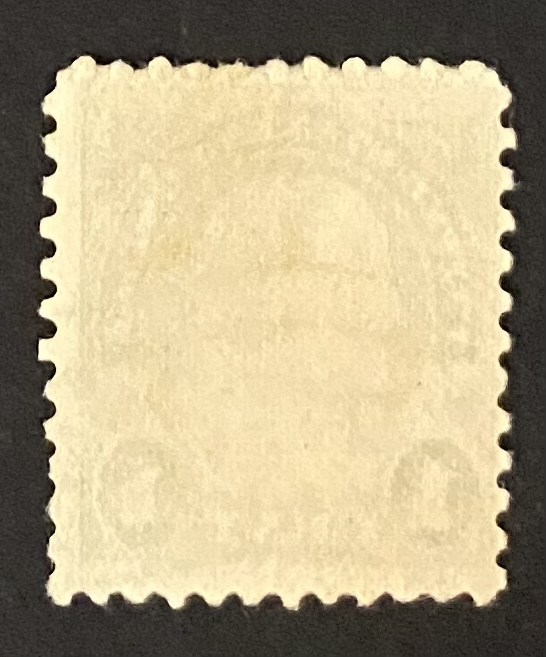
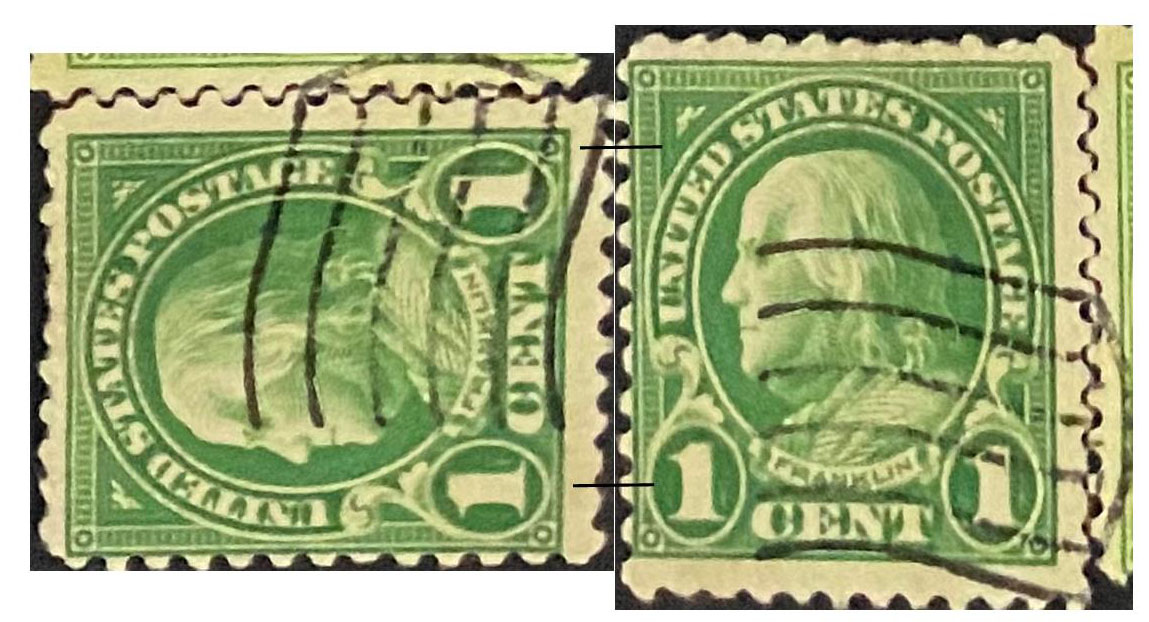
Let's take this from the top. First, your stamp is a Scott 632, which is perf 11 x 10.5. Here are two images of your left stamp. I have drawn 2 lines on the perforations. Note the alignment of the two perf tips at the top and the half-alignment near the bottom. Since a stamp is close to 20mm in size, this shows the perforation rate is 1/2 different between the top and side, thus can only be Scott 632. The fact that you noted no green set-off on the reverse side is also confirming to a rotary pres printing.
Moving forward ... When identifying stamps from the "Fourth Bureau Issues", the definitive set from 1923-38, which you have here, the first step is having a list of the possibilities whether from Stampsmarter or Scott, etc. I can't tell what reference you are using, but it would be helpful to us in guiding you through the process.
The next step is determining the perforation gauge. The majority will be 11 x 10.5, followed by some perf 11 x 11, then very few perf 10, then a few other scarce oddities. The perforation gauge alone will ID most of these stamps without any other metric needed.
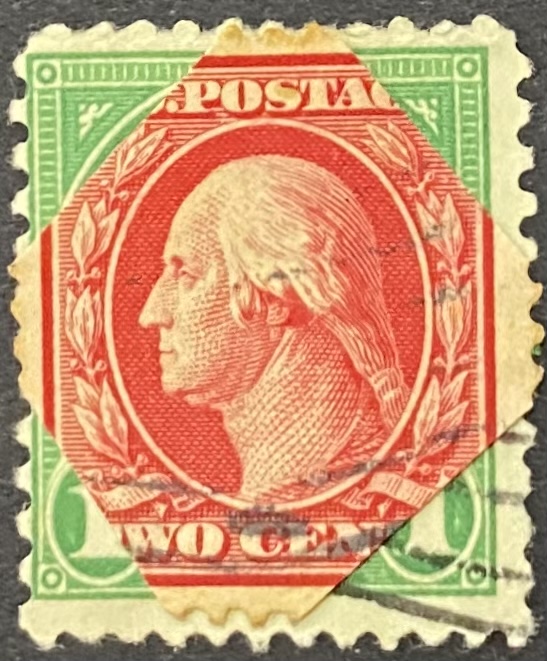
If a stamp is 11 x 10.5, it is identified. There is no need to use a template. Additionally, templates should be from the same issue. You are showing a Washington/Franklin stamp over a 4th Bureau stamp, which doesn't demonstrate the proper use of the technique. One also has to have the proper ID on the template, to know how to interpret the results.
Shades: I would not get caught up in the shades of this issue. Yes, certain printings (i.e., perforation varieties) tend to come only in certain shades, that is something you will get a feel for after sorting out a considerable quantity.
Fortunately, there are no watermarks to contend with, which makes this issue easier than the previous Washington/Franklin series.
I hope this helps.





 Posted 03/24/2022 07:51 am