|
This page may contain links that result in small commissions to keep this free site up and running.

Welcome Guest! Registering and/or logging in will remove the anchor (bottom) ads. It's Free!
To participate in the forum you must log in or register.
| Author |
 Replies: 9 / Views: 1,700 Replies: 9 / Views: 1,700 |
|
|
Pillar Of The Community

United States
1773 Posts |
|
|
Just when you think you've seen everything something new pops up. I have handled over 1000 Scott Blue International Binders and I've never seen one like this. The album is a 1943 International with almost no stamps and porobably the original binder. The unusual thing is that there are 2 additional reinforcements built into the binder as shown. Has anyone else seen this before? 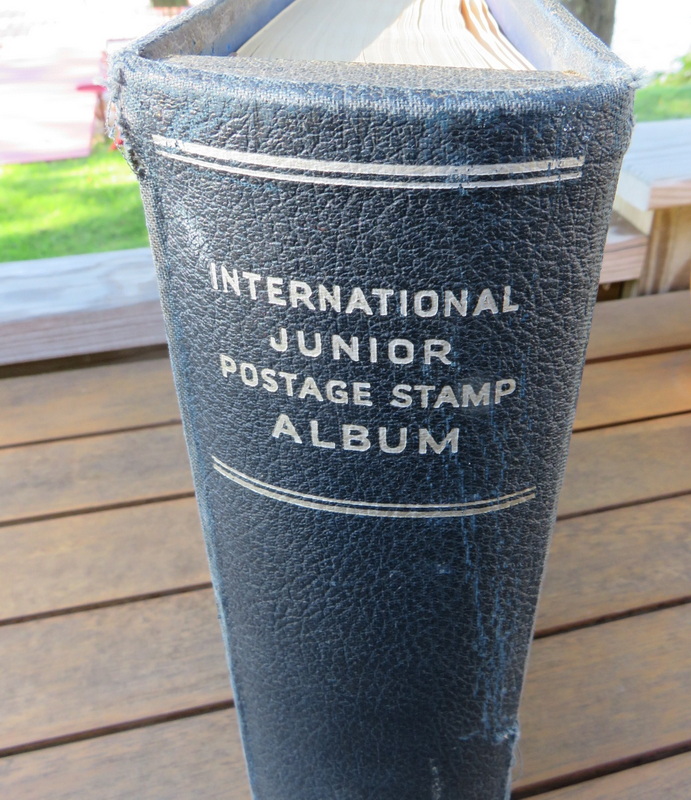 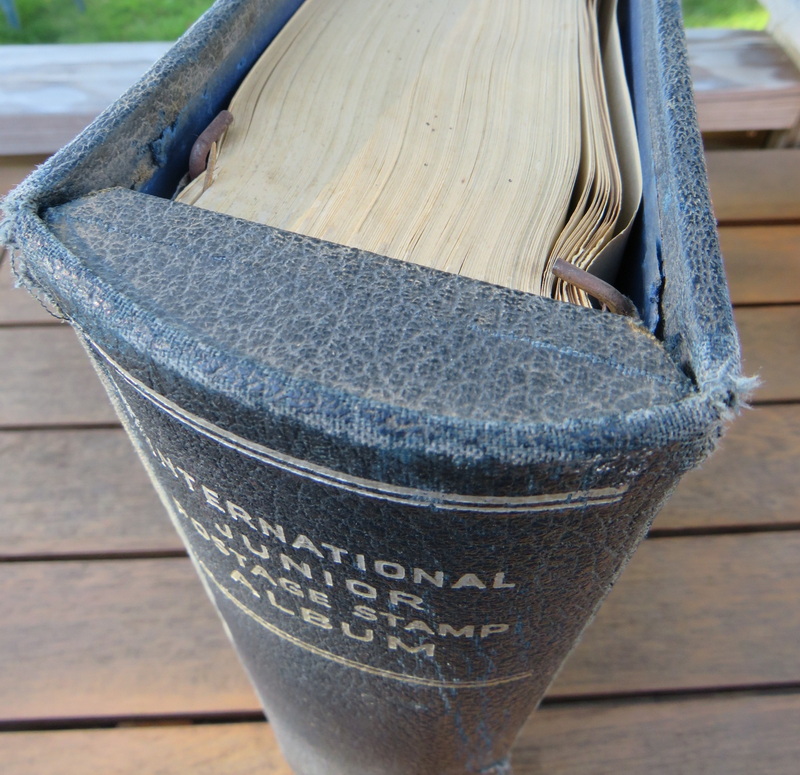 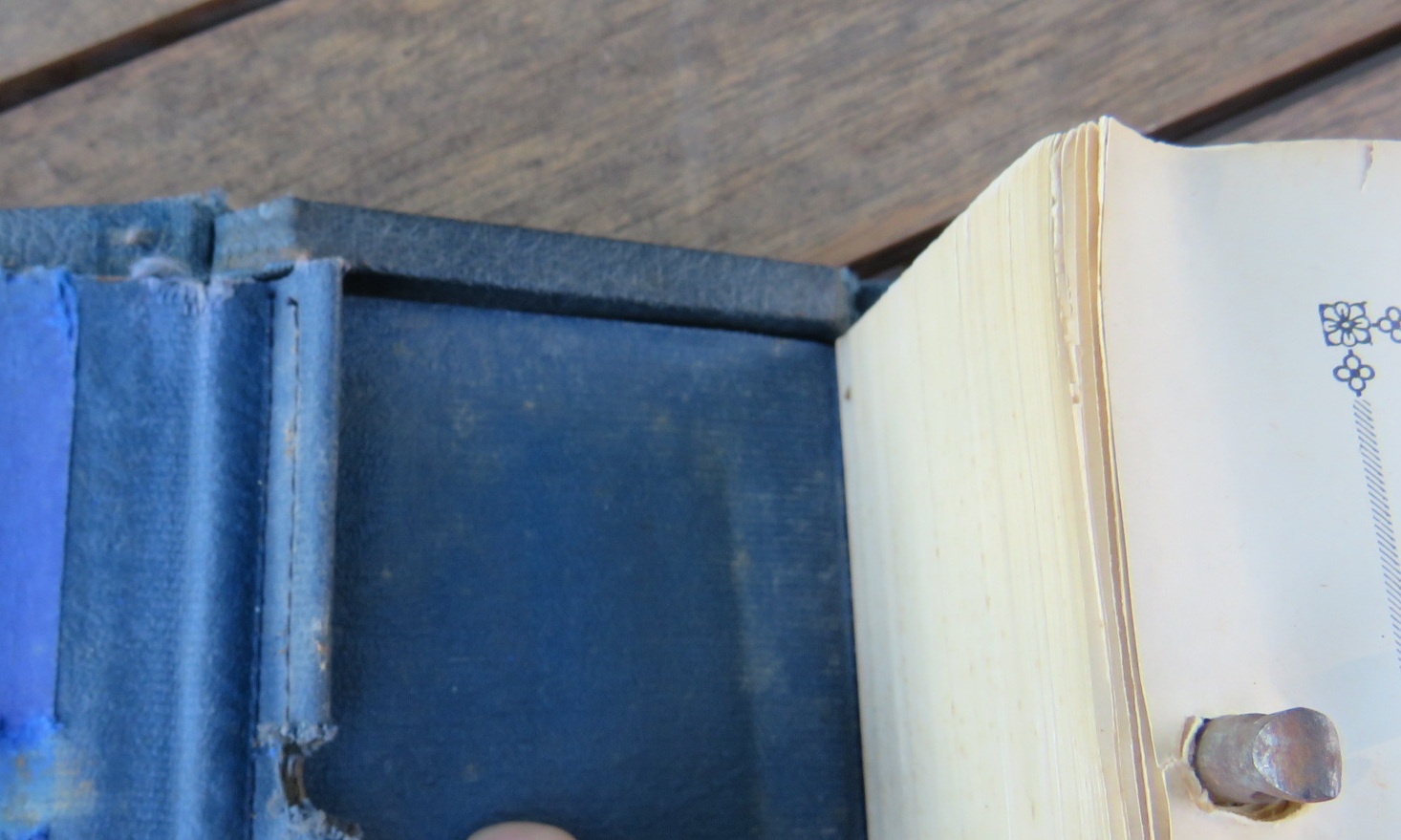 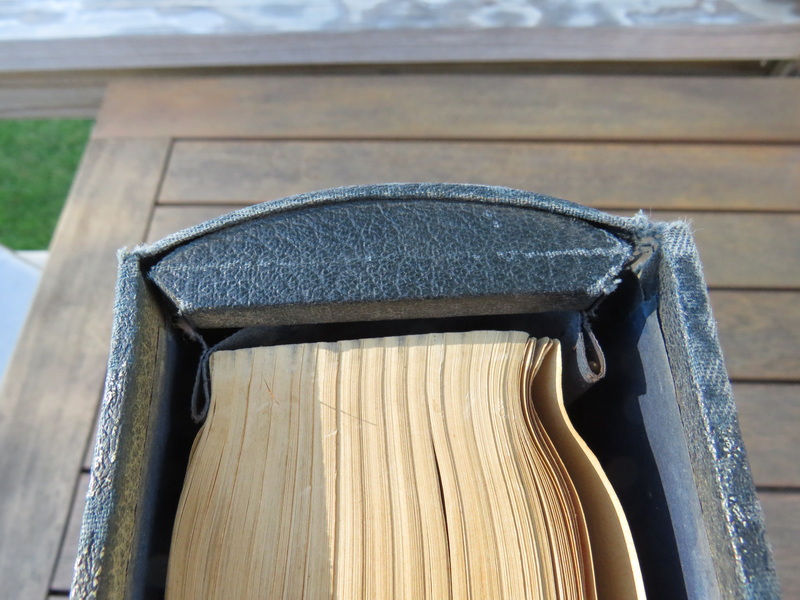 The binder still shows wear in spite of the extra parts, but it's probably 85 years old. |
|
Send note to Staff
|
|
|
|
|
Bedrock Of The Community
12703 Posts |
|
|
Ken - I too have never seen that before. My guess is that those sections were meant to reinforce the spine? Seems like a good idea but added expense to production and maybe was dropped? Pretty cool to see. |
Send note to Staff 
|
|
|
Pillar Of The Community
United States
1773 Posts |
|
|
I see a lot of binders that have been dropped and the end of the spline is bent. I can see how these additional pieces would help prevent that. |
|
Send note to Staff
|
|
|
Pillar Of The Community
1363 Posts |
|
|
If I recall correctly, the blue International albums were still fairly new in 1943. Scott had only recently decided to move its International pages from their brown binders into their new line of green Specialty albums for separate countries and regions, the ones we still have today for the most part. So for general or worldwide collectors, they created a far more selective (fewer stamps) worldwide replacement album which they called the "International Junior" album. The "Junior" in the title was later dropped. That album is the current International album now grown from one volume to 50+ volumes. Initially, it was available in either a sewn hardbound version and a loose leaf two-post version. This must be one of those early two-post binders.
As for this odd binder, my guess is that Scott experimented a little at that time with making the binders, and this may be one of those experiments. This looks like an escaped early experimental version of the new International Junior binder. Maybe it was sold for awhile, and if not, maybe it got out somehow to be used by a collector.
It has two differences from the more common binders Scott still sells.
One is the odd protected area you see at the top of the inner spine. I wonder if that is continuous all the way down the inside of the spine as a kind of support for the inner edge of the pages to rest against? If so, it may be to push the pages into a straight line to make them all even -- for some reason. Current Scott binders have the two posts curved inward to curve the pages inward to give the pages a curve across their edges. Many collectors mistakenly curve the the two posts outward.
I have no idea which is "better" -- straight edges or curved edges -- or why it would be better to have pages straight across compared to curved.
[Collectors who insert the two posts curved outward away from the spine end up with pages curved slightly outward. That works fine, but forces the middle pages out a bit oddly. Just a tip for you! ]
The other difference is, of course, those two pouches running up and down the spine which current binders do not have. They appear to hold the two long wires that go through the holes in the two posts that go through the holes in the pages. If that makes any sense. There'll be a quiz on this later.
I'll guess that Scott found those pouches didn't last very long, maybe tearing over time. The current system runs the two wires down inside the curved-over edges of the metal plate in the spine. The reinforcing metal in the spine of the binder is rolled over on each side to make two tunnels, one on each side, for the two wires to slide inside of. Fabric tunnels must not have been up to the job. The two short posts which go through the holes in the pages poke into two slots cut into the metal tunnel. The two wires slip down inside those tunnels and through the holes in the posts (after some fiddling!). Kind of clever. If you tear apart an old binder and look at how it's done, it makes sense -- but not easy to describe.
With this binder, the wires probably stressed the fabric-paper pouches pretty quickly and tore through them. That may explain why Scott abandoned this early version. Why haven't these fabric-cloth pouches become torn? If this album sat on a book shelf and was not used much, that would explain why the pouches are still in good shape. To me, the album looks new or lightly used, at best.
All speculation by me. But it seems logical enough. Cheers! |
|
Send note to Staff
|
| Edited by DrewM - 09/04/2022 03:29 am |
|
|
Pillar Of The Community
United States
3224 Posts |
|
|
I've only seen a couple like this. KRelyea will probably confirm that the thingies are just end caps, maybe just to keep dust out. DrewM's thoughts about the wire placement are likely spot on.
There seems to be a bound version of the 1943 album also, maybe accounting for this (new?) binder version being scarce. If someone could dig up a Scott ad for the albums (is there a page for it in this album?), it might be useful. I also thought that at some point during the war, the page paper quality went down, being thinner and grayish. This 1943 version doesn't appear to be like that.
|
|
Send note to Staff
|
|
|
Bedrock Of The Community
12703 Posts |
|
|
I would wager that the design has something to do with the material constraints of WWII. It is actually surprising that Scott was able to continue using steel at that point given the non-critical nature of a stamp album to National defense. |
|
Send note to Staff
|
|
|
Pillar Of The Community
United States
1124 Posts |
|
|
Quote:
The other difference is, of course, those two pouches running up and down the spine which current binders do not have. They appear to hold the two long wires that go through the holes in the two posts that go through the holes in the pages. If that makes any sense. There'll be a quiz on this later. I can confirm that these supple wires do indeed hold the album posts. My Scott Blue Internationals, bought around 1974, all have this system (as do several of my older non-Scott albums, such as my Schaubek Hungary Specialized in 3-volumes bought in the late 1960's). The sleeves that hold the wires have never torn or worn out but needing to pull the wires out to be able to add or remove a page can be a real pita, especially since all the pages before or after the spot you're aiming for need to be lifted off the posts to allow access, and then be fed back onto the posts. I presume this is why there are two wires, one at the beginning and the other at the end, requiring less pages needing to be pulled depending on where you want to make a change (whichever side is closer). International-wise, I switched to the Brown Vintage Reproductions long ago and all the pages are in 3-ring Scott binders. Its way easier just to pop the rings open to add a page, and the pages lay flatter to boot. |
|
Send note to Staff
|
|
|
Pillar Of The Community
United States
1773 Posts |
|
|
The reinforcement pieces are about 5/16" wide and are only at the top and bottom. Drew you have good eyes to notice the pouch system for holding the rods, I didn't see that at all. I think the current method of putting the rods into a curved channel in the metal would be incompatible with the reinforcement pieces and perhaps that's why they were discontinued.
This album has seen very little use and other than about 20 hinge marks seems to be completely empty and unused, however I think the pages are too thin for this album to be very useful.
Ken
|
|
Send note to Staff
|
|
|
Pillar Of The Community
1363 Posts |
|
|
Hy-brasil's comment about the degraded quality of paper during WWII can be seen in books published in that era on thin, cheap paper. Probably stamp album pages were on the same poor quality paper. It was not a good time to buy a stamp album, I'd say! Better to wait a few years.
In any case, it's a bit of a weird system with the two endcaps (dust covers?) and the long fabric-paper pouches to hold the rods. Docgfd confirms the pouches can survive a very long time if, presumably, cared for well. But I'd still go for the "rolled metal" tubes Scott now uses as holders for the two wires. Those are very sturdy.
The major continuing weakness of Scott binders, both International and Specialty, is that as the cover is opened and closed, the paper-fabric along the 'hinge' wears until eventually it tears. Often on older binders, you can see how thin and worn this location is. It can be 'fixed' (sort of) with good-quality tape like gaffers's tape, but that repair may only last for awhile and if you plan to put the repaired binder into a slipcase, beware that the tape may make it too tight to fit easily. As I've learned. To address this problem, Scott offered these binders with metal hinges for awhile as an option on some (all?) of its binders. Seems like a good idea to me. Not sure if they still sell them. If not, was that also a failed experiment?
With many stamp album makers going over to vinyl covers for their albums, I still prefer Scott's fabric-paper cover which is sturdy and long-lasting. Vinyl also wears along the album's hinges until it suddenly cracks and breaks as I've discovered even on expensive Schaubek, Lindner, and other albums. I think the green and blue material Scott uses for its album covers is called "fabrikoid" which Wikipedia even has a tiny article about.
It says that Fabrikoid was created in the early years of the previous century, meaning over a hundred years ago. It "consists of cotton cloth coated with pyroxylin (a less nitrated nitrocellulose, dissolved in castor oil, alcohol, benzene and amyl acetate). Fabrikoid has been used for luggage, bookbinding, upholstery and dress trimmings." Not sure I quite get that recipe, but you learn something every day.
White Ace used much the same kind of material on their binders when they were around. |
|
Send note to Staff
|
| Edited by DrewM - 09/06/2022 01:06 am |
|
|
Valued Member
United States
229 Posts |
|
|
So they reinforced the metal spine which will last centuries and left the wire rod held by a loose strip of fabric. Not hard to see why these aren't well known. |
|
Send note to Staff
|
|
| |
Replies: 9 / Views: 1,700 |
|
|
To participate in the forum you must log in or register. | |
Disclaimer: While a tremendous amount of effort goes into ensuring the accuracy of the information contained in this site, Stamp Community assumes no liability for errors. Copyright 2005 - 2026 Stamp Community Family - All rights reserved worldwide. Use of any images or content on this website without prior written permission of Stamp Community or the original lender is strictly prohibited.
Privacy Policy / Terms of Use Advertise Here |
| Stamp Community Forum |
© 2007 - 2026 Stamp Community Forums |
| It took 0.2 seconds to lick this stamp. |
 |
|
|
|


 Posted 09/02/2022 2:56 pm


