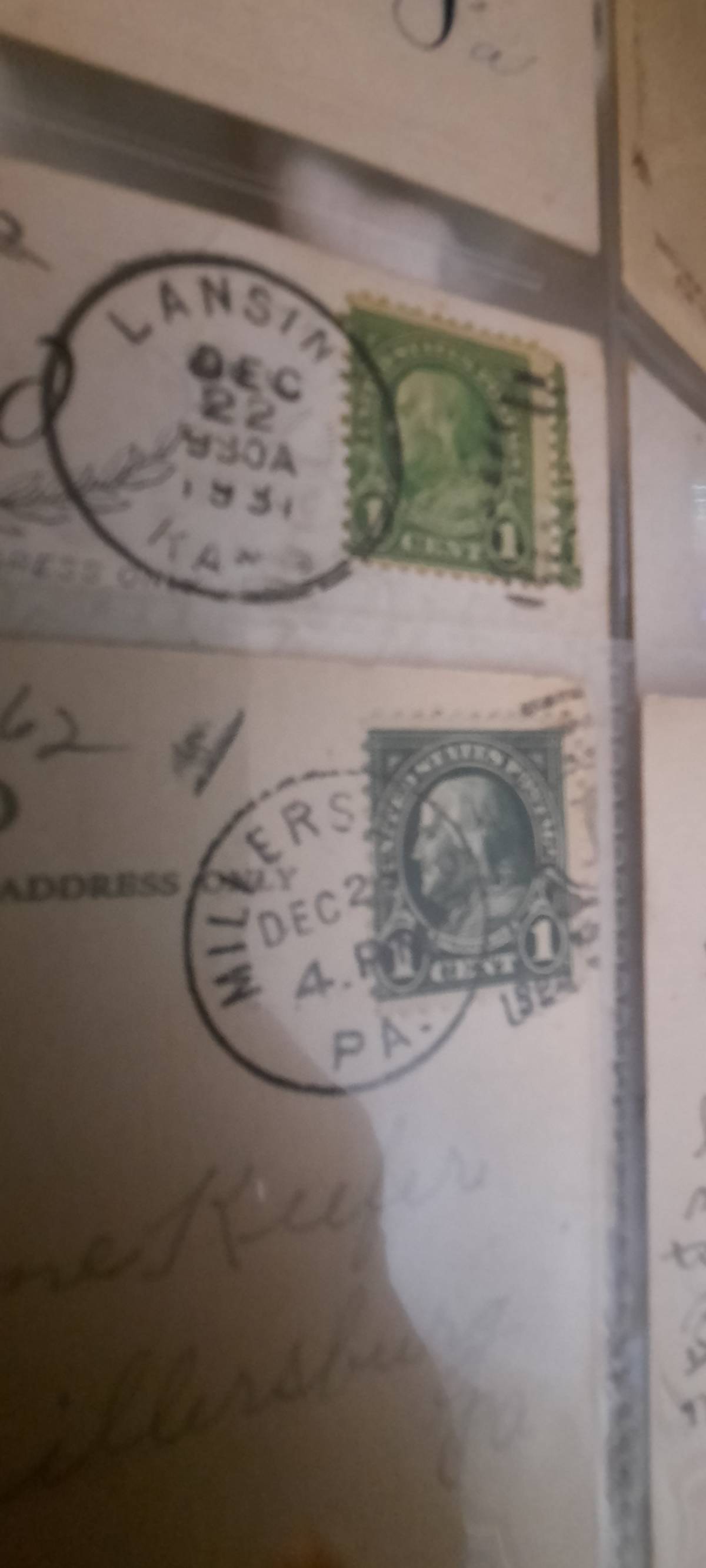
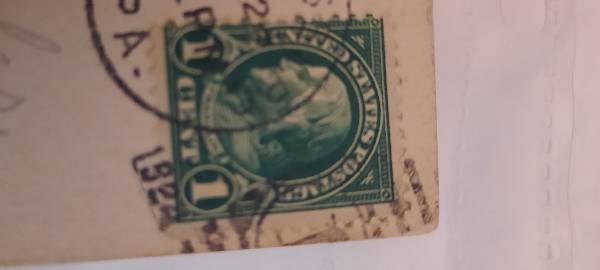
The use of dimensions to ID the Washington stamps is virtually impossible, catalogs and others include them but they only confuse hobbyists into thinking they have a rarity. You could remove (soak) the stamp from the post card and have a look at the back but to be honest I would leave it alone. You avoid damaging the stamp and the postcard is probably worth more than the stamp alone.
These stamps were printed in the billions and the odds of having a rarity is like winning the lottery and seeing Bigfoot on the same day. So the best approach to identifying stamps is to ALWAYS start with the assumption that you have the most common variety. Ignore where someone else may have mounted the stamp, ignore how they may have IDed the stamp. Some collectors have spent 50 years hoping to find a rare variety, looked through literally tens of thousands of stamps, and never found one.
But if anyone feels they have a rarity, the only way to be sure, and the only way to sell it at anything close to market value, is to send it in for a certification. Certifications can be costly but spending $35 dollars (or more) on one to only find that the stamp is worth a dollar certainly has taught many folks a lesson.
We get a lot of these kinds of inquiries, so one of our members wrote this great article
https://stampsmarter.org/learning/I...arities.htmlDon





 Posted 10/09/2022 10:46 pm