|
This page may contain links that result in small commissions to keep this free site up and running.

Welcome Guest! Registering and/or logging in will remove the anchor (bottom) ads. It's Free!
To participate in the forum you must log in or register.
| Author |
 Replies: 10 / Views: 1,551 Replies: 10 / Views: 1,551 |
|
|
Valued Member
Canada
97 Posts |
|
|
|
|
Pillar Of The Community
Australia
3297 Posts |
|
|
Valued Member
Canada
97 Posts |
|
|
Pillar Of The Community
United States
1038 Posts |
|
|
During Covid I jumped into this area. Have lots of material and enjoyed organizing it, especially with all different plates numbers to try to find. Lots of fun.
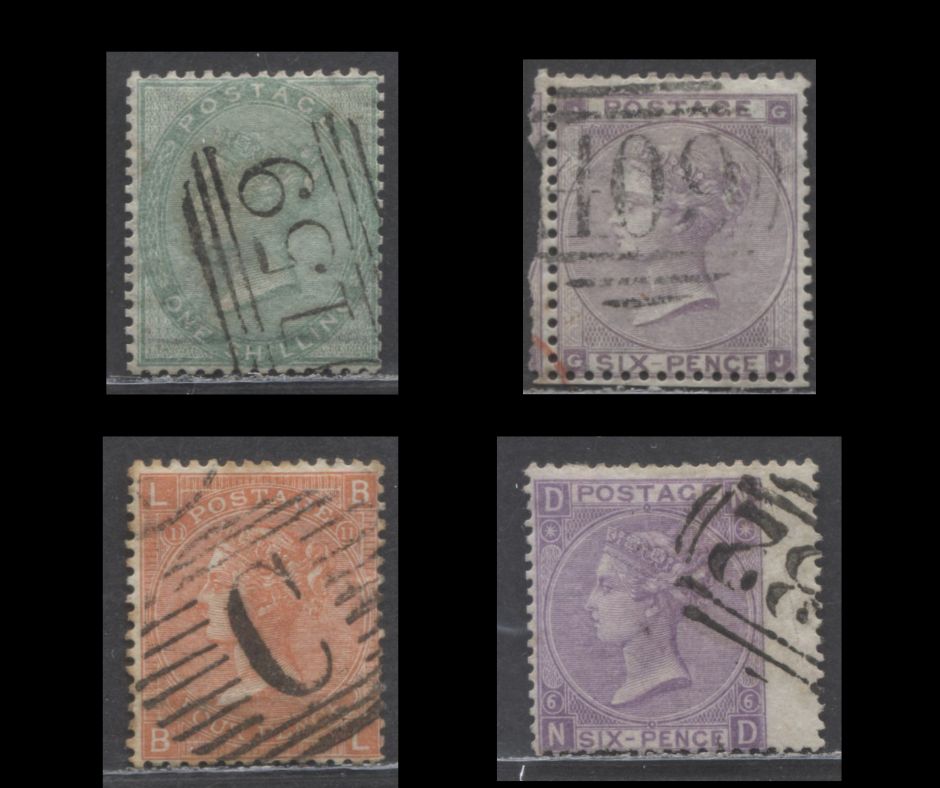
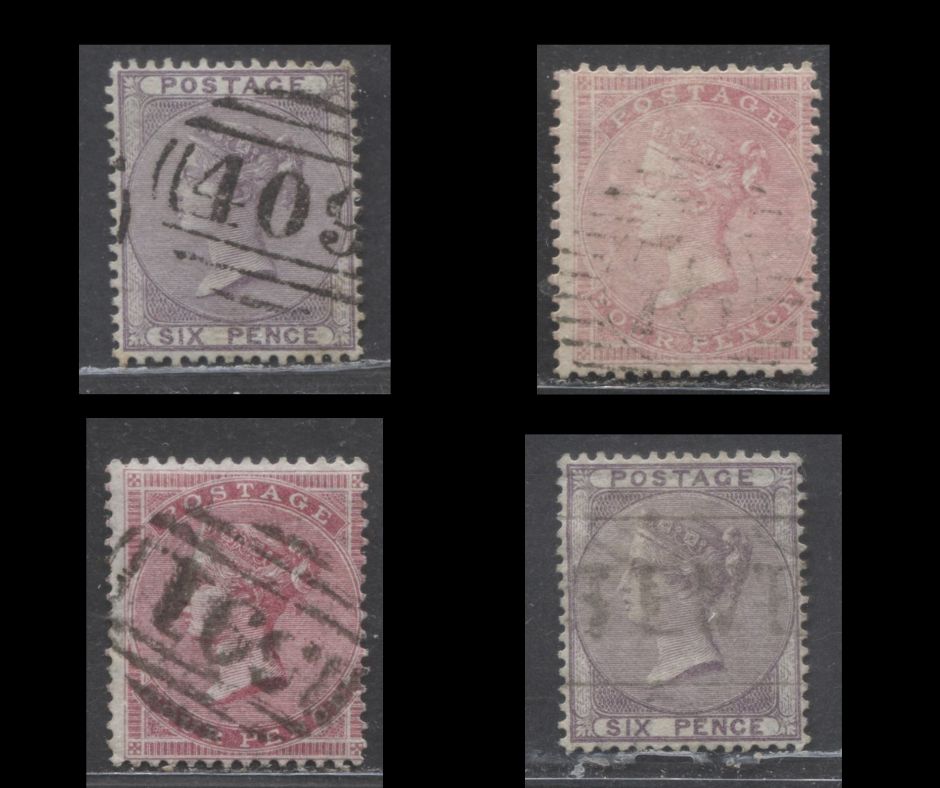
I am quite familiar with "American" grading standards and not British. Trying to pick out "highest quality " examples of used stamps, trying to judge which stamps are best… was quite difficult. Centering is difficult with these used issues and heavy cancellations are bountiful. I enjoyed your write up on this.
Finally, I use to ask myself … how blue is "bluish paper"? Always looking for these as they are more valuable.. would love to see side by side examples with white vs blue.
|
Send note to Staff 
|
|
|
Pillar Of The Community
Netherlands
6640 Posts |
|
|
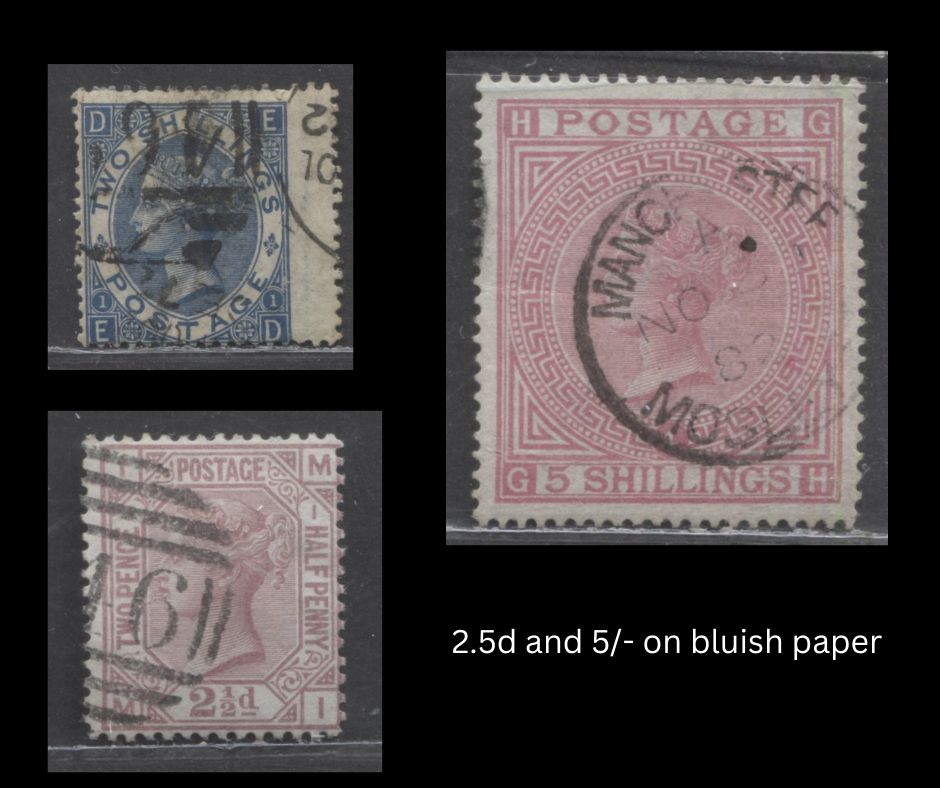
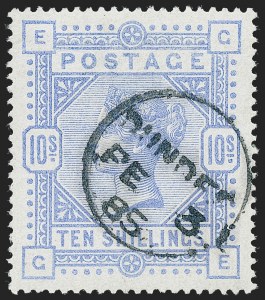
In Europe there is no grading like in America. Instead, the state of the stamp and its appearance determine how 'fine' it is. Certificates, normally, only mention whether there are faults or not. The classification is left to the seller, and I have seen ebay sellers - and sometimes well-known dealers - call a stamp that is absolute crap call 'very fine.' As for the blued paper: you got the point. It is more 'comparably' blue. In the early line-engraved stamps, the Prussiate of potash in the ink mixture, when wet, reacted spread through the paper. You can clearly see the bluing of the paper. Later, the Prussiate of potash was added to the paper to prevent the removal of the cancellation marks. This is the blued paper of the surface printed issues. The practice was stopped in 1884 and you get the 'white' paper varieties. A reliable source with the necessary expertise is Stanley Gibbons. You can look at their site to see what the blue and white papers look like. Of course, you always should be aware you may not see the true colours. It is nothing like the apparent blueing of the paper caused by the early inks. I then have the same question you have. I doubt seeing a single, I would be sure whether it is 'blued' paper. The 5s stamp posted by OP, above, has a CDS for 1882. The stamp is the 1867-type. It was printed on paper with the Maltese Cross watermark. On 25 November 1882, it appeared on paper with the 'Anchor' watermark. The latter is known on white paper from plate 4. Maybe OP can confirm his example is the 'Anchor' watermark. The 1882 cancellation should imply this is on blued paper. But the blueing varied on this paper. |
|
Send note to Staff
|
|
|
Valued Member
Canada
97 Posts |
|
|
The paper of the 5/- is indeed the Anchor watermark.
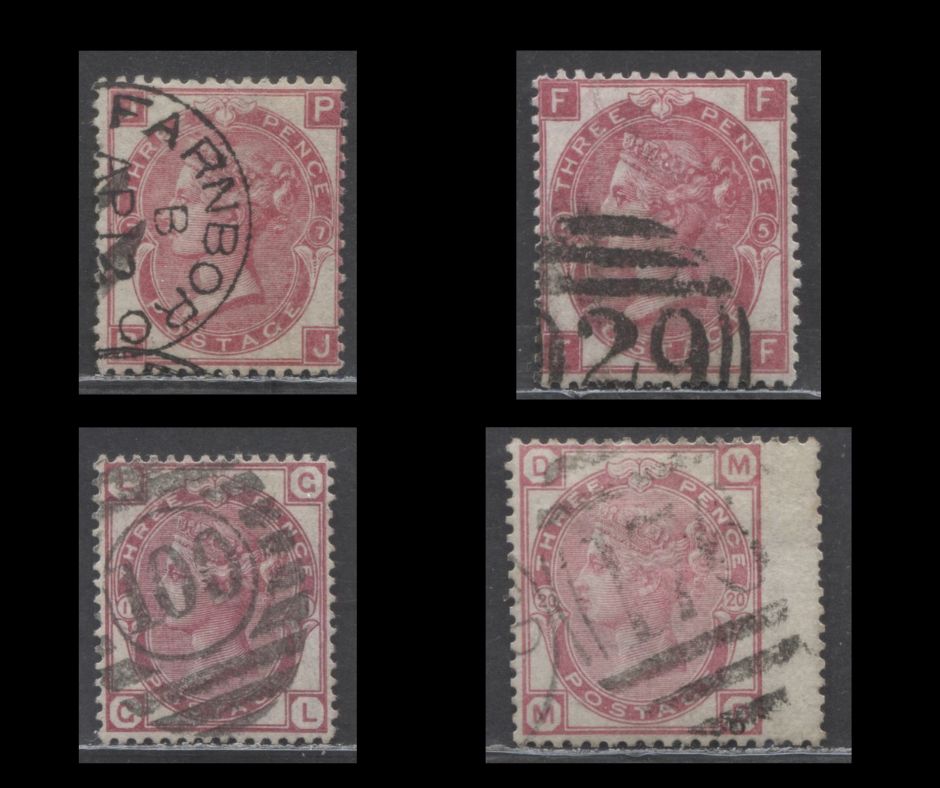
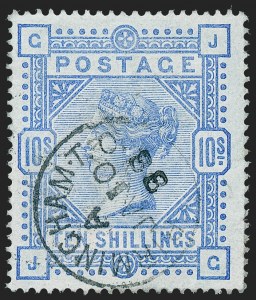
I am not an expert on the bluish papers admittedly, but the examples I show here are clearly more bluish than white. I point out in the post that most certifying bodies will no longer issue certs on single used stamps unless the date of the cancel is pre-1884. Yet, I have seen a lot of used examples offered in credible auctions that had cancellations dated well after that, and my general experience with GB from this period is that you see later dates on cancels all the time. So, I don't think you can dismiss a bluish paper stamp as fake just because it was used after 1884, especially on the high values, because the demand for them was not as great as for lower values. So, it would have taken a lot longer to use up existing stocks, and so one would expect plenty of later dates.
No, I think a collector has to become familiar with the quality of the blue, in other words the true tone of blue, as well as whether it is even or uneven on genuine examples. I think knowing that will root out most, if not all fakes. If you have a stamp that you feel confident is on bluish paper I wouldn't worry too much about the lack of a cert unless you want to sell the stamp.
|
|
Send note to Staff
|
|
|
Bedrock Of The Community
12730 Posts |
|
|
Pillar Of The Community
Netherlands
6640 Posts |
|
|
Thanks for confirming the watermark.
There was no claim about the stamp being genuine or not, or not being on blued paper. The reason I informed about the watermark was because the earlier watermark would have made it a very certain blued paper. However, since it had 22 rather than 20 perforation tips, it, likely, was the anchor watermark issue from 1882. That is the only variety of this design that exists on white paper. But then, the cancellation date takes away any doubt. So, the example you provided, beyond all doubt, can be argued to be an example of a blued paper stamp.
In 1884, a new design was introduced. These, initially, were printed on the paper with the Prussiate of potash mixed in with the pulp. During 1884, that practice ceased. Your stamp being cancelled (30?) November 1882 did coincide with the anchor watermark. - Incidentally, also showing how quick any new variety would be in use. - At the same time, it coincides with the blued paper period.
Pictures on websites, normally, do not show true colours. From what I am seeing - and the same goes for the examples on SG's website - it is mostly greyish. If I had no idea the question with these stamps is whether they are on white or blue paper, I would not even consider using the word blue. I have yet to see an online example that shows even the remotest blue tinge. On the 1841 Penny Red, the blueté can be very blue.
What auction houses used to do and do, sometimes differs due to new insights. After all, for decades, those same auction houses would have told you the Penny Black was the world's first stamp and the Two Pence Blue was issued on 10 May 1840. It, now, is known both became valid on 6 May 1840. - Still, the Penny Black was available from 1 May 1840 and the Two Pence Blue may not have been available before 5 May 1840, and only from a few offices in London. Making the penny Black first at the post, again. -
The price difference in the high value blue vs. white papers is enormous in the 1884 issues. If you are going to pay a premium of hundreds of pounds, you might be well-advised to look for a certificate. In the 1882 issue, the difference in price is not so big, if there is a difference at all. Probably, you should be more concerned about the genuine postal cancellation as that is where the value would be. Fiscal cancellations are common and worth considerably less. Also, postal cancellations are much easier to fake.
Indeed, late uses are known. However, the turn-over in these high value stamps should not be underestimated. They were not printed in huge numbers but were used to pay taxes, and frequently so. It is unlikely these stamps remained in stock very long. |
|
Send note to Staff
|
|
|
Pillar Of The Community
United States
1038 Posts |
|
|
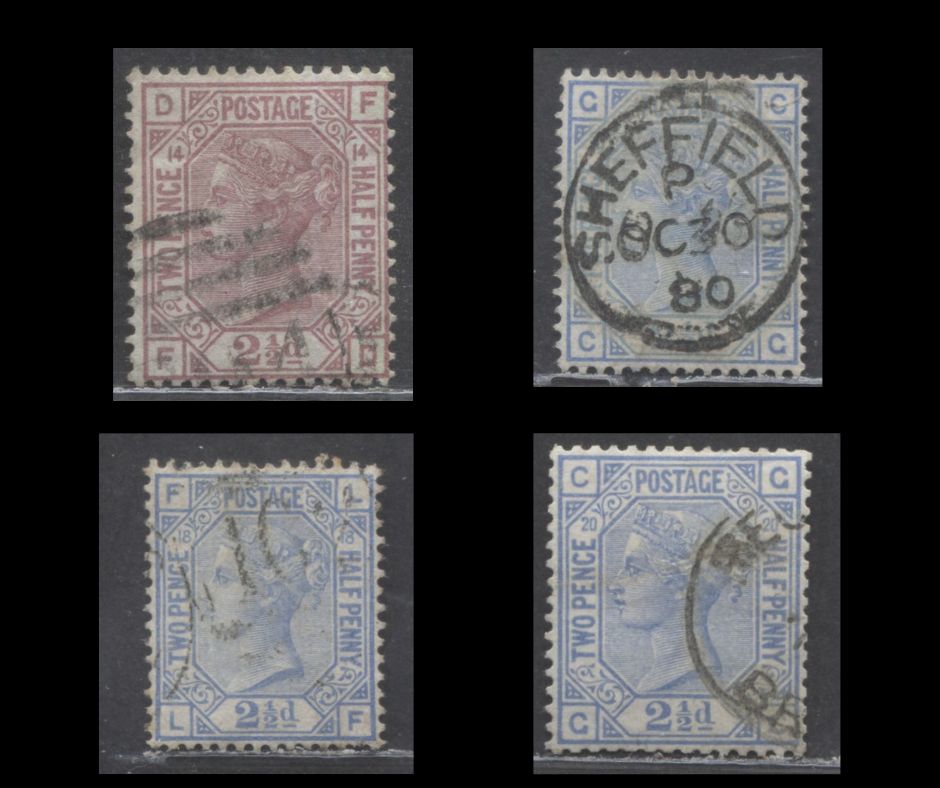
Rogdcam post above shows almost imperceptible nature of "blue" vs white.
I have large numbers of these in my collection and find looking at stamp from front almost useless
I turn them all over and assess from backside, comparing 10-15 copies at a time. Even comparing one stamp vs another is not enough. In my opinion you need large numbers of these stamps turned over to look for bluish paper. Some stamps are just on darker paper, toned etc. I agree that "blue" is more "gray" blue . Need to see back side of stamps
|
|
Send note to Staff
|
|
|
Pillar Of The Community
United States
1038 Posts |
|
|
When I put this page together 2-3 years ago, I turned all these stamps over along with another 2 pages of them (not shown). the upper right stamp is on blued paper compared to the rest- I think. one or two others are questionable blue, but not enough for me to say for sure. Reality- I'm not sure. LOL 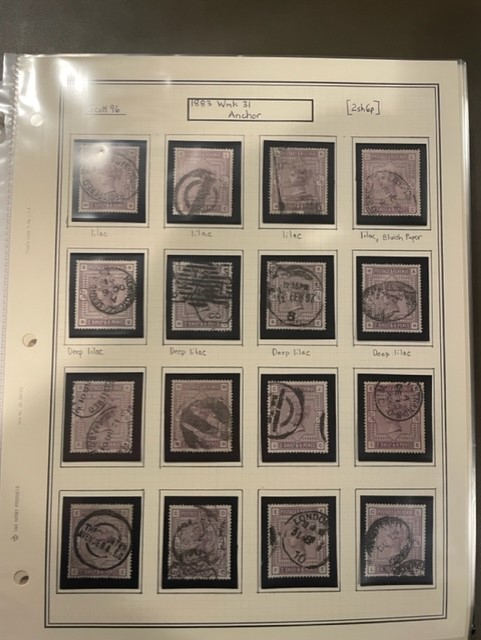 |
|
Send note to Staff
|
|
|
Valued Member
Canada
97 Posts |
|
|
Thanks for your feedback and input guys. I wasn't trying to be defensive about the blued papers. All I was trying to say is that my perspective, speaking as a dealer is that people should not be hesitant to develop confidence in their own judgement and expertise. A certificate is just an opinion, rendered by a committee of senior philatelists and dealers who meet once a month in most cases. They usually get it right, but not always. I've had rare situations where I've send something modern that I KNOW is good, because I know the issue well and I know the provenance, and it came back with a bad cert, and I had to go back and essentially say "ok boys lets try this again". after sending in reference material that would clearly show I was right. Nobody can be an expert in everything, and so if you are a specialist collector and you are focused and know your area well, there is no reason to think that your knowledge isn't at least as good as most dealers. When it comes to a general feel for things - that gut instinct and sense of judgement - that's where dealers have an advantage. When you work with stamps every day for 10 plus hours you gain a 6th sense for when something just doesn't look right and conversely for when it does. Of course, you may research that thing, or take it to an expert and find out you were mistaken.
On that last note, I've seen a lot of fakes and forgeries and repairs in my time. One thing that I have noticed about most of them is that by and large most are not that well done. There is a small handful of very well executed fakes that could fool most experts or people with only a general working knowledge of an area. But when I'm on Facebook groups it seems that no matter what is posted, whenever it is something valuable, there is almost always someone on there who is quick to assert that it must be a well executed fake. There are simply too many instances of that for it to be true for all of them. Quite often a cigar is just a cigar, and that rare classic that the poster said came from grandfather's or dad's album really did come from there and really is good. |
|
Send note to Staff
|
|
| |
Replies: 10 / Views: 1,551 |
|
|
To participate in the forum you must log in or register. | |
Disclaimer: While a tremendous amount of effort goes into ensuring the accuracy of the information contained in this site, Stamp Community assumes no liability for errors. Copyright 2005 - 2026 Stamp Community Family - All rights reserved worldwide. Use of any images or content on this website without prior written permission of Stamp Community or the original lender is strictly prohibited.
Privacy Policy / Terms of Use Advertise Here |
| Stamp Community Forum |
© 2007 - 2026 Stamp Community Forums |
| It took 0.22 seconds to lick this stamp. |
 |
|
|
|


 Posted 12/10/2022 12:27 am