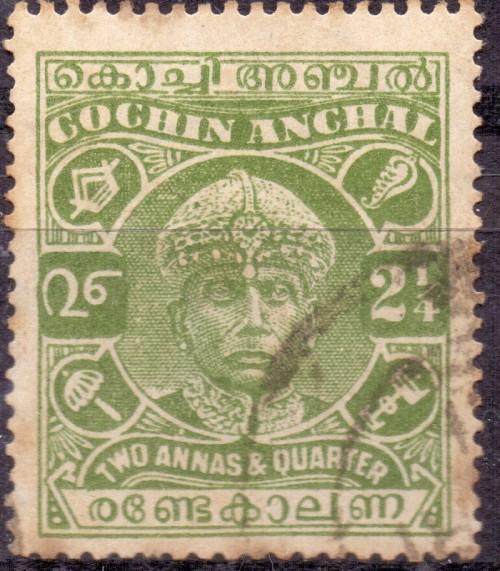
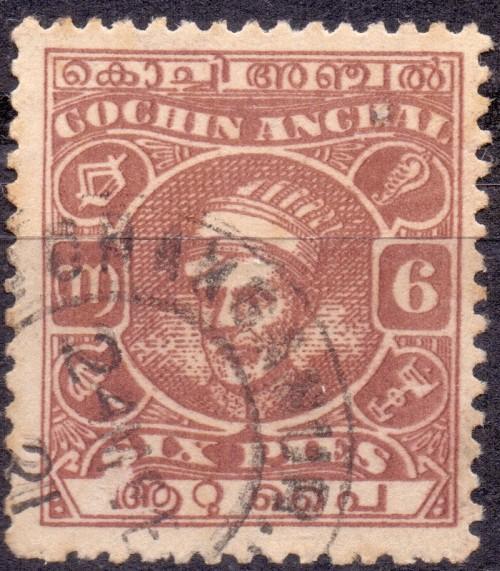
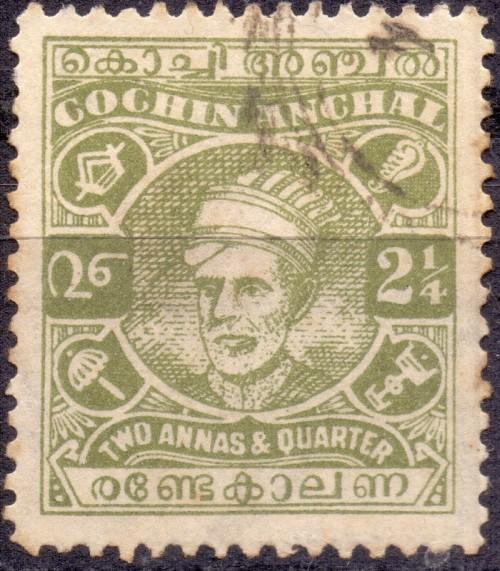
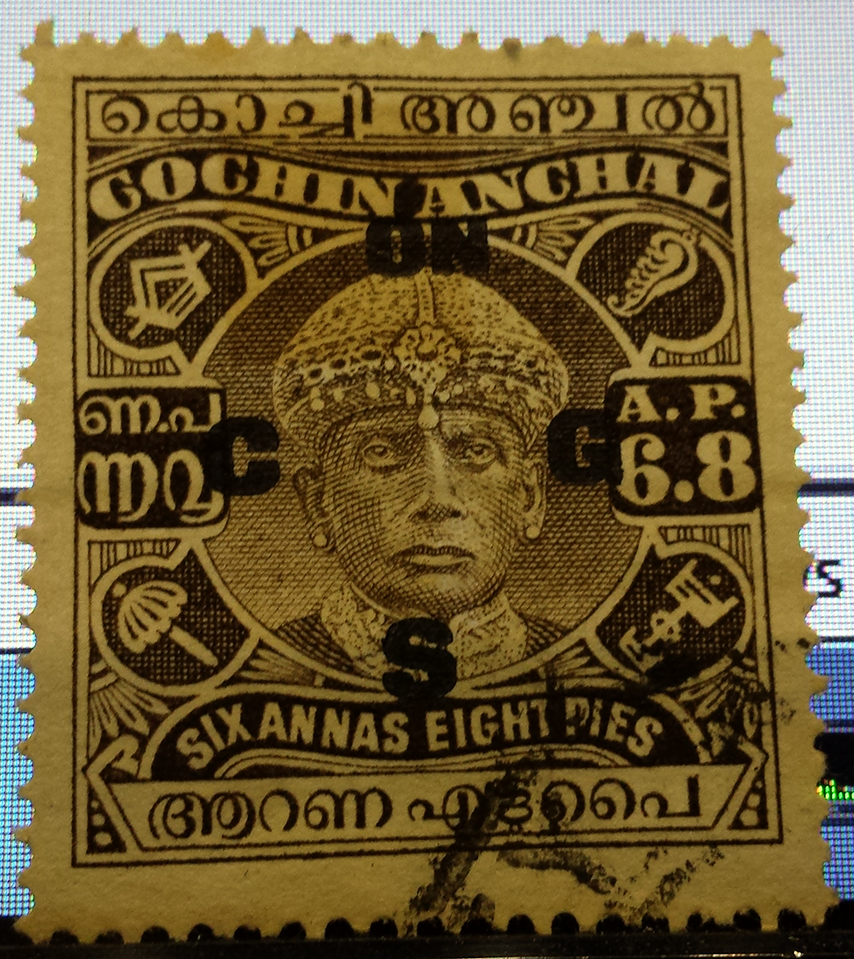
Joe1225us, that was probably true of these high values. That, or there were large numbers of remainders of them, when the Cochin State post office closed down. In any case, the 3 Anna 4 Pies, 6 Annas 8 Pies and 10 Annas are all priced in Gibbons at £1.50 each - not much better than new issue prices.
But the
3 Anna of that set

is listed at £70 mint (and 10p used - showing it saw plenty of use).
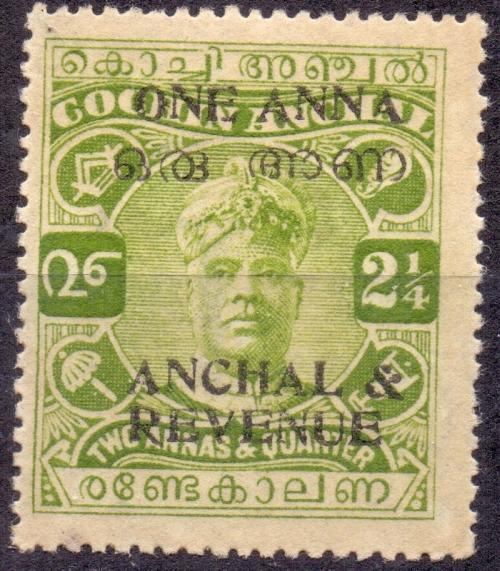
The redundant 1 Anna 8 Pies value from the same set was surcharged with new - useful - values in 1943

The Gibbons values make interesting reading:
The 3 Pies surcharge (SG O58) £8.50 mint and £4 used
The 9 Pies surcharge (SG O59) £190 mint and £42 used
The first 1 Anna 3 Pies surcharge (SG O60) £5 mint and £4 used
The second 1 Anna 3 Pies surcharge (SG O61) £4 mint and 75p used
So the pricing is all over the place. AFAIK, the old East German answer
doesn't apply. There was never any attempt to withhold certain values. Rather, the problem was that collectors tended to look down their noses at Official stamps. So what survived and was bought for the trade was rather hit and miss.
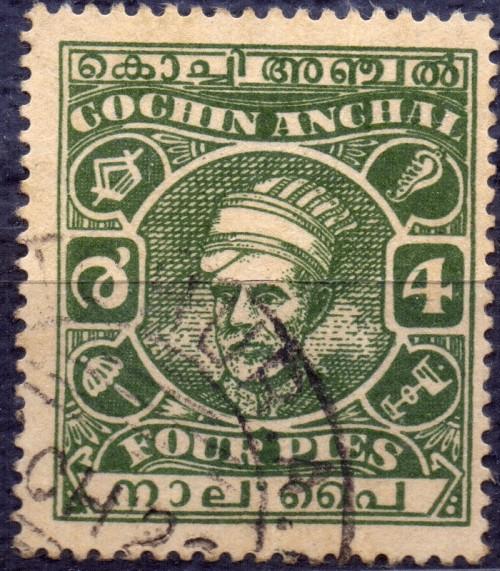
There's an even more striking example of anomalies in pricing in the 5th Raja set, issued 1946-1948. The 4 Pies value of the set

is priced at £3750 mint and £85 used. (It was the local postcard rate, for a time.) The companion 3 Pies value

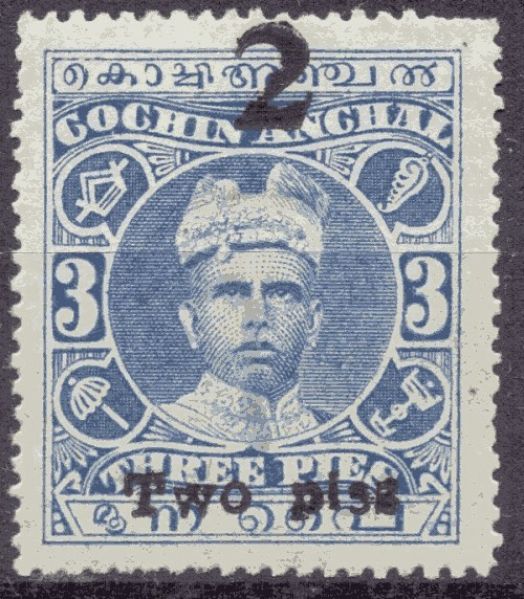
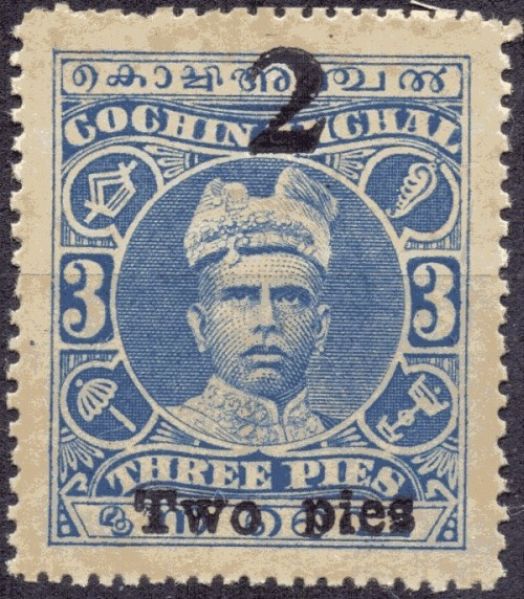
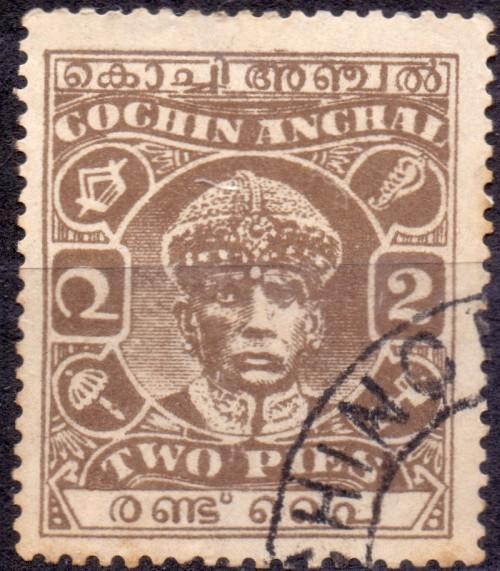
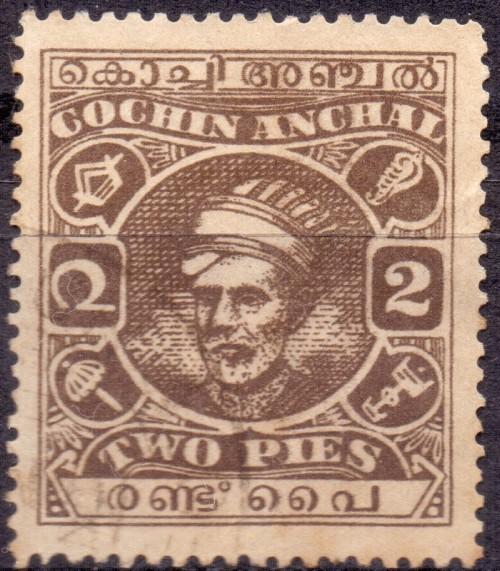
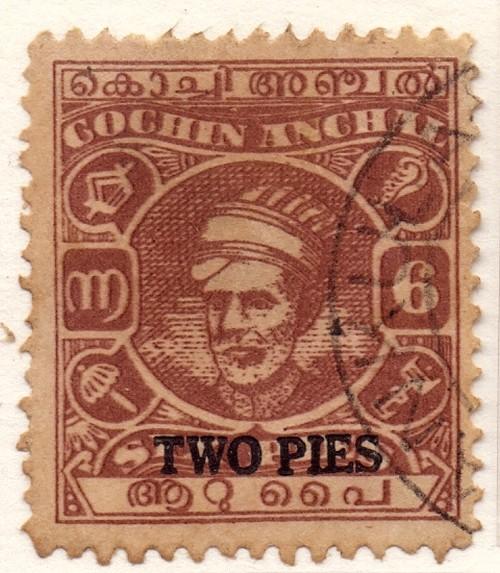
is priced at 50p mint and 40p used. Here, the explanation seems to be that the 4 Pies plate was defective: it's regularly found with white streaks through it, and so was probably quickly discarded. Old stocks of the 4 Pies surcharge on the 4th Raja stamp:

(£8.50 mint and £17 used) and the replacement 6th Raja 4 Pies

(£17 mint and £6.50 used) would have been used instead.
All of which makes the Uglies, and Cochin the George VI era particularly, a fascinating area to collect.





 Posted 12/13/2014 4:26 pm




 .
.