| Author |
 Replies: 13 / Views: 1,799 Replies: 13 / Views: 1,799 |
|
|
Pillar Of The Community
500 Posts |
|
|
|
|
Pillar Of The Community
United Kingdom
8637 Posts |
|
|
Could you show your stamps, rather than Scott excerpts? Scott numbers mean nothing to those of us outside the US. |
Send note to Staff 
|
|
|
Pillar Of The Community
United States
1434 Posts |
|
|
Quote:
Anyone have any simple way to describe the differences? There isn't. The Scott types are based on the characteristics of specific print runs, to put it simply. Things like the eyes, jaw, neck, eyebrows, frame details, overall quality of the lithography (IIRC). You need a Yvert or Maury for these, really; throw Scott away for anything non-USA, in my opinion. |
|
Send note to Staff
|
|
|
Pillar Of The Community
Canada
1462 Posts |
|
|
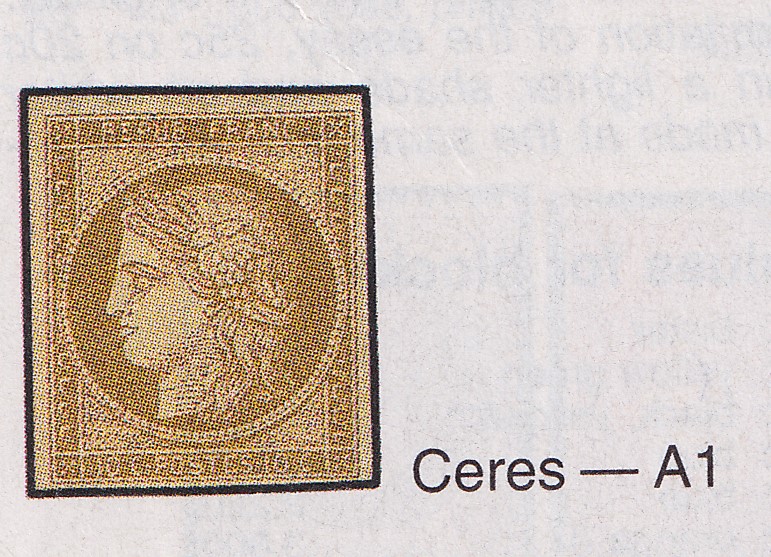
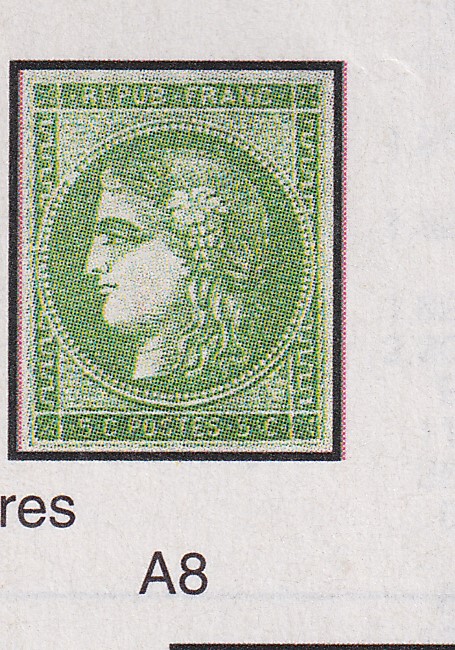
Yes, definitely agree Scott is lacking. But in any case only a few imperf stamps have the same value/colour combinations between the original Ceres issue (A1) and the Bordeaux issue (A8). So you only need to distinguish (using Scott #s) - 10 bistre, yellowish (#1 & #42 (Yt 43)). #42 is much more common. 20c dark blue (only found used in Bordeaux issue, so extremely likely you would have #44 (Yt 45), not #4. 40c orange, yellowish (#7 & #47). #47 more common. Images of a #7 and #47 I have, you can see the differences are quite pronounced. #7 (Yt 5) 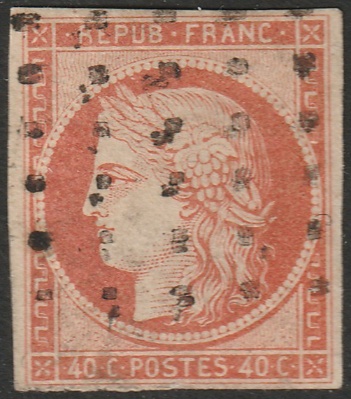 #47 (Yt 48) 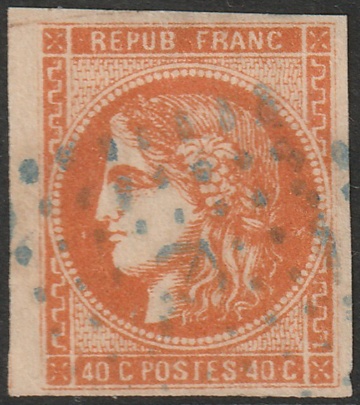 |
|
Send note to Staff
|
| Edited by gmot - 02/15/2023 2:00 pm |
|
|
Valued Member
Denmark
89 Posts |
|
|
Pillar Of The Community
United Kingdom
8637 Posts |
|
|
As you can see from the images, the Bordeaux issue is a much cruder production, and can readily be distinguished. More difficulty attaches to distinguishing the 10c bistre, 25c blue and 40c orange of 1849 from the French Colonies issue of 1871, which were printed from the same plates. |
|
Send note to Staff
|
|
|
Pillar Of The Community
Canada
1462 Posts |
|
|
That is so true on the French colonies - I've been tripped up a couple times there. Cancellations are helpful in that regard. French colonies 40c from 1871 (Sc 14, Yt 13) 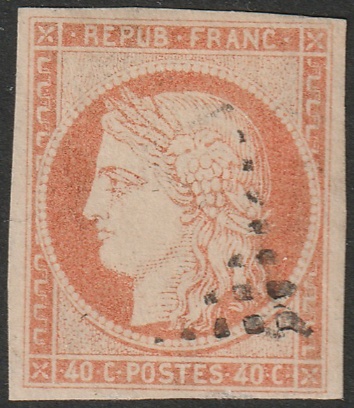 |
|
Send note to Staff
|
|
|
Pillar Of The Community
United Kingdom
8637 Posts |
|
|
The old plates are also likely to produce a more worn impression. Gibbons also mentions thicker paper on the 1871 issue. Some of these differentiators rely in your having a few to compare, of course.  |
|
Send note to Staff
|
|
|
Pillar Of The Community
Canada
1462 Posts |
|
|
That's very interesting on the paper - Yvert colonies specialized doesn't mention a paper difference. I have lots of 1849 France but none of those 3 colonies issues at the moment, will certainly compare next time they cross my door. |
|
Send note to Staff
|
|
|
Pillar Of The Community
500 Posts |
|
|
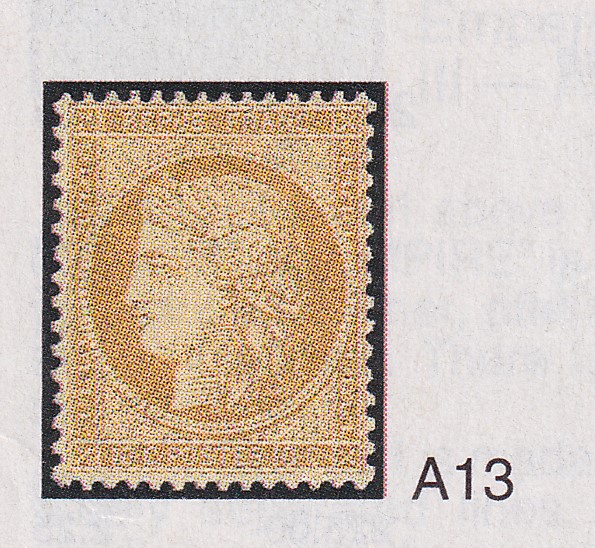
Here is a scan of a few I've been looking at ... I think the first one is a #1 though I assume it could be French Colonies (Scott #4?). Again I can't tell any design differences between a #1 (A1) and #42 (A8) from the Scott Catalog. The other 2 stamps I think are both #54's (design A13). Emphasizing "I think" ... Viking123, your web link looks very helpful. I will check these using that web site to see if they are forgeries (which seem plentiful). 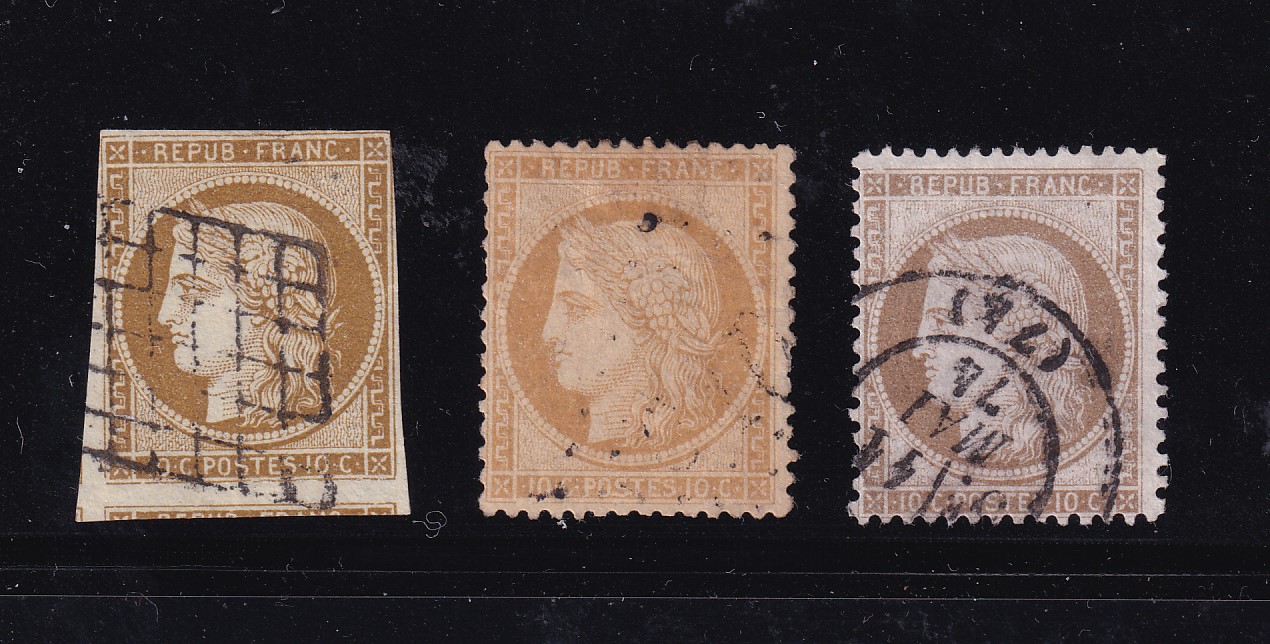 |
|
Send note to Staff
|
|
|
Pillar Of The Community
Canada
1462 Posts |
|
|
That's a typical grill cancel for the 1849 Ceres issue, so #1 fits for that.
And yes, Sc 54 (Yt 36) - it comes in bistre yellow (Yt 36) and bistre brown (Yt 36a) shades, although Scott doesn't distinguish. |
|
Send note to Staff
|
|
|
Valued Member
Denmark
89 Posts |
|
|
@canyoneer
I always check old stampissues to see if there is any forgeries and if there is, what do I have to be aware of. I buy stamps online and that can be a challenge if you buy stamps outside your normal colleting area.
I sometimes buy false stamps for reference if they are well made and if they are part of larger collections, then I will have a little bit of both, I do not have the Ceres Issue, France is not my area of collection, that said I do have a collection of France and also French Colonies.
It is a beautiful serie of stamps the old Ceres Issue and I understand why you collect these Frensh stamps.
Looking at your stamps they look genuine, but you always need to have the stamp in the hand to feel the papper and just look closely to the stamps. |
|
Send note to Staff
|
|
|
Pillar Of The Community
500 Posts |
|
|
Thanks for all your help. I think I'm figuring out some of the basics. Main thing I see for 1849-50 vs 1870-71 is the obvious pointed feathers on the head. Below is a scan of my 40c ones (Scott #7 and #47?). The left one is on fairly thin paper - however, I wonder if the cancel type means this may be French Colonies #14. 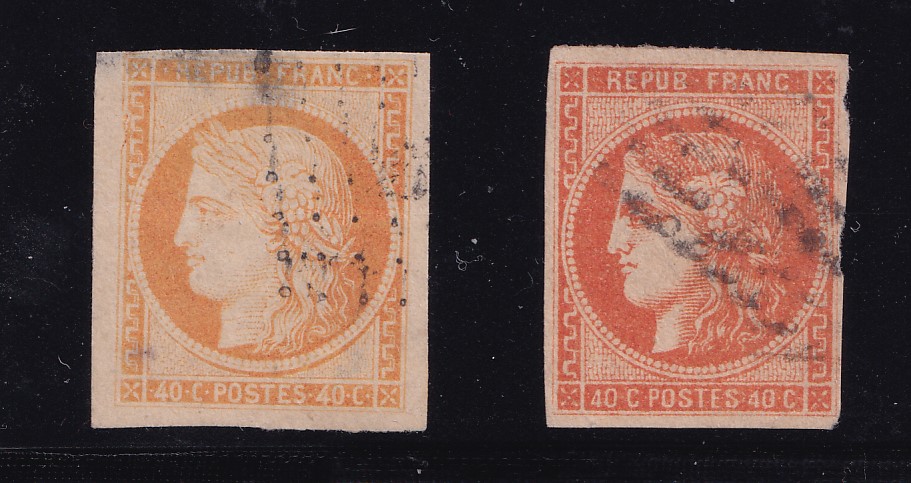 |
|
Send note to Staff
|
|
|
Pillar Of The Community
Canada
1462 Posts |
|
|
It does look more like French colonies to me. The cancel is a lozenge - can't tell if there's a number or letter at the right side in the lozenge. If number, will be a petit chiffre (small numeral) cancel in which case it is France #7. If letter, probably Colonies. |
|
Send note to Staff
|
|
| |
Replies: 13 / Views: 1,799 |
|




 Posted 02/15/2023 12:36 pm