| Author |
 Replies: 16 / Views: 1,128 Replies: 16 / Views: 1,128 |
|
New Member
3 Posts |
|
|
I inherited a large colection of stamps and coins, all of the coins are already catalogued but stamps are not, there are over 2000 stamps in my possesion right now. How do I catalogue them, and how do I authenticate if I come across some that are possibly valuable. |
|
Send note to Staff
|
|
|
|
|
Pillar Of The Community
United States
1434 Posts |
|
|
You'll need a catalog; if you're in the US, then Scott would be your first and most readily available publisher. Used book store, library, ebay are all good sources. If you buy, just pick up an older (10-20 yrs old) edition. The values change, but the actual catalog numbers almost never do, and that's what you need. |
Send note to Staff 
|
|
|
Pillar Of The Community
Netherlands
6648 Posts |
|
|
Maybe, you can tell us what stamps you have. Are they from specific countries? Did they come in an album? What condition are they in?
Maybe you can post some pictures. |
|
Send note to Staff
|
|
|
Valued Member
223 Posts |
|
|
There shouldn't be any pressure to unless they do turn out to be somewhat valuable. I have far too many stamps to finally write down what I think they are. I keep my best ones close by and the others will be just fine. Please post some pictures and remember that 2000 is a small number in the stamp world. |
|
Send note to Staff
|
|
|
New Member
3 Posts |
|
|
Stamps are from all over the world, and almost all of them are from before 1950, many from the balkans, austria, france, germany, ussr, ottoman empire, italy, and colonies around the world, all of them came in many albums, some smaller some bigger, and a few of them came in like transparent plastic like packaging just a bit bigger than the stamp itself |
|
Send note to Staff
|
|
|
Valued Member
United States
40 Posts |
|
|
Quote:You'll need a catalog; if you're in the US, then Scott would be your first and most readily available publisher. Used book store, library, ebay are all good sources. If you buy, just pick up an older (10-20 yrs old) edition. The values change, but the actual catalog numbers almost never do, and that's what you need. I've been looking into catalogs myself lately. Personally I wouldn't buy even old ones for 2,000 random stamps. If you can get the old volumes delivered for say, $15 each (reasonable expectation?), that's $90 for a set, which could possibly be more than the stamps are even worth. There are some free online resources. You won't get the Scott numbers, they're not comprehensive, and you may or may not learn anything at all about value, but they might be useful. Here are a couple: https://www.freestampcatalogue.com/ (Michel) https://www.stampworld.com/en/Thus far I've found them pretty clunky to use. We've digitized most things and that makes a lot of research easier, but this may be an area where it's actually easier to thumb through a hard copy. |
|
Send note to Staff
|
|
|
Pillar Of The Community
United States
1434 Posts |
|
|
Quote:
You won't get the Scott numbers, they're not comprehensive, and you may or may not learn anything at all about value, So, not really any good for cataloging what one has, at least not without having to repeat the exercise again eventually with an actual reference. You're correct about the cost though, a lot depends on what the OP (thinks) he has... could just borrow a few volumes from the library. But like any hobby or education in general, it requires an investment of resources to start and progress. |
|
Send note to Staff
|
|
|
Pillar Of The Community
United Kingdom
8637 Posts |
|
|
For most general collections, perhaps from someone's childhood, you don't need to "catalogue" stamps, if by that you mean assigning catalogue values to them. Most will be worth very little. A first step would be to group them by country, perhaps put them in a stock-book or stock-cards. Or upload some pages here. |
|
Send note to Staff
|
|
|
Moderator

United States
5109 Posts |
|
|
Quote:
Stamps are from all over the world, and almost all of them are from before 1950, many from the balkans, austria, france, germany, ussr, ottoman empire, italy, and colonies around the world, all of them came in many albums, some smaller some bigger, and a few of them came in like transparent plastic like packaging just a bit bigger than the stamp itself From what you described, I am not very hopeful that any of them are "valuable". However, since you seem to know where most of them are from, you should easily be able to sort them and then show us some of the ones which you feel have more potential than others. Please note that old, in stamps, to me, means something before 1910. However, there are some newer ones with some value. Condition is everything, so no need to show us pictures of damaged items. Good luck. |
|
Send note to Staff
|
|
|
Pillar Of The Community
United States
1434 Posts |
|
|
Quote:
if by that you mean assigning catalogue values to them I thought "cataloging" meant nothing more than identifying them in an orderly, descriptive way (which in philately and numismatics generally means using the appropriate number from a recognized reference). I'm skeptical about a situation like this, where OP claims to have valuable specimens but has no idea who to catalog them, which begs the question, How does OP know they're valuable, if he doesn't know what they are? |
|
Send note to Staff
|
| Edited by classic_paper - 02/20/2023 2:00 pm |
|
|
New Member
3 Posts |
|
|
Moderator
United States
5109 Posts |
|
|
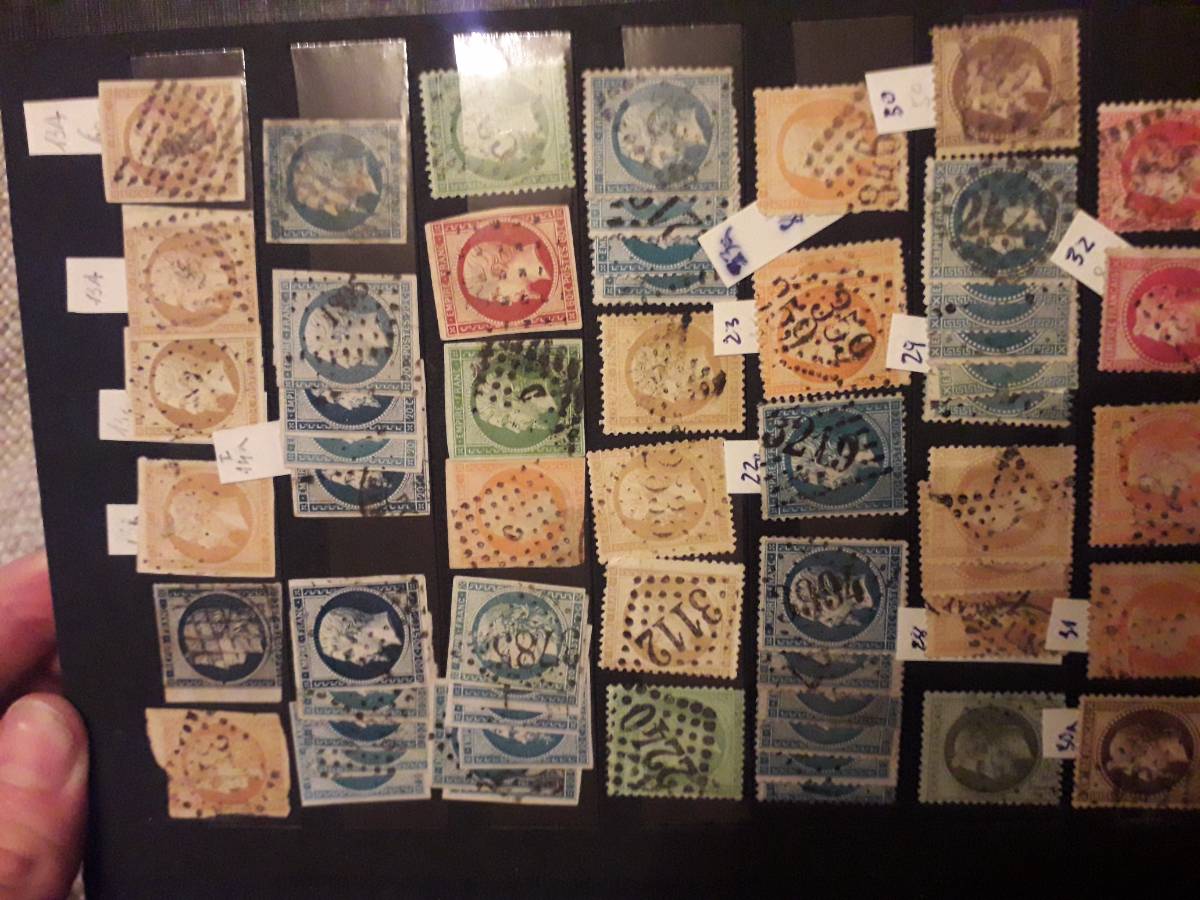
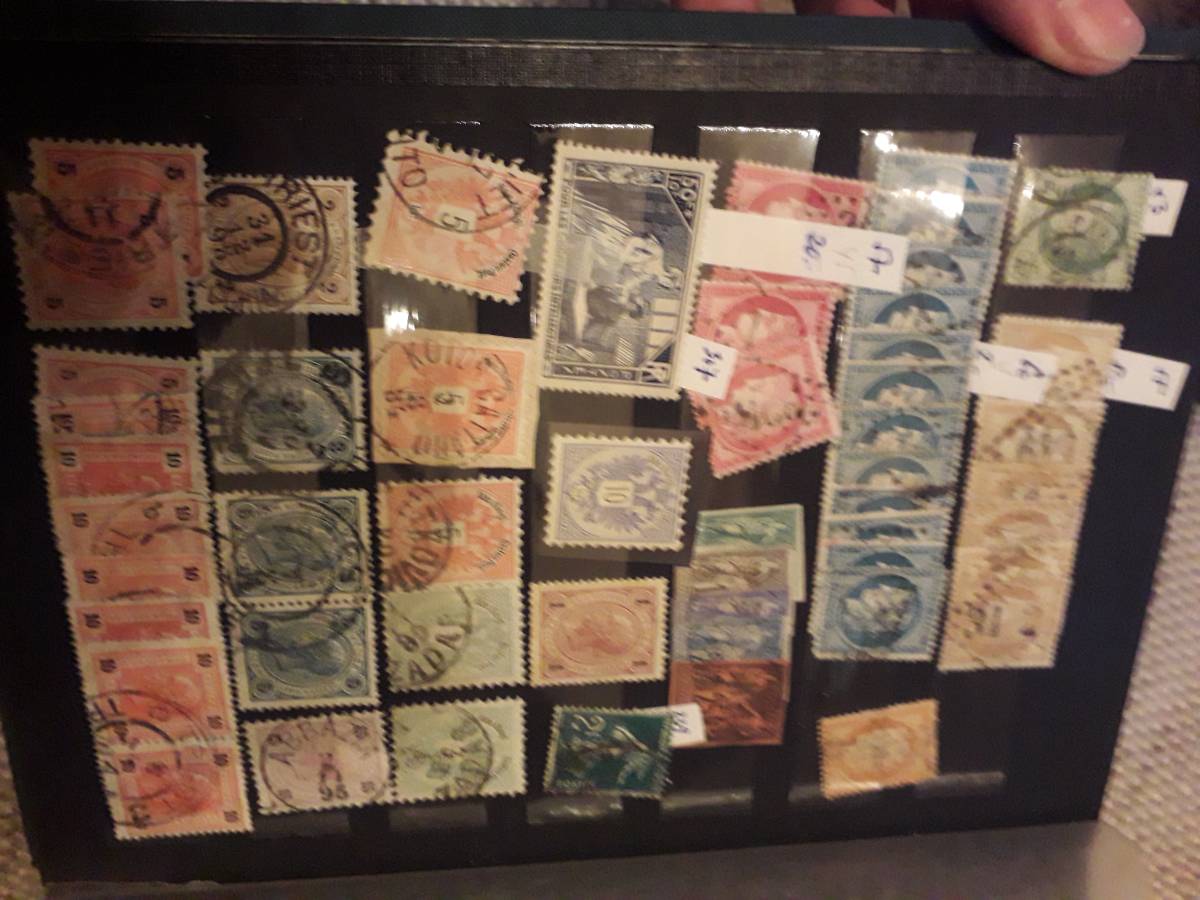
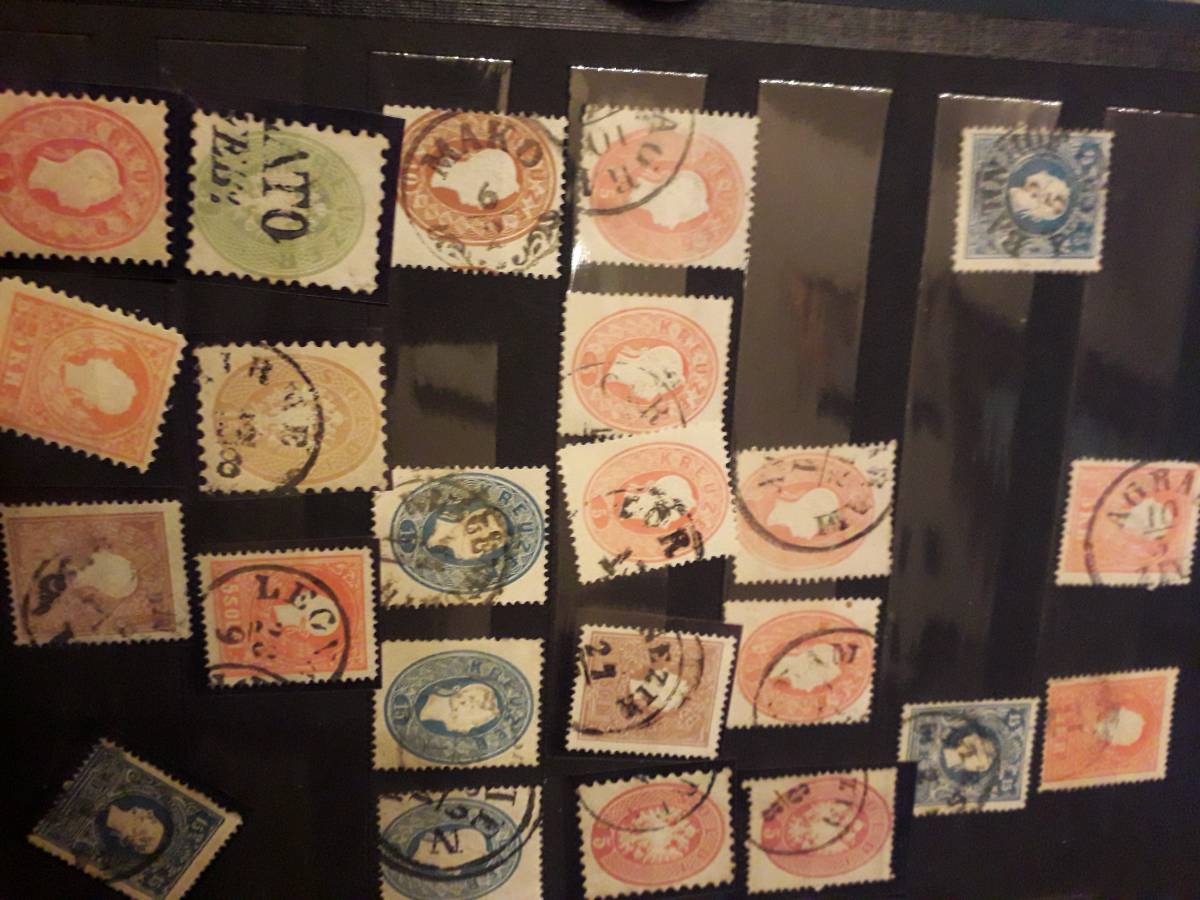
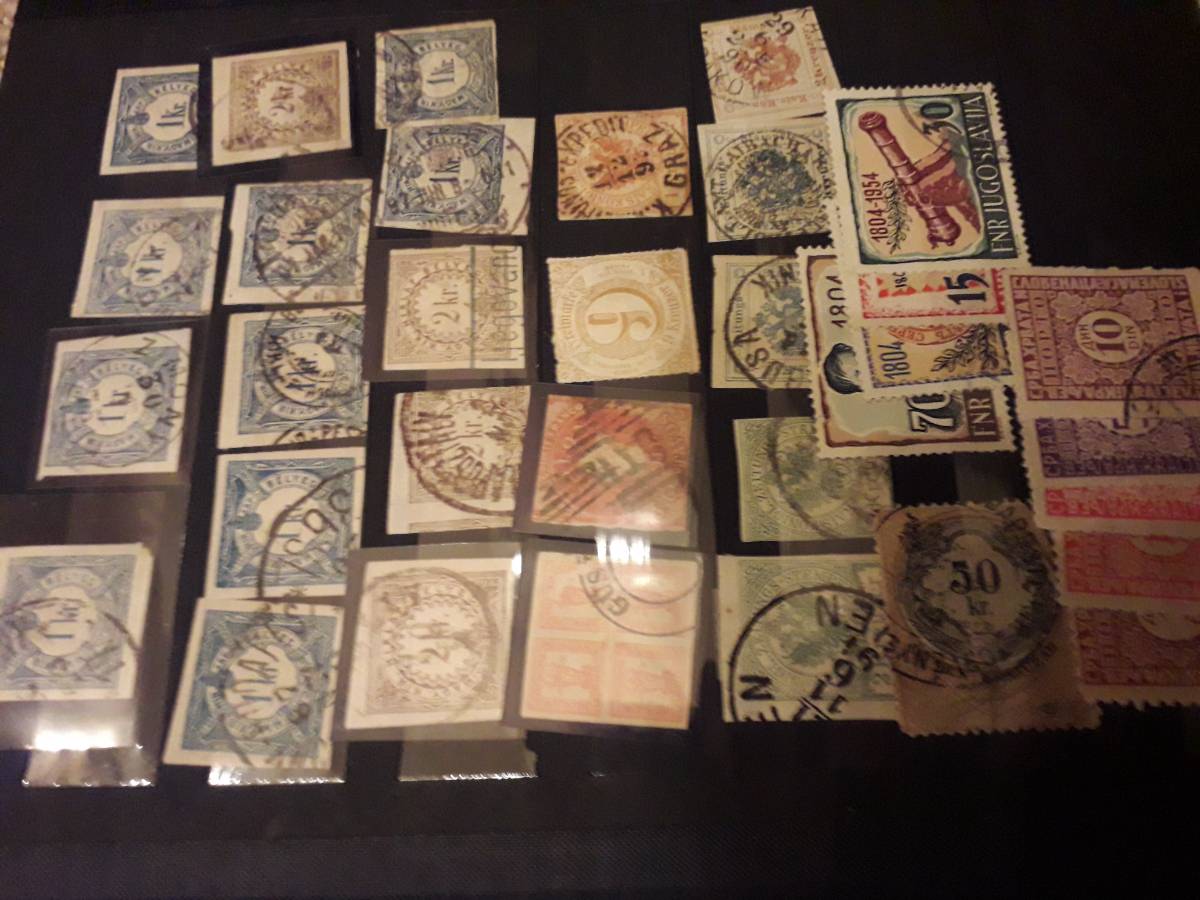
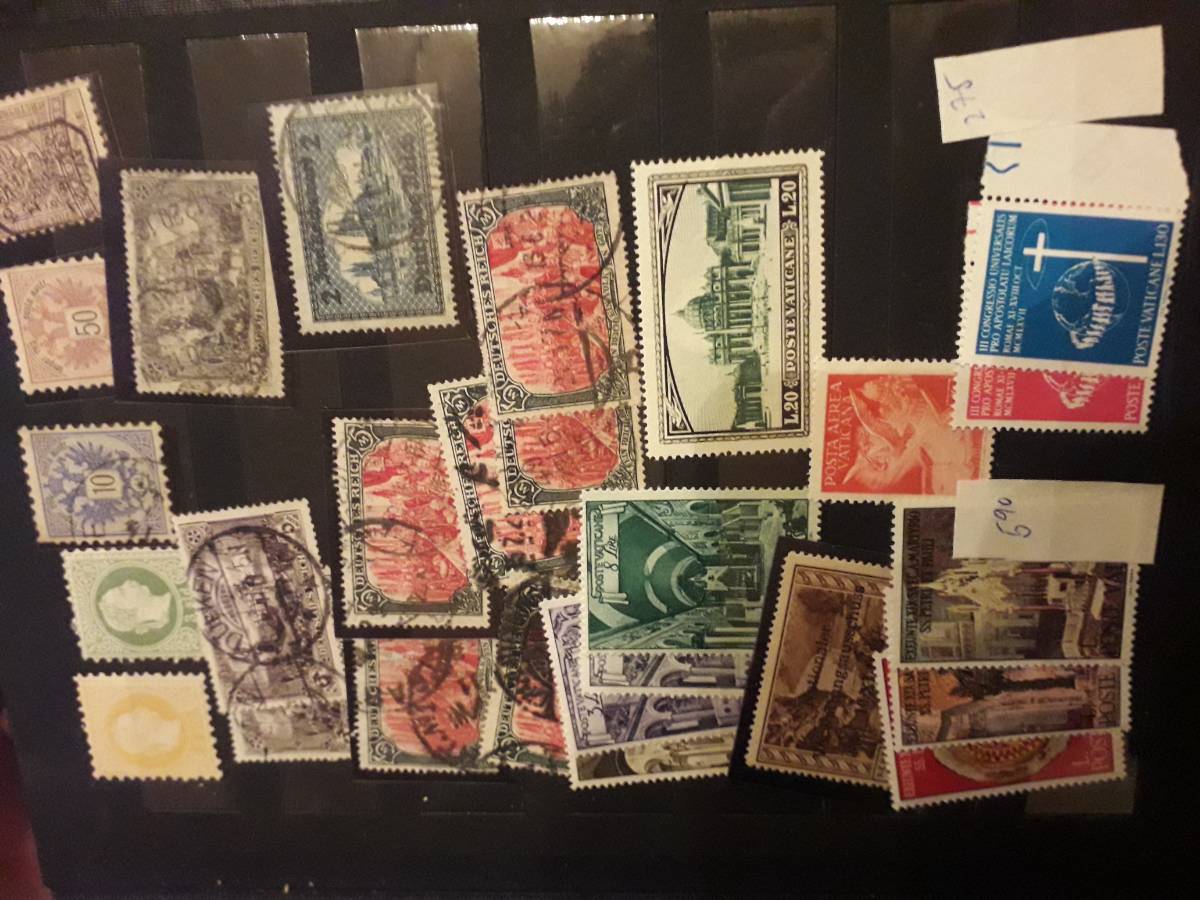
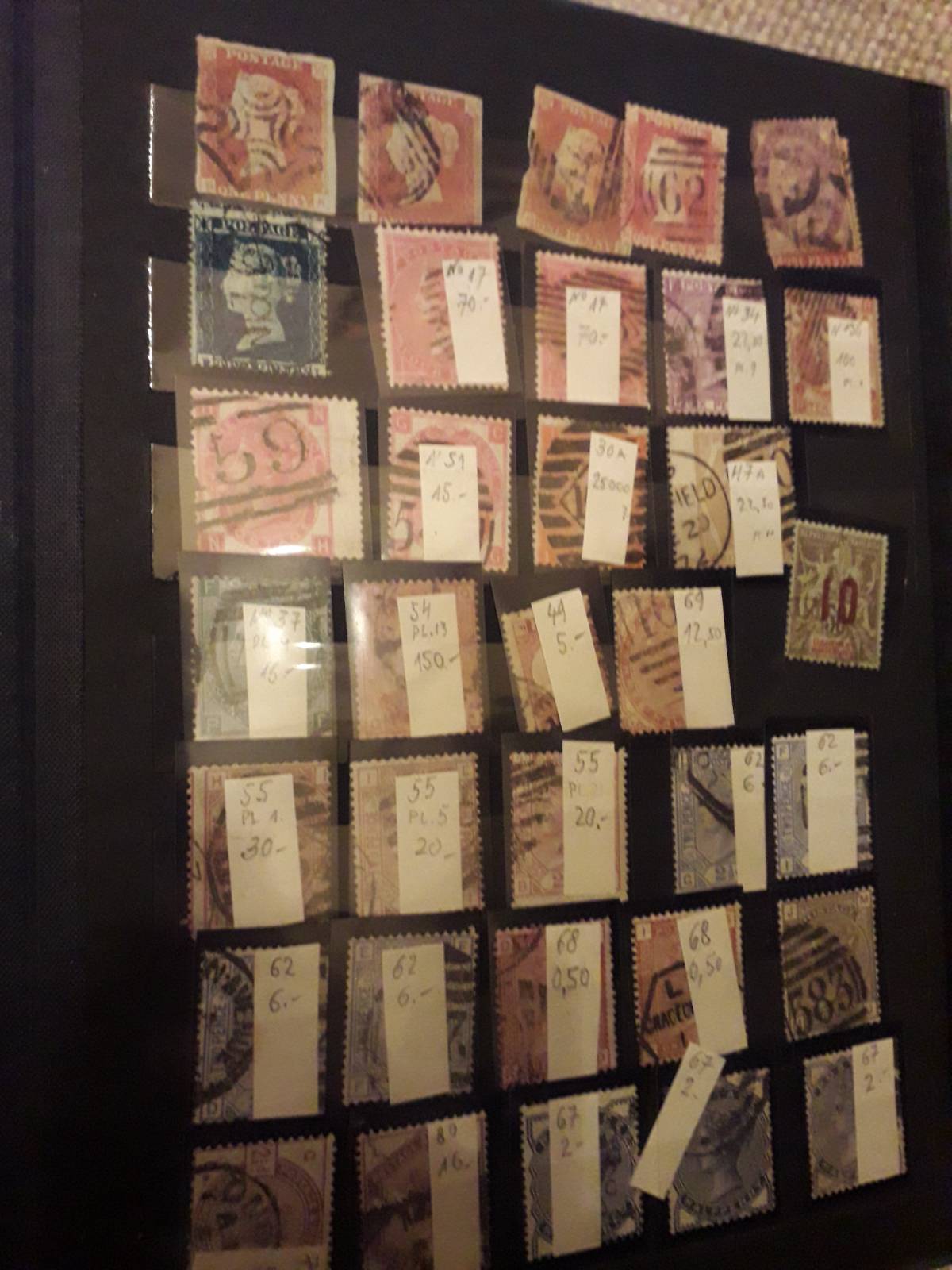
It looks like they are mostly grouped by country, you have catalog numbers on some, and some values on others. What more would you like the community to provide for you?
Note that I don't know the catalog number on the Great Britain stamps. |
|
Send note to Staff
|
| Edited by Partime - 02/20/2023 2:36 pm |
|
|
Pillar Of The Community
Netherlands
6648 Posts |
|
|
I am wondering whether, on the bottom row, the ½d with nr. 67 is green when it looks blue. Otherwise, it may be the 1884 and 1880 ½d have been mixed up.
'67' is the Yvert & Tellier (and unificato) nr. for the 1880 ½d green.
Above it is the 1d Venetian Red 1880 stamp Y&T nr. 68.
I would not be surprised if those French stamps also have Yvert & Tellier numbers.
Prices, probably, are in Euro.
It raises the question from where OP is. If Europe forget the Scott catalogue. Yvert & Tellier and Michel are the most commonly used catalogues. |
|
Send note to Staff
|
|
|
Pillar Of The Community
Canada
1462 Posts |
|
|
Yes, those are Yvert numbers on the French stamps. Pic isn't great, but looks like some nice Austria and Lombardy Venetia there in the 3rd one. |
|
Send note to Staff
|
|
|
Valued Member
United States
40 Posts |
|
|
Quote:
So, not really any good for cataloging what one has, at least not without having to repeat the exercise again eventually with an actual reference. You're correct about the cost though, a lot depends on what the OP (thinks) he has... could just borrow a few volumes from the library. But like any hobby or education in general, it requires an investment of resources to start and progress I guess it depends on what's needed. Freestampcatalogue has the Michel numbers. Any of them could at least help identify issue dates and some variations. Getting whatever catalog is needed from the library is an excellent plan unless the OP wants to take up collecting more long term and wants to buy them.  |
|
Send note to Staff
|
|
|
Pillar Of The Community
Netherlands
6648 Posts |
|
|
Replies: 16 / Views: 1,128 |
|




 Posted 02/19/2023 12:18 pm