| Author |
 Replies: 35 / Views: 1,538 Replies: 35 / Views: 1,538 |
|
|
|
Bedrock Of The Community
12704 Posts |
|
|
Wow, this became complicated. It is actually very simple.
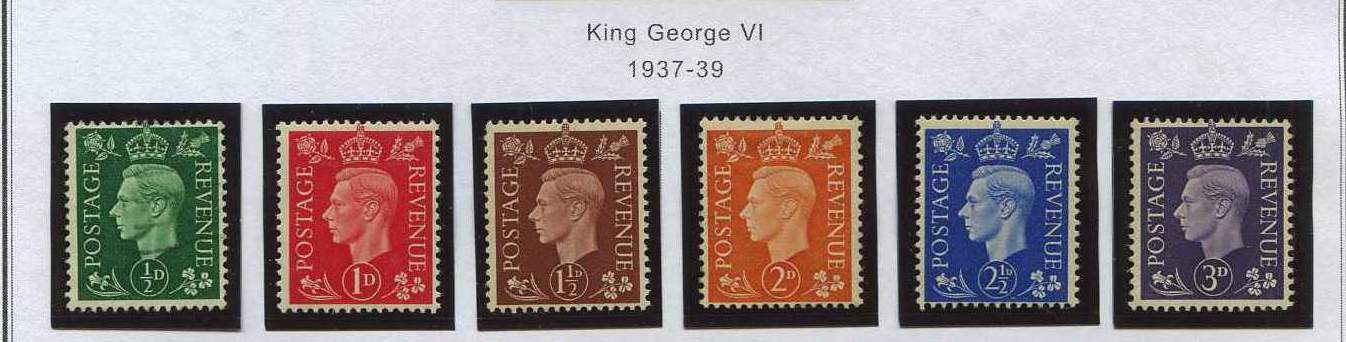
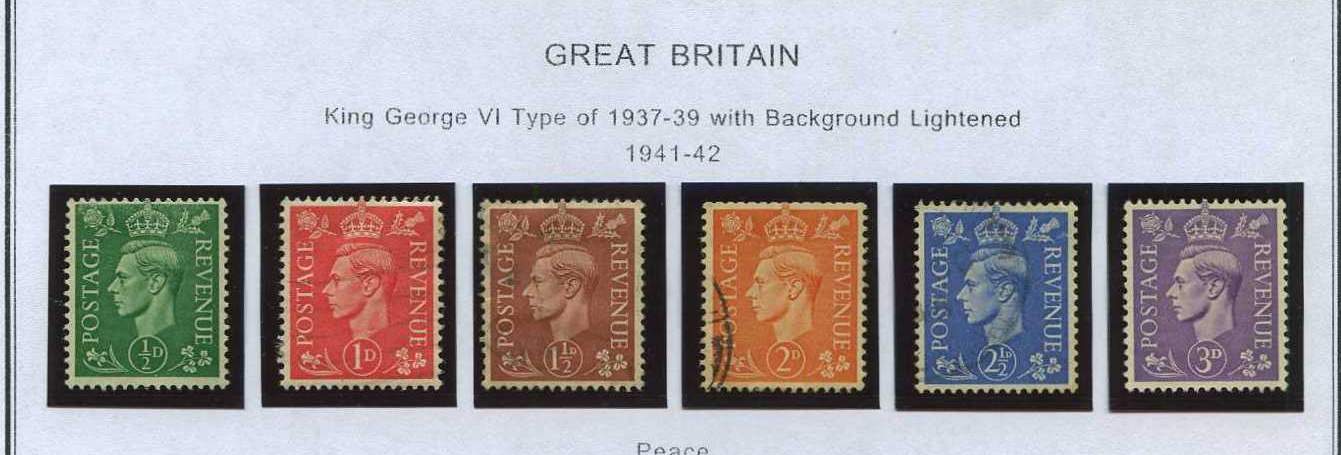
The OP was asking about Scott numbers and what the "II" meant. So, sticking to Scott (apples and apples) you go to the stamps in the front-of-the-book that were overprinted, and you find that there are TWO types. The type from 1937-39, Scott 235-48 and the same type issued in 1941-42, Scott 258-63. There was another issue in 1950-51 but that is not relevant to the discussion having been issues AFTER the overprints were applied. Boom! You see that the values of the 1941-42 issue align with the values designated as type II in the Eritrea section. The only value not used was the 1-1/2 pence. You will see that Scott states "Stamps of Great Britain 1937-42 Surcharged". Since the period includes both issues you can easily deduce why two types are noted.
PS: Scott could have done a better job in pointing out the difference by putting a "41" or "42" in parenthesis instead of "II". |
Send note to Staff 
|
|
|
Bedrock Of The Community
Australia
38679 Posts |
|
|
Bedrock Of The Community
12704 Posts |
|
|
Pillar Of The Community

1312 Posts |
|
|
Pillar Of The Community
Netherlands
6639 Posts |
|
|
As I collect GB and Ireland, I use Stanley Gibbons and Hibernian. Scott is rarely used in Europe. GB & Commonwealth collectors will use Stanley Gibbons. Continental European collectors that use catalogues covering regions or the world will mostly use Michel or Yvert & Tellier.
I only get some hint of what Scott does from posts on SCF and I am underwhelmed.
Calling something a background colour when, in fact, these stamps were printed in a single colour on surfaced whitish paper appears ridiculous. If anything, it is the foreground.
I agree with rogdcam that referring to the years would have been clearer than adding (I) or (II). However, why not just give the catalogue number?
Every catalogue has its peculiarities. |
|
Send note to Staff
|
|
|
Pillar Of The Community
1312 Posts |
|
|
Agreed. And very confusing to me at least - a beginner - and no explanation of the meaning of the marks (II). |
|
Send note to Staff
|
|
|
Pillar Of The Community
United States
7103 Posts |
|
|
Scott Classic Specialized says this about the underlying stamps: Quote:
Nos. 235-240 show face and neck highlighted, background solid and Quote:
Types of 1937-39, with Background Lightened for Nos. 258-263. We might as well be picking at what they actually say. As an aside for any readers wondering about the Classic Specialized, it is not simply an assemblage of the early stamps pulled from the multi-volume Scott catalogue. It has more detail, more varieties, more coverage, generally speaking, than the basic volumes. It includes things that aren't listed, at all, in the main catalogue. It's a nice single volume for the worldwide classic-era collector. If you're remotely interested in British Commonwealth material, you're still going to want Gibbons' Commonwealth & Empire. |
|
Send note to Staff
|
|
|
Pillar Of The Community
United Kingdom
8624 Posts |
|
|
"Colours changed" would have been simpler.
The practice of most catalogues in referring to a stamp hundreds of pages away is infuriating. I don't expect catalogues to follow Maury and illustrate everything, but one picture of overprinted etc stamp would be a welcome (and pretty basic) service. |
|
Send note to Staff
|
|
|
Pillar Of The Community
United States
7103 Posts |
|
|
Not to appear to be the constant defender of Scott/Amos - if we're going to organize a brigade with torches and pitchforks, I'll be right there - but they picture seven surcharged stamps for use in Eritrea, and tell you either the Scott number of the underlying stamps, or at least the year range. In the main Great Britain listings, they conspicuously tell you where to go for the overprints. So, not bad.
(Again, this is in reference to their Classic Specialized. I don't have a full set of the basic catalogues at this location.) |
|
Send note to Staff
|
|
|
Pillar Of The Community
1312 Posts |
|
|
All I ask for is an indication of what (II) means…. Pictures would be nice. But then the size of the volumes grow.
Now I know when I see (II), to look for something else. Haha. |
|
Send note to Staff
|
|
|
Pillar Of The Community
Netherlands
6639 Posts |
|
|
Bedrock Of The Community
12704 Posts |
|
|
Scott has a lot of "idiosyncrasies" for sure and it takes some time to learn your way around and interpolate what they are saying at times. When I was starting out there was some head scratching going on and bad words being directed towards Scott.
My pet Scott peeve is how some areas are very inclusive of all related issues and others send you off to another volume or perhaps multiple volumes to find answers. |
|
Send note to Staff
|
|
|
Pillar Of The Community
6358 Posts |
|
|
Quote:
When I was starting out ... Scott catalogs were in black and white. They are not perfect, but have come a long way since then. |
|
Send note to Staff
|
|
|
Bedrock Of The Community
12704 Posts |
|
|
Quote:
Scott catalogs were in black and white. They are not perfect, but have come a long way since then. I remember when they were handwritten on parchment.  |
|
Send note to Staff
|
|
|
Pillar Of The Community
United Kingdom
8624 Posts |
|
|
Having bought the most recent SG Portugal and Colonies catalogue, I was pretty hacked off to find that it still,retained some b/w illustrations for the earlies and that some sections appeared unchanged since my old SG Europe catalogue from the '60s, including (dangerous accusation to make, as it's usually wrong) the same omissions. Hard to believe that what can be said about the Ceres issues etc hasn't changed in sixty years. |
|
Send note to Staff
|
|
|
Replies: 35 / Views: 1,538 |
|




 Posted 02/21/2023 6:21 pm