Here are some covers from my collection that show how the treatment of underpayment on international mail changed through the years.
Prior to a country being admitted to the Universal Postal Union (U.P.U.), they were free to determine how they wanted to deal with underpaid mail.
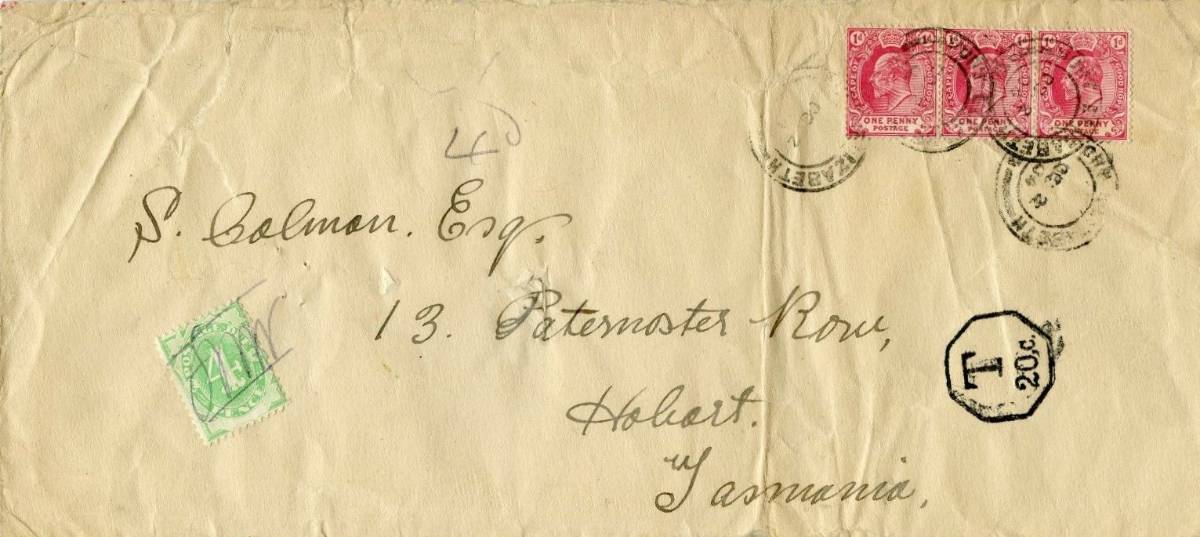
This first cover shows a treatment where the deficiency was noted and an additional 6d was recovered as a fine.

From the time of joining the U.P.U. until 1907, a double-deficiency rule was applied. The actual amount of the deficiency was noted but double the amount was collected. The deficiency was converted to a central measurement in centimes at an agreed conversion.
The cover below would have weighed between ½ and 1 oz. It should have been prepaid 5d, instead of 3d. The actual deficiency of 2d is converted to centimes at 1d = 10c, so an octagonal 'T / 20c' marking is applied in South Africa. On arrival in Australia, the handwritten '4d' converts the 20c back to 2d and doubles it for the taxed sum.
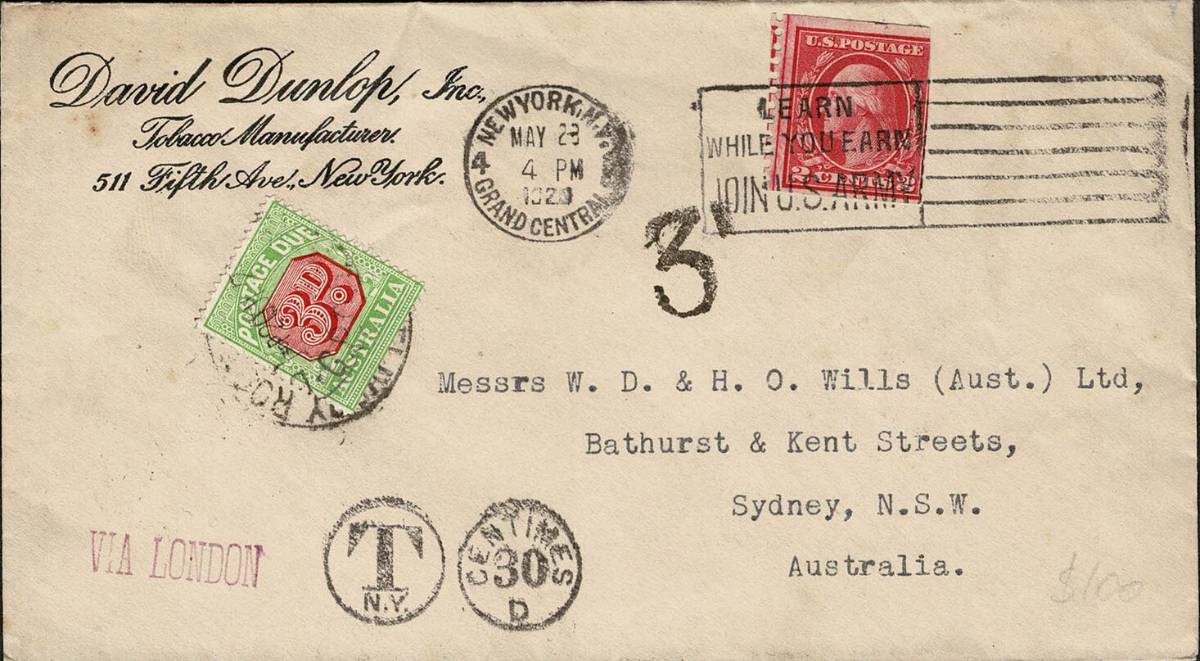
After 1907 the double-deficient amount was noted in the originating country.
This cover is underpaid 3c. It is paid 2c against a required 5c. The United States converted local currency to centimes at $US0.01 = 5 centimes but the tax marking from the U.S., the binocular 'T / N.Y. / CENTIMES / 30 / D' represents two times the 3c deficiency.
From 1966, the universal centimes measure was removed and the 'fractional' calculations were introduced.
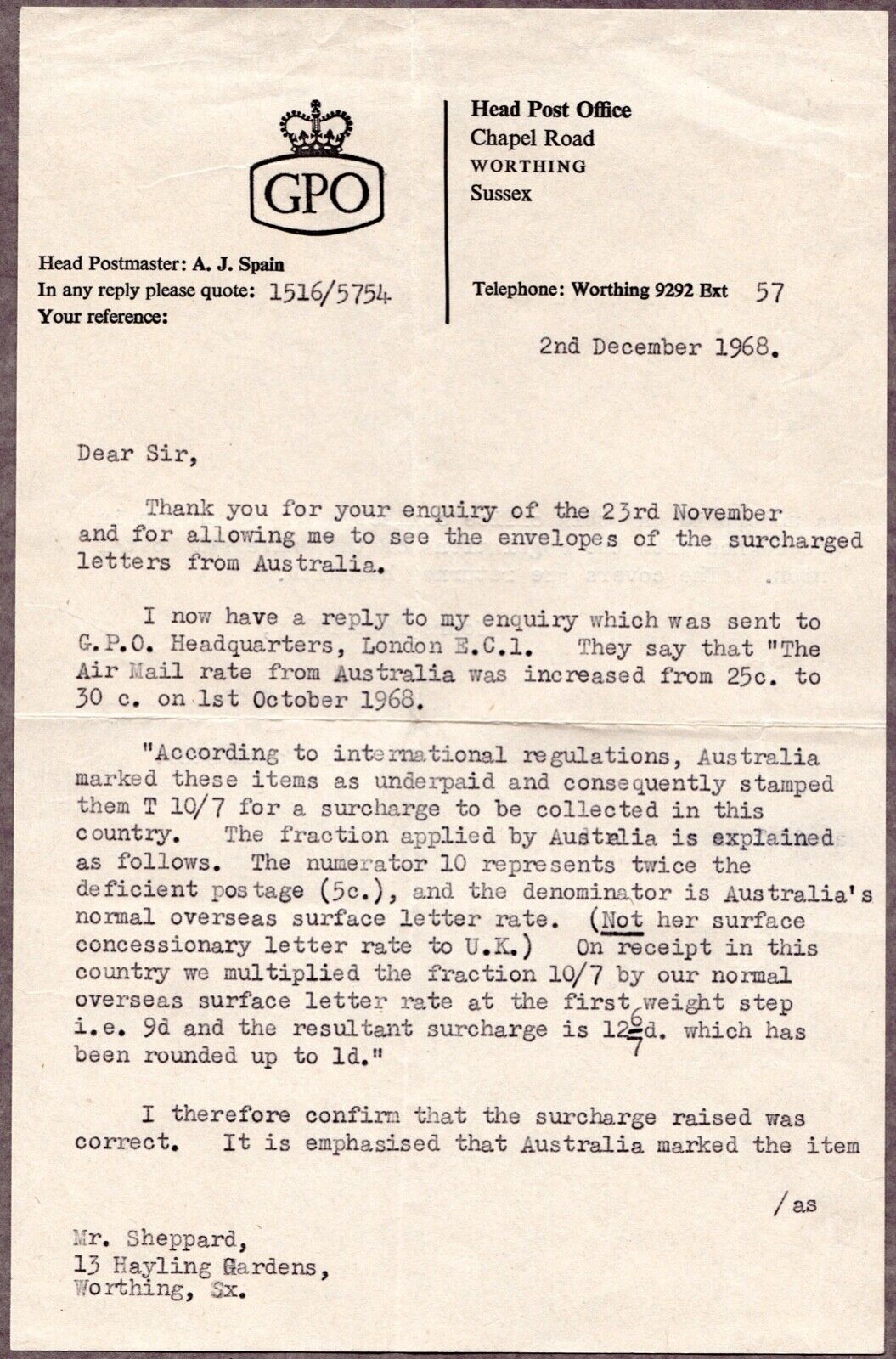
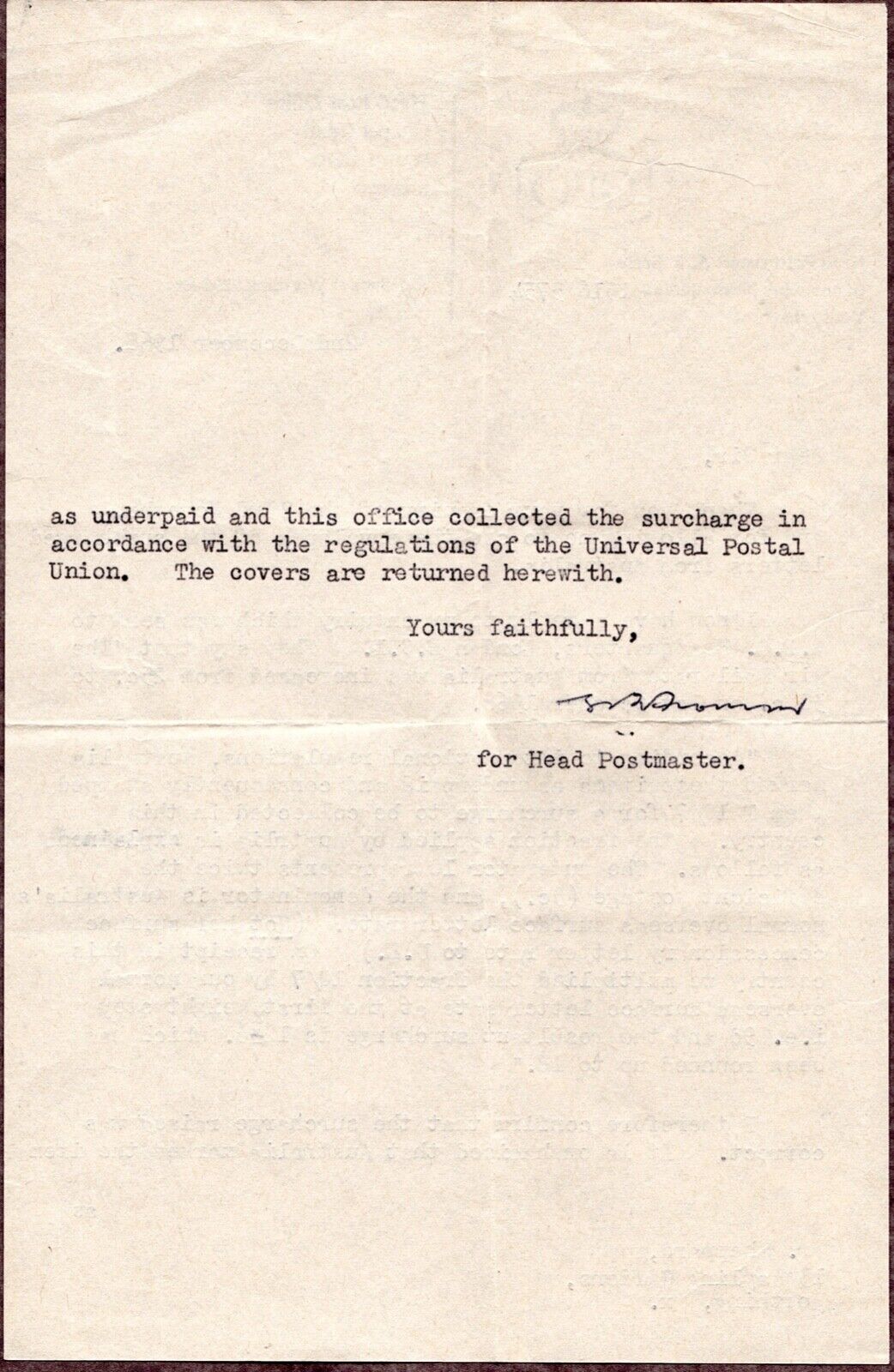
The letter within this cover perfectly explains how the fractional system worked.
[center]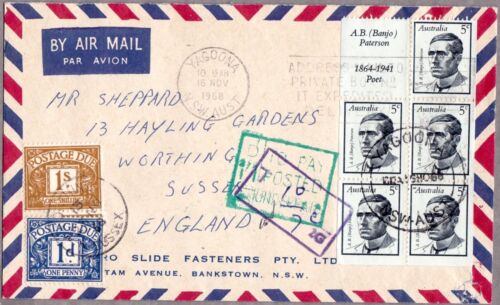
Comments and questions welcomed.





 Posted 04/25/2023 04:48 am


