Quote:
...a better scan of individual stamps to see the dots (or lack thereof), I can do that....
I will give a hardy, "Thank you!" if you we to do that.
To review or explain the process for those to whom this is new information:
Stamps designs are suggested, drawings or models (mock-ups) are made, reviewed and changed as directed (Here by the Postmaster General of the USPOD). More models are made, and when approved, the model is engraved into a die. The die impression is taken and sent for final approval. If not approved the die is considered a die essay (unreleased design). Further changes are made as directed until a final die is approved. Yet die approval may not yet be final. The 50 cent Parcel Post Die was approved, transfer rolls made and the plate sent to press. During the first press run the Postmaster General changed his mind. He request the back ground barn and the tower (silo) be eliminated. This had the cows on the "Dairying" stamp stand out even more in the design.
If approved, that die becomes the working die after the metal is hardened. This is a negative (reversed) image of the design. The die is then used to make a transfer roll in soft metal. The transfer roll is then hardened. It is a positive of the design, meaning it looks correctly like the stamp with all high points where the lines of ink color would appear on the finished stamp.
The transfer roll is then used to impress images into the soft metal of a soon to be printing plate, image by image. This is when layout lines, dots, arcs and oops I dropped a tool are added by the sideographer so the transfer roll images line up on the plate correctly. When done, the plate is polished, hardened and sized for the press used. If all goes correctly, the plate images are exactly similar to the image pulled from the die. When they are not the PV (plate variety) collectors have reasons to be joyful.
Of course a pressman needs to get the plate and install it on the press. This allows for bangs, scrapes, oopses and other insults to the plate during handling. After a press run the pressman needs to remove the plate and put it away. For the next press-run use it is retrieved and installed on the press then removed again. This is repeated as often as necessary until the plate is no longer used in production. Each subsequent handling allows for bangs, scrapes, oopses and other insults to the plate during handling.
Since we have stamps with the spot of color in the right tail of the "4" and stamps without now what

.
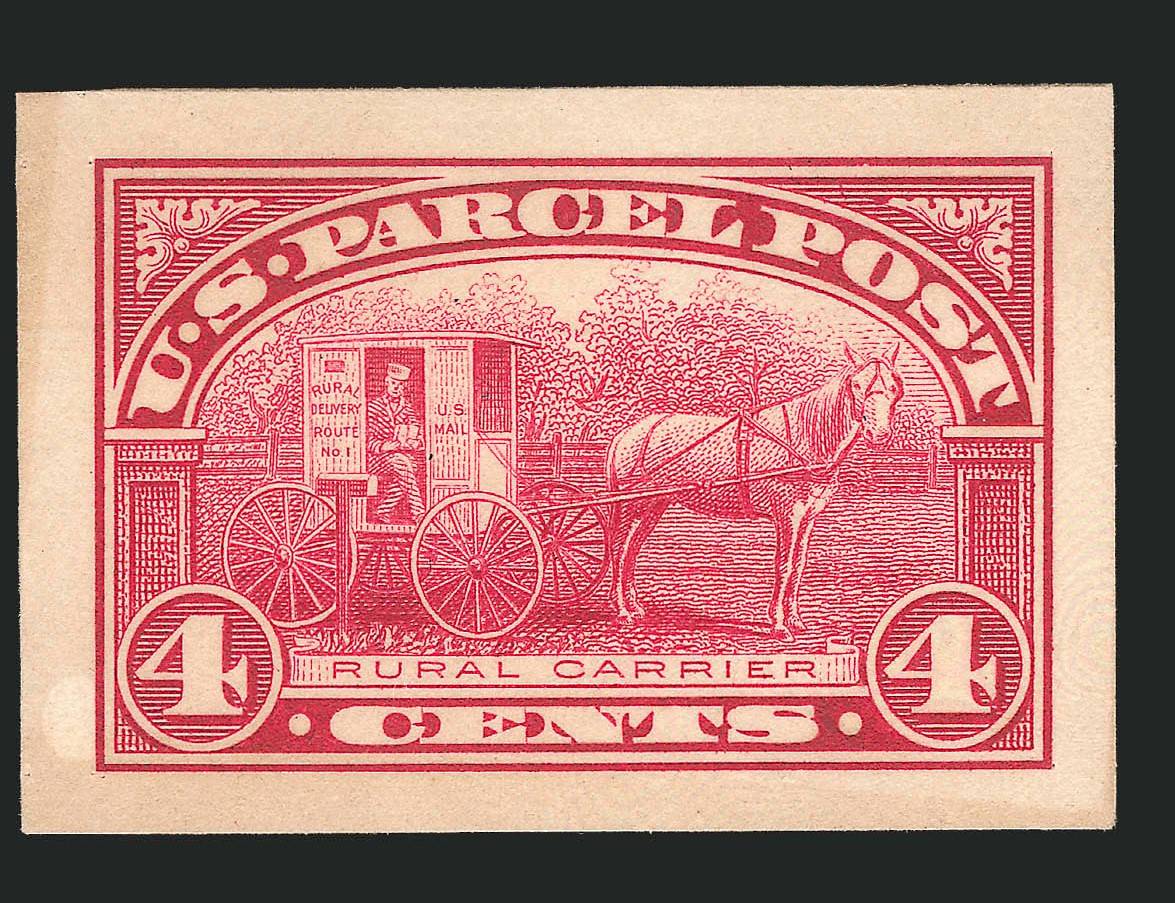
We see the die has the dot of color. There was only one die made, P.O. Die #563.
That die was used to make not one, not several but eight transfer rolls; specifically transfer rolls, 779, 780, 781, 782, 892, 893, 894 and 895.
At least two of the transfer rolls were put into production to make 13 plates with numbers:
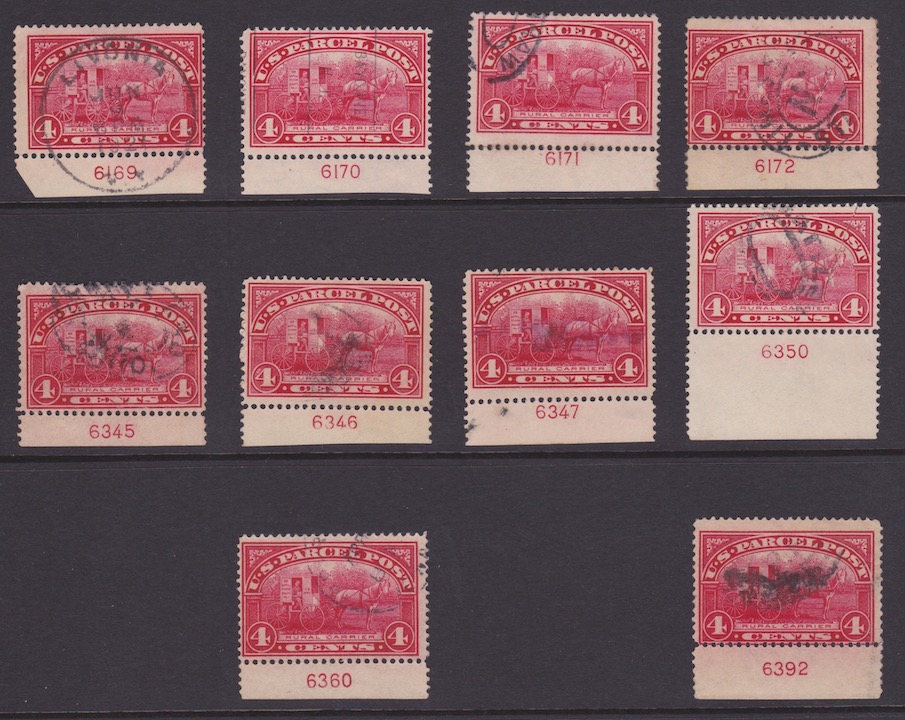
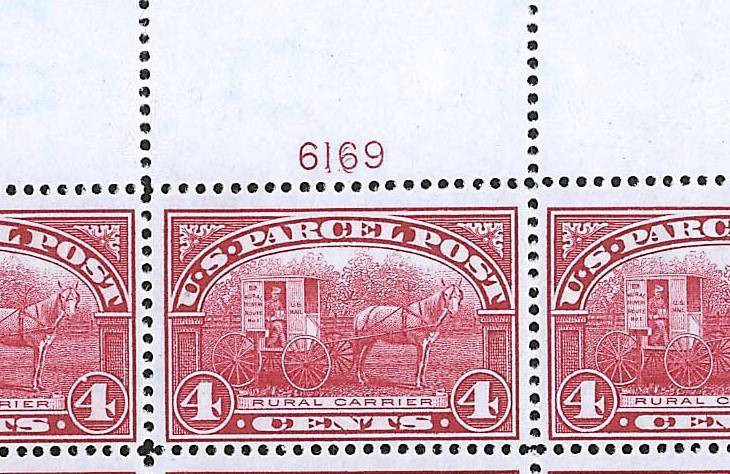
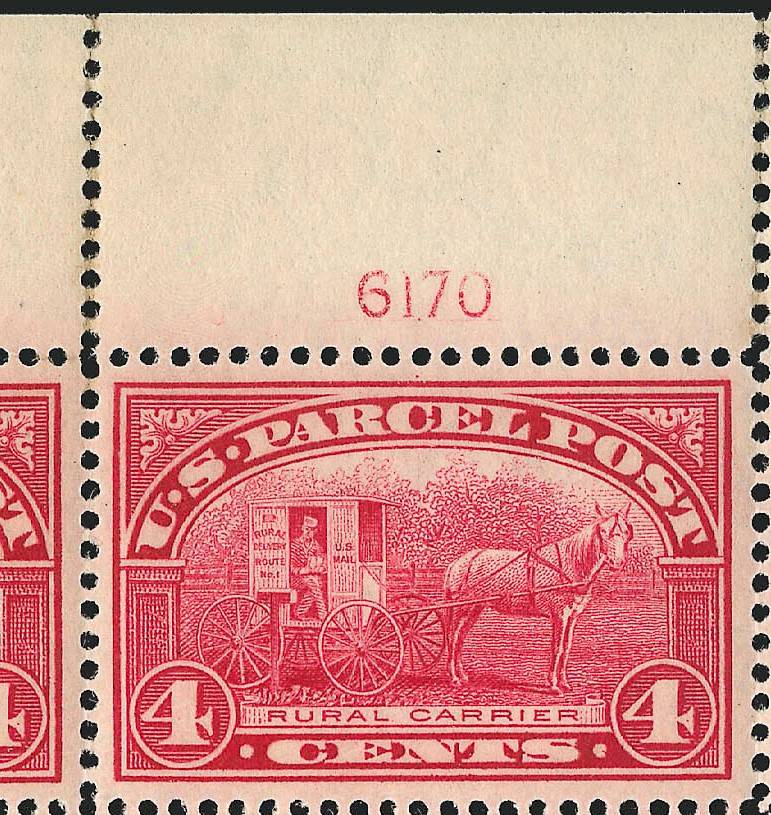
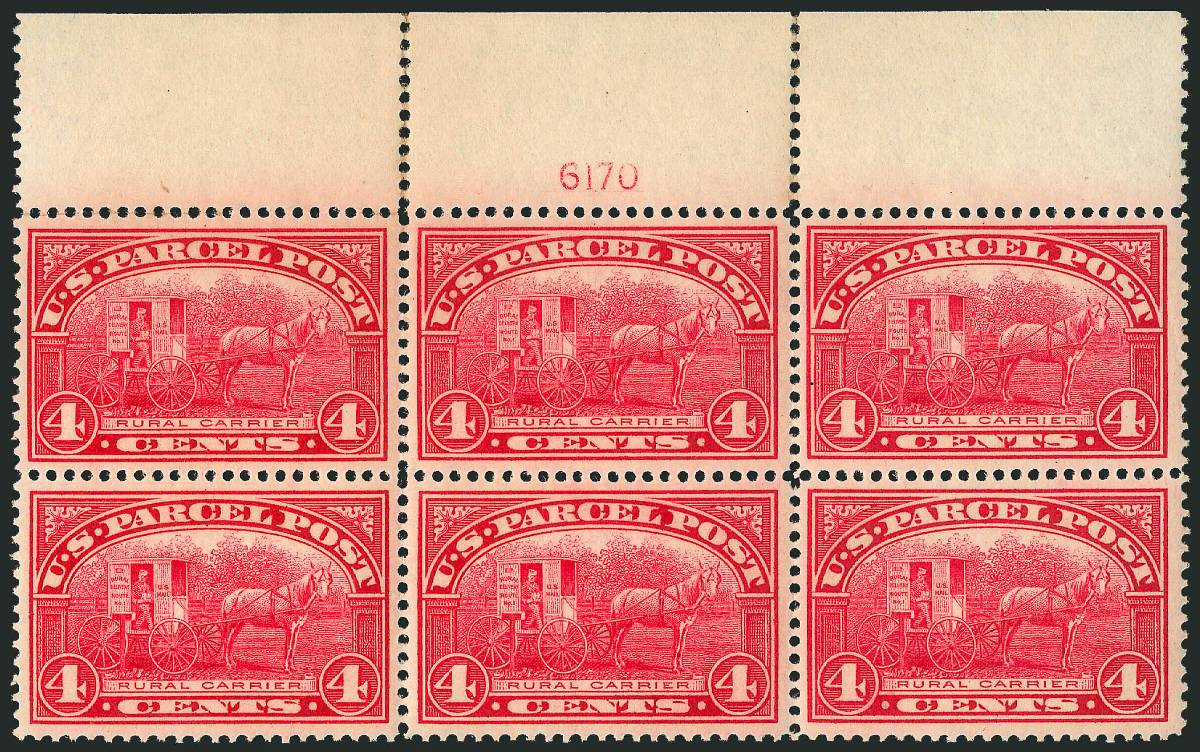
6169, 6170, 6171 and 6172 were all finished on 11-14-1912 and sent to press for the first time 12-2-1912.
6345, 6346, 6347 and 6350 were all finished on 1-21-1913 and sent to press for the first time 1-22-1913.
6359, 6360, 6361 and 6365 were all finished on 1-27-1913 and sent to press for the first time 1-28-1913.
6392 was finished 2-10-1913 and sent to press the first time 4-7-1913.
While they should exist, I do not have records for which transfer rolls were used to make which plates. As each transfer roll was made each would have the dot of color in the tail of the right 4 which on the transfer roll would be a small bulge, convexity or protuberance in the size of the spot of color. Thus during the finishing of the various transfer rolls, one or more had the small bulge, convexity or protuberance, AKA, "spot" polished right off of the image design, either by choice or by unintended action. For at least one transfer roll, the "spot of color" as on the approved die was not removed.
So as the APPROVED, by the Postmaster General, die had the spot of color, that was how the stamp should look and as it was intended to look. THUS the stamps with the spot of color are correct and the stamps without the the spot of color are the plate varieties as that is how the production facts align.
Cloudy French had it backwards in his book. However until the die proofs could be compared to the stamps the assumption was the spot was the flaw and thus plate variety. now some 44 years later I will generalize and say I knew he was wrong because I obtained my die proof within months of the release of his book. Such was not done until after he published his book and it took someone like me, very interested in Parcel Post, happening to own a proof PLUS caring about tiny plate varieties. This published (wrong) information was considered correct and caused me my problem. I owned an example of a 1-1-1913 cancelled mail piece with two four cent PP stamps both of which were examples of the "with spot" in the right 4. According to Cloudy such stamps could not have been available for use on 1-1-1913 as all listed plate numbers with the spot went to press after 1-1-1913. I wasted my money, except owning the proof I knew I still salvage a win.
My several year search at the time was for any of the four plate numbers which went to press 12-2-1912 to be sent to the post offices and available for use on 1-1-1913 with the "spot of color". I found plate # 6170 as the only one of the first four plates sent to press in 1912. Thus certificates could be issued for my example of 1-1-1913 parcel post stamp usages as well as a second example with a four cent with spot of color. The second cover piggyback on the paperwork as both went in for certificates together.
Later I participated in reversing the certificate on the second one due to a fraudulent cancellation. While it was 1-1-1913, two issues arose, with further examination it was found that the dimensions of the 1-1-1913 cancellation did not match the actual dimensions of the known real cancellation device. So several years later I got a call about that and advised I had only supplied paperwork about just the spot of color. I had no reason to be concerned about the cancel as it was not my item. I advised I did not look at anything beyond the 4 cent stamp, but hold on. When I returned to the phone I advised I looked up the post office to find 1-1-1913 was during the several month period that that post office was closed for relocation. That sealed the case the cover was faked. The known real cancellation device was used before and after the brief closure. The original certificate was overturned. And that became its own mid-five figure
sh 
show.
I am stopping here to allow everything to be absorbed. I will later explain how to determine a transfer roll flaw caused plate variety as well as explain two other unique occurrences with parcel post plates.





 Posted 05/15/2023 12:06 pm






 I trust you will have an