| Author |
 Replies: 17 / Views: 1,771 Replies: 17 / Views: 1,771 |
|
Valued Member
Egypt
295 Posts |
|
|
thanks to members whom help me when I asked before about cancelations by guiding me to resources to get info, but those books answer some questions and make another questions and some questions didnt answered yet I will add photos then ask 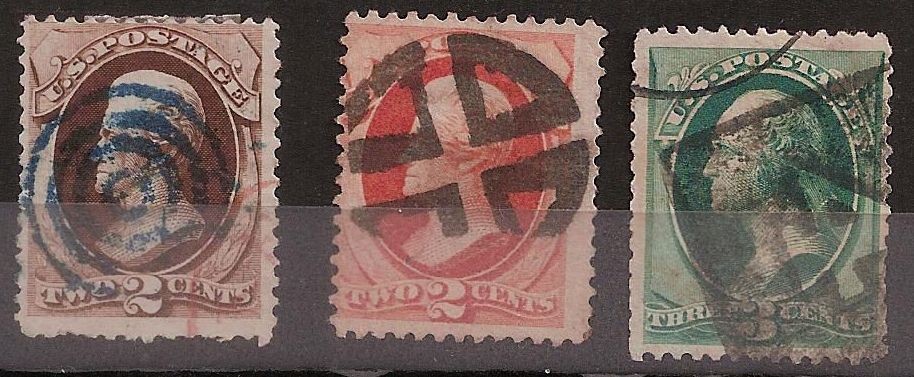 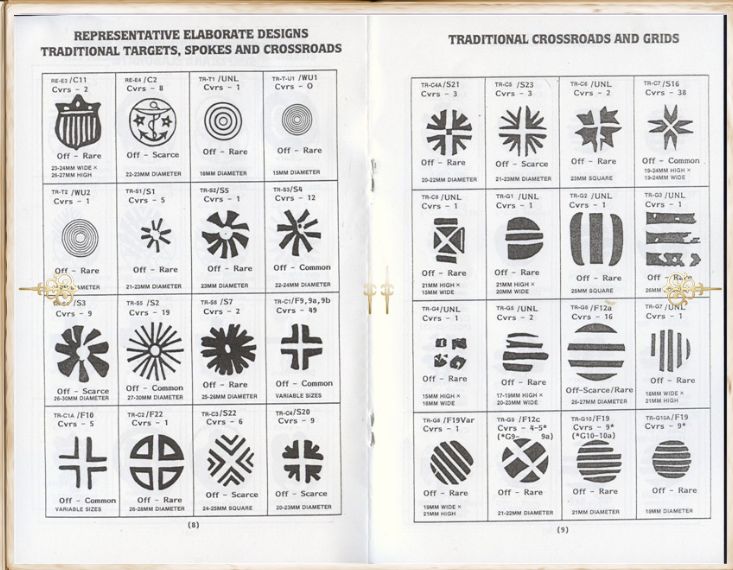 the second photo is a screenshot from the site stamp smarter, I refer to it also to the book written by James-m-cole my questions didnt touch the first two stamps from left directly but by refer to resources they classify the cancelation as rare then my question is they mean rare in covers or rare to get even on off paper stamp also what mean by "off" used in off-rare or off-common , this is my first question my second is about the third stamp from left is still didnt find this cancel in any resource and thanks for advance for any help. |
|
Send note to Staff
|
|
|
|
|
Moderator

United States
12330 Posts |
|
|
Valued Member
Egypt
295 Posts |
|
|
thanks dear:51studebaker , but I wish t ask again if they say rare they mean rare in covers or in general seldom items. |
Send note to Staff 
|
|
|
Valued Member
Egypt
295 Posts |
|
|
dear :51studebaker your help is very great but again this cancel have no cole-number may I understand why?  |
|
Send note to Staff
|
|
|
Moderator
United States
12330 Posts |
|
|
As I mentioned in one of your other threads, market values for these 'fancy' cancels are typically a few dollars (US) more than a similar stamp. For example, look at some ebay sold values for Boston Negative type cancels on full covers or post cards https://www.ebay.com/sch/i.html?_nk...H_Complete=1Color cancelled Bank Note stamps also normally have a market value of a few dollars more than the same stamp without a color cancel. Don |
|
Send note to Staff
|
|
|
Pillar Of The Community
6358 Posts |
|
|
Quote:
this cancel have no cole-number may I understand why? Jim Cole's book on fancy cancelations of the Banknote Era, like most other cancel books, it is only a representative sampling of the countless thousands of cancels during that era. It is far from complete. |
|
Send note to Staff
|
|
|
Valued Member
Egypt
295 Posts |
|
|
dear: 51studebaker my questions here isnt about value in money I ask to give clear right description for every stamp , every stamp I have there is a little piece of paper beside with all data. thats why I ask about they mean rare as a stamp or as a cover. |
|
Send note to Staff
|
|
|
Pillar Of The Community
United States
1123 Posts |
|
|
Your second photo shows the pocket guide of NYFM (New York Foreign Mail) cancellations and lists the relative scarcity of the represented cancellations used by that office. Some cancels were known to be used by that office for only a few days and a small number of verified examples are known, others were in use for much longer and have many examples known. The number of covers that the author knows about is listed, plus the relative scarcity of single stamps "Off" cover.
Do note that this guide only lists postmarks known to have been used by the New York Foreign Mail office, and the scarcity is based upon the postmark being used in that regard. For the first two postmarks, the ones on the 2 cent stamps, there are lookalike cancels from other towns that are very common. In order to qualify as a "rare" NYFM example takes some effort and experience. For example the diameter of the cancel must be measured carefully and the thickness of the lines evaluated. Take the center stamp, the crossroads, the outer diameter should be 26-28mm. Your example looks smaller than that, so it is most likely from another town, and not the "rare" NYFM example. The "traditional target" cancel on the left was used by many many other towns, but only rarely by the NYFM. That office preferred the fancy geometric cancellations as pictured on the previous two pages of that guide. To see the ordinary target cancel used by the NYFM is a rarity, but you need evidence that it was used by the NYFM to make it rare. The author of that pamphlet writes about the target cancel "I would advise only obtaining this NYFM either on cover or on piece, for off cover it looks just like countless other targets used in many cities in this period." If you tried to certify this stamp from the experts at the PF, likely they would say something along the lines of "No opinion with regards to the origin of this cancel".
The best way to describe them is "target cancel, city unknown" and "crossroads cancel, city unknown". The third one does look like a Boston Negative, I don't know of any lookalikes, so it is safe to say that one is from Boston. These are described in Cole and elsewhere. Probably BOS-32. |
|
Send note to Staff
|
|
|
Valued Member
Egypt
295 Posts |
|
|
dear:ZebraMan I am happy with your comment , as it the type of comment I prefre as it make the topic contain valuable info for me and for any one read it later it will be a guide for them, so I will read it again and comment on some points also I will update photo with other items and my work on it one item I will post is negative cancel I didnt find in any data base, thanks for advance till we talk again. |
|
Send note to Staff
|
|
|
Valued Member
Egypt
295 Posts |
|
|
still in work and search,hint: I am not an expert, I just try to learn. 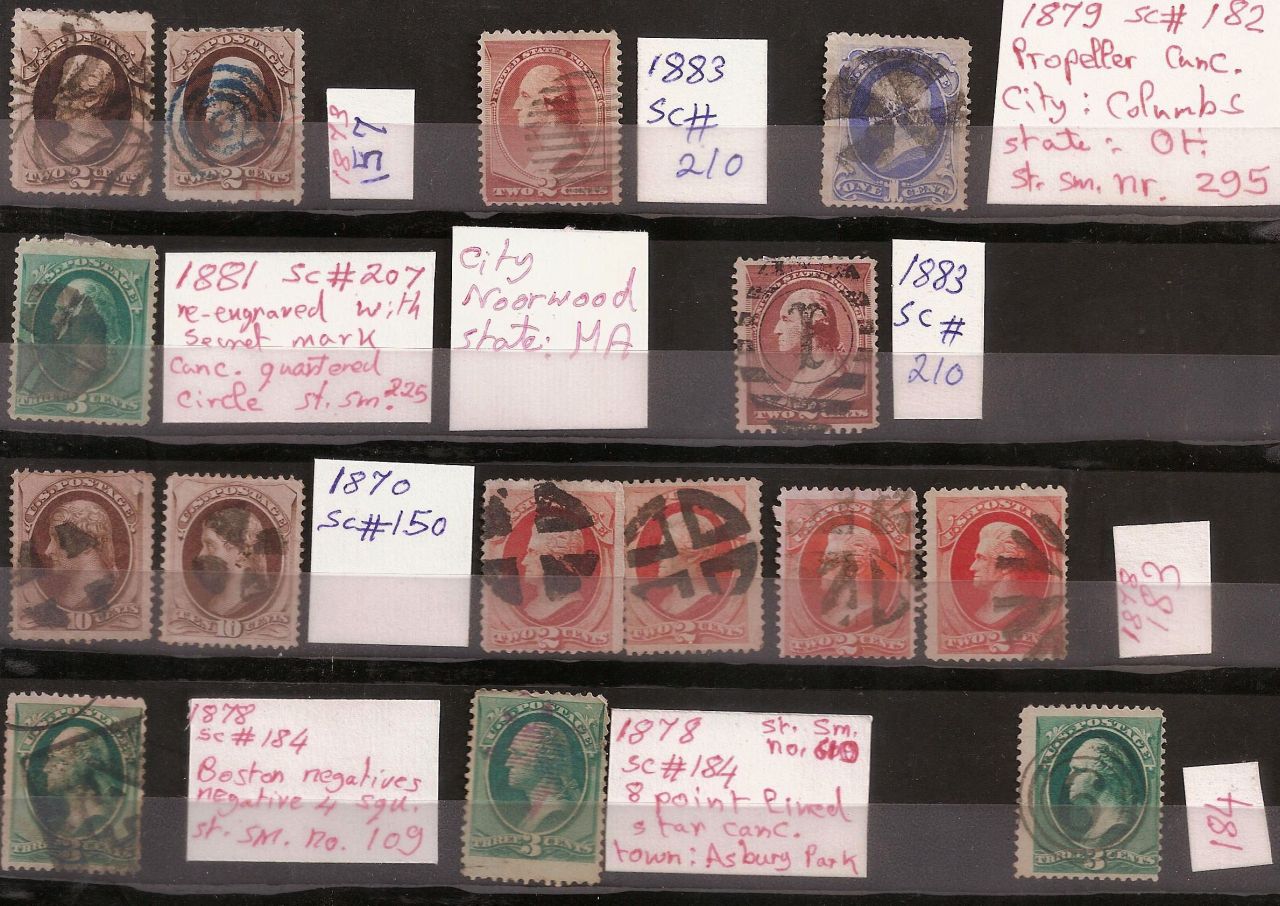 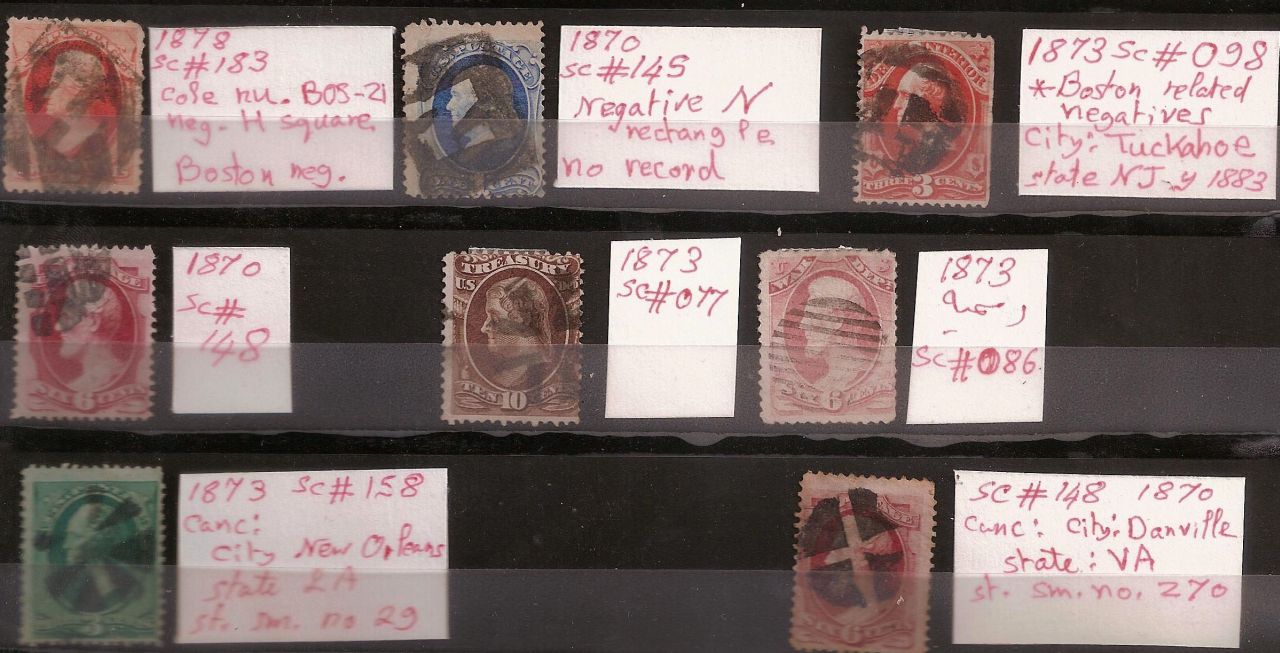 any help, correction will be valuable. a small hint: the second photo first row 2nd stamp from left " negative N" didnt recorded any place so any help. |
|
Send note to Staff
|
|
|
Pillar Of The Community
United States
1114 Posts |
|
|
Agree with John Becker that the Cole listings are a decent sampling of the fancy cancels of the Banknote era, but not exhaustive. Off-cover, there may be multiple towns/cities that had a particular cancel, so identifying a specific town may not be possible. Also agree with ZebraMan about the 3rd stamp cancel (negative "4" in a square) being from Boston. There are some negative numeral in circle cancels that are very similar from Portland, ME and Boston, MA for example. There are also some negative letter in circle cancels that are similar from Waterbury, CT and Boston, MA.
Best case is to get them on cover (tied to cover even better) for specific identification. The NYFMs are fairly easy to identify, but you also need to make sure the size of the cancel design is correct (as ZebraMan mentions), as other sizes of some are known from different towns and are not NYFMs. For example, the middle cancel on the 2c Vermilion is also similar to a Waterbury C-2 (Rohloff) as well. |
|
Send note to Staff
|
|
|
Valued Member
Egypt
295 Posts |
|
|
dear:orstampman , yes there is similar cancellations so I try to do my best but many cancellation on stampsmarter database with no Cole number also no measures and also the book no measures , so when I find measures NYFM I compare to that in stamp so the first photo first stamp from left canc: GE-C3 13 spokes, but again second photo first row stamp negative N in rectangular shape didnt listed in stampsmarter or killer of banknote. |
|
Send note to Staff
|
|
|
Pillar Of The Community
6358 Posts |
|
|
mottaz,
I feel you are trying too hard.
MOST of these cancels are so simple that they were used in many cities. As an example, the very last stamp you link to Danville, VA. The "quartered cork" killer was used in countless hundreds of cities.
I would recommend appreciating the cancels for their art and beauty and not worry about an exact town identification, which is nearly impossible for most of these when off-cover. |
|
Send note to Staff
|
|
|
Valued Member
Egypt
295 Posts |
|
|
thanks:John Becker, thats what I learned from trial ,also this is the goal of ask here to guide my way and you are right I manage those canceled stamps as other countries cancellations, thanks for your help and meet you again in another trial. |
|
Send note to Staff
|
|
|
Pillar Of The Community
United States
922 Posts |
|
|
mottaz,
In the United States, the post office did not issue cancellation devices to every post office, so the postmasters either purchased handstamps from private companies or made their own cancellations. In other countries, where the post office provided the cancellation devices, you may have been able to identify each postmark on your stamps. However, in the US, there are privately supplied devices where the same marking was used in many offices. There are also simple markings that were handmade in many post offices - the "quartered cork" is just the cork from a bottle (like the cork from a wine bottle) where a post office employee cut an "X" in the cork with a pocket knife. This was done in hundreds of post offices, and the cork cancels only lasted for a short period of time before they broke and post office made a new one, so there are probably thousands of these cancels that are virtually identical once the stamps are off-cover. |
|
Send note to Staff
|
|
|
Valued Member
Egypt
295 Posts |
|
|
dear:SPQR yes I know what you say before I try but what I didnt know that there is no a distinct way to know the cancellation in case off paper but for sure I learned that now but there still some cancellations I didnt found in any source, so I stop because it time consumer but for sure I learned more new things. |
|
Send note to Staff
|
|
|
Replies: 17 / Views: 1,771 |
|



 Posted 07/15/2023 12:31 pm


