| Author |
 Replies: 12 / Views: 1,909 Replies: 12 / Views: 1,909 |
|
|
New Member
3 Posts |
|
|
Hello, Like so many others, I have inherited a collection. I am not looking to get rich, I just enjoy the stamps. That being said, I am having trouble with this one. I read all of the other posts and I was unable to find an answer. Here's my list of characteristics, please let me know where I went wrong so I can improve my skills. 1. Color: Blue Green 2. Perf: 12 3. No Re-engraving horizontal line 4. No Secret Marks 5. Yes Soft Porous Paper 6. Yes American Bank Note Co. 7. Yes Hinged 8. Used? / Canceled? 9. Shading bleeds into oval??? I messed up somewhere here, because this list qualifies as nothing! Thank you and please let me know if you need any further information. 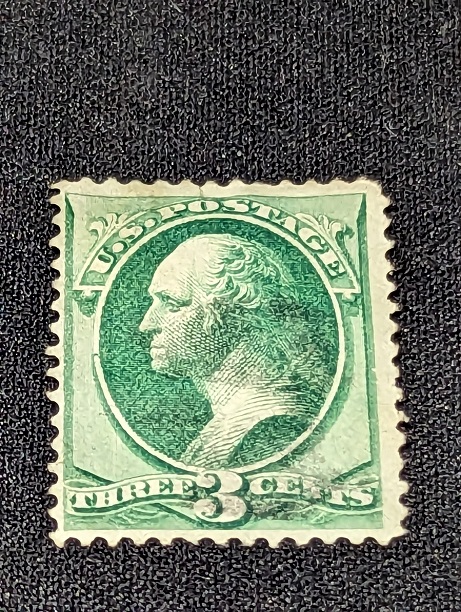 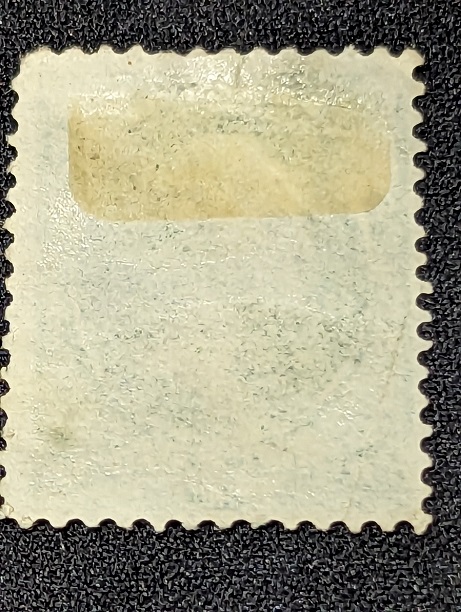 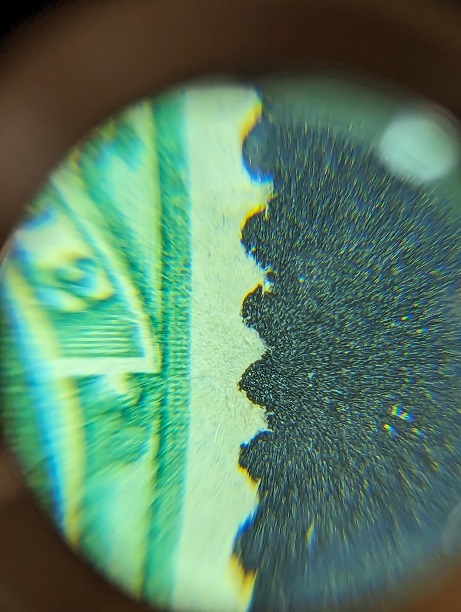 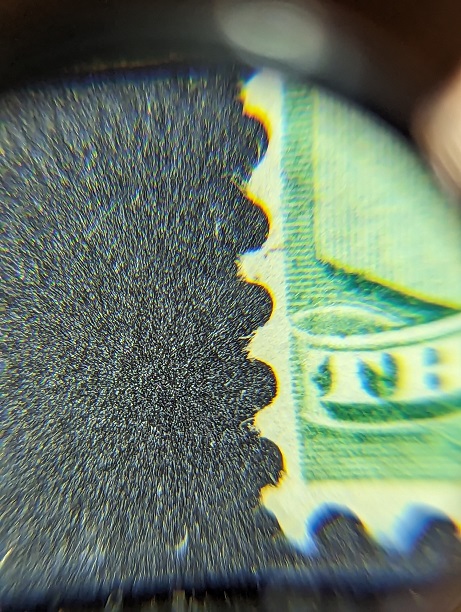 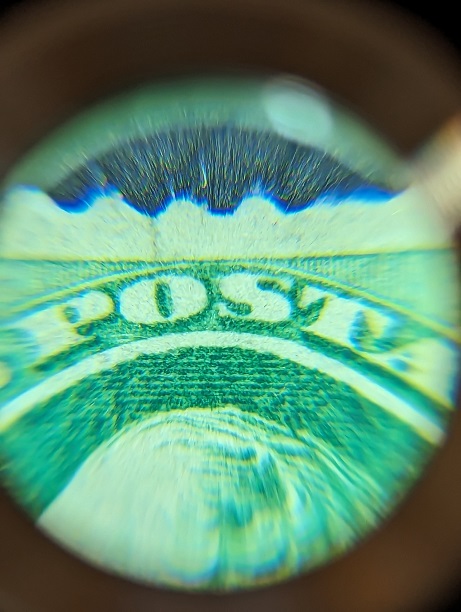 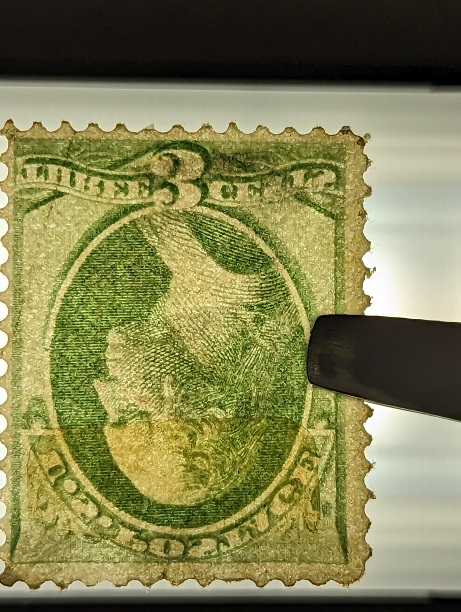  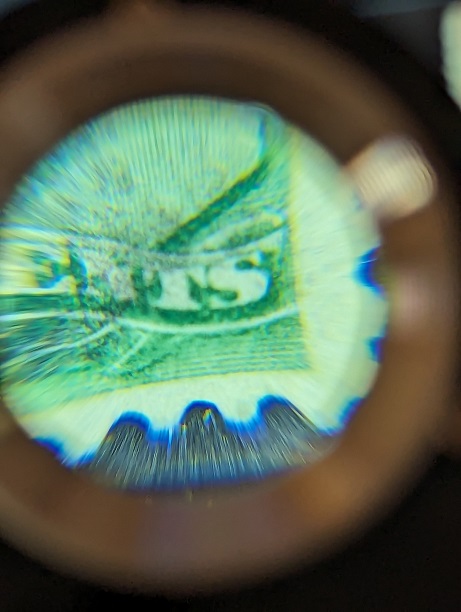 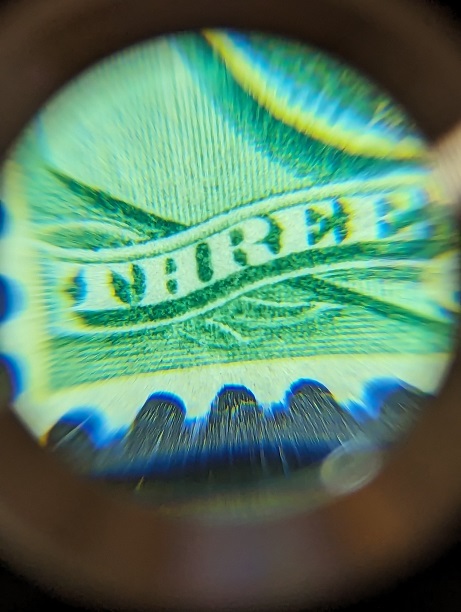 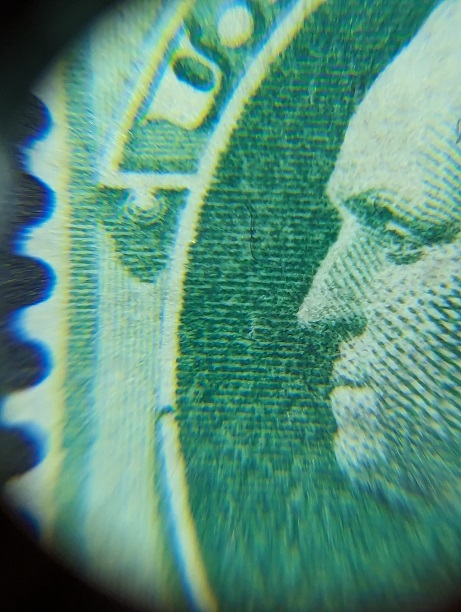 |
|
Send note to Staff
|
|
|
|
|
Valued Member
United States
65 Posts |
|
|
Pillar Of The Community
United States
8956 Posts |
|
|
Welcome Edmond. I do not know what you meant by "I messed up...", but maybe you should have posted the questions under the "U.S. Classics" forum. You would get more answers there
Peter |
Send note to Staff 
|
| Edited by Petert4522 - 08/01/2023 5:16 pm |
|
|
Moderator

United States
5109 Posts |
|
|
Quote: Here's my list of characteristics, please let me know where I went wrong so I can improve my skills.
1. Color: Blue Green
2. Perf: 12 (Did you use a perforation gauge?)
3. No Re-engraving horizontal line (What does this mean?)
4. No Secret Marks
5. Yes Soft Porous Paper (OK, but tough for a beginner to determine)
6. Yes American Bank Note Co.
7. Yes Hinged (Does not matter if it is used)
8. Used? / Canceled? (Yes, Used ... cancelled. See the black smudge?)
9. Shading bleeds into oval??? (What are you implying here?)
Looks like you understand most of the concepts. Some of your higher detailed pictures are showing some odd areas, so not sure what you are going for. So, what Scott number did you come up with? |
|
Send note to Staff
|
|
|
New Member
3 Posts |
|
|
Thank you all for your responses. Partime, If I have the Color wrong and the Paper, then it's #147. How I came to the conclusion that it's Soft...I compared it to a Columbian (which is Soft Porous), I don't have a Hard example. How I came to the conclusion that it's Blue Green. I compared it to Green and it looks Blue Green, but I can't be certain. Did I use a Perf Guage...Yes The 1873 notes had a horizontal line added, 1mm below the "TS" right side, to the engraving plate (See Pic). With the ink bleed, I haven't seen it anywhere. If they can ensure a 1 mm line is added to a billion stamps without error, what happened here? I was curious if this was common to find and not something I should include in my description. Thank you very much. 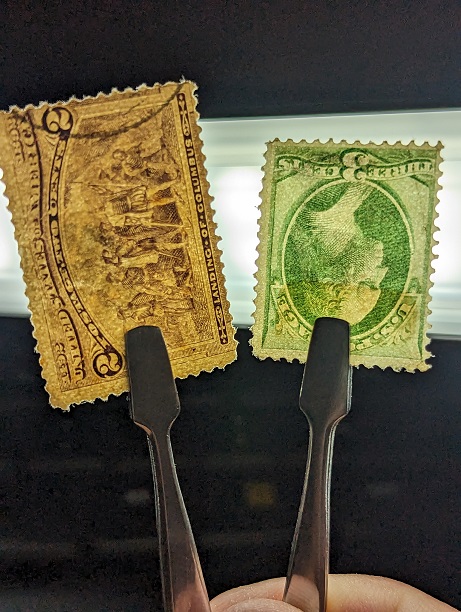 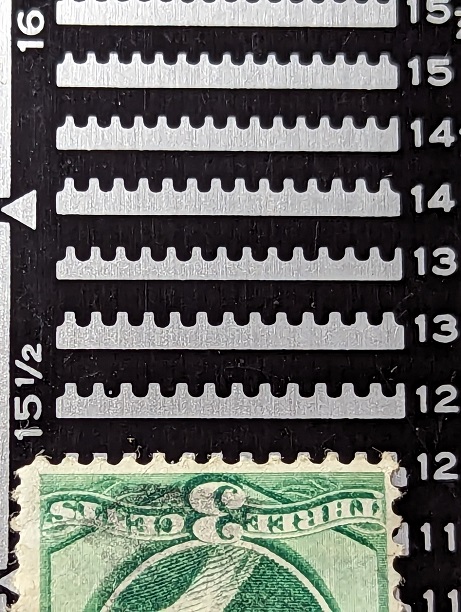 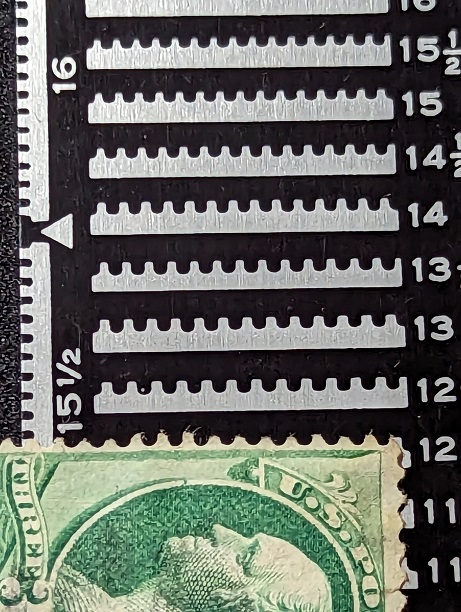 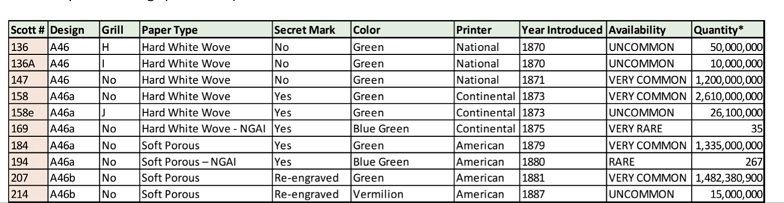 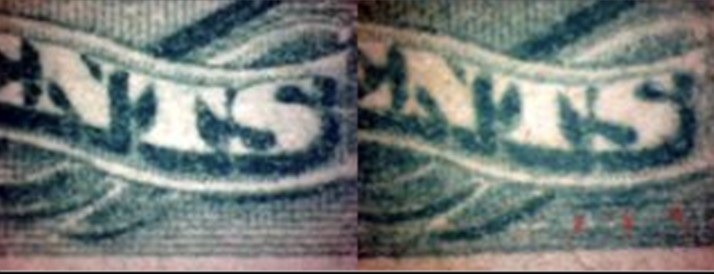 |
|
Send note to Staff
|
|
|
Pillar Of The Community
United States
1434 Posts |
|
|
Quote:
If they can ensure a 1 mm line is added to a billion stamps without error, Who said they could? No printer ever has, or can. That's why EFOs and variants exist. |
|
Send note to Staff
|
|
|
Pillar Of The Community
6366 Posts |
|
|
The most important part here is the ID of the design type of the engraving, specifically, the combination of your points 3 and 4. This is the first step and will narrow down the possibilities before any worries about shades or papers, which tend to take care of themselves after the engraving type is determined.
Color: yellow + blue = green. The red end of the spectrum light-fades more readily, thus fake "color-error" blue stamps have been made to fool collectors from various green postage and revenue stamps of this era by chemical/light alteration. Thus I would recommend not getting lost in the weeds over shades, especially with used stamps, which have typically led a harder life than mint ones. Also, each of Scott 147, 158, 184, and 207 lists a minimum of 3 shades in the Scott US Specialized catalog. The chart you reproduce lists only the main one.
The best learning tool for this series is studying actual stamps. I sense you have very few of this general design to compare against. You will also find there is some natural variation among those with the same catalog number. Imagine the challenge of making a billion+ of the same thing over a span of years, during summers and winters, new and old plates, different employees, etc. They were getting the job done with no thoughts to collectors a century and a half later.
This series can be both challenging and rewarding with the variety of engravings and postal history uses. Enjoy! |
|
Send note to Staff
|
|
|
Pillar Of The Community

United States
1168 Posts |
|
|
I can hear someone saying "I just want to know in what dang space to mount this stamp in the album." :-)
If you think it is soft paper and not re-engraved, then 184 would be the likely conclusion. I agree with John that green and blue-green are too subtle to make a clear distinction without having a lot of samples of each on-hand to compare with. |
|
Send note to Staff
|
|
|
New Member
3 Posts |
|
|
Zebra...Ha! When I got them they were either in bags or hinged. I've been sorting and organizing...and that Wash 3 cent is just laughing at me.
John...Thank you for your insight, very salient points, makes sense.
I'm going to hit a show in September and hopefully gain some insight from more seasoned collectors.
I appreciate the feedback...have a great weekend!!! |
|
Send note to Staff
|
|
|
Valued Member
6 Posts |
|
|
This is a bit unclear , but it might refer to the design of the stamp where the shading extends into an oval frame. |
|
Send note to Staff
|
|
|
Pillar Of The Community
United States
1117 Posts |
|
|
EdmundDantes - I think you did a good job of determining that this stamp is likely a Scott 147, and the paper appears to be hard white wove to me from the scans. |
|
Send note to Staff
|
|
|
Pillar Of The Community
6366 Posts |
|
|
General commentary: One of the shortfalls of the catalogs (and of the chart reproduced in an earlier post) is the lack of any direction of what parameters to examine first. Which are the most important features to a particular issues/series and which don't really matter? Beyond the subtle design differences, the identification strategies can be quite different for a mixed pile of 3 cent banknote-printed stamps without watermarks and all perforated the same versus a pile of 2 cent Washington/Franklins with printing method, watermark and perforation varieties. Add to that the typical collector beginning to learn about these series often has only a very few examples to study when the best teaching tool is comparing the stamps themselves. |
|
Send note to Staff
|
|
|
Moderator
United States
12330 Posts |
|
| |
Replies: 12 / Views: 1,909 |
|




 Posted 08/01/2023 4:20 pm


