Quote:
Is it going to be 100% accurate, no of course not. No census ever is, as it depends on others submitting data. But it's what we have.
And that was and is my point, even the BEST CENSUS REPORTS (I made that all caps to underscore the respect for such a report I have) are just estimates and counting of
reported items. Per your comment in the original thread, you mentioned a census of four blocks of four. Armed with that information you paid less than 8% of catalog. What would the price be if in fact a fifth or sixth block of four came to light and was included in an updated census? Would the price drop to 7, 6 or even 4%? I think not. Nor do I think the catalog price would feel downward pressure due to two new discoveries. Likewise if your block of four was split for singles, the catalog price would most likely not go up.
Now your referenced census report is just one of many and really no one can have an idea if the foundation of the census was solid to begin with nor if there have been changes in the information AND if the new information has been published.
As I noted, even a legendary philatelist such as Tony W. can be short on his published counts. You may take his information on postage dues as accurate because you have no way to know otherwise, while I did have a way. Sadly, he died before I could open up a discussion with my friend of 30 years on the subject of his counts. I did buy his examples with my understanding of a large count.
Harry K. Charles, Jr., PhD., has published much on postage dues. Yet I was surprised that he did not include information about goodies I owned. I even contacted him and he just did not find information on my material. I sent it to him. But I purchased my material in question years before he got deeply involved and via back channels of private treaty sales not public auctions nor published retail lists. I cannot believe I am the only collector who quietly buys materiel and then buries it for decades thereafter. Below I include another such person.
Henry Gobie discovered a unique Q-7,15 cent, 7-1-1913 FDC. After the discovery article, it was shown for a year or two more in an exhibit of Henry's. Who has seen it since then? Henry told one person I owned it. His annual calls to buy it stopped when he died while never seeing the cover in person. One other dead collector, Scott Ward, Grand Award winning exhibitor of US Parcel Post was the only other person since the exhibit to have seen the item in person. Even Robert Schlesinger, exhibitor of parcel post, Vermeil, open international competition at Ameripex '86 did not see it when visiting me. Now that is Scott listed, but not the unique Q-3 block of 4 on a 7-1-1913 FDC which walked into Pacific '97 with an unknown party, not even known if a stamp collector, to a dealer who then sold it to me within a few minutes when he left his booth and found me on the floor. That was the only item the anonymous person brought and he was observed leaving the venue after the dealer purchase as the dealer followed him to the exit while looking for me. Chase, yes that Chase, was known to have a 12-31-1912 (twelve) Q-2 cover. Such was mentioned in the philatelic literature pre-1930. Yet from about circa-1930, it dropped from the radar. It was sold to a collector who collected two suitcases full of parcel post covers, including a 7-1-1913 Q-2 FDC and values on cover except the 50, 75 and 1.00 denominations. The suitcases were placed into the attic of a home. Earlier this century, after 2007, the suitcases were discovered, removed and sold as two suit cases of parcel post covers to as it happen, a friend of mine. One contained just 1 and 2 cent covers. The other the "good stuff" which when via private treaty to me and split with Scott Ward. I made the buy for the Chase cover, Scott for the Q-2 FDC. I have never shown the Chase cover to anyone in person but it can be seen in the PF Certificate Database. The suitcase of one and two cent covers were slowly distributed into the market place over a couple of years. I see them surface on
ebay and elsewhere at time as I know how to ID them.
My point is, even the reports which can effect the pricing of items, are not necessarily something to rely upon when spending money. A guide, yes, absolute, far from it. Too many collectors trade behind the scenes for all the good stuff to show up in public auction and sales sheets.
Lastly for specifically the Parcel Post Postage Due covers, besides me there was one dealer-collector who vacuumed up PPPD covers when he saw them. Robert "Bobby" Feldman. He started before me, meaning before 1983 and whatever he got stayed out of the light until he sold his group of nearly 300 PPPD Covers in approximately 2016 to Wade Saade. Thus that holding finally returned to the light of day, after for some covers, nearly 40 years.
All this is to say, scarcity does not drive price alone, the big price driver is interest, aka, collector demand. Many inverts can be had for just a few dollars because a a low or lack of demand. While scarcity knowledge is nice, catalog values are a bigger driver of final price than information on scarcity. With revenues, if the interest in blocks of four and larger takes off, prices should rise, but until then, not so much.
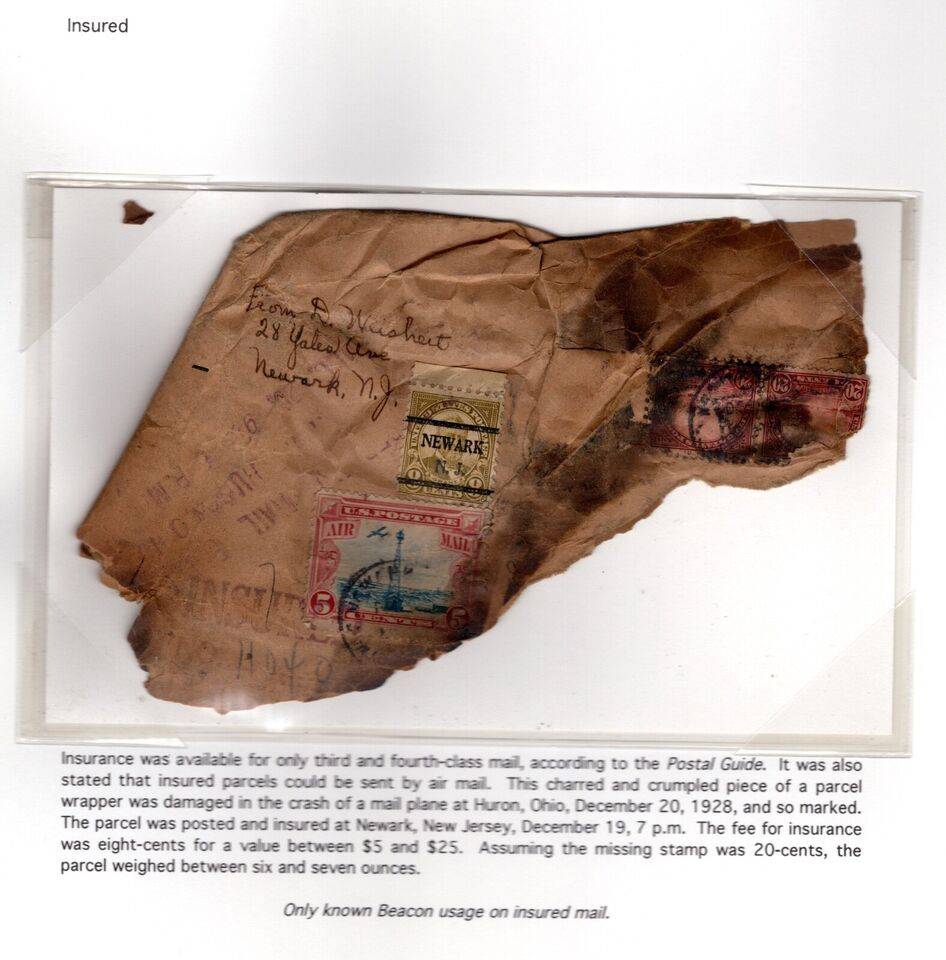
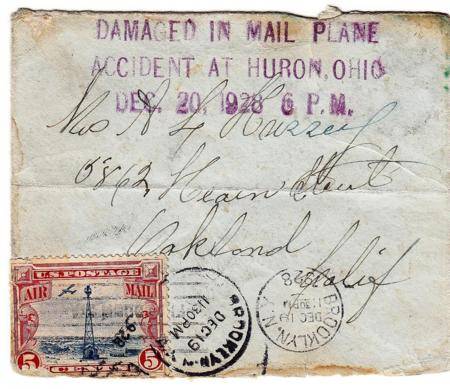
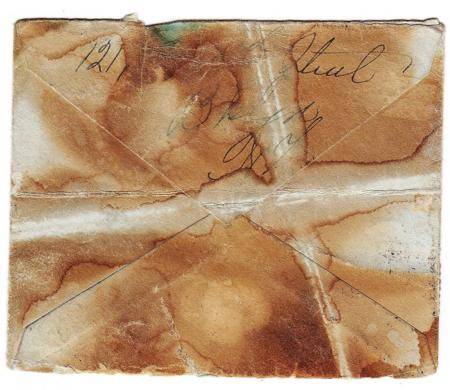
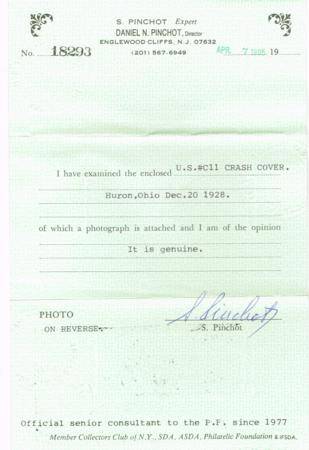
As to the C-11 covers shown in this tread, folks like and chase crash covers. For the crash involved in the two covers above, less than 10 covers remain. Yet while they have interest and a four figure price, they are out stripped in price by the much more common Hindenburg Crash covers. Why is that? The greater interest in that crash, not the scarcity of the covers.





 Posted 08/06/2023 8:22 pm