Stamp Community Family of Web Sites
Thousands of stamps, consistently graded, competitively priced and hundreds of in-depth blog posts to read


Stamp Community Forum
 
Username:
Password:
Save Password
Forgot your Password?

This page may contain links that result in small commissions to keep this free site up and running.

Welcome Guest! Registering and/or logging in will remove the anchor (bottom) ads. It's Free!

United Kingdom Of Great Britain And Northern Ireland – Major Error

 
To participate in the forum you must log in or register.
Author Previous TopicReplies: 4 / Views: 912Next Topic  
Pillar Of The Community
Netherlands
6526 Posts
Posted 08/13/2023   4:22 pm  Show Profile Bookmark this topic Add NSK to your friends list Get a Link to this Message
River Wildlife

For decades, I had a standing order for new issues with Royal Mail. After BREXIT, British stamps are taxed when received in the EU. The Dutch postal authority processes the orders from outside the EU. After randomly picking a number for a while, they now charge 9% VAT. For this service, that is compulsory, they charge a fee of € 6. They even did so once they concluded no charge was due.

Foreign sellers can sign up to a scheme under which the seller collects duties and pays it to the relevant EU tax authority. Sendings must identify the scheme and necessary data must be entered online. Tallents House, Royal Mail's philatelic service, did adhere to the scheme. It, however, could not be bothered with complying with the regulations. So, I paid import duties through Royal Mail and then € 6 plus 9% import duties to PostNL. Tallents House would also split up sendings, so I could pay a multiple of € 6 on a single issue. Therefore, earlier this year, I cancelled my standing order with Royal Mail for special issues. This was bad timing.

On 13 July, Royal Mail issued a set of five first-class and five second class stamps depicting British River Wildlife. There are several other products. The printers, Cartor Security Printers, committed a major error in the printing of these stamps. The stamps with the error were available until 26 July. This means that they are readily available. People who have a standing order with Royal Mail will, almost certainly, have received the stamps with the error. Since dealers receive stamps in advance of the issue date to service their first day covers, it is likely any stamps received through a new issue service will have the error.

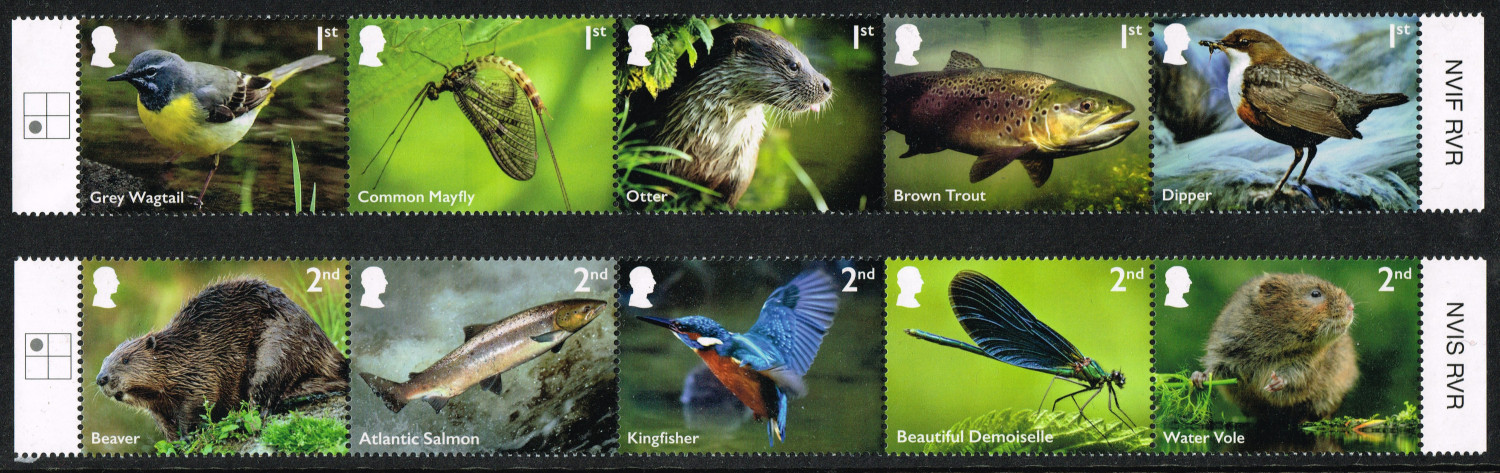
Here is a scan of the full set of stamps.


13 July 2023, Great Britain, River Wildlife (set)
Send note to Staff

Pillar Of The Community
United States
4279 Posts
Posted 08/13/2023   4:28 pm  Show Profile Bookmark this reply Add Parcelpostguy to your friends list  Get a Link to this Reply
And the error is?
Send note to Staff  Go to Top of Page
Pillar Of The Community
Netherlands
6526 Posts
Posted 08/13/2023   4:45 pm  Show Profile Bookmark this reply Add NSK to your friends list  Get a Link to this Reply
First and second-class stamps

In the 1950s, the General Post Office started to experiment with automatic letter facing machinery. The machines would recognise the position of the stamp and turn the mail item so the stamp would be in one of two positions. It would then be cancelled. The machinery also sorted out the printed paper matters that attracted a lower cost of carriage.

At first, machinery used an electric signal for this. Graphite lines were applied to the back of the stamps. These graphite lines conducted the electric current that the machinery could detect. Later, optical signals were used. Phosphor bars were applied to the front of the stamp. When passed under ultra-violet light, the bars emitted a light signal that an optical reader would recognise.

The printed matter and normal rates were replaced by the two-tier system of first and second-class mail. The automatic sorting machinery sorts out second-class mail. Second-class stamps have a single phosphor bar. Other stamps have two or more bars. The sorting machinery will recognise the number of light signals during the time it takes for a stamp to pass under the optical reader. If one signal is recognised, the mail is sorted out as second-class mail.

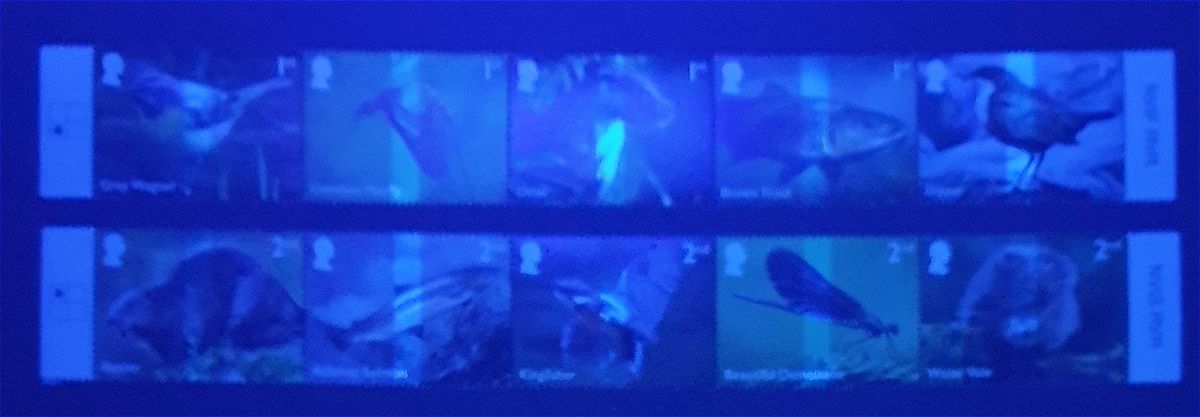
Cartor Security Printers, erroneously, applied a single phosphor bar to all stamps in the set; i.e., both the first-class and second-class stamps have a single phosphor bar.

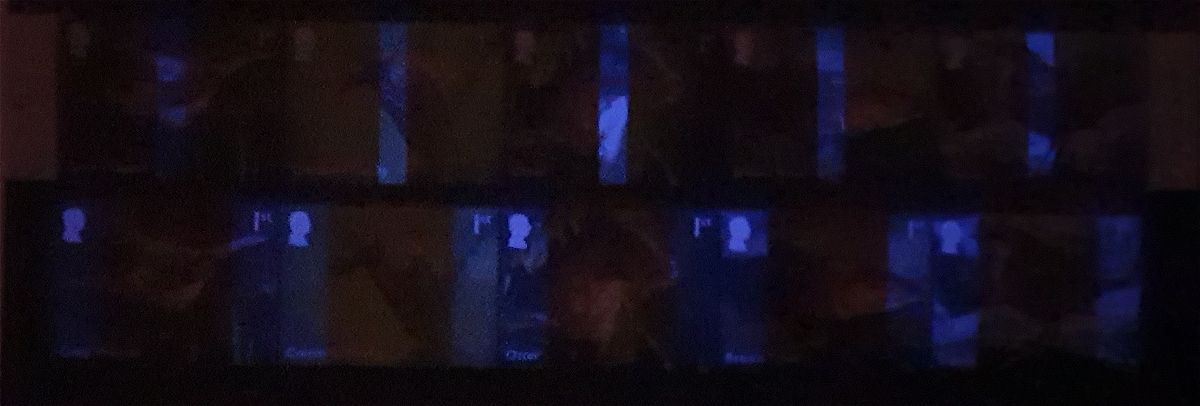
This is what it looks like under a longwave ultra-violet lamp.


Single phosphor bar on first and second-class River Wildlife stamps under a longwave ultraviolet lamp

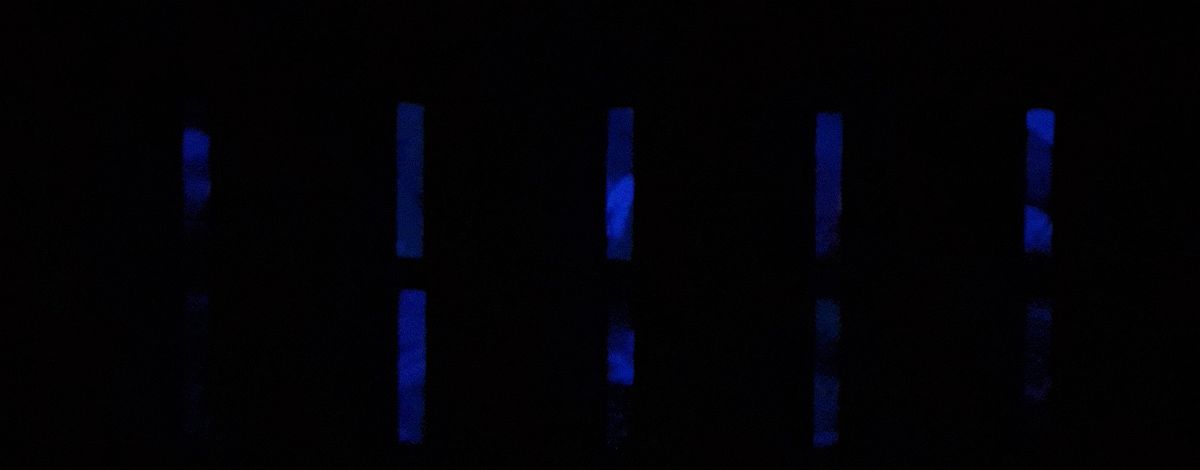
And the afterglow after irradiating the stamps with a shortwave ultraviolet lamp. (Same set-up as above).


Single phosphor bar on first and second-class River Wildlife stamps afterglow from a shortwave ultraviolet lamp
Send note to Staff  Go to Top of Page
Pillar Of The Community
Netherlands
6526 Posts
Posted 08/13/2023   5:05 pm  Show Profile Bookmark this reply Add NSK to your friends list  Get a Link to this Reply
Exchange programme

It took some time for the error to be discovered and for Royal Mail to act. As I wrote, dealers receive stamps well in advance of the official release date, i.c., 13 July 2023. The first-class stamps remained on sale until 26 July 2023. From 27 July 2023, first-class stamps could be purchased with the correct phosphor tagging.

Because of this error, the letter for which you paid the first-class rate might be treated as second-class mail. Royal Mail, therefore, has made it possible to exchange the stamps with the error for correct stamps. This is what they posted on the website of their shop:


Quote:
Due to a technical error in the printing of our River Wildlife Special Stamp issue, some of the 1st Class stamps in the set purchased before 26th July may be processed as 2nd Class stamps. We removed these products from sale and apologise to any of our customers who were affected. Customers who have purchased 1st Class stamps in this issue, or products that include those 1st Class stamps, can visit our website at royalmail.com/riverwildlifeexchange to find out more. Products purchased from 27th July are not affected.


So, you might want to check your stamps. If you want to exchange your stamps, it is possible.

Neither the stamps with the phosphor error, nor the stamps with the correct number of phosphor bars will be rare. Of course, by recalling the remainder of the stamps with the phosphor error, they will be in relatively short supply. Most ebay sellers offering these stamps ask upward from £ 20 for a set of stamps, including the strip of first-class stamps with the phosphor error. The strip of first-class stamps with the correct number of phosphor bars can be bought from Royal Mail's website at £5.50 plus p&p, and customs charges where applicable.

Naturally, I wanted this error. I paid just under £ 20, including all costs. The seller, kindly, franked the envelope with a mix of stamps. This includes one of the second-class and one of the first-class stamps. The first-class stamp is one with the single phosphor bar error.
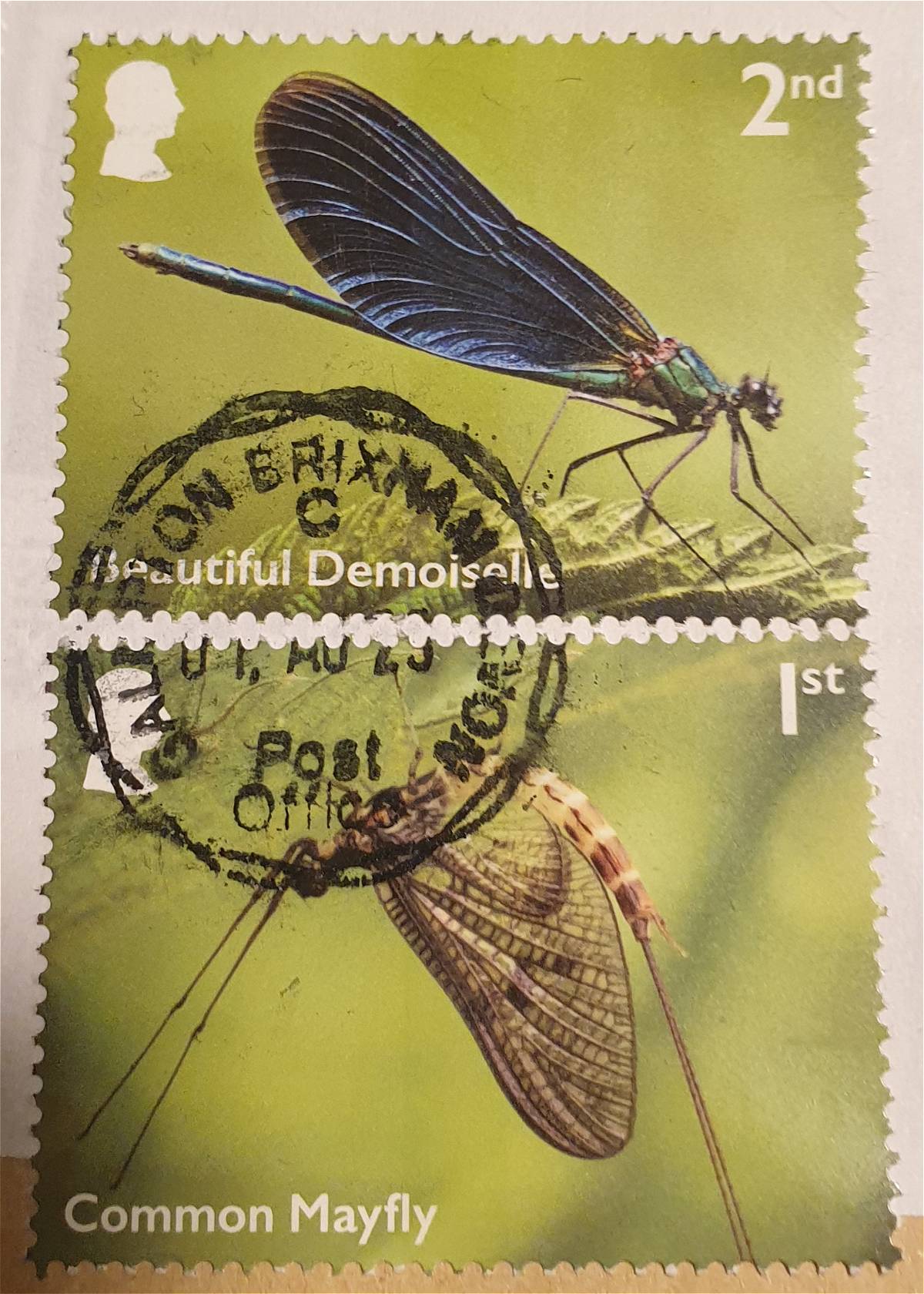

River Wildlife stamps
Send note to Staff  Go to Top of Page
Pillar Of The Community
Netherlands
6526 Posts
Posted 10/04/2023   3:59 pm  Show Profile Bookmark this reply Add NSK to your friends list  Get a Link to this Reply
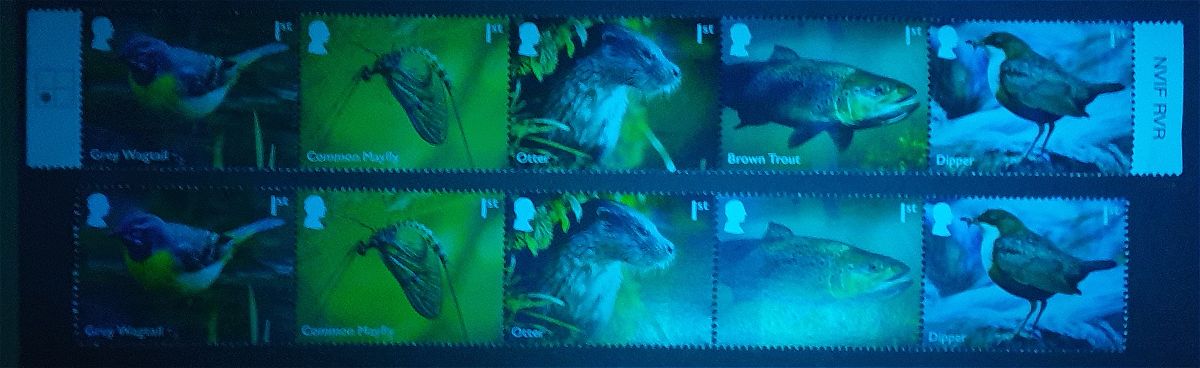
Here are the two strips of first class stamps. The one at top is the strip I posted earlier (note the grid showing from which pane of the printer's sheet it originates in the left margin and Royal Mail product code in the right margin).

The lower strip is the re-issued strip with the correct phosphor layout. The picture was taken of the stamps under a Lindner shortwave UV lamp.


To the right of the third (otter) stamp and to both sides of the fourth (brown trout) stamp in the bottom strip, the phosphor bars are visible. The phosphor bars show as a slightly darker area running from top to bottom.

As I wrote before, both the second-class and first-class stamps of the original issue had centre phosphor bars. A single bar identifies a stamp as pre-paying second-class postage. Clearly, this should not be the case for a stamp inscribed "1st".

The next picture shows the afterglow once I turned off the shortwave UV lamp.


The phosphorescence shows as a glow. The '1st' and King's Head in the bottom strip clearly show in the areas that emit light. From above picture, it is evident these are at the sides. The stamps have two side bars.

The stamps in the top strip have narrow centre phosphor bars. The '1st' and King's Head are in the dark areas.

Also without a UV lamp, it is quite easy to distinguish the two issues: hold the stamps at an angle under an ordinary desk lamp and vary the angle until the bars show as matt areas similar to that on the otter and brown trout stamps of the bottom strip above.
Send note to Staff  Go to Top of Page
  Previous TopicReplies: 4 / Views: 912Next Topic  
 
To participate in the forum you must log in or register.

Go to Top of Page

Disclaimer: While a tremendous amount of effort goes into ensuring the accuracy of the information contained in this site, Stamp Community assumes no liability for errors. Copyright 2005 - 2026 Stamp Community Family - All rights reserved worldwide. Use of any images or content on this website without prior written permission of Stamp Community or the original lender is strictly prohibited.
Privacy Policy / Terms of Use    Advertise Here
Stamp Community Forum © 2007 - 2026 Stamp Community Forums
It took 0.14 seconds to lick this stamp. Powered By: Snitz Forums 2000 Version 3.4.05