perf12
Quote:
Complicated D.L.O. cover;
Did this cover make a return trip too India? Or ,did it ever leave Inia?
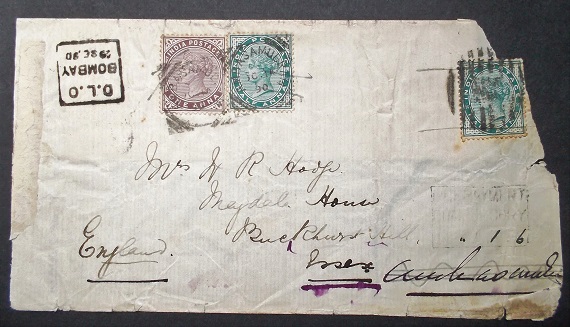
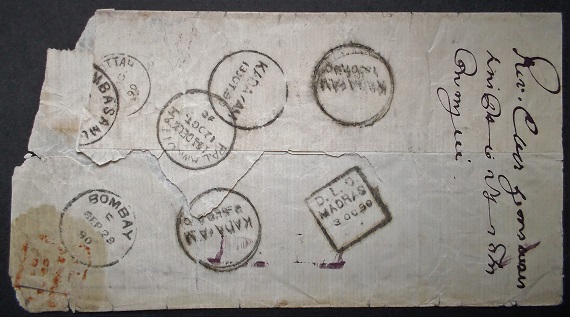 Sequence of Postmark Strikes
:
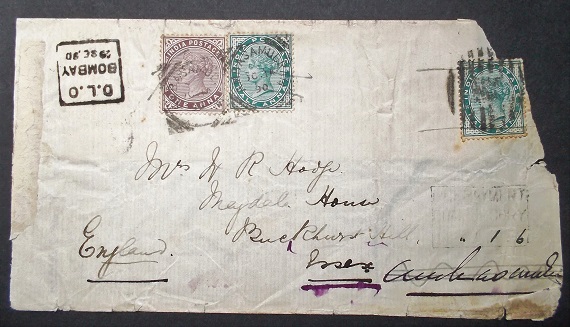
1. Renouf type 19/Cooper type 35 barred circular
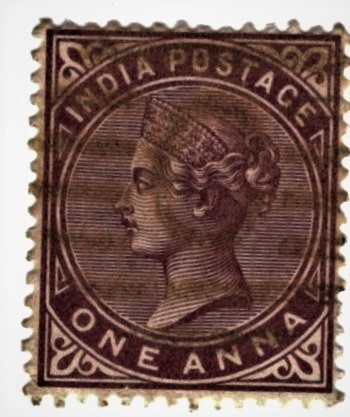
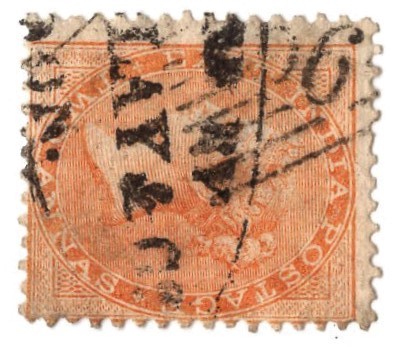
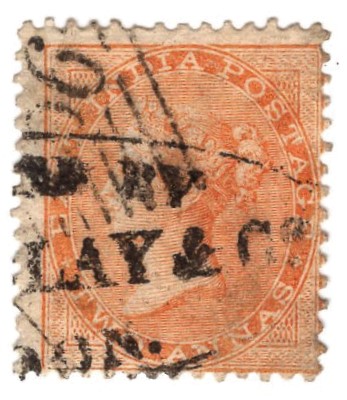
M obliterator (canceling the Br. India 1883 ½A SG 84) struck by Ambasamuttiram SPO
Ambasamuttiram evidently was the dispatching post office as later Chennai DLO sent the cover back to the sender at Ambasamuttiram.
2. Ambasamuttiram SPO cds dt. Sep 25,1890
This cds was struck in conjugation with
M killer as the latter did not indicate the post office or the date of dispatch.
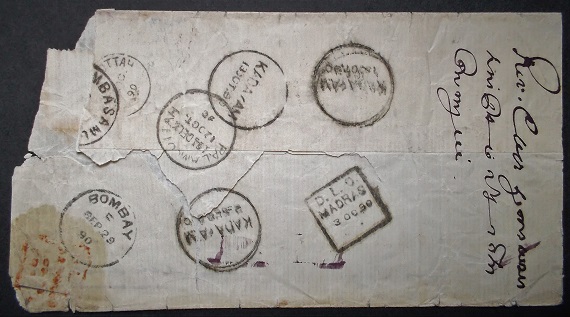
Though the date part of Ambasamuttiram cds is gone, it can be deduced from the Kadaiyam cds dt. Sep 26 as the transit time of mail between Ambasamuttiram and Kadaiyam generally was 1 day.
3. Kadaiyam SPO cds dt. Sep 26,1890
4. Mumbai F cds of Mumbai Foreign Branch dt. Sep 29,1890
This was applied because all westbound Indian mail to foreign destination was routed via Mumbai.
Initially the cover was franked with only a ½A stamp which was actually the basic inland letter rate for weight upto 5.83gm (½ tola) from Apr 1, 1869 to Mar 31,1905.
The Mumbai Foreign Branch found that the cover escaped detection of underpayment of postage at Ambasamuttiram SPO and sent it to Mumbai DLO to return it to the sender.
5. Mumbai DLO mark dt. Sep 29,1890
Mumbai DLO found the cover was from Ambasamuttiram from its cds on the cover and hence sent it to Chennai DLO which was the main DLO in South India.
6. Chennai DLO mark dt. Oct 3,1890
The cover originally did not have the name of the sender. Address detail was not a problem at that time, name and place was sufficient for the post office to deliver mail in a small town.
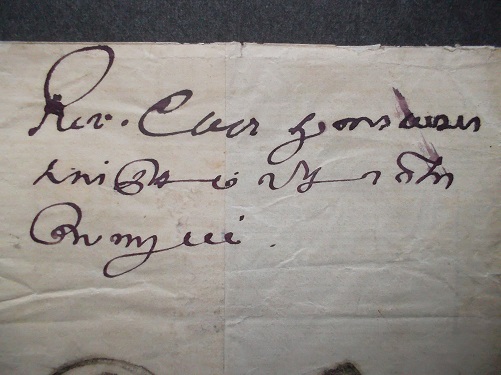
So at Chennai DLO, the cover was opened to find out the sender's name which was then written on the back of the cover and it was resealed with a strip of paper.
The redirected address Ambasamuttiram on the address side was also entered at Chennai DLO.
perf12
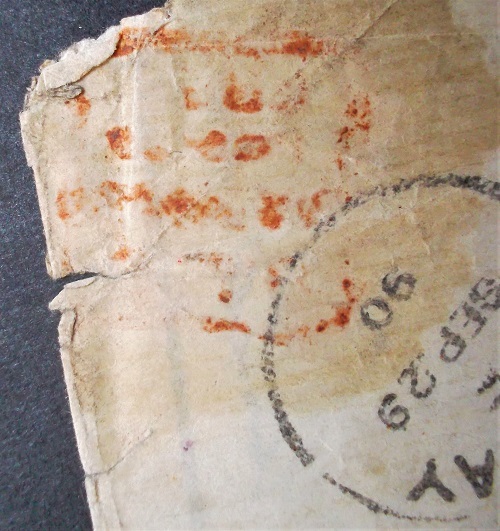
Quote:This red marking?
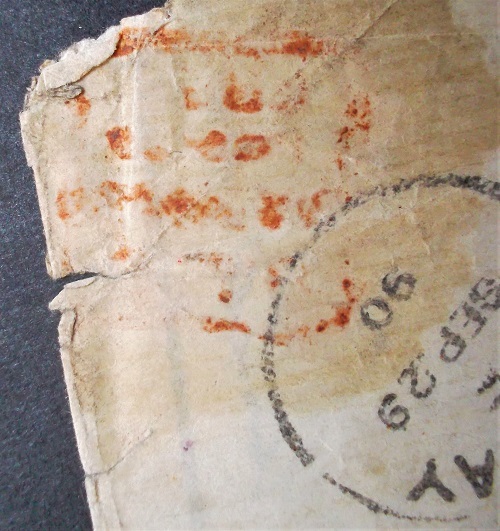
This is the correct orientation.

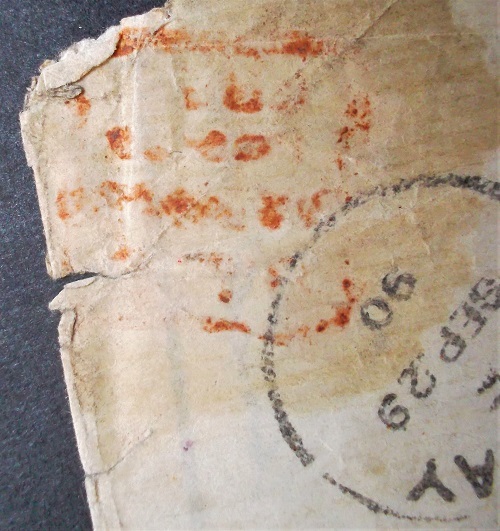
7. This is Chennai DLO
FREE mark dt. Oct 3?,1890 in red, which was impressed to indicate that no postage due was chargeable on the cover to return it back to the sender.
Since the cover then did not leave India, the cover was treated as an inland cover and hence ½A was sufficient.
It may be mentioned that DLO Free postmarks were one of the very few postmarks after 1873, which was applied in red ink.
This mark was introduced in 1883 following the Rule 544 of the Indian Post Office Manual 1883.
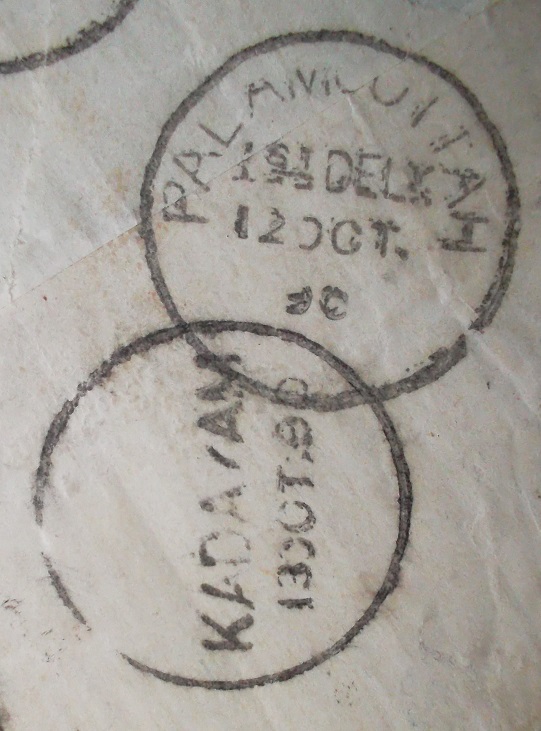
8. Palaiyamkottai HPO cds dt. Oct 12?,1890
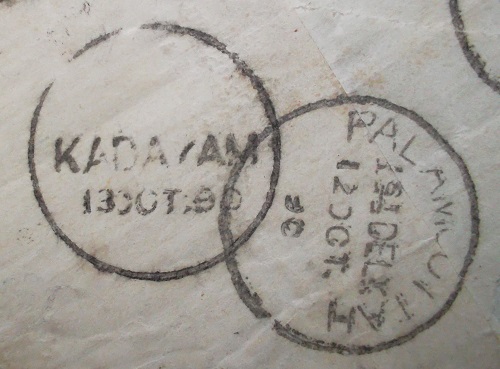
Palaiyamkottai HPO was the Disbursing Office of both Kadaiyam and Ambasamuttiram SPO.
9. Palaiyamkottai HPO Dely (Delivery) cds dt. Oct 12,1890
This was most likely was struck in error.
10. Kadaiyam SPO cds dt. Oct 13,1890×2
11.
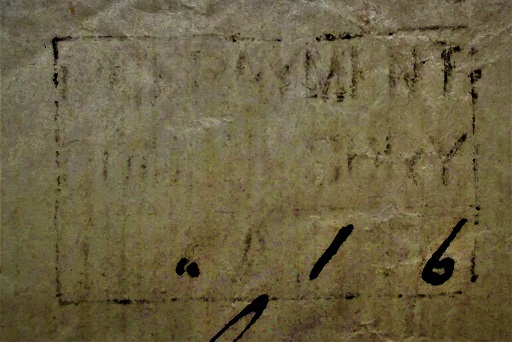
PREPAYMENT COMPULSORY rectangular marking applied at Ambasamuttiram SPO
1 after
A and
6 after
P indicate the new postage 1A6P paid by stamps.
12. Danby type B Ambasamuttiram SPO squared circle cancel dt. Oct 14,1890×2 (canceling the newly affixed Br. India 1883 ½A SG 84 & 1883 1A SG 88)
Postal Rate Conundrum: It is evident that postal staffs at Ambasamuttiram SPO did not have any clue how to deal with mail to foreign destinations.
The ½A stamp originally affixed was no longer valid once the cover was delivered back to the sender.
From Jan 1,1884 to Dec 31,1890, the basic letter rate from India to England was 4A6P for weight upto 14.18gm (½oz).
Instead of the correct 4A6P postage, the postal staff at Ambasamuttiram SPO went by the 1½A postcard rate to England, thus leaving the cover underpaid by 3A.
The cover does not have Indian Taxe marking or additional Mumbai Foreign Branch postmark dt. >Oct 14,1890 or Mumbai–Adan Sea Post Office mark or Buckhurst Hill receiving mark. So, it is practically impossible to confirm that if this cover at all reached its final destination Buckhurst Hill, England.





 Posted 02/02/2020 11:46 am