I didn't want to influence the poll until folks had a chance to reply, but there is additional context to the Highland Hospital and its place in the evolution of patient rights and safety.
About 6 years after the letter shown was sent, on the night of March 10, 1948, a fire broke out in the central building Highland Hospital in Asheville, North Carolina. The fire quickly spread through the four-story building, trapping nine patients inside. Seven of the patients, including author and artist Zelda Sayre Fitzgerald, were killed.
Zelda Fitzgerald was the wife of F. Scott Fitzgerald, the author of "The Great Gatsby." She had been diagnosed with schizophrenia in the early 1930s and had been in and out of mental institutions for most of her adult life. She was admitted to Highland Hospital in 1945 and had been undergoing electroshock and insulin shock therapy at the time of the fire. She was daily injected with enough insulin to induce an hour-long coma which was typically accompanied by a seizure. This treatment was the order of the day for people were thought to be suffering from schizophrenia.
The fire started in the kitchen of the hospital and quickly spread to the upper floors. The fire escapes were made of wood and quickly burned, trapping the patients inside. The fire department was called to the scene, but the fire was too large and they were unable to save everyone.
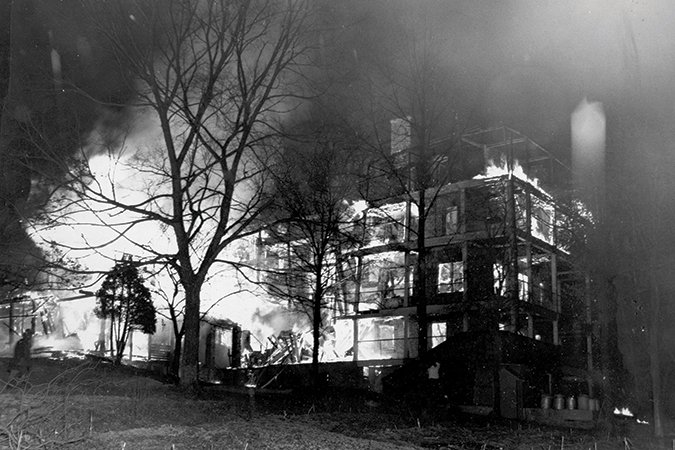
The fire was a major tragedy for the families of the victims and for the community of Asheville. It also brought attention to the need for better fire safety standards in mental institutions.
In the aftermath of the fire, a coroner's jury ruled that the fire was accidental, but that there had been some negligence on the part of the hospital staff. The jury found that the fire escapes were inadequate and that the fire department had been hampered by the fact that the windows and porches of the building were shackled with chains to prevent patients from jumping out.
The Highland Hospital fire led to changes in fire safety standards at mental institutions across the country. New regulations required that fire escapes be made of metal and that windows and porches be unshackled. This fire also led to changes in the way that mental illness was treated. The fire highlighted the need for more humane and compassionate treatment for people with mental illness.
The letter shown, and the patient involved, has nothing to do with the fire but offers a bit of insight into the facility and treatments of that era.
Don





 Posted 09/04/2023 07:43 am


 Much more difficult to get rid of if you even can.


