|
This page may contain links that result in small commissions to keep this free site up and running.

Welcome Guest! Registering and/or logging in will remove the anchor (bottom) ads. It's Free!
To participate in the forum you must log in or register.
| Author |
 Replies: 248 / Views: 15,519 Replies: 248 / Views: 15,519 |
|
|
|
Pillar Of The Community
United States
8622 Posts |
|
|
I have to agree ,there are collectors who are well qualitfied to expertise stamps and covers but due to them being in professional careers or retired from successful business they have no interest with dealing with the public and/or signing a certificate . They spend their own time and money to become who they are and build amazing collections but they want to live private lives .
|
Send note to Staff 
|
|
|
Pillar Of The Community
United States
8622 Posts |
|
|
Some day I am hoping A.I. will help me find out if the overprint on this Australian stamp is real . Years ago I was told on the ebay Chat Board I was stupid and fooled into buying this stamp on the right from a ebay seller from Hialeah Florida . Lets see if AI can help me out ,I put a regular stamp next to it ,using my R.I. system {that the system of matching fakes to real stamps } 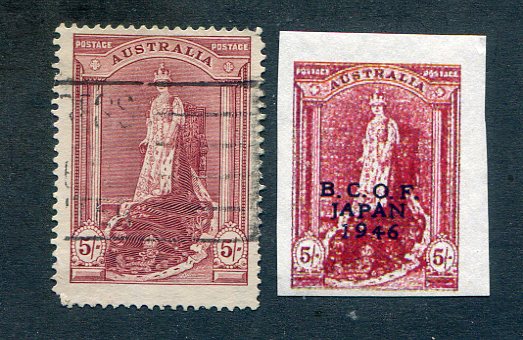 |
|
Send note to Staff
|
| Edited by floortrader - 09/11/2023 12:05 pm |
|
|
Pillar Of The Community
United States
3532 Posts |
|
|
Quote:
With a knowledge base represented by such a group, and the published resources, could AI assist in the plating of stamps from this issue?
Would that be legitimate application, and would it be a useful thing, or simply remove much the fun from collecting the area? It would be a legitimate application and I believe that it would be very useful, while, at the same time, it may remove some of the "fun" for some people. Those people could choose to not use the AI for plating, and, instead could use existing methods. Plating can be very labor-intensive. Back when I had lots of time to spend on it, I would occasionally stare at a difficult patient stamp for over 6 hours. At some point my eyes would eventually focus on the right minutia, and my brain would process the subtle differences in the appearance of detail on the stamp I was examining vs recorded material and then I'd make the connection. With an AI doing this, we could more quickly reconstruct plates that have never been re-constructed. This, because even though there is not material to make a positive comparison against, there "is" material to make a negative comparison against, to determine that the subject stamp is indeed from a previously unrecorded position / plate. Sometimes just determining that is hard. So this would definitely help advance the state of the art of reconstructing never-before reconstructed plates is my long-winded point. It would also help dealers better identify material that they have, and sell them with more accurate descriptions, which would allow collectors doing their own plate re-constructions to more quickly complete their own reconstructions. * Of course this is all forward-looking assuming the technology is properly implemented. |
|
Send note to Staff
|
|
|
Valued Member
141 Posts |
|
|
floortrader; Are you pulling our legs? The underlying image is not engraved. It is a fake. The added B.C.O.F / JAPAN / 1946 also is fake. A few years ago, Hialeah, Florida, was the source of many such fakes sold on ebay. Hialeah offered fake stamps of various countries. The Hialeahs are photocopies or laser-printed. I used cerebral intelligence (human memory) to solve this puzzle, not AI. |
|
Send note to Staff
|
|
|
Bedrock Of The Community
12801 Posts |
|
|
I came across this question on Stack Exchange: Quote:
Is it possible through AI,Computer vision & Machine learning technologies by giving details of the Stamp after inputting the Stamps images? This was an answer: Quote:
Your question is not trivial and is actually quite a large project.
I am working on this problem right and now I've discovered a number of problems and solutions to getting this to work for postage stamps. They are unique objects that are difficult to do computer vision on because of their perforated edges. It's both a blessing and a curse:
Catalog your data: You need a catalog of existing stamp data. This includes all of the information you would like, such as country, value, currency, description, and category. Very little of this information can be determined using computer vision. You might be able to get the value and currency from a stamp's front face, but none of the other stuff. Like, how would you determine country? Or a description that include details like year of issue, etc? Honestly if you have all of the other information, just add value and currency to your data set. You then need to pair this info to a stamp's image. In this case, using a MySQL database to pair the stamp row id to an image_id would work. Now you have the data you can match images to.
Train a ML model to find generic stamp objects: Finding a stamp in an image is the first step on the vision side of things. If you know all of your images to be matches are directly of cropped stamps, you can skip this step. But unless your images are perfect (which they never really are), you should train a ML model to find stamps in any image, putting a bounding box around one, and then cropping the image to the box.
Crop images to get only core info: This is where things get tricky. Because of the perforated edges of a stamp, image matching techniques like using SIFT will see features in your edges. These features will match up to almost all of the images in your set, and cause image recognition to not work well. So what I do before running image matching is I'll crop the borders of each stamp out (85% of the original size) to build my image matching index with. Getting rid of common data is key to making each stamp more unique, and perforated edges, or just borders in general, are a common denominator in all stamps that we can try and filter out.
Exact stamp matching with SIFT: After that, I run OpenCV SIFT detection of about 150 features per image, each revised to 300H x AspectW, to start building a descriptors list. I run PCA on the vectors down to 64 dimensions, and then store it all in a Faiss index. There are lots of little details I am skipping over here (and you can look up the advantages and disadvantages of everything I mentioned here), but this is the gist of it.
Further filtering with color and weights: I then run the image through the same process of resizing and feature detection, and then match that against that Faiss index. Right now I'm just taking the top vote getter (based on the number of features detected) as the match, and it works extremely well, but you can add further checks like Color Moments or histogram matches to further weed out mismatches with high vote counts. You can also filter more by adding in weight to scores based on distance between features.
Of course, this is all just to get the feature matching to work. Beyond that you have the scope of whatever application/service you're building around this, which includes UI, camera control, etc etc.
I hope this helps! It's a massive project. I cannot even imagine the work involved for AI to expertize. |
|
Send note to Staff
|
|
|
Pillar Of The Community
Netherlands
6649 Posts |
|
|
Quote:
Catalog your data: You need a catalog of existing stamp data. This includes all of the information you would like, such as country, value, currency, description, and category. Very little of this information can be determined using computer vision. You might be able to get the value and currency from a stamp's front face, but none of the other stuff. Like, how would you determine country? 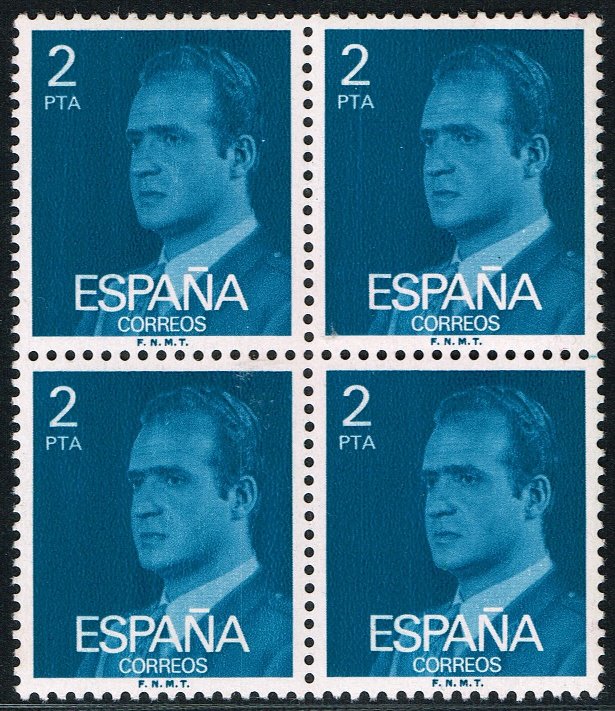 Does anyone have a worldwide catalogue? I am guessing this stamp is from Botswana, but it is so difficult to determine the country that issued it without a catalogue. I can only determine it by comparing pictures in a catalogue.  Fortunately, since this, clearly, is a penny-value, it must be Great Britain. |
|
Send note to Staff
|
| Edited by NSK - 09/11/2023 2:32 pm |
|
|
Valued Member
8 Posts |
|
|
Random thoughts on this.
There are apps that identify plants, birds, etc. They all make mistakes, but those mistakes can be tolerated because they don't impact on anyone's investment. In theory, an AI-assisted stamp identifier could provide the same kind of basic identification functions that would be highly useful to new collectors. But depending on the type of information the identifier outputs, the results could cut both ways. A common stamp could be misidentified as a rare variant, and vice versa.
But basic ID'ing of a stamp is fundamentally different from expertizing.
It would be interesting to know how an AIE would dip a stamp to look for repairs or watermarks, or to highlight grills.
Say an AIE mistakedly issued a bad cert for a unquestionably genuine stamp that cats at $400. Would that be enough to pause the whole enterprise and re-evaluate its merits? What if the mistake was made on a $1000 stamp? Or a $10K stamp? What proportion of accurate assessments vs. mistakes (weighted by value) would be deemed acceptable?
|
|
Send note to Staff
|
| Edited by Cali Phil - 09/11/2023 3:14 pm |
|
|
Bedrock Of The Community
12801 Posts |
|
|
NSK - The answer could have been clearer, but I assume what he is getting at is the stamps that are hard to assign a Country to. We have all dealt with them and Scott's rear of catalog identifier is pathetically weak after all of these decades. Older Eastern Bloc countries can be a real trial as can language barriers. Then you have stamps that have been overprinted for use in colonies and so forth. Remember, the ultimate goal is to have a machine do the work with little involvement from us. |
|
Send note to Staff
|
|
|
Pillar Of The Community
Netherlands
6649 Posts |
|
|
It is exactly that what computers are great at: reading an inscription and recognising the meaning. There are very few stamps that do not carry a country name. Computers do not suffer from language barriers as people do.
If there is one thing that Google Translate is good at, it is recognising languages and words. With very few stamps not having the country name appear on them, that is the simplest part. It leaves just a few with overprints that may be confusing, but even there AI might be able to solve the puzzle better. A lot of the overprints can be found somewhere on the web.
Once, someone was wondering what the overprint 'C.E.F.' stood for. Rather than flicking an hour through the back of a catalogue hoping to find that overprint, Google provided the answer within a minute or two. Most of that time was lost on my inability to type quickly.
If there is one thing a computer cannot do, it is identifying a currency from a number. Many countries only use numerals, as the country name identifies the currency. I used that Irish stamp on purpose. Old British stamps have a d (denier / denarius) to identify the old Sterling penny. The new penny is identified by a p. On Irish stamps, the old currency was indicated by a p of 'pingin' and after the change to decimal currency, it was dropped as it would have been the same symbol. Nowadays, they have the Euro.
A lot of currencies were used by more than one country. |
|
Send note to Staff
|
|
|
Pillar Of The Community
United States
1875 Posts |
|
|
Here is Google Bard acting as a Washington-Franklin expertizer. This was the prompt: You are an experienced philatelic expertizer with expert knowledge of the Washington-Franklin head postage stamps of the United States of America. You receive a stamp having the following characteristics: the stamp shows the head of Washington facing left and the design "2 CENTS 2"; the stamp is offset printed; the top line of the toga is complete; there are five vertical shading lines in the toga button; the line of color in the left "2" is very thin and broken; the shading dots on the nose have 6 or 7 dots in each of the bottom three rows; the third row of dots from the bottom has four dots instead of six; the fourth shading row from the top of the nose is incomplete, containing only 4 dots; the left numeral "2" has an incomplete line at center; the color is a bright carmine to red shade; the "line of color" in the left "2" is weak and looks broken. What is the Scott catalog number of this stamp?  |
|
Send note to Staff
|
|
|
Pillar Of The Community
Netherlands
6649 Posts |
|
|
An example as to Quote:
You might be able to get the value and currency from a stamp's front face  Let's hope this one would not come up as Dollar. Currency ==> country does not work. Country ==> currency is the only sensible way to identify. |
|
Send note to Staff
|
|
|
Pillar Of The Community
United States
4473 Posts |
|
|
Quote:
I have known several describers; I have never heard any call themselves dealers. Unless they were doing both they would not. If they are doing the describing for free, they are part of stamp dealing as that is where their monetary compensation originates. To expand your concept to automotive sales, you are saying the only true car dealers are the shifty and slick sales men on the lot. Of course the cars just magically appear assembled, cleaned and polished when your payment appears. The stamp business and auto industry are not owned and run by one individual. If it was, then there would be no issue with Tesla's approach to do away with pesky and bothersome car dealerships which just bloat the sales price. |
|
Send note to Staff
|
|
|
Pillar Of The Community
United States
4192 Posts |
|
|
Quote:
Quote:
Are one flavor of "stamp dealer," like it or not.
I would disagree. "Dealers" are direct sellers. "Describers" are just that, people who give a written explanation of an item. They help, but they have no direct control over whether said item sells or not. I have known several describers; I have never heard any call themselves dealers. Unless they were doing both they would not. What parcelpost should he said is describers ore part of the profession side of things. |
|
Send note to Staff
|
|
|
Bedrock Of The Community
United States
10882 Posts |
|
|
Quote:
If they are doing the describing for free, they are part of stamp dealing as that is where their monetary compensation originates. These were all professional describers for known auction houses. So they were not dealers. They were never involved in any kind of direct involvement with any financial transactions. |
|
Send note to Staff
|
|
|
Pillar Of The Community
United States
772 Posts |
|
|
"IMO, we are in danger of running out of experts in far less than 50 years."
What is really needed now is a major effort to gather together all of the collective wisdom of philately, digitize it, store it on a (preferably non-profit) server and make that wisdom accessible to everyone anywhere in the planet at the touch of a few keystrokes.
The biggest problem in philately going forward is that knowledge and information is dispersed among thousands of sources, often hidden away in limited-edition published works that are inaccessible to the vast majority of collectors, or more recently on websites whose contents often disappear when the author of the website is no longer with us.
I know the APS has been working on a project of digitalization of the APRL for the past several years now, which could be the basis for such an overarching project, but if this project is going to be successful for future generations, it is going to need to be much more systematic and likely require further outside contributions to be completed.
So for example forgeries, we know of several excellent works on forgeries (Serrane, Varro Tyler, etc) and there are many excellent websites that cover specific countries/issues in detail and a few that are more global in scope. What would be beneficial to philately in the long run, in my opinion, would be for an organization like the APS (or perhaps better, the FIP so that there is a clear global foundation for the project) to create permanent digital archives of both published works and websites that deal with forgeries, combines the material together so that it is easy to access and organized in a clear manner, and accessible to all collectors wherever in the world they are.
Alternatively, if no organization is willing to take up this task, a ground-up philatelic equivalent of Wikipedia as the source is an alternative, but this requires a massive effort on the part of volunteers to both supply and verify the information provided to the public. As someone who currently works with an online stamp catalogue that is built based on the Wiki principle, I can say that while it is a huge, seemingly never-ending labor, in the end by making the information contained within the catalogue freely accessible to anyone around the world has to be a huge positive for the future evolution of the hobby. |
|
Send note to Staff
|
APS #173088
|
|
|
Replies: 248 / Views: 15,519 |
|
|
To participate in the forum you must log in or register. | |
Disclaimer: While a tremendous amount of effort goes into ensuring the accuracy of the information contained in this site, Stamp Community assumes no liability for errors. Copyright 2005 - 2026 Stamp Community Family - All rights reserved worldwide. Use of any images or content on this website without prior written permission of Stamp Community or the original lender is strictly prohibited.
Privacy Policy / Terms of Use Advertise Here |
| Stamp Community Forum |
© 2007 - 2026 Stamp Community Forums |
| It took 0.25 seconds to lick this stamp. |
 |
|
|
|


 Posted 09/11/2023 10:50 am


