| Author |
 Replies: 17 / Views: 1,782 Replies: 17 / Views: 1,782 |
|
Valued Member
United Kingdom
19 Posts |
|
|
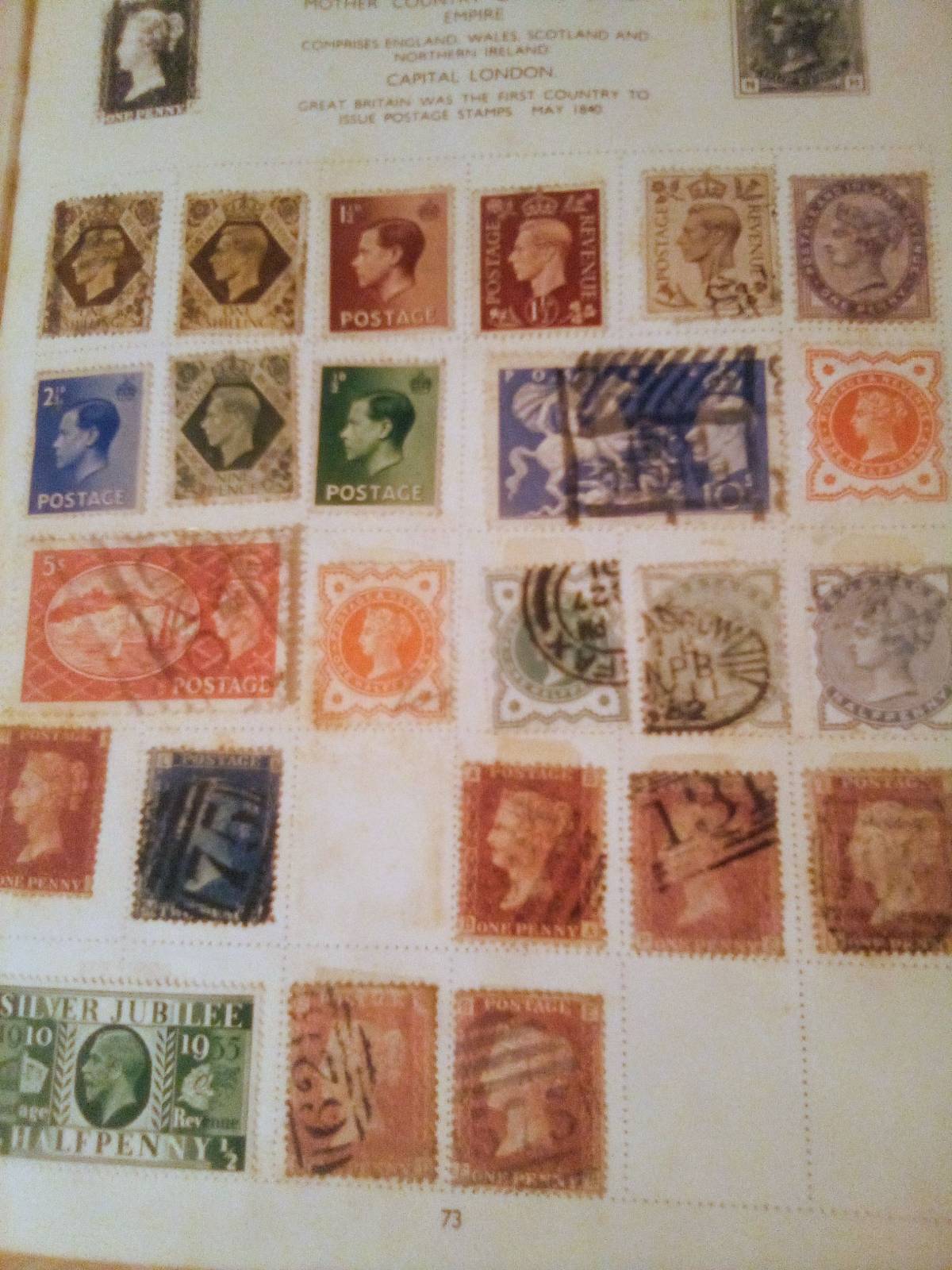
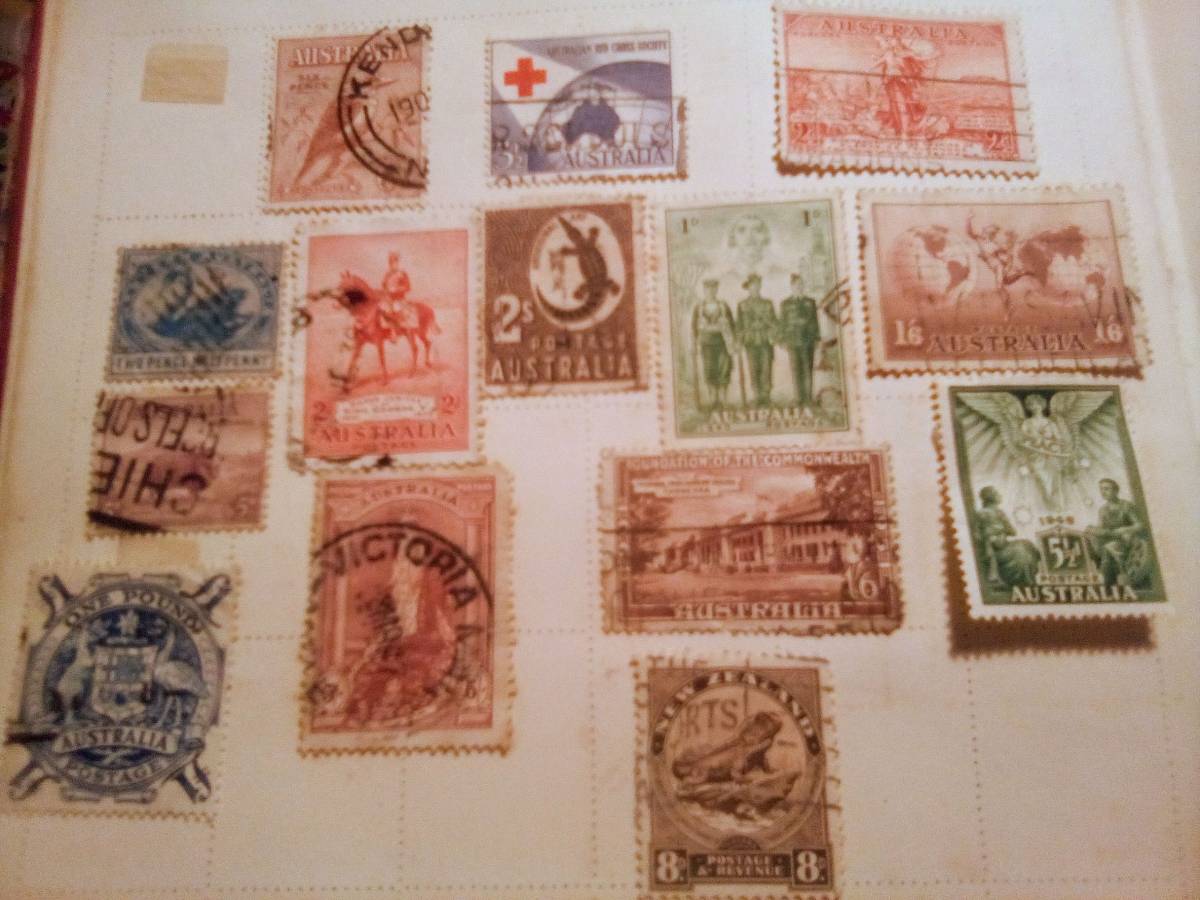
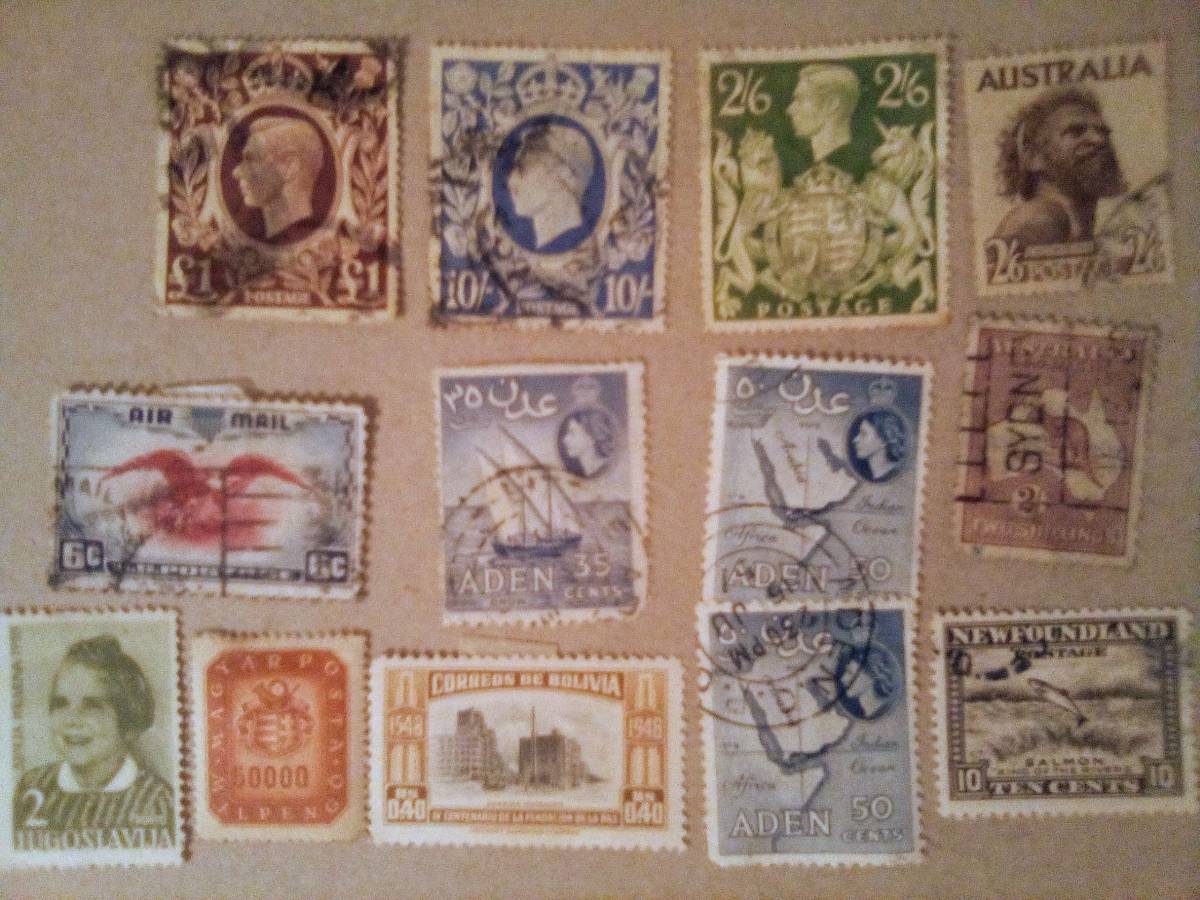
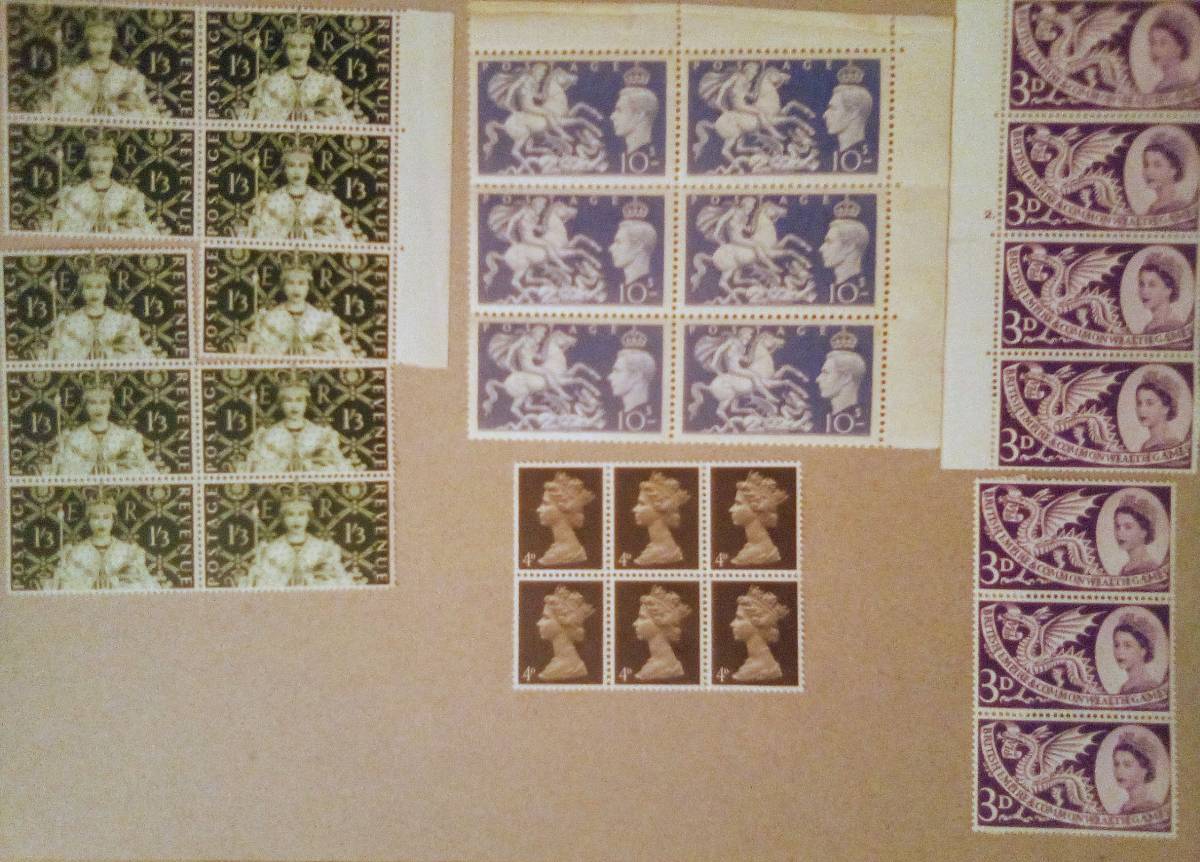
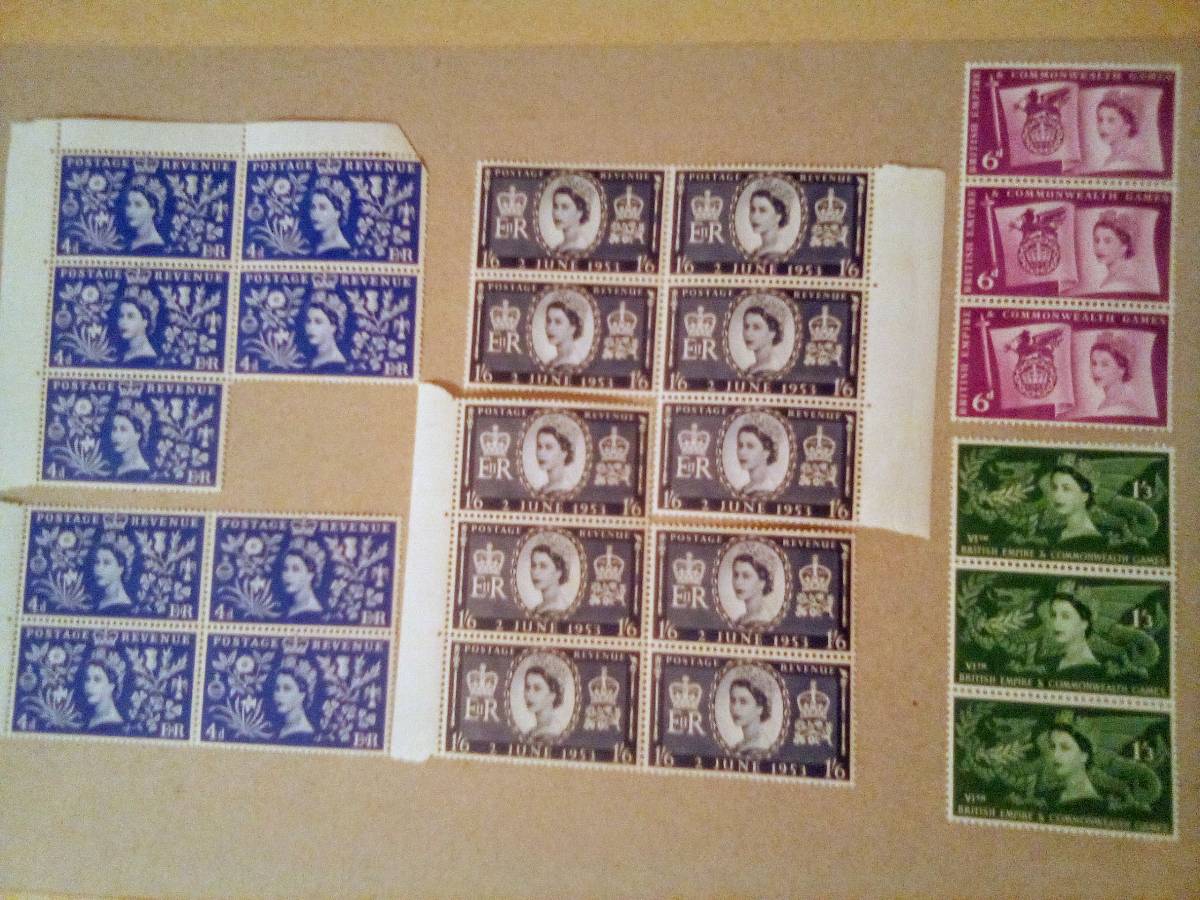
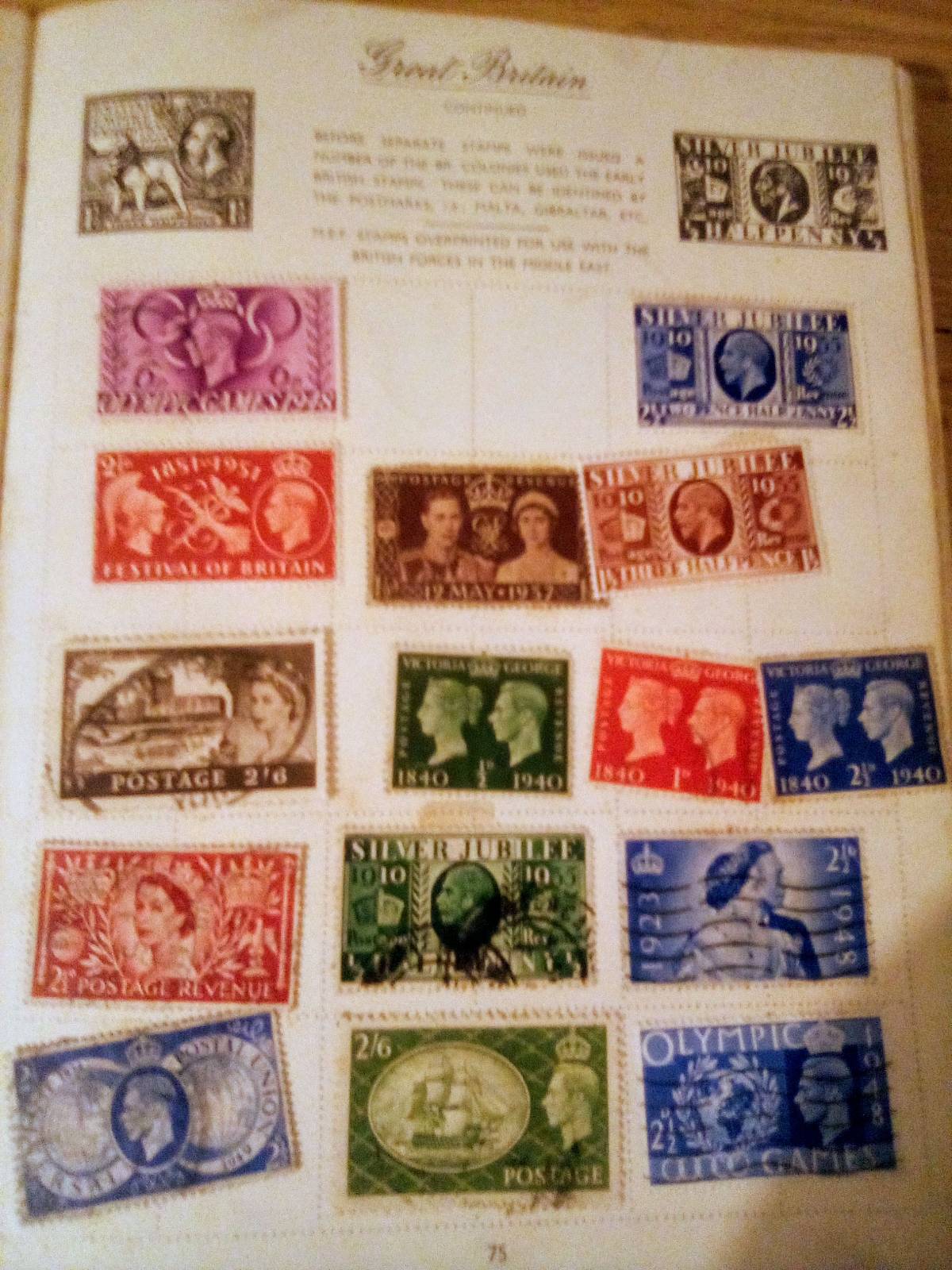
Hi I know this is probably a little tiresome for regular posters but I inherited a stamp book, I've tried to get au fait with the general terms of philately but it's a bit like learning a new language. Anyway I have a book of approximately 1,100 stamps. The book itself is called 'Royal Mail Stamp Album' from 1936 The collection is world wide, with the emphasis on 'colonies' as it was then. That's how it is worded at least ie French Colonies, Portugese Colonies, British Guiana and so on It is British / Colony heavy but some really interesting prints from across the world and I've honestly just enjoyed researching the back stories of a lot of the artwork. They are from, say, late 1800s right through to the 60s but mostly I'd say 1900s -20s/30s I have researched a fair bit and struggle with a few things. Mostly watermarks as I find them really difficult to make out, even as to whether any are inverted etc They are mostly hinged(?) but with a few separate unhinged / unused sets but to my (untrained) eye, they look mostly very well preserved. I've looked up the odd one or two which jumped out a bit (recent one a King George £1 brown stamp, which is selling on ebay (I know) for £20 but others I thought more of interest for a £1 ok, so I wouldn't know where to begin in terms of what photos to send, as there are so many pages/ stamps. I'm not just here specifically for to see any value for selling but obviously if any were to jump out I would probably look at that. I'm genuinely interested in looking through the collection, but, as I say I don't know where to start so any ideas on what to send (I'm aware I can't be posting 180 pages of them) ok, thank you for reading. |
|
Send note to Staff
|
|
|
|
|
Pillar Of The Community
Netherlands
6650 Posts |
|
|
The £1 stamp you describe sounds like the GB George VI 'Festival' high value from 1951. It was named for being released at the same time as the stamps commemorating the Festival of Britain. There is some value in the post-war stamps with a face value of 2/6 and higher. But they should be in perfect condition and have no trace of a hinge.
Otherwise, value, mostly, is in some of the pre-war stamps, especially the stamps issued up to 1910-1920. Again, condition is everything. If the album shows dates, post some pictures from the 1800s and very early 1900s. If there are high-value stamps, i,e, German Mark (not pfennig), French Francs (not centimes), and half crown and higher for GB and colonies, they might give some impression.
Use scans, not photographs if possible.
And philatelists call an album that hold stamps 'stamp album.' |
Send note to Staff 
|
|
|
Pillar Of The Community
United Kingdom
631 Posts |
|
|
Hi Youknowme, welcome to the forum from very sunny North Wales. Good to see another from our side of the pond join us. Pictures are what we want, most of us are happy to look at other people's stamps!
Plenty of helpful folk on here.
Regards
DavidR |
|
Send note to Staff
|
|
|
Pillar Of The Community
United States
506 Posts |
|
|
So watermarks are best seen by placing the stamp upside down on a black surface and immersing in a small amount of watermark fluid. Lighter fluid can be used as a substitute. Some watermarks are very difficult to see, particulary KGV* stamps that have yellow or purple in the colors. Difficult for me anyway
*Kimg George V |
|
Send note to Staff
|
|
|
Valued Member
United Kingdom
19 Posts |
|
|
Pillar Of The Community
Netherlands
6650 Posts |
|
|
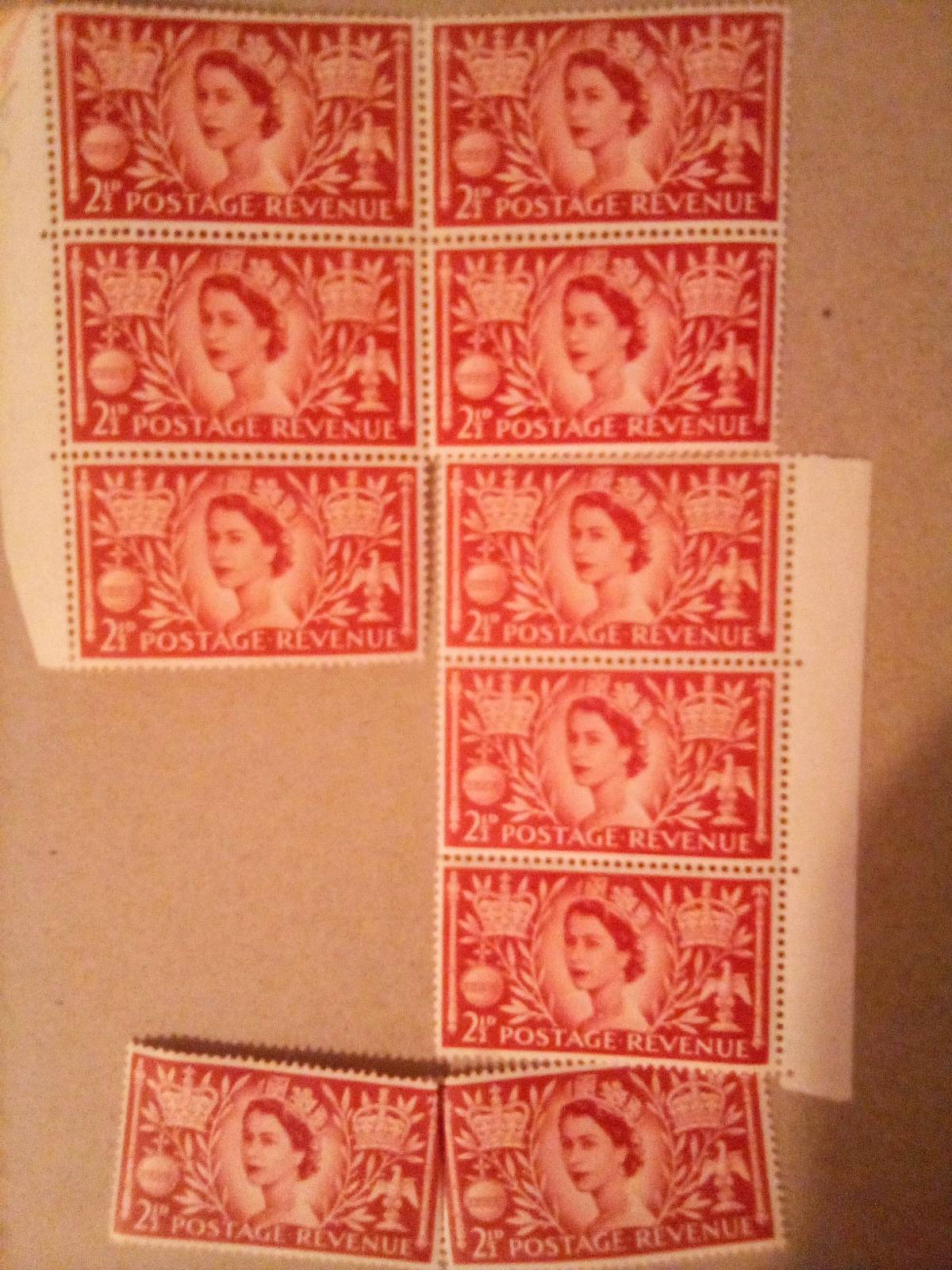
Is the £1 brown top left in the third picture the one you wrote about? That is the £1 'Arms' definitive. If it is, I am sorry to say it will not sell for anything near £20. To achieve such a price, it must have a very neat single cancellation. Most of the British stamps in your pictures have very heavy cancels. There is some value in the unused early Elizabeth II stamps from the multiples. However, if they are hinged that would detract from the value.
Most watermark varieties result from stamps issued from rolls or stamp books. There are very few stamps in your pictures that were ever issued that way. The probability they have a watermark variety that is valuable is small. Watermarks tend to show much easier on used stamps. Use a dark background and put them face down. Shine a lamp on them. That tends to make the watermark visible. Scanners (using a black background) often show watermarks. |
|
Send note to Staff
|
|
|
Pillar Of The Community
United Kingdom
8641 Posts |
|
|
The best of those looks to be the block of the mint KGVI 10/-, unless the stamps are toned. |
|
Send note to Staff
|
|
|
Valued Member
United Kingdom
19 Posts |
|
|
Thank you both - in answer to NSK, yes this was the £1 stamp, I understand it won't be of value in this and I didn't realise the neatness of cancellations was a factor - you learn something new every day, including about the watermarks. I'm unsure whether the hinged stamps in the album came from rolls, or otherwise, I am guessing the latter.
And yes, all of the sets are unhinged, so I'm no sure to what exactly 'toned' means, in this context but I am thinking maybe it means faded? I'll take a closer look, and thanks again for replying |
|
Send note to Staff
|
|
|
Pillar Of The Community
United States
2830 Posts |
|
|
Turn the 10/- block around and look at the gum, or better yet try to make an image of it and post here. If the gum is uniformly white like when it was purchased from the PO, then the block isn't toned. If there are brown or orange areas or spots on the gum side of the stamps themselves, the block is considered toned. |
|
Send note to Staff
|
|
|
Pillar Of The Community
United States
1434 Posts |
|
|
Quote:
I didn't realise the neatness of cancellations was a factor In this hobby, almost everything is a factor. |
|
Send note to Staff
|
|
|
Pillar Of The Community
United Kingdom
8641 Posts |
|
|
Sorry, I should have been clearer. Whilst a toned body may be the subject of admiration from some, a toned stamp isn't. As Shermae says, it means that the original, usually white, paper has become browned. This is particularly common in stamps from hot, humid countries. In our climate, it's more likely to result from storage in cold, damp rooms. |
|
Send note to Staff
|
|
|
Pillar Of The Community
Netherlands
6650 Posts |
|
|
I agree with GeoffHa. His post reminded me I wanted to check the specialised catalogue for varieties of that 10/- 'Festival High Value' block. Unfortunately, none are listed.
It is a nice 'positional' block from the top right of a pane.
For British watermark varieties.
Some rolls were made up from special sheet printings. They are somewhat difficult to identify, but, normally, do not have watermark varieties.
With the introduction of photogravure printing, they were printed from continuous reels of paper. Several columns of stamps were printed together, like a sheet, but without the margin between them. To split the columns of stamps into individual rolls, a blade was used.
When you tear a stamp from a sheet, the tips of the perforations are ragged. The tear unevenly. Where a blade has been used, the tips are quite even. So, if you see the left and right 'cut' and top and bottom 'torn,' you have a vertical-delivery coil. If the top and bottom are cut and the sides are torn, you have a sideways-delivery coil. Sideways delivery coils printed on continuous reels of paper were printed sideways. Because the watermark was upright, it will show sideways when you look at the stamp. Depending on the sideways orientation of the stamps it can show sideways or sideways inverted.
Some stamp sheets were printed sideways. But for those, the sideways watermark is the normal one and there are no varieties. Stamps printed from continuous reels cannot have watermark orientation errors.
Simplifying a little. Booklets are produced by printing sheets of stamps and sheets of covers. The margins are pasted to the booklets or sewn in. Then these sandwiches are cut into individual booklets. This will leave only one side, or two adjacent sides appear 'cut.' To reduce waste, the sheets of stamps were printed with columns of panes in alternating orientations (upright, inverted, upright, inverted). This would allow for a wide margin between two sets of columns that could be pasted or sewn and then cut. As the paper had the watermark upright, they appear upright and inverted in alternating columns of stamps.
Some booklet panes were printed sideways but in alternating columns. These have sideways and sideways inverted watermarks.
So, from the photogravure stamps of King George V a magnifier will tell you whether it is a sheet stamp (torn all four sides), coil stamp (cut opposite sides), or a booklet stamp (cut one side or two adjacent sides). Note: even in the 1950s, some coils were made up from sheets, but those will not have watermark varieties.
Before the photogravure issues of King George V, stamps were printed on sheet-fed machines. If the sheet was inserted incorrectly, the watermark could have an incorrect orientation. Booklet stamps tend to be limited to values up to 1 1/2 d. The other values with a watermark variety are errors and tend to be scarce.
There is one exception to the photogravure stamps. The very first values were printed in photogravure on German presses that required sheets to be fed inverted. On very few occasions, they were fed upright causing an inverted watermark. These stamps come in three formats (actually the booklet and coil stamps have very minor deviations). The error only occurs on the stamps with the original, large format. These were never issued in books. |
|
Send note to Staff
|
|
|
Valued Member
United Kingdom
19 Posts |
|
|
Thank you for clarifying, Geoff. I wouldn't say it was browning, more just a white 'faded over time' type hue.
NSK - thank you so much for this very thorough reply. I will need to read up on this properly and then get my magnifier out, I am in between work shift presently, so will find time to do this in the coming days, thanks again and I will thumb through the album and see what other things stand out.
I have a double page of Hungarian 1940s / 50s sports themed stamps, for example, and many stamps with 'overprints', as I've come to understand so, will find some of the older / old colony ones. |
|
Send note to Staff
|
|
|
Pillar Of The Community
Canada
5821 Posts |
|
|
Quote:
The very first values were printed in photogravure on German presses that required sheets to be fed inverted. @NSK , just curious which German manufacturer produced these presses. |
|
Send note to Staff
|
|
|
Pillar Of The Community
Netherlands
6650 Posts |
|
|
@lithograving,
The specialised catalogue only mentions "Gernan presses." Harrison and Sons had Johannisberg BT.1 and BT.9 sheet-fed photogravure presses at their Hayes facility. It is likely these were used to print some of the photogravure Mackennals in 1934. |
|
Send note to Staff
|
|
|
Pillar Of The Community
United States
1434 Posts |
|
|
Replies: 17 / Views: 1,782 |
|




 Posted 09/07/2023 4:00 pm