| Author |
 Replies: 13 / Views: 691 Replies: 13 / Views: 691 |
|
|
Pillar Of The Community

1318 Posts |
|
|
Sorting some stamps and came across the attached. Guess on the word? Im drawing a blank. 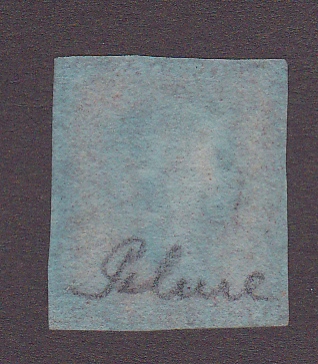 |
|
Send note to Staff
|
| Edited by Stamps4Life - 09/10/2023 12:23 pm |
|
|
|
|
Pillar Of The Community
United States
1116 Posts |
|
|
Looks like "pelure" to me, as in pelure paper (very thin, translucent).
Not sure that is what the paper actually is, but that IS the word. |
Send note to Staff 
|
| Edited by orstampman - 09/09/2023 5:32 pm |
|
|
Pillar Of The Community
1318 Posts |
|
|
Very nice - thank you! And , the paper does seem thinner upon checking after your post. |
|
Send note to Staff
|
|
|
Pillar Of The Community
United States
1026 Posts |
|
|
It doesn't look like pelure paper to me, typically with pelure you can see the front design through it. |
|
Send note to Staff
|
|
|
Pillar Of The Community
Australia
3299 Posts |
|
|
Was this stamp ever issued on pelure paper?
Pelure has a particular feel that, once you know what it feels like, it's unmistakable.
Variations in paper thickness would've occurred for this issue surely? |
|
Send note to Staff
|
|
|
Pillar Of The Community
Netherlands
6643 Posts |
|
|
@stamps4Life, what stamp are you writing about? "1d red Queen Victoria" makes me think of a 'Penny Red.' It does look like "pelure" is the written word. The Penny Reds were never printed on pelure paper.
Considering the blueing of the paper, I doubt this is pelure paper at all. The red inks often contained Prussiate of Potash that could permeate into the paper when still wet. This process caused the blueing of Penny Reds and in extreme cases the 'Ivory Heads' that also can be found on 'Penny Blacks.' That looks like transparent paper but is not.
This may occur on more red stamps of that time. |
|
Send note to Staff
|
|
|
Pillar Of The Community
United States
713 Posts |
|
|
It is always a good idea to show the front and back of stamps that you have questions about.
|
|
Send note to Staff
|
|
|
Pillar Of The Community
1318 Posts |
|
|
Heres the front. I've not investigated further as I did not know what the word was/is. Was just sorting a lot and came across this. FWIW, the paper does seem thinner than 'usual'. 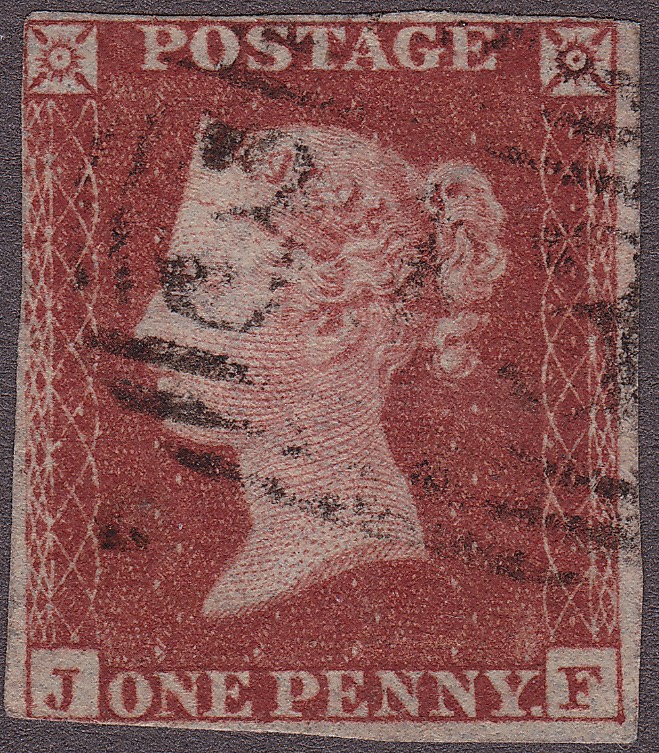 |
|
Send note to Staff
|
|
|
Pillar Of The Community
Netherlands
6643 Posts |
|
|
This was hand-made paper. There is variation in the thickness.
Someone had one too many looks in a Scott catalogue and called all that appeared translucent pelure paper.
This is just the blueing of the paper that creates an effect of translucency. |
|
Send note to Staff
|
|
|
Pillar Of The Community
1318 Posts |
|
|
No doubt on the paper variations for this stamp. I've read about that. I dont have any idea what it is or isn't, but I think it would be hard to tell from a scan. The paper does feel 'tissue like', but thats as far as id go not having the experience to go further with it. I have plenty of stamps to compare it to, all thicker in composition, probably none thinner though. And I dont have a confirmed Pelure example for comparison either. Trying to figure out the plate, maybe 150 or 170, to determine more particulars. |
|
Send note to Staff
|
|
|
Pillar Of The Community
Netherlands
6643 Posts |
|
|
Forget about 'paper types' they do not exist. All variations were within the specifications of the GPO. |
|
Send note to Staff
|
| Edited by NSK - 09/10/2023 1:05 pm |
|
|
Pillar Of The Community
1318 Posts |
|
|
I did find this in The Postage and Telegraph Stamps of Great Britain
PAPER.— The paper on which the stamps in this Section were p r I n t e d w a s h a n d -m a d e , w I t h r a g g e d o r " d e c k e l " e d g e s a l l r o u n d the sheet,and was manufactured by Messrs.Faircroft and Co. at the Rush Mills,near Northampton,under the inspection of an officer of the Inland Revenue Department. The sheets, after having been made up in to reams of five hundred,were forwarded direct to the offices of the Department in Somerset House,and there counted in and out,every sheet being rigorously accounted for.
The colour of the paper was greyish-white, and, like all hand-made papers, it has varied considerably in thickness at different periods.†
* Coincident with the enclosing of the plate number within a circle, another number was introduced into the upper and lower margins,which was the " official" number of the plate.
This is especially noticeable in some of the one penny stamps, particularly those printed about the summer of 1870 (plates 139–144, Series ii.),which are on comparatively thick paper,differing materially
from those appearing in the autumn of 1876, which are found on paper so thin as almost to resemble pelure paper. |
|
Send note to Staff
|
|
|
Pillar Of The Community
Netherlands
6643 Posts |
|
|
Your stamp is pre-perforation. Nowhere near 1870s.
Thin paper does not make pelure paper. |
|
Send note to Staff
|
|
|
Pillar Of The Community
1318 Posts |
|
|
I wasn't saying it was my stamp, I was just posting what I had found on pelure. Sorry for the confusion. |
|
Send note to Staff
|
|
| |
Replies: 13 / Views: 691 |
|




 Posted 09/09/2023 5:25 pm


