|
This page may contain links that result in small commissions to keep this free site up and running.

Welcome Guest! Registering and/or logging in will remove the anchor (bottom) ads. It's Free!
To participate in the forum you must log in or register.
| Author |
 Replies: 15 / Views: 1,038 Replies: 15 / Views: 1,038 |
|
|
Valued Member
Japan
385 Posts |
|
|
Hope everyone's well. I'm away from my scanner so please forgive the photography. Top stamp - Definitely #191, soft paper Middle stamp - #166, lighter rose carmine on extremely brittle, thick hard paper (I'm still studying that one) Bottom stamp - #155, hard paper, darker carmine 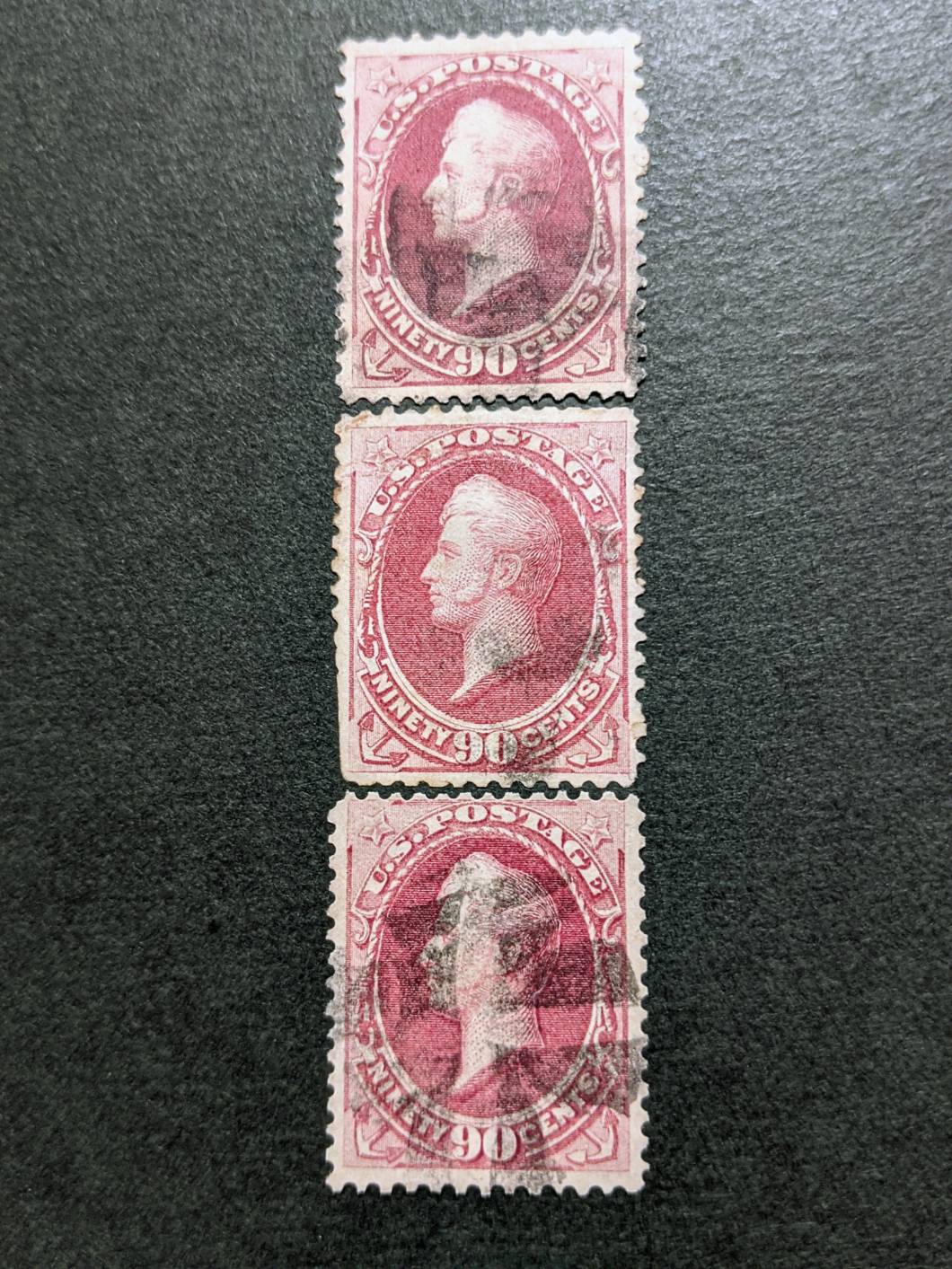 My first interest is in the design size of the #155: it's thinner than all other Perrys I've compared it to. It's on fairly thick paper with vertical ribbing that can be seen from the front and the back. I'm guessing this is the reason the design is substantially more thin. I'll post the comparisons/ribbing next: 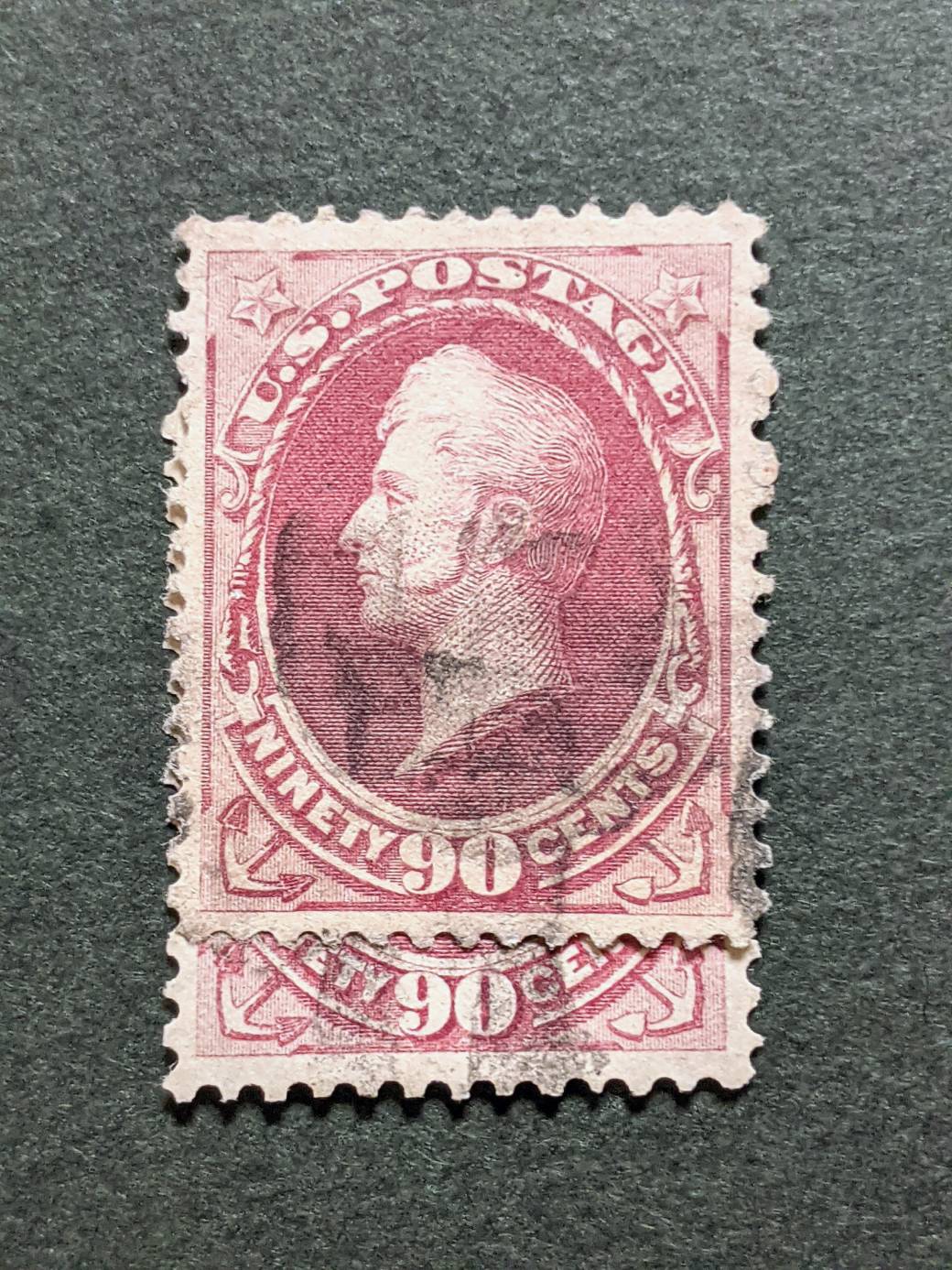 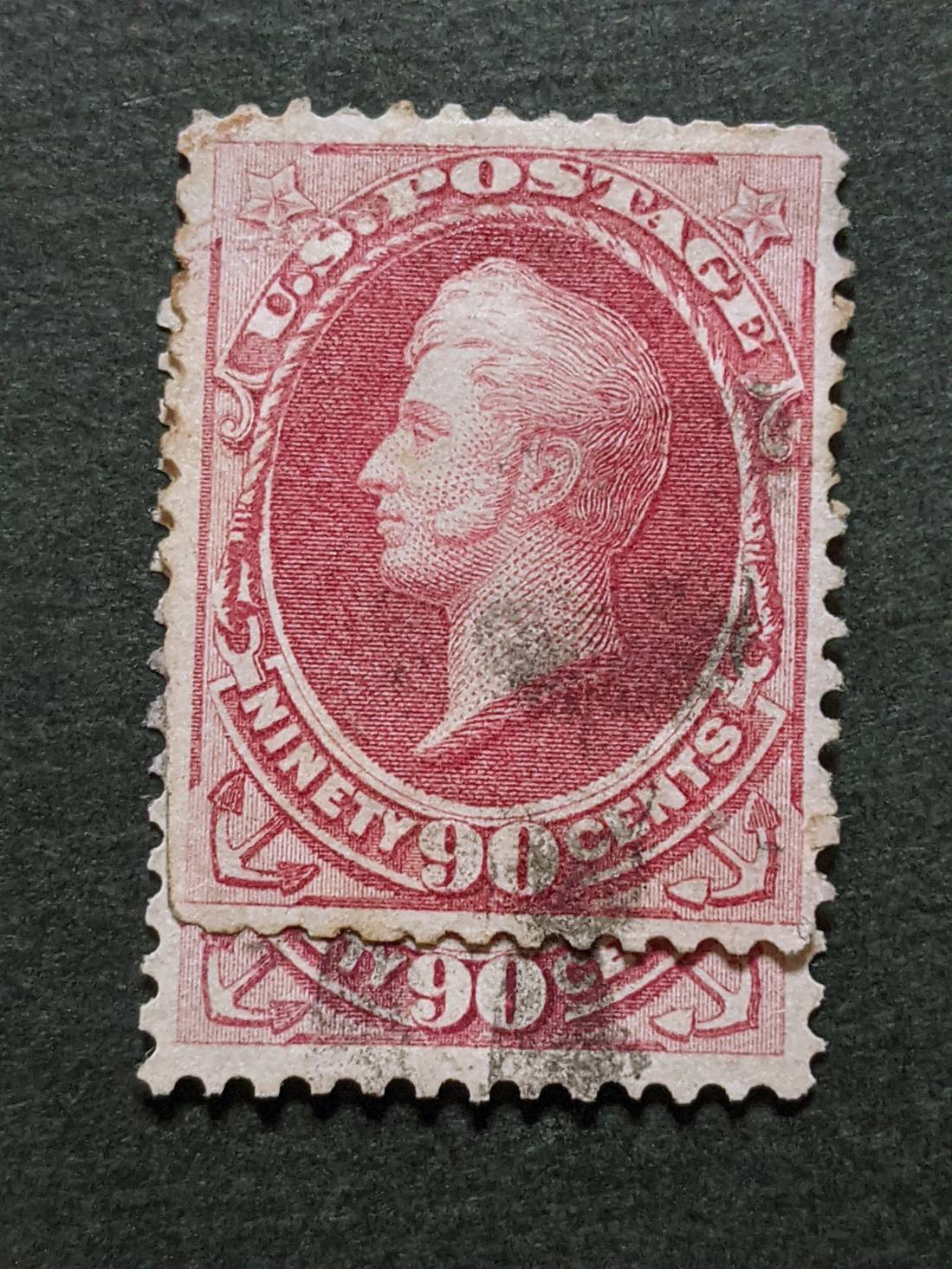 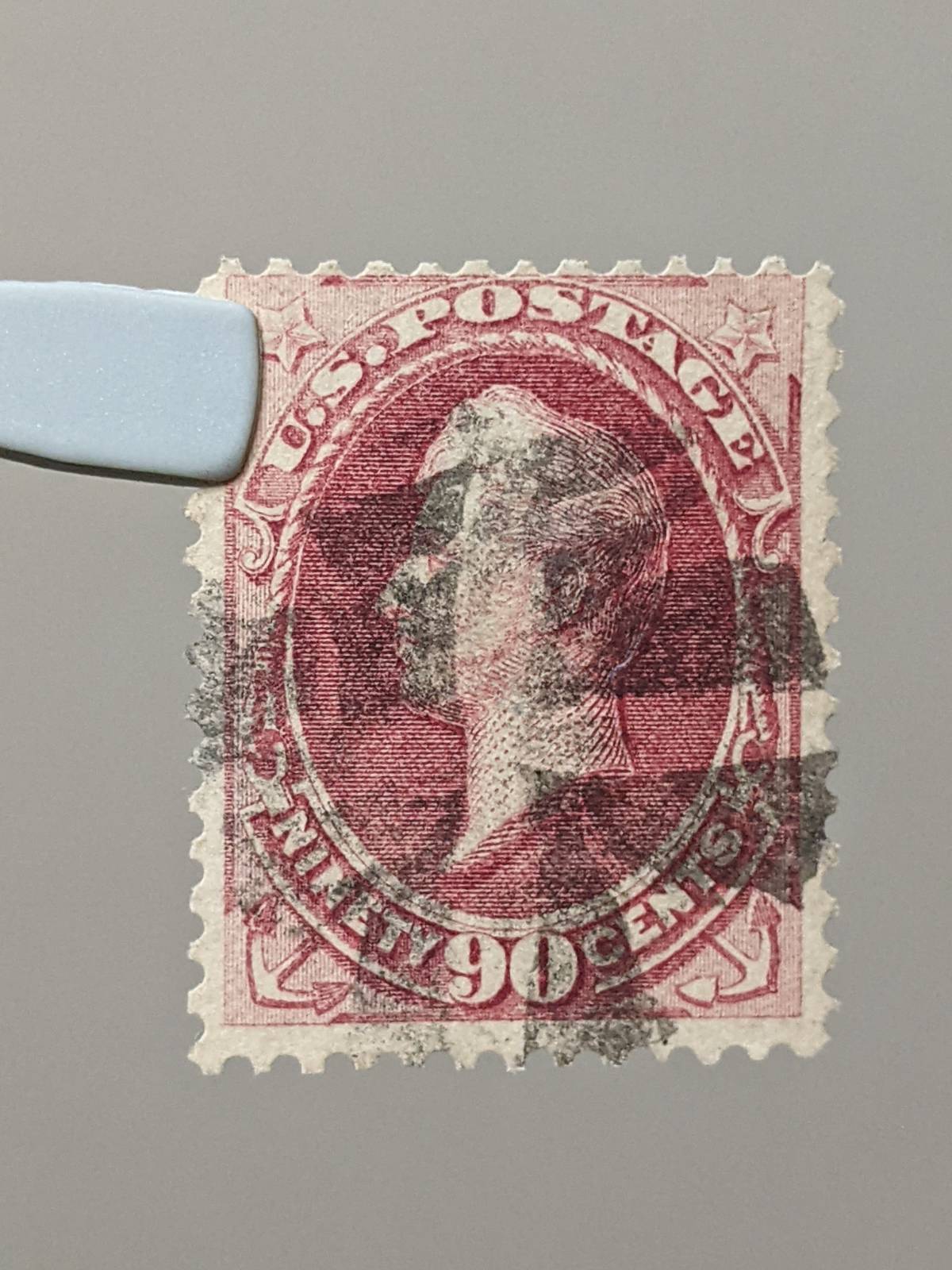 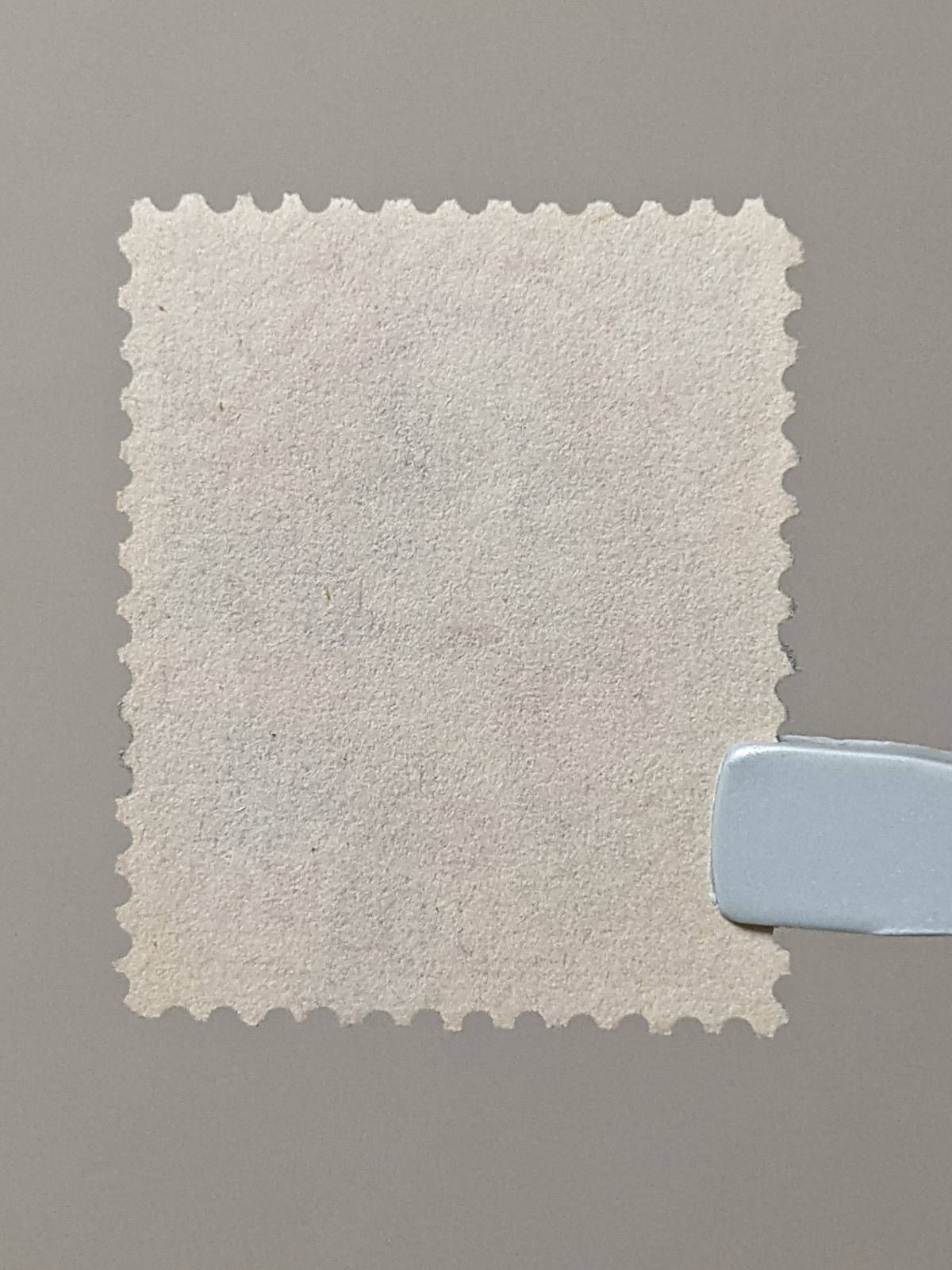 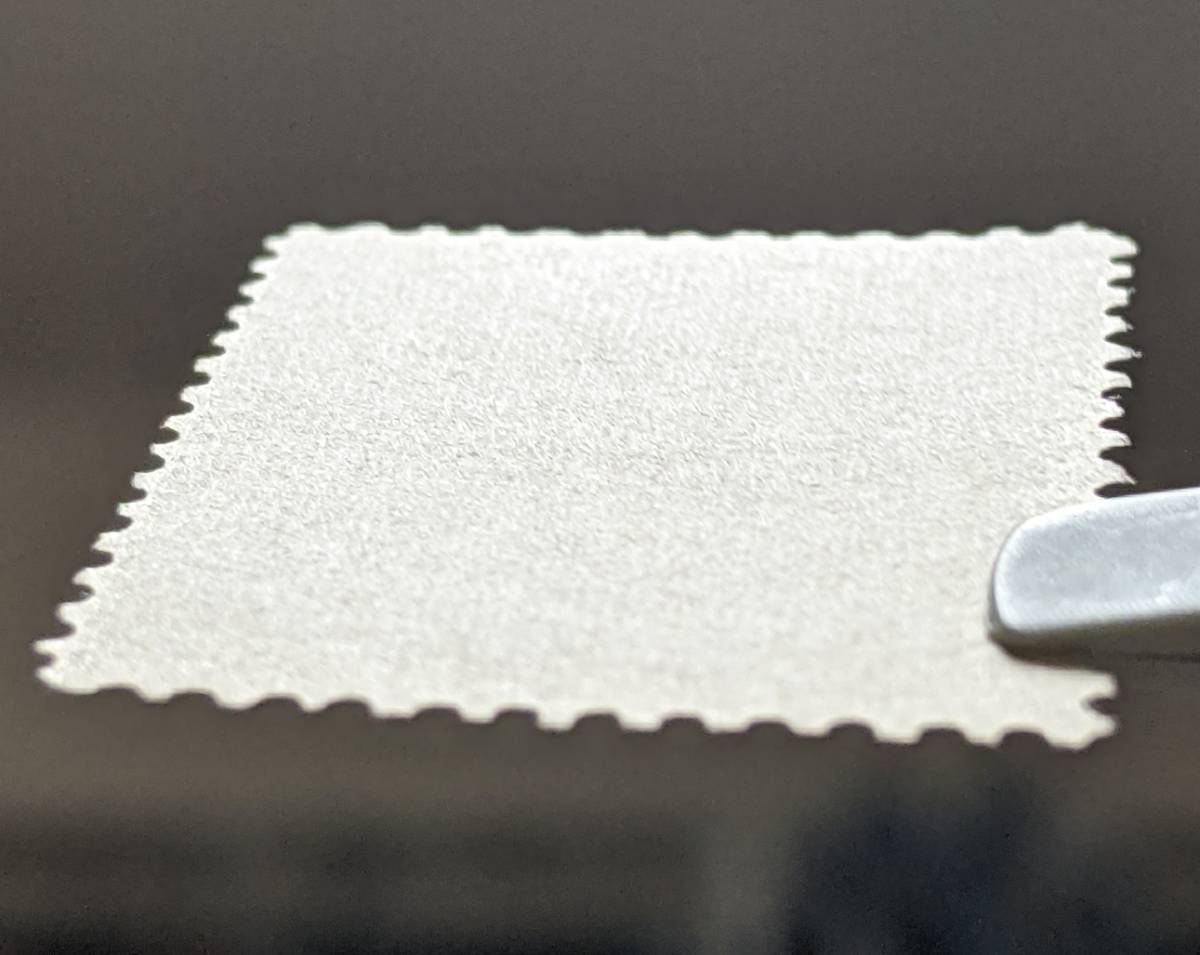 Here is my question: Is this design size consistent with 1870 issues? Or more to the point.. could this be another way to identify a National printing? -Stephen |
|
Send note to Staff
|
|
|
|
|
Valued Member
Japan
385 Posts |
|
|
Then, I have one more point regarding the Secret Mark. I've read that early collectors claimed that the secret mark of the #166 can be found on the star in the top-right corner.. but I've noticed something else: The anchor in the bottom left corner shows considerably less detail than the #166. When checking the shading on the stem of the anchor, the first line (closest to the middle of the stem) is longer on the #166 and produces a squared-off angle, whereas the #155 is more rounded into the right hook of the anchor: 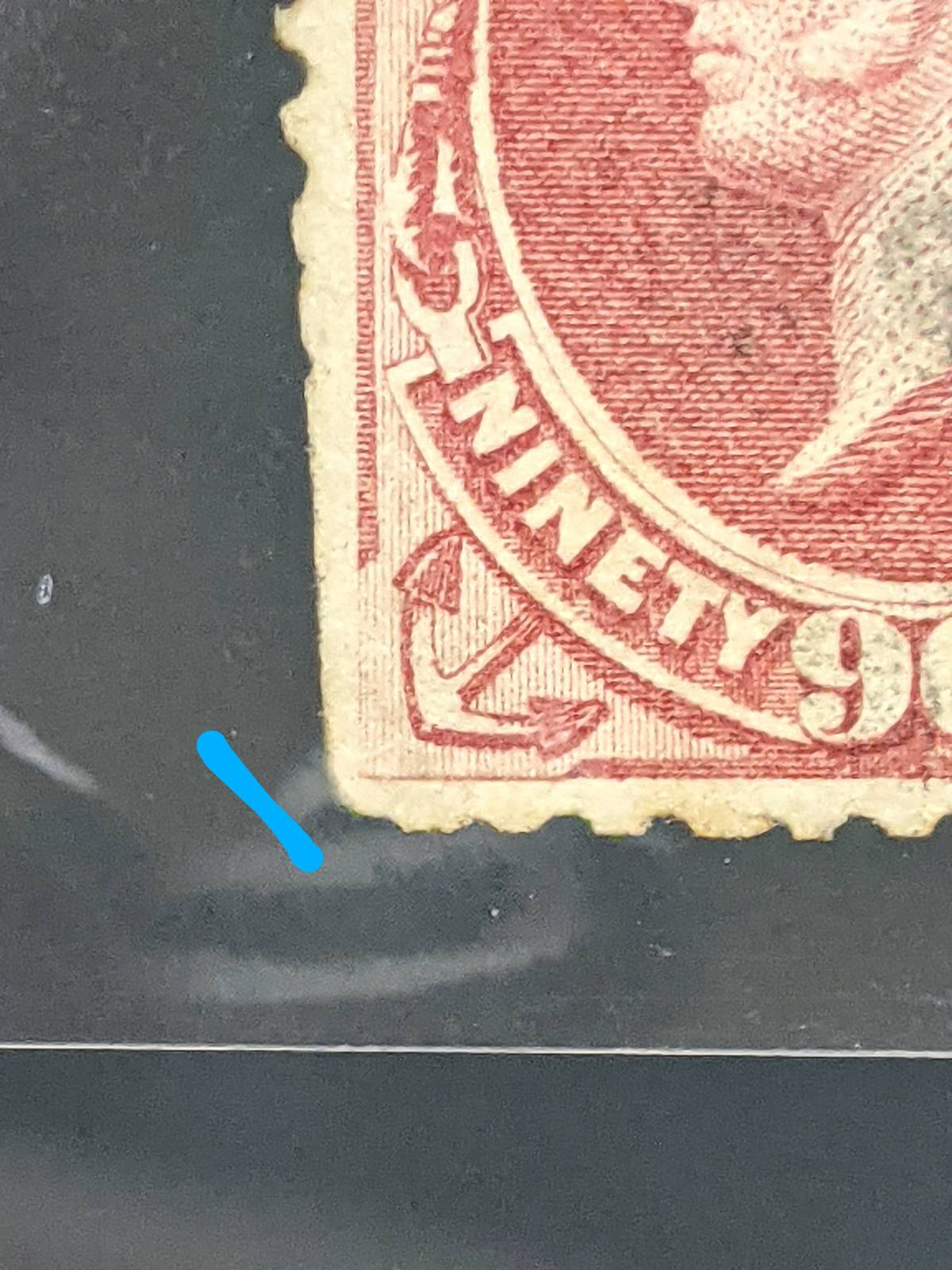 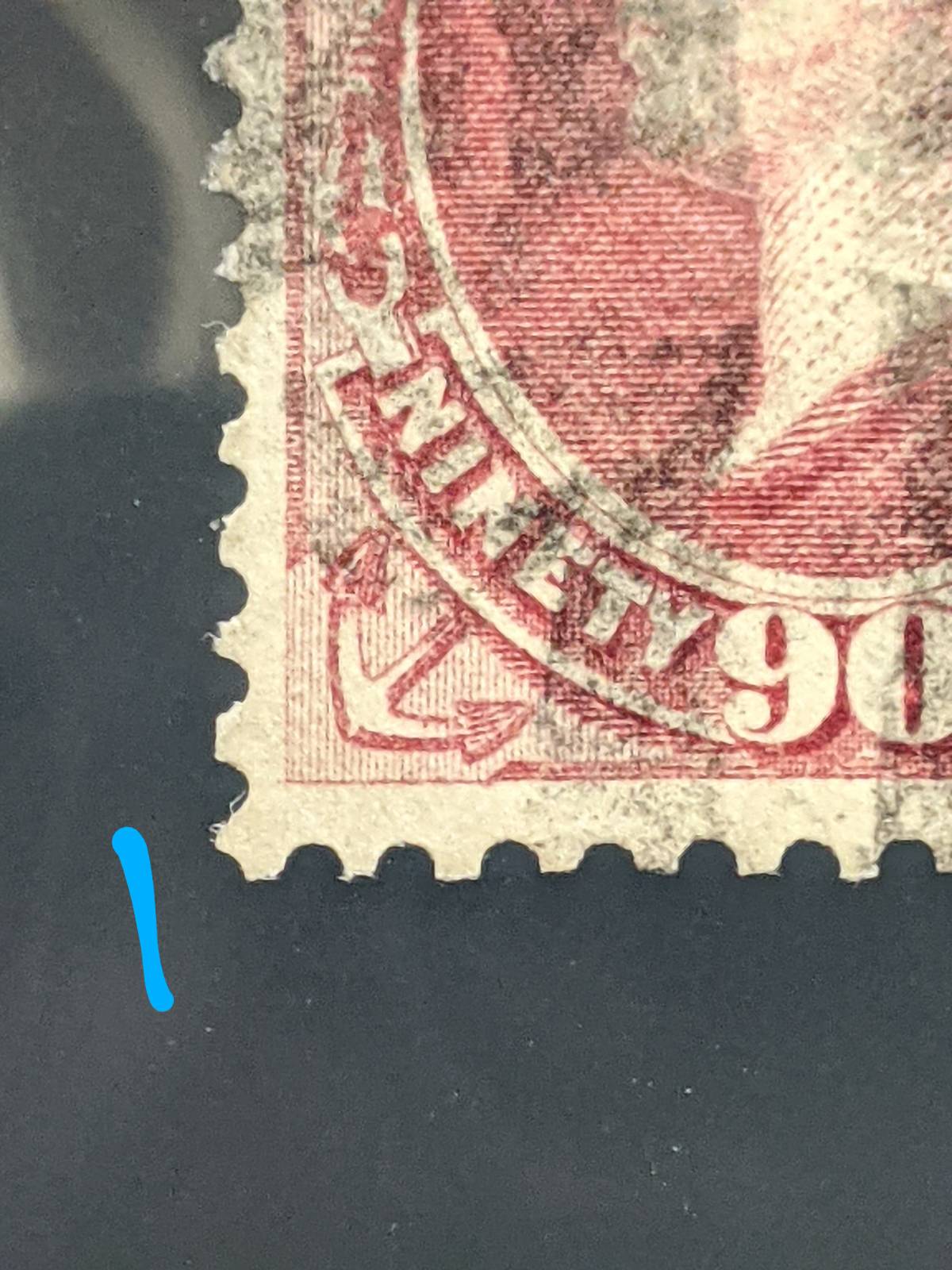 After seeing this now I can't unsee it on other examples as well. Has this been mentioned before, or is it not a viable Secret Mark? |
Send note to Staff 
|
|
|
Bedrock Of The Community
12703 Posts |
|
|
Quote:
Is this design size consistent with 1870 issues? Or more to the point.. could this be another way to identify a National printing?
The printers are used the same plates. |
|
Send note to Staff
|
|
|
Pillar Of The Community
6357 Posts |
|
|
If you are going to present data comparing two widths, then you should also present similar data comparing the heights.
You ask us to draw conclusions based on half of the data readily available. Very poor methodology. |
|
Send note to Staff
|
|
|
Pillar Of The Community
United States
1946 Posts |
|
|
Stephen-P wrote: Quote:
My first interest is in the design size of the #155: it's thinner than all other Perrys I've compared it to. It's on fairly thick paper with vertical ribbing that can be seen from the front and the back. I'm guessing this is the reason the design is substantially more thin.
I'll post the comparisons/ribbing next:
I've underlined the operant words here. You have shown us some pics in which you identify certain vertical striations as ribbing (per the association of you words and pictures. But here I must ask if you have made the measurements which would distinguish vertical paper mesh from the kind of lines associated with true ribbing? Since you do not say, I am inclined to think you may not have made the measurements. What I was seeing in your pic does not look like ribbing to me. It would be doing us a favor if you would purchase an example of certifiable ribbed paper and then familiarizing yourself with its characteristics. In addition to the linear dimensions associated with both styles of "Continental ribbed paper," which you must learn to recognize at sight, Ron Burns has also come up with a test involving the application of some moisture and watching for a particular style of curling. While that is mostly about paper mesh, the one-two paper, as Wiley called it, Probably would be best if In the future, you don't bring us a sample of so-called ribbed paper until it has passed one or more of the appropriate tests to establish that. As always, if you are not able to perform these tests yourself, then contact one of the certifying agencies for special submission instructions for residents of Japan. |
|
Send note to Staff
|
|
|
Valued Member
Japan
385 Posts |
|
|
I'm sorry essayk, but I believe you may have misunderstood my post. Calvet Hahn and Roy White both acknowledge a ribbing that occured on pre-banknotes. I was using the term generally as they were, not specifically to only the 1873 types. I didn't know about the water test, but I can spot them pretty easily without checking the back at all. The color is usually very deep, with a design that is more 'crisp', but in a fuzzy way. Hard to explain, so here are some examples: 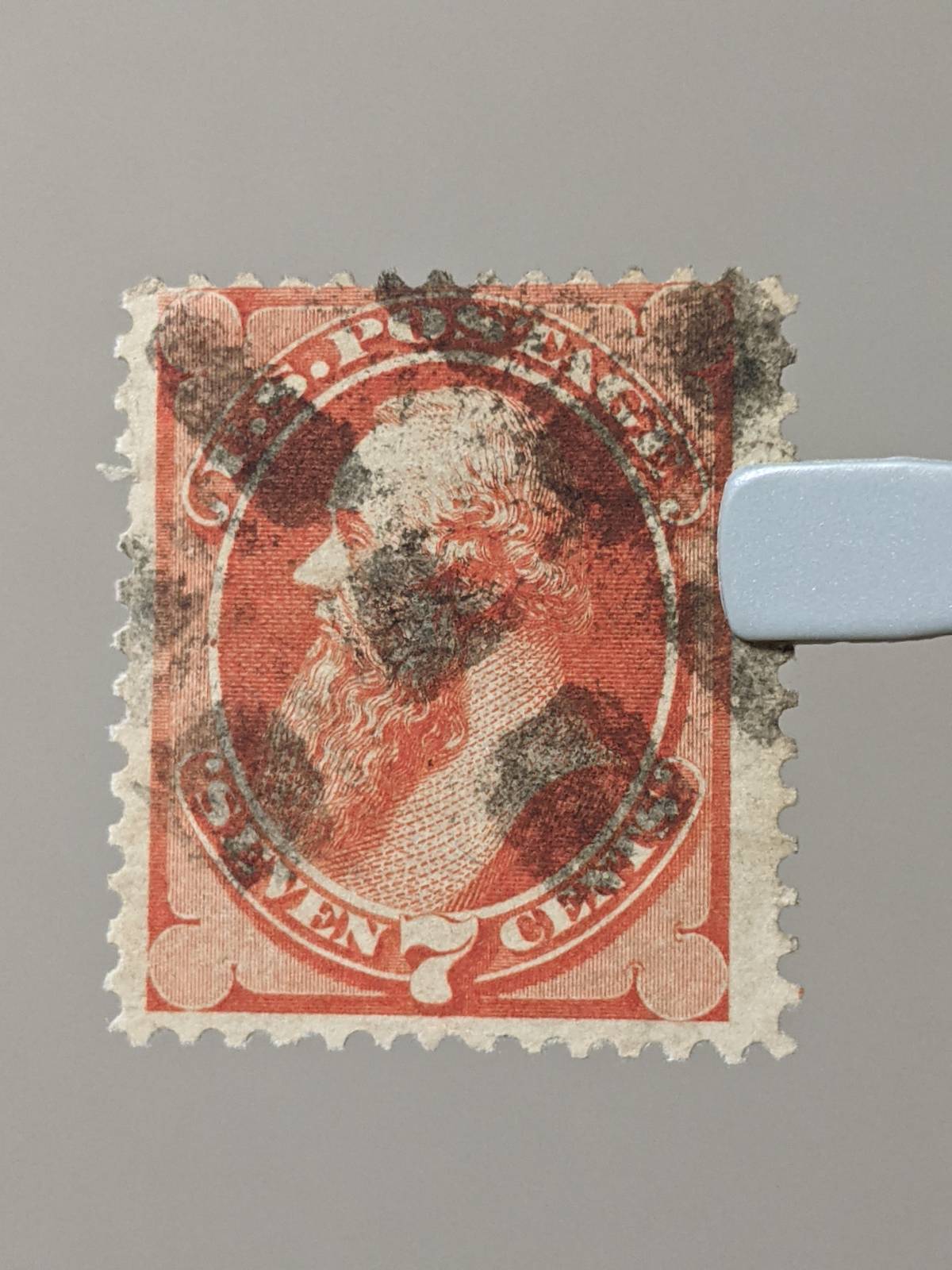 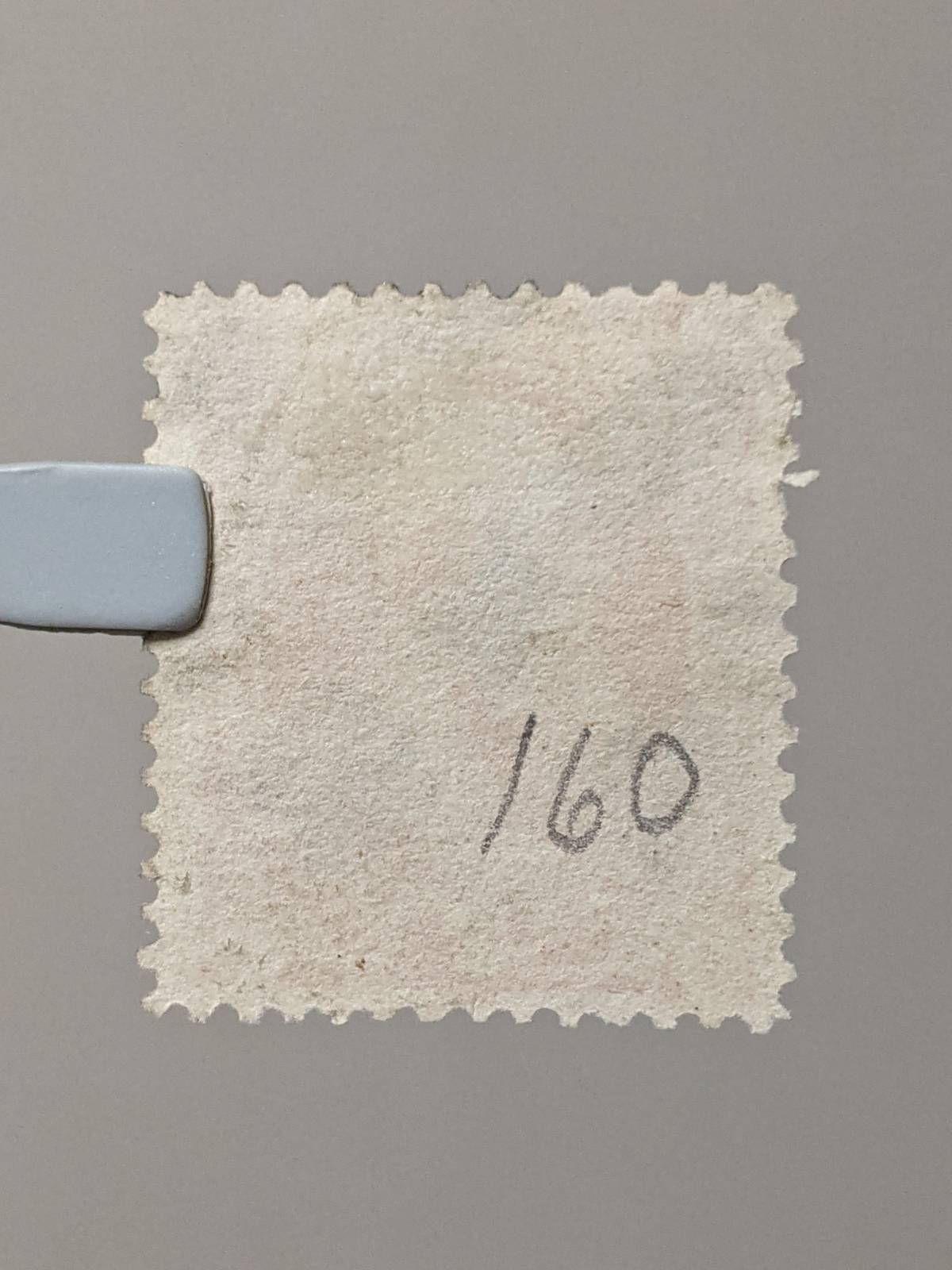 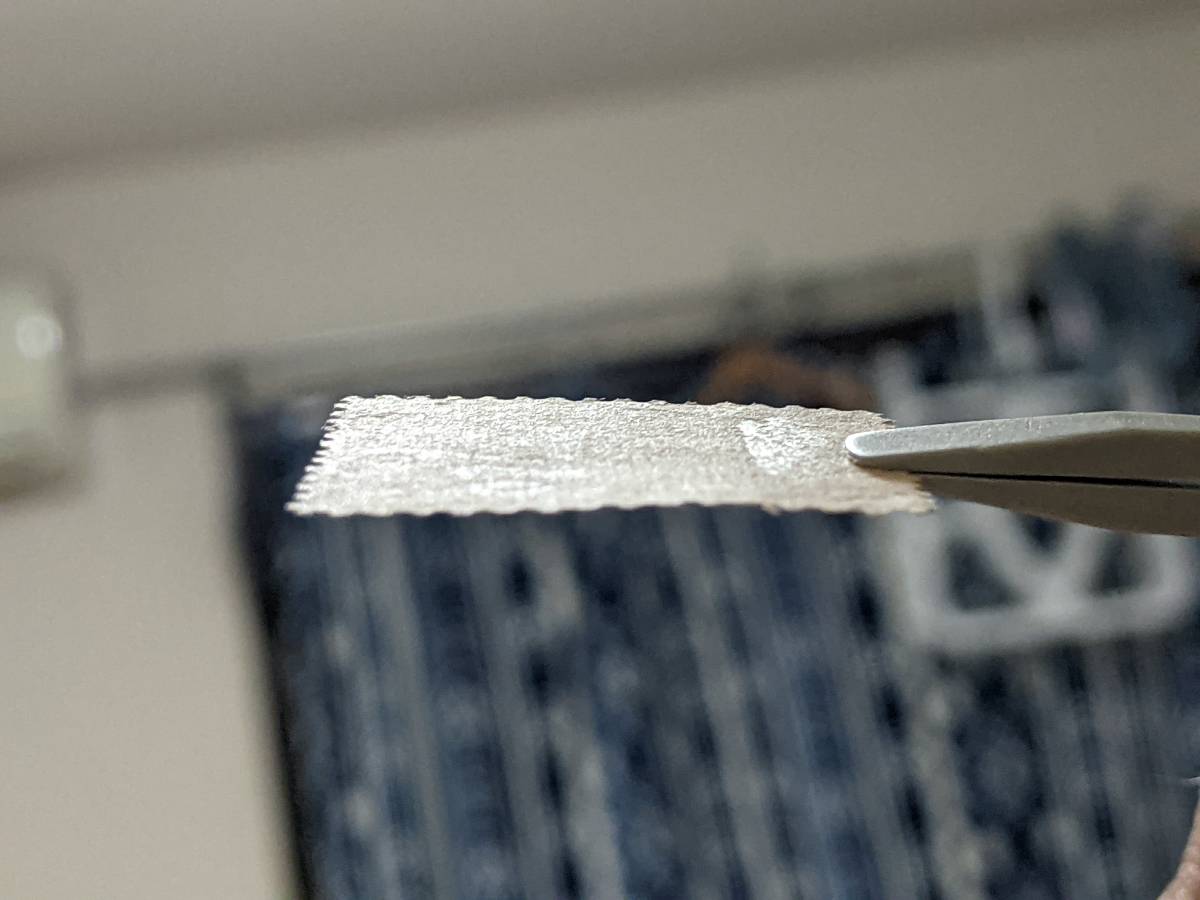 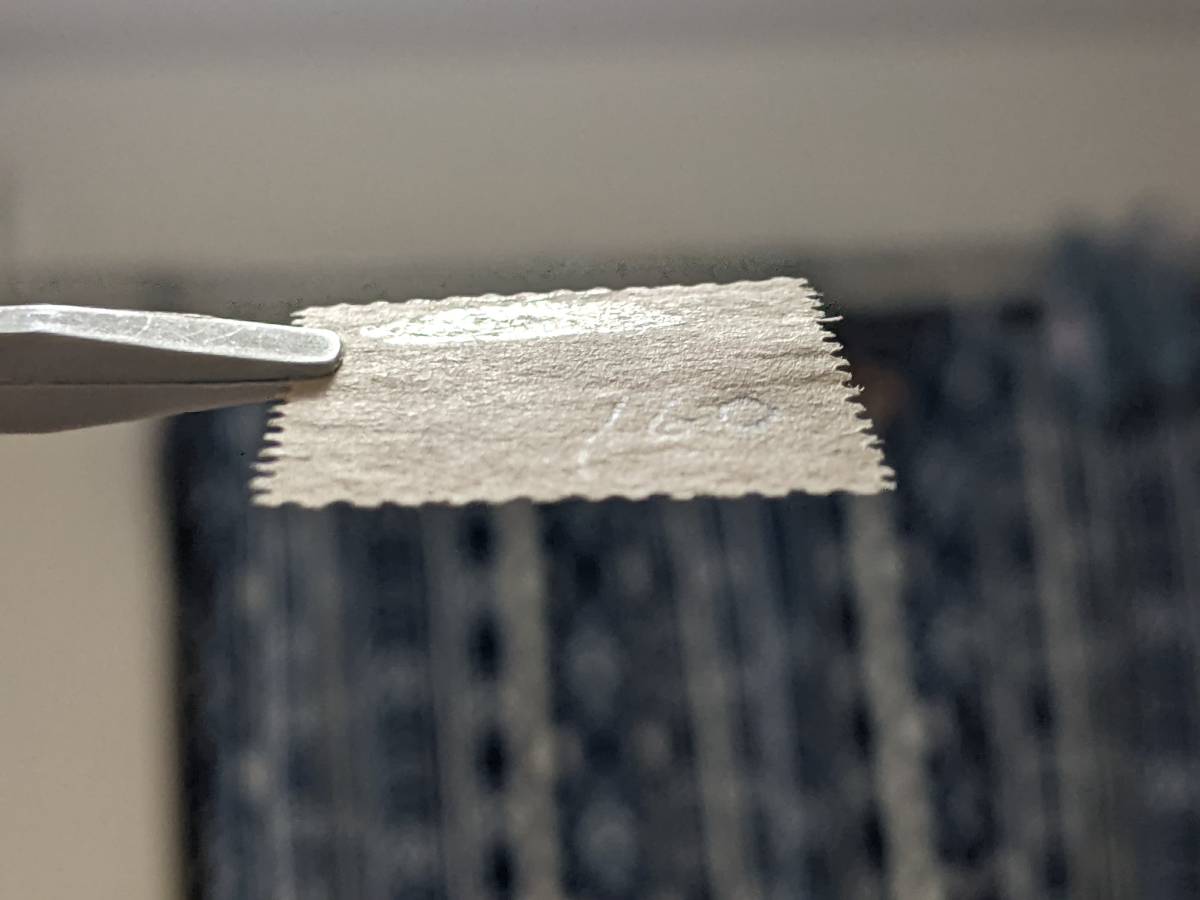 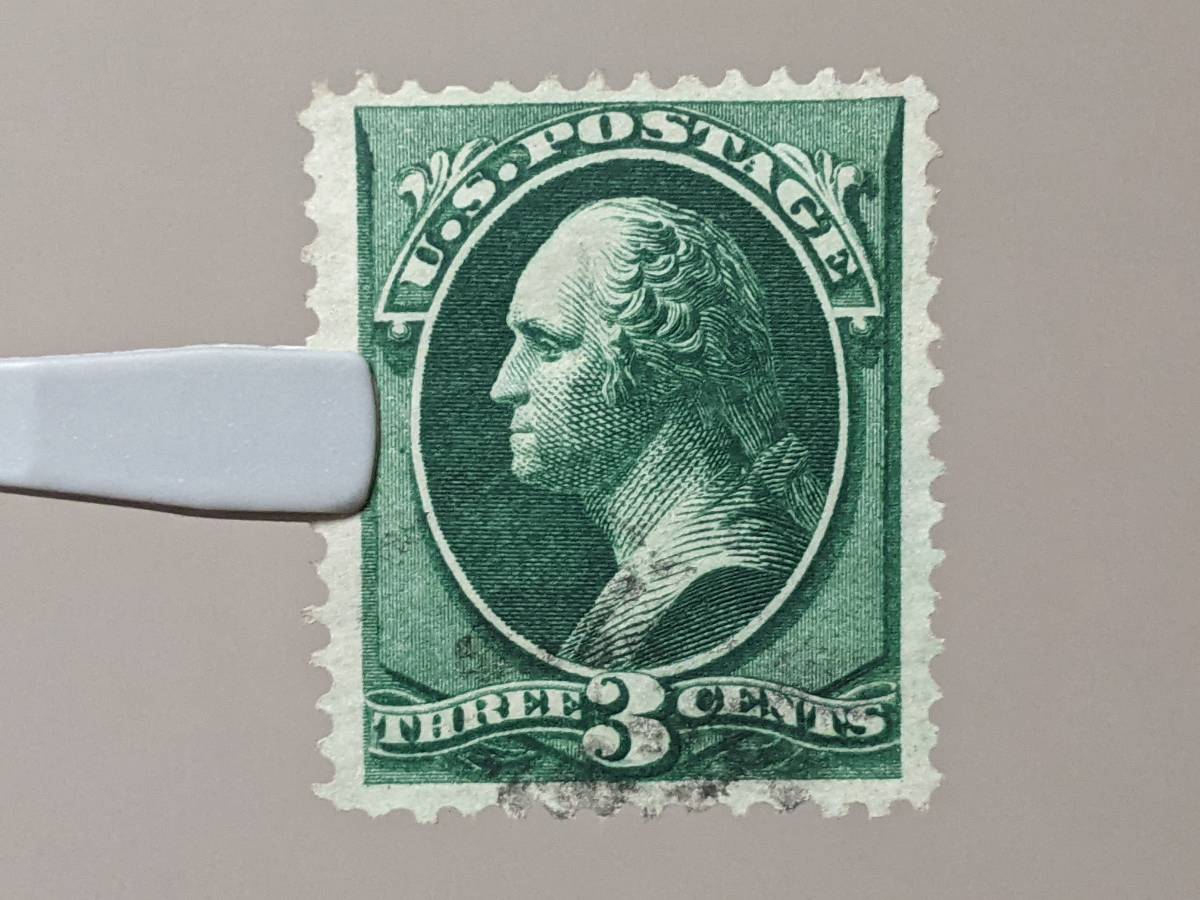 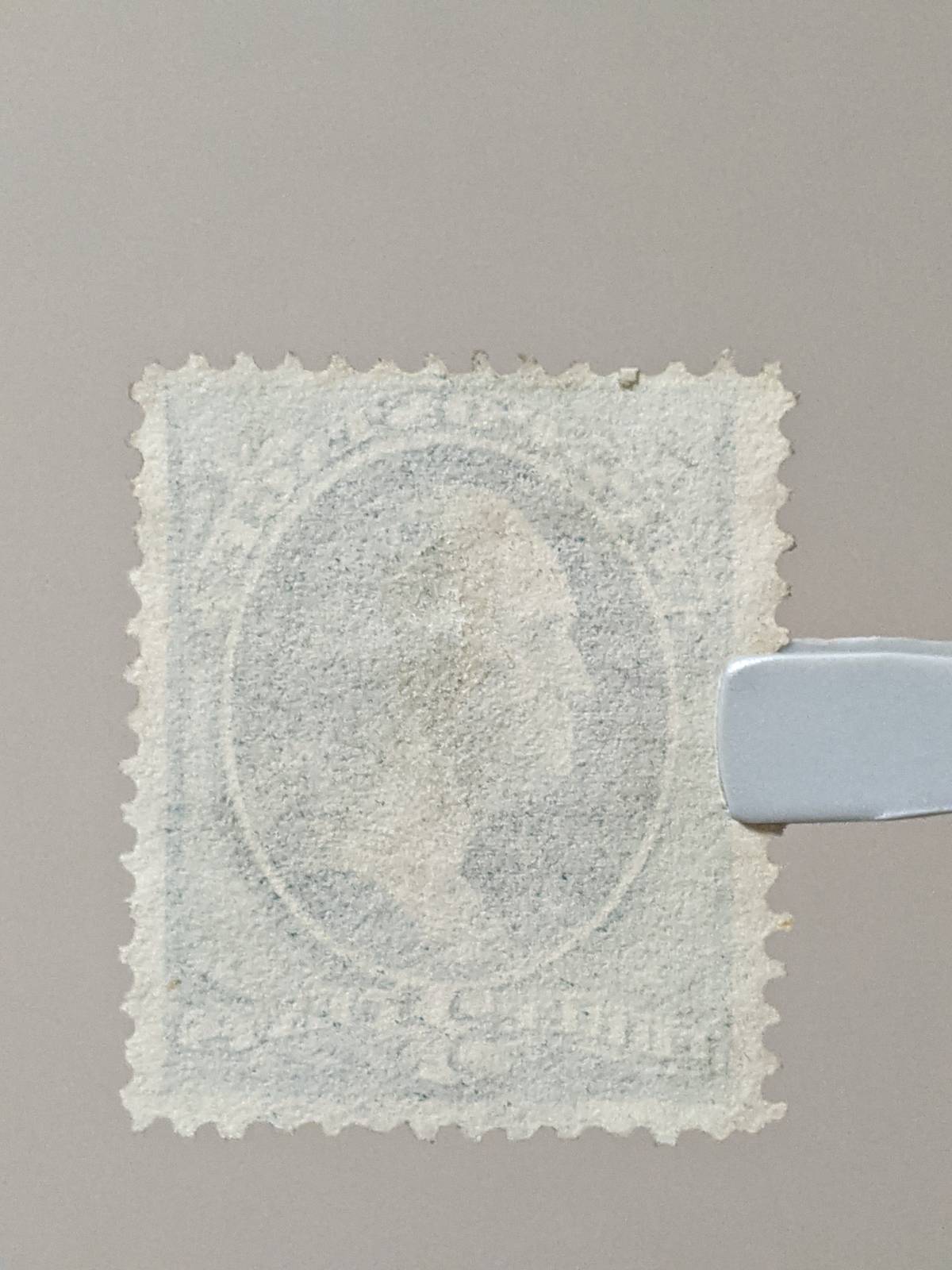 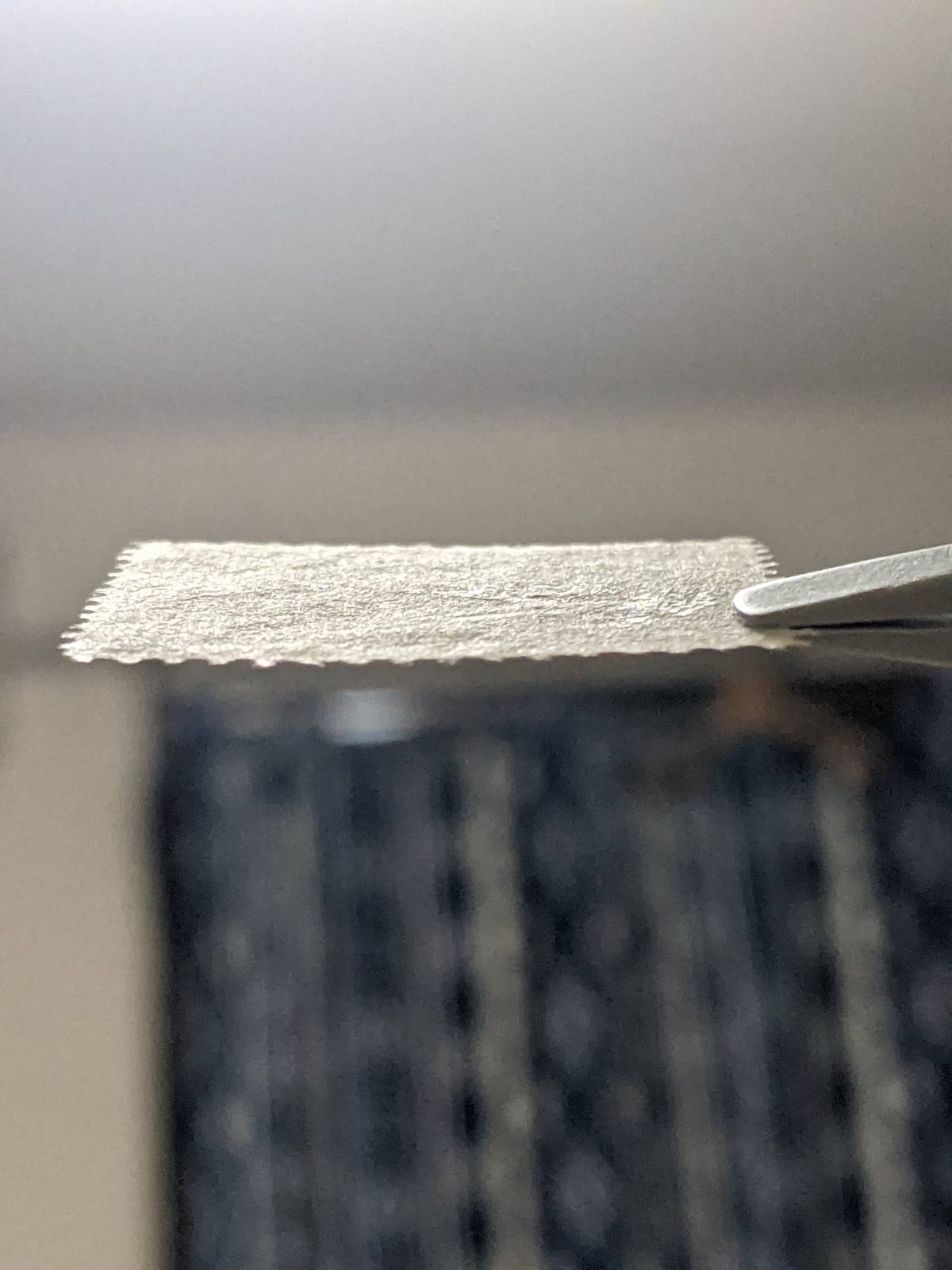 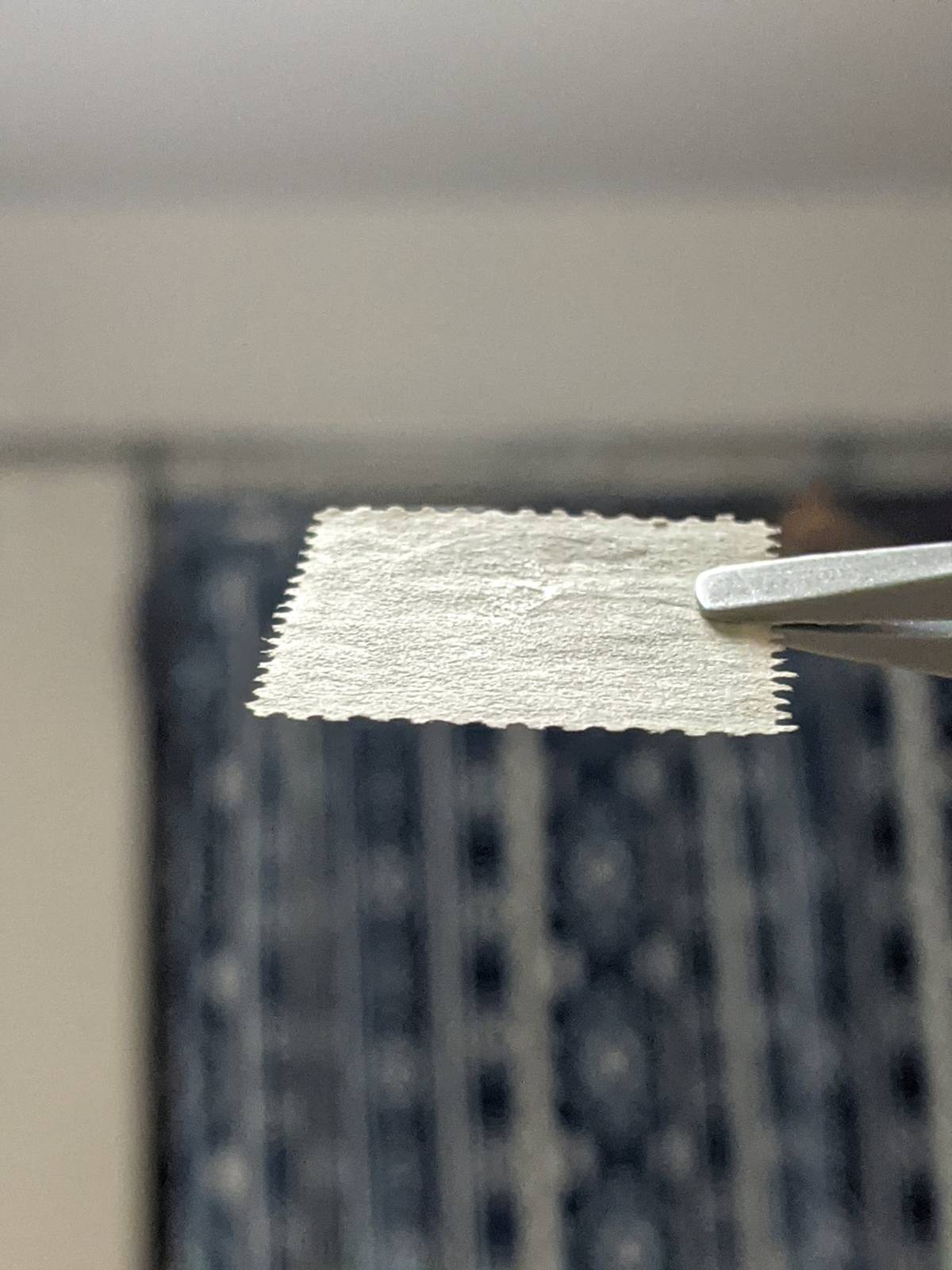 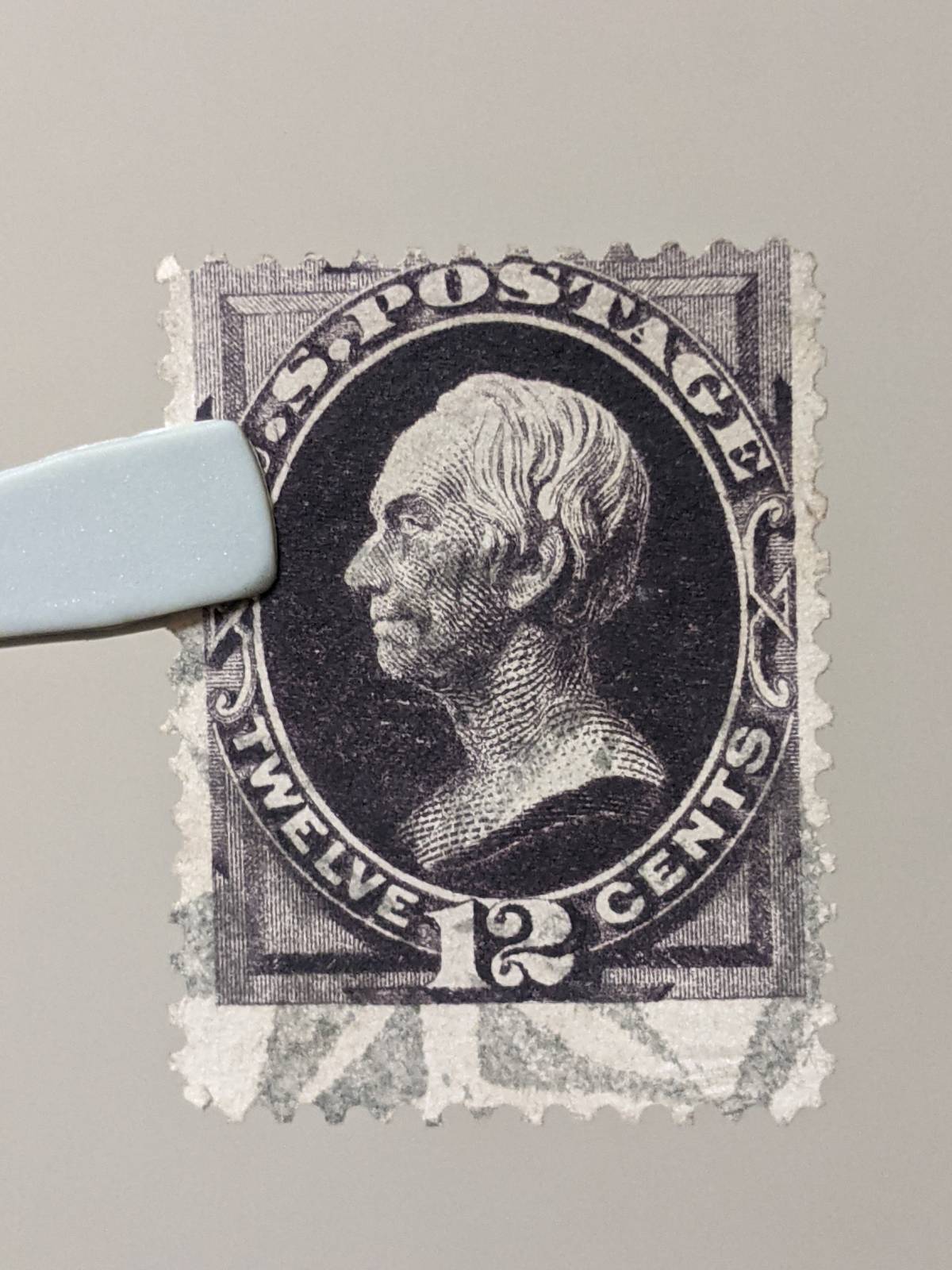 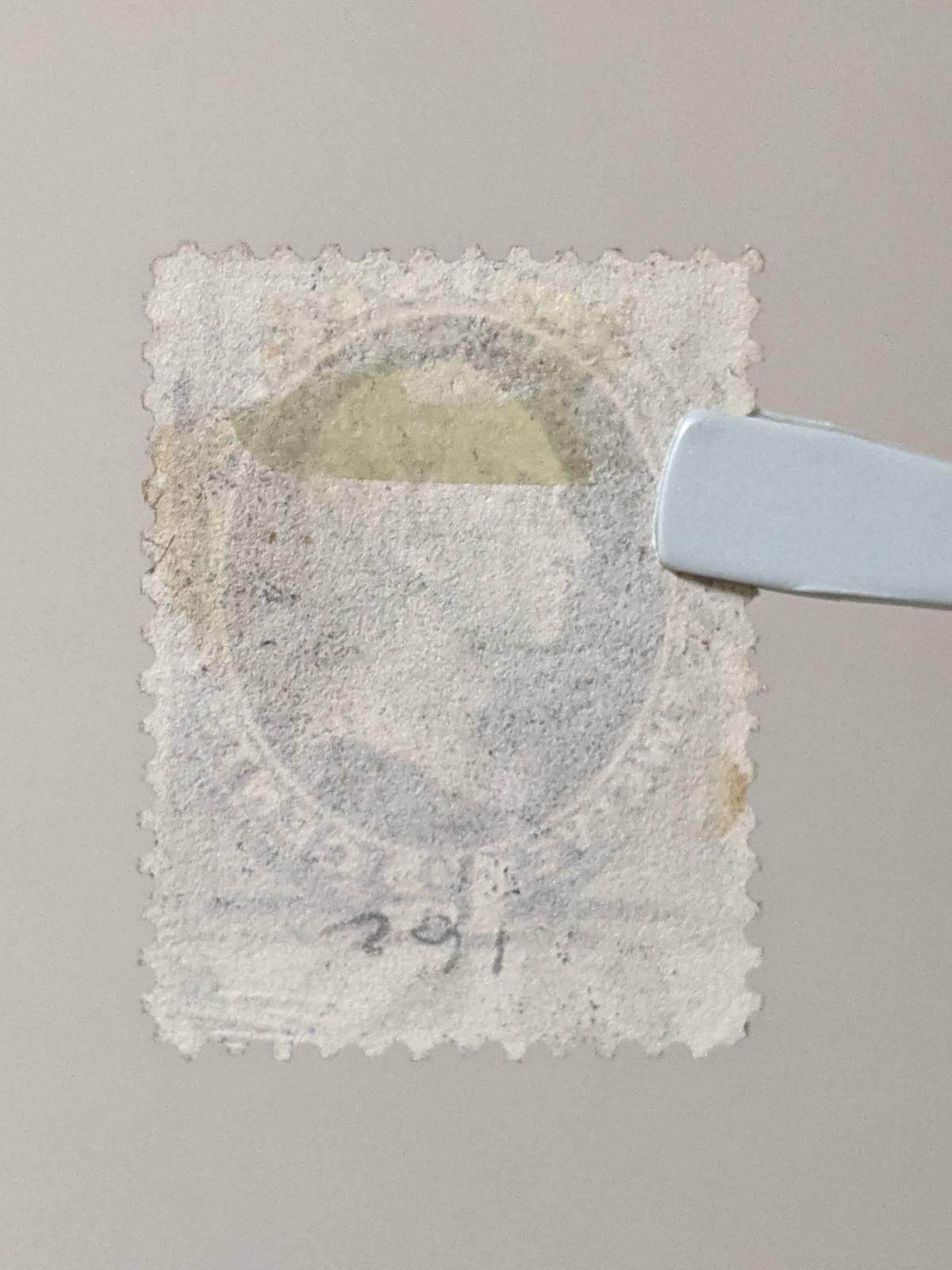 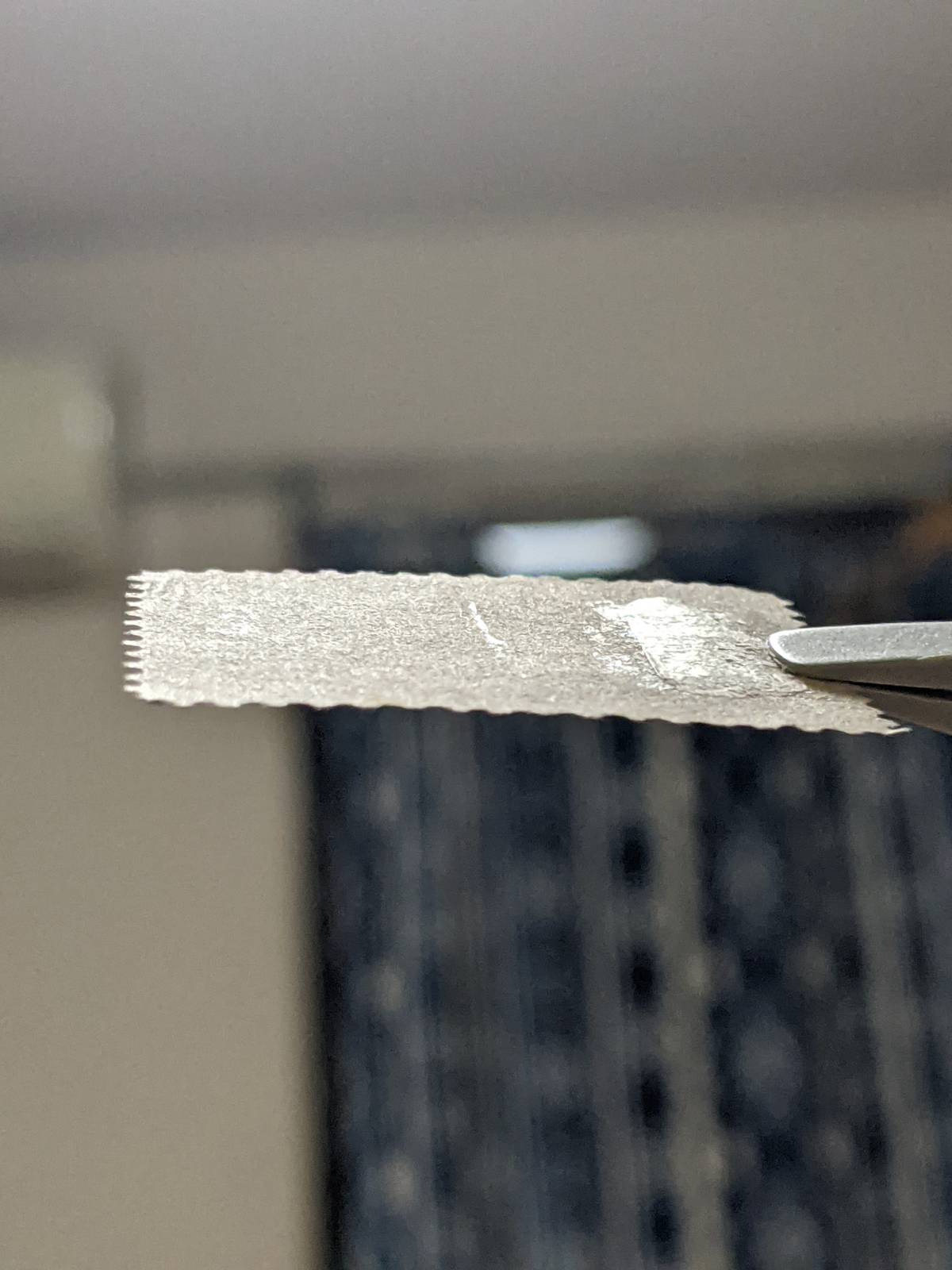 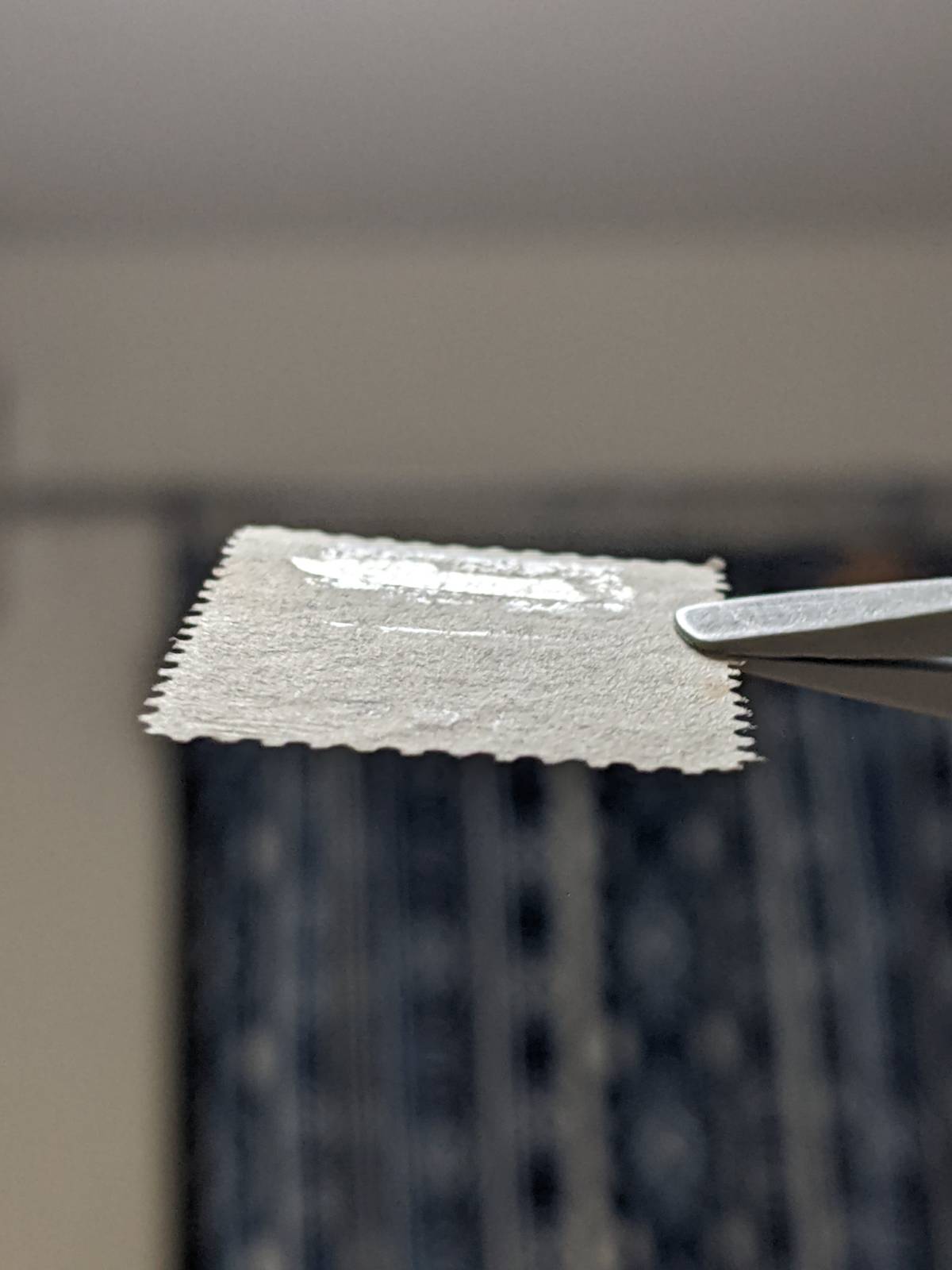 All of these are horizontally ribbed (which are harder to capture for some reason), 40 lines up and down. I have more but I think this is enough. --------- Back to the #155 in question - For the average paper mesh pattern, the lines flow both horizontally and vertically, fairly balanced, and the "mesh" pattern becomes visible. For this #155, you only see the lines running in one direction, much like all other ribbed paper (including the Continentals). Here is a picture of the #155 at the horizontal perspective: 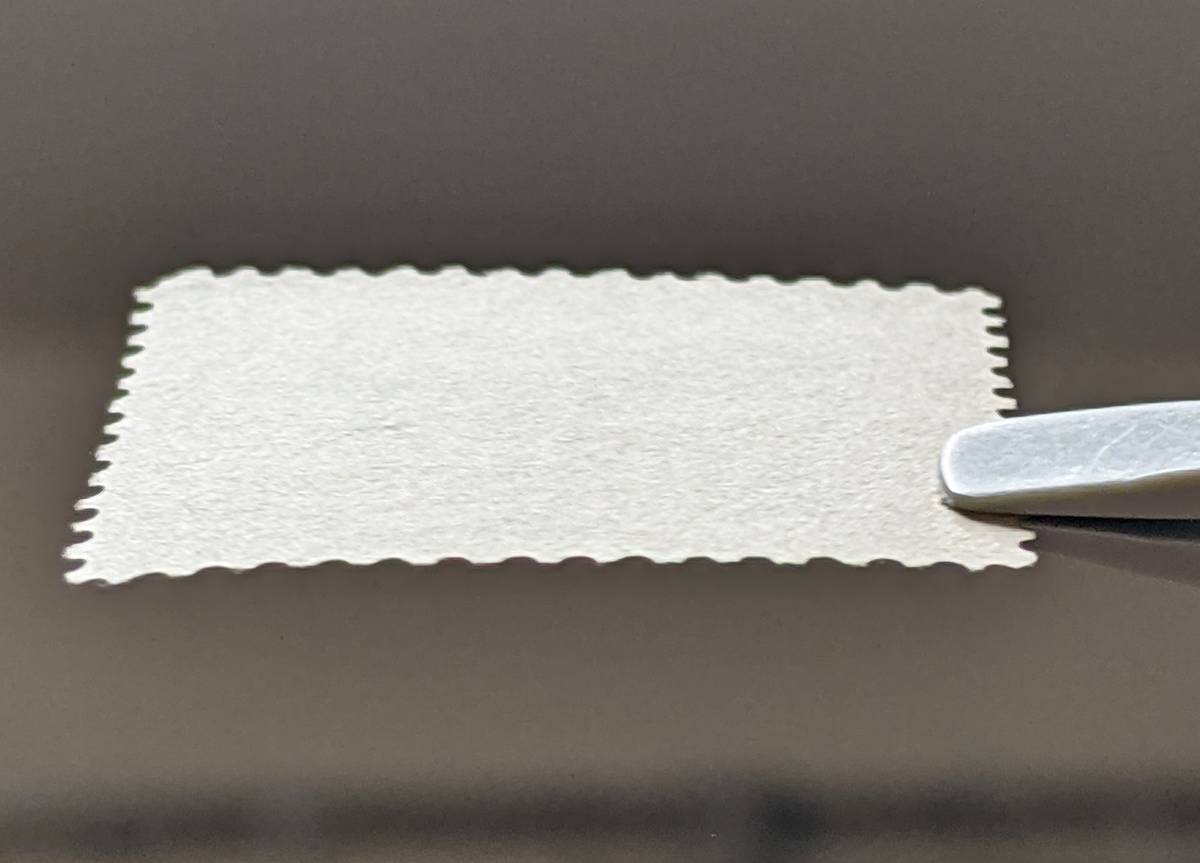 We see the same pattern experts mention with the 1851 ribbing, as well as the one I showed in this thread: https://goscf.com/t/84869Correct me if I'm wrong, but to my understanding the main difference in "true ribbing" is that it occured during stamp production, while earlier ribbing occured during paper production. There are two potential ways to distinguish on type from the other: 1) the ribbing on the #1 can be seen quite easily, without having to place it under a specific light, whereas for the #155 shown here (and Continental types), oblique lighting is necessary. However, when the #155 shown here (and Continental types) are put under direct light, they have a thick surface much like the consistency of concrete, whereas the earlier ribbed papers still show the lines. 2) The design size is unchanged on the #1, but for the #155 and continental types, the design is slimmer or shorter depending on the ribbing direction. This is why I'm asking about vertical ribbing on 1870 banknotes in general, so that I can verify if the slimness is actually because of the ribs or something else. |
|
Send note to Staff
|
|
|
Valued Member
Japan
385 Posts |
|
|
This is my point - I believe there is ribbed paper specific to National printings just like there is ribbed paper specific to Continental printings. This shouldn't be controversial, since Experts have recognized 1870 banknotes with ribbing in the past. Enter the "24c ribbed paper but not the ribbed we're looking for":  Anyways, I think this is important. If we can verify National printings having their own type of ribbing, we may be able to distinguish a National from a Continental 90c, 30c from more than just the color. |
|
Send note to Staff
|
|
|
Bedrock Of The Community
12703 Posts |
|
|
Quote:
I believe there is ribbed paper specific to National printings just like there is ribbed paper specific to Continental printings. Given that the Banknotes have been studied ad nauseum for many decades I highly doubt your belief. See Brookman Volume II for an in-depth discussion of these stamps: https://www.uspcs.org/wp-content/up...k-Marked.pdf |
|
Send note to Staff
|
|
|
Pillar Of The Community
United States
1946 Posts |
|
|
Stephen-P wrote: Quote:
Anyways, I think this is important. If we can verify National printings having their own type of ribbing, we may be able to distinguish a National from a Continental 90c, 30c from more than just the color. Quote:
This is my point -
I believe there is ribbed paper specific to National printings just like there is ribbed paper specific to Continental printings.
This shouldn't be controversial, since Experts have recognized 1870 banknotes with ribbing in the past.
Calvet Hahn and Roy White both acknowledge a ribbing that occurred on pre-banknotes. I was using the term generally as they were, not specifically to only the 1873 types.
Stephen, your use of sources is highly questionable inasmuch as you allude to them but do not actually cite them. Case in point: I tracked down what Cal Hahn said about ribbed paper in the article "The Topic Is Paper" © Calvet M. Hahn 2002, to which you did provide a link earlier in this thread. However, in your allusion to that article, you observed, "According to the Calvet Hahn piece, ...(link)... the machine made paper of the 1951 imperforate sometimes showed ribbing, .... Based on that allusion you move to a speculation, "but I wonder, because of pieces like this, if that same machine-made "ribbing" went back earlier... " You have here, for you own purposes, intentionally misrepresented what Hahn actually said. Hahn devoted a few paragraphs to discussing the origins of "Machine-made Paper" in a section with that as a heading. The next section he titled, "Identifying Handmade vs. Machine-made Paper," and in that section he observes, "That stamp paper used in 1852-3 shows ribbing, which was caused by a worn press blanket used during the printing and does not represent true ribbing or laid paper. [emphasis mine] In his very next sentence, Hahn observes,"Roy White challenges this theory and suggests in his Papers and Gums book that pull rollers, spirally bound with wire, located between the final drying phase and the calendar finishing process are responsible." As I read him here, for Cal Hahn, the only paper variety he associated with the term "ribbed paper" was that used by Continental from 1873-1875. I have not looked into the Roy White paper studies on this, but would like to see a verbatim citation of any comparisons he makes between the early pseudo-ribbed paper about which Hahn is speaking with respect to stamps before 1870 and the ribbed paper used by Continental from 1873-1875. As to the question: Quote:
Correct me if I'm wrong, but to my understanding the main difference in "true ribbing" is that it occurred during stamp production, while earlier ribbing occurred during paper production. Permit me to quote from the work by H.L. Wiley from 1915, The U.S. 3c Green 1870-1887: Probably the most interesting detail in connection with the ribbed paper is that the dimensions of the stamps printed thereon are different from those of all other stamps. This proves conclusively that the paper is a distinct and individual product of the paper mills, a distinct variety, and entitled to recognition as such." (p. 5) That initial opinion has been the dominant opinion among students for the last century. There is a phenomenon being illustrated in your material about which you do not comment. Does the name Lowell Cooper mean anything to you? |
|
Send note to Staff
|
| Edited by essayk - 09/25/2023 4:48 pm |
|
|
Valued Member
Japan
385 Posts |
|
|
Quote:
"Stephen, your use of sources is highly questionable inasmuch as you allude to them but do not actually cite them. Case in point: I tracked down what Cal Hahn said about ribbed paper in the article "The Topic Is Paper" © Calvet M. Hahn 2002, to which you did provide a link earlier in this thread. However, in your allusion to that article, you observed, "According to the Calvet Hahn piece, ...(link)... the machine made paper of the 1951 imperforate sometimes showed ribbing, .... Based on that allusion you move to a speculation, "but I wonder, because of pieces like this, if that same machine-made "ribbing" went back earlier... "
You have here, for you own purposes, intentionally misrepresented what Hahn actually said. Hahn devoted a few paragraphs to discussing the origins of "Machine-made Paper" in a section with that as a heading. The next section he titled, "Identifying Handmade vs. Machine-made Paper," and in that section he observes, "That stamp paper used in 1852-3 shows ribbing, which was caused by a worn press blanket used during the printing and does not represent true ribbing or laid paper. [emphasis mine] In his very next sentence, Hahn observes,"Roy White challenges this theory and suggests in his Papers and Gums book that pull rollers, spirally bound with wire, located between the final drying phase and the calendar finishing process are responsible." Essayk, I'm trying to understand your point. The Continental ribbing (what you are calling "true ribbing") never entered my mind during that entire post. It is a totally different animal. I even made it clear to rogdcam in my reply to him that I'm not asking about the ribbing found on Banknotes from 1873. Maybe try reading that post again without thinking about the Banknotes at all, then you might understand what I was asking. It's really not that complicated. "Do you think it's probable that whatever happened to the 1851 ribbed imperforates (mentioned in Hahn's article) may have also happened to the Sc#1 shown here?". I never did get a response to that, so it would be good to get your input (hopefully in that thread: https://goscf.com/t/84869 to keep everything clean). Notably, if you've had experience seeing what Roy White and Hahn are talking about in hand, it would be super helpful if you could compare it to the stamp I show there. Pictures of the effects of worn press blankets/pull rollers on stamps would also be outstanding. Essentially, I wanted your experience with the "fake ribs" rather than the "true ribs".  |
|
Send note to Staff
|
|
|
Valued Member
Japan
385 Posts |
|
|
Bringing it back to this thread, you quote: Quote:
"Permit me to quote from the work by H.L. Wiley from 1915, The U.S. 3c Green 1870-1887: Probably the most interesting detail in connection with the ribbed paper is that the dimensions of the stamps printed thereon are different from those of all other stamps. This proves conclusively that the paper is a distinct and individual product of the paper mills, a distinct variety, and entitled to recognition as such." (p. 5) That initial opinion has been the dominant opinion among students for the last century." This is excellent! Thank you very much for offering this statement, and for your own approval of it regarding the Continental ribbed papers. The reason I brought up the "ribbed" Sc#1 in this thread was to show that the dimensions were still the same as others, despite the "ribbing". This is in stark contrast with Continental ribbing, which have significantly different dimensions than their counterparts. For the #155 in question, I am very well aware that (let's just say for argument's sake) if this were ribbing on the back, it is certainly not the 40 lines per inch that the Continentals possess. But it does have a similarity to the ribs on the APEX-certified 24c National I alluded to above. If the dimensions of this #155 were the same as others, I wouldn't be posting about this at all. But the fact that it is considerably slimmer gives me reason to at the very least explore the possibility of a "true ribbing" unique to National papers. I think the idea is not so far-fetched. In fact, if I were to get my hands on the APEX-certified piece above, I would be willing to bet that the design is considerably shorter than others. Please keep in mind that I realize very much how foolish this all must sound to you. It's just something that excites me enough to keep my eyes open for another potential candidate from 1870 with the same dimensions. Quote:
Does the name Lowell Cooper mean anything to you?
Not at all. I looked him up and saw a book about stamps on bicycles, or something to that effect. But that's it. |
|
Send note to Staff
|
|
|
Bedrock Of The Community
12703 Posts |
|
|
I must be missing something. The Banknote plates were the same from printer to printer. The paper was not "ribbed" after the act of printing. The paper, no matter what type, was printed upon. Knowing these simple facts, I fail to see what "ribbing" has to do with apparent design width. It comes back to moisture content every time and the expansion and contraction caused by it. No? The design width on a plate was "X" across all printers. The paper is the variable. Ribbing or honeycombs or pineapples have nothing to do with design size. No?
If I am wrong kindly explain to me how ribbing would shrink or expand a design impression. |
|
Send note to Staff
|
|
|
Moderator

United States
5106 Posts |
|
|
Pillar Of The Community
United States
1946 Posts |
|
|
@Partime:
Thank you for the citation from White. I will be looking at it and the biblio carefully. However, may I trouble you for another post from his work? In his fourth paragraph he says, "Based on our introductory discussion of the likely origin of ribbed paper, ..." Could you provide us with what he says on the matter at that point in his work? |
|
Send note to Staff
|
|
|
Moderator
United States
5106 Posts |
|
|
Pillar Of The Community
United States
1946 Posts |
|
|
@Stephen-P who wrote: Quote:
Maybe try reading that post again without thinking about the Banknotes at all, then you might understand what I was asking. It's really not that complicated.
[sigh: Linear thinking always takes longer than intuitive leaping. But for reliable accuracy there are no shortcuts.] Since you seem to be struggling to express even simple ideas, let us attend to the language being used to convey the matter. You want us to "understand" that there's ribbing and then there's "ribbing." You recognize that in the literature the term "ribbing" was particularly and specifically applied to certain stamps of the Continental Bank Note Co. Okay. When did that come about? After all, in the matter of nomenclature, pride of place belongs to whomever came first. What is the earliest reference to ribbing on the stamps of the CBNCo? Well, without a lot of additional digging, the earliest reference I can cite is the reference by John Luff (p.136, 1902) to a report by Crawford Capen in the Post Office for February 1897 (p. 151). So the association of that term with certain stamps of the CBNCo goes back for just over a century. In US philately for all that time the term "ribbing" has referred to a particular phenomenon exhibited by a particular set of stamps, and it is so handled by the Expertization services. By your own admission you have observed similar but different striations on stamps of the NBNCo, and now you want to co-opt the term for use with them. You want us to see "National ribbing" in contradistinction to "Continental ribbing." What you do not seem to recognize is that another term has already been coined to refer to what you are observing. It is on account of that I asked you if the name Lowell Cooper rang any bells for you. Since you gave no reply to that, I am left to assume that his work is not yet familiar to you. However, you will find it referenced in the quotes of Roy White that were provided to us by Partime. So let me cut to the chase. The phenomenon you are observing is not called "ribbing" which would introduce confusion with the application of that term to a distinct set of operations by another company. Cooper brought the notion of "paper mesh" into the philatelic lexicon in 1979 with a 35 year study he did on more than 100,000 3 cent greens. I do not expect you to appreciate that on its own merits. But I do suggest you read about mesh in the 7th reference on the numbered list from Roy White. |
|
Send note to Staff
|
|
| |
Replies: 15 / Views: 1,038 |
|
|
To participate in the forum you must log in or register. | |
 Who Was The Upper Keswick, N.b. Postmaster In 1941 Going Ape What Did You Do Philatelically: Today Or Recently? Jerusalem Views On Stamps 1851-57 12c Washington China Classic Stamps Forgeries: Help Needed Pre-WWII Dutch Indies W Kobe, Japan Cancel China: An Out Of The Question Fake Need Help With Japan Ekcs Japan Scott #51 Or #53 - Your Thoughts On The Road Again - Eye To Eye With The Local Postal Authority Newfoundland Caribou Issue - Prussian Blue? Pottery, Ceramics, Porcelain, And Other Clayware Value Question: Full Sheet, Austria Scott # 840A-H, Issued 5'24'1969. Modern Industrial Art And Design Art & Paintings On Stamps Cover Calendar For Month And Day -Pics Postmarks.day By Day Help Center For Japanese Stamps Cartoon & Comic Characters On Stamps! Indypex 2026, September 18, 19, And 20, 2026 New South Wales Numeral Cancels Nashville Philatelic Society-Your Invitation To Our Meeting Monday, September 14, 2026 Big Blue Album - How Far Along Is Everyone? Pushing 330,000 All Different Worldwide Stamps In One Collection . Who Was The Upper Keswick, N.b. Postmaster In 1941 Going Ape What Did You Do Philatelically: Today Or Recently? Jerusalem Views On Stamps 1851-57 12c Washington China Classic Stamps Forgeries: Help Needed Pre-WWII Dutch Indies W Kobe, Japan Cancel China: An Out Of The Question Fake Need Help With Japan Ekcs Japan Scott #51 Or #53 - Your Thoughts On The Road Again - Eye To Eye With The Local Postal Authority Newfoundland Caribou Issue - Prussian Blue? Pottery, Ceramics, Porcelain, And Other Clayware Value Question: Full Sheet, Austria Scott # 840A-H, Issued 5'24'1969. Modern Industrial Art And Design Art & Paintings On Stamps Cover Calendar For Month And Day -Pics Postmarks.day By Day Help Center For Japanese Stamps Cartoon & Comic Characters On Stamps! Indypex 2026, September 18, 19, And 20, 2026 New South Wales Numeral Cancels Nashville Philatelic Society-Your Invitation To Our Meeting Monday, September 14, 2026 Big Blue Album - How Far Along Is Everyone? Pushing 330,000 All Different Worldwide Stamps In One Collection .
Disclaimer: While a tremendous amount of effort goes into ensuring the accuracy of the information contained in this site, Stamp Community assumes no liability for errors. Copyright 2005 - 2026 Stamp Community Family - All rights reserved worldwide. Use of any images or content on this website without prior written permission of Stamp Community or the original lender is strictly prohibited.
Privacy Policy / Terms of Use Advertise Here |
| Stamp Community Forum |
© 2007 - 2026 Stamp Community Forums |
| It took 0.3 seconds to lick this stamp. |
 |
|
|
|


 Posted 09/22/2023 12:05 pm