| Author |
 Replies: 21 / Views: 1,739 Replies: 21 / Views: 1,739 |
|
Valued Member
65 Posts |
|
|
|
|
Pillar Of The Community
Netherlands
6638 Posts |
|
|
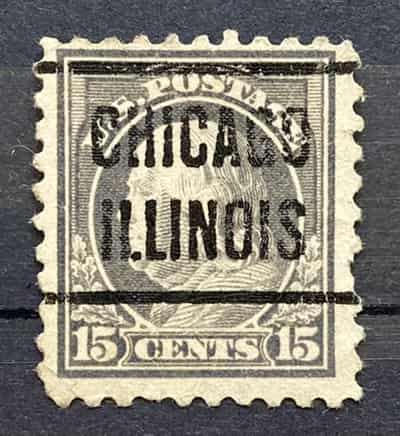
It is missing three full perforations and has a bend in the lower right corner. That, seriously, affects the value.
From the picture, it is not very clear if this stamp has its gum.
The top left corner, also, might need to be examined. |
Send note to Staff 
|
| Edited by NSK - 10/07/2023 03:51 am |
|
|
Valued Member
65 Posts |
|
|
thanks bro
This brand is not common, so for now this is the only one with this angle.
In the catalog the stamp is described as a trial stamp, is it really a trial stamp with pre-cancel? |
|
Send note to Staff
|
|
|
Pillar Of The Community
Netherlands
6638 Posts |
|
|
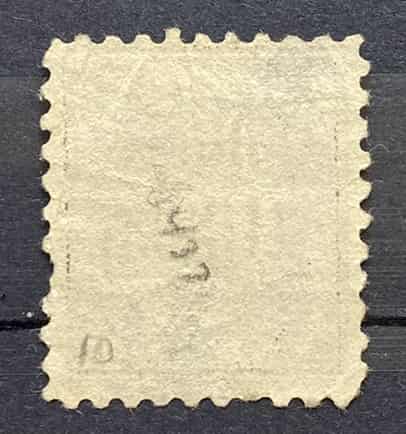
When I say the corner might need to be examined, I am observing that the ink is clearly visible from the back except in the corner. In places, the ink has even passed through the paper. There is a whitish diagonal line. The frameline appears to jump up. This makes it suspicious, not unique. |
|
Send note to Staff
|
|
|
Valued Member
Switzerland
496 Posts |
|
|
"so for now this is the only one with this angle" - try to find a better translation, this one doesn't make sense.
Assuming this is Scott 437 (with watermark) and not Scott 475 (no watermark). Scott 475 exists with a trial precancel, but from Springfield, Mass. Your stamp is a run-of-the-mill Chicago precancel.
When looking from the back:
-left perf pulled out.
-bottom perf pulled.
-bottom right corner perf pulled.
-seems like a hinge was pulled off the top right (thinned paper all over the place).
Summing up, you have a stamp with minimal rest value. Likely not sellable. |
|
Send note to Staff
|
|
|
Pillar Of The Community
Netherlands
6638 Posts |
|
|
In defence of OP: in many languages the same word is used for 'corner' and an 'angle'. If you depend on an online translation, the nuance may escape you.
OP, also has been using 'brand' for stamp. The translator appears to prefer to translate 'marka' or 'marky' into 'mark,' being a brand and not 'stamp.' |
|
Send note to Staff
|
|
|
Valued Member
65 Posts |
|
|
NSK You misunderstood me a little. I always measure perforation first, the golden rule. In the photo there are 10 perforations, 10 teeth. 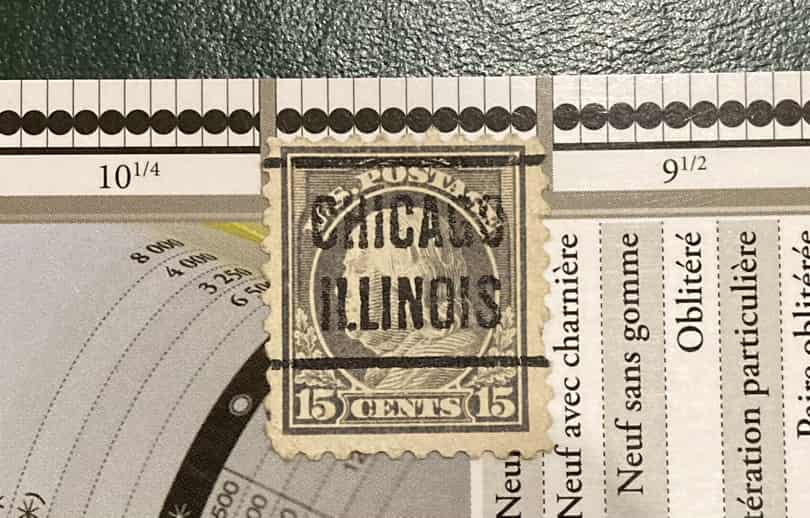 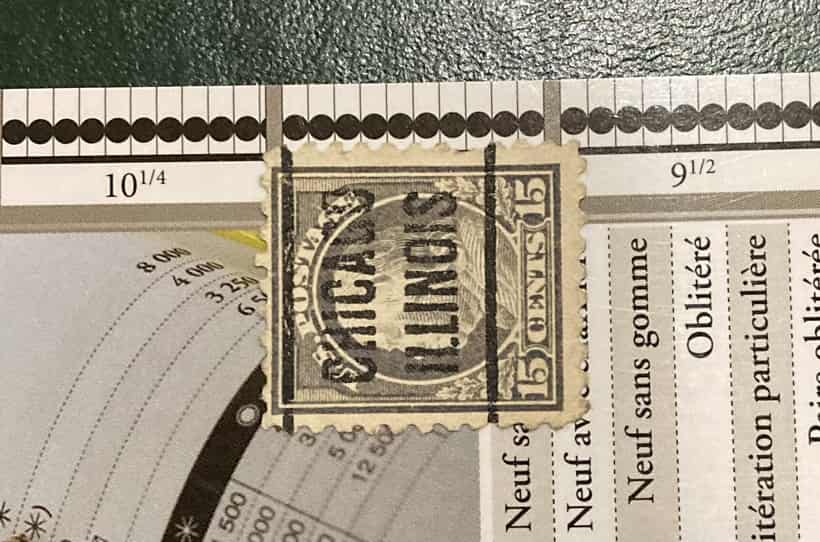 |
|
Send note to Staff
|
|
|
Pillar Of The Community
Netherlands
6638 Posts |
|
|
No, I have not misunderstood you at all. I understood you perfectly.
Stop counting! The number of teeth and holes is irrelevant. Only use that perforation gauge. If the gauge says 10, that is the only number we need. We do not want to know the number of holes or teeth, only the measure on the gauge itself. That gauge has nothing to do with the number of holes or teeth on the stamp. |
|
Send note to Staff
|
| Edited by NSK - 10/07/2023 1:26 pm |
|
|
Valued Member
65 Posts |
|
|
Do you know why I count my teeth?
If you count the teeth from above, you can determine perforation from the teeth, for example.
10 - 11 teeth from above are 10 perforations.
12 teeth from above is 11 perforation.
13 teeth is 12 perforation.
For vertical teeth it is a little more difficult but definable.
If you don't believe me, try it yourself.
Sincerely |
|
Send note to Staff
|
|
|
Pillar Of The Community
United States
2830 Posts |
|
|
Actually, I have used Hunter's method for finding scarce perf varieties by just looking at an image on ebay or Hipstamp. Once you learn the difference in the number of perfs or teeth, you can then sort between the scarce perfs and the common perfs just by counting. It's a rough method, but I've been successful using it. If you ask the seller to find out what perf the example of interest is, they may get on to what you're hunting for and change things significantly. So it's better to have a method to identify scarcer perfs without asking the seller. This is in no way endorsing that any of the materials being shown by OP are correctly identified, rare or valuable. Edited to add: This technique is especially useful for perforation varieties that are not listed in Scott. |
|
Send note to Staff
|
| Edited by shermae - 10/07/2023 2:56 pm |
|
|
Valued Member
Switzerland
496 Posts |
|
|
"If you don't believe me, try it yourself" - Please do not try to patronize the long time members here.
You have shown that you are not well versed at all in stamp terminology or basic printing technology by basically misdescribing each and every common stamp you show as "rare", "unknown variety" and equally nonsensical descriptions.
Measure the perforations with your Y&T perforation gauge and THAT IS THE END OF THE STORY as far as discussing perforation gauge is concerend. |
|
Send note to Staff
|
|
|
Valued Member
Switzerland
496 Posts |
|
|
shermae: This is the method used by many of the dealers I've met. It relies on the fact that the perforation steps are huge (10 - 11 -12), so an experienced philatelist can determine the perf gauge by simply looking at the W/F stamps. I HIGHLY doubt the method works for stamps that differ in <= 0.25 perf step differences. |
|
Send note to Staff
|
|
|
Pillar Of The Community
Netherlands
6638 Posts |
|
|
Quote:
10 - 11 teeth from above are 10 perforations.
12 teeth from above is 11 perforation.
13 teeth is 12 perforation. No, it is not. Stop counting. You are correct that between 13 teeth, there are 12 holes. You, also, are correct that if the stamp is exactly 2 centimetres wide and has half teeth on both extremes, it has 12 holes and the perforation gauge is 12, i.e., the stamp is "perforated 12" or "perf. 12" as catalogues write. Otherwise, it is not. If your stamp is 3 centimetres wide and has 13 teeth and twelve holes, it is not 12 perforation. The Swedish Tiger webside should not use "12 perforation". That is confusing. If your stamp is two centimetres wide and has 10 teeth and nine holes, and it lines up with the dots above the '10' on your gauge, it is 'perforated 10'. It is not a rare perforation 10 with nine perforations, it is perforation 10, end of story. The number of teeth and holes is EXTREMELY IRRELEVANT. All that matters is the number on the gauge where your stamp lines up with those dots. Once again: stop counting! |
|
Send note to Staff
|
| Edited by NSK - 10/07/2023 3:09 pm |
|
|
Pillar Of The Community
Netherlands
6638 Posts |
|
|
Quote:Actually, I have used Hunter's method for finding scarce perf varieties by just looking at an image on ebay or Hipstamp. Once you learn the difference in the number of perfs or teeth, you can then sort between the scarce perfs and the common perfs just by counting. It's a rough method, but I've been successful using it. If you ask the seller to find out what perf the example of interest is, they may get on to what you're hunting for and change things significantly. So it's better to have a method to identify scarcer perfs without asking the seller. When OP finds a perf. 10 stamp with 10 teeth and 9 holes plus part holes on both extremes, we get a "10 perforation stamp with rare ten teeth that is not in the catalogue." Let's not encourage OP in jumping to incorrect conclusions and first learn to rely on a perforation gauge. |
|
Send note to Staff
|
|
|
Pillar Of The Community
United States
2830 Posts |
|
|
The other problem as we have all seen repeatedly in these threads is that the OP cannot count. Last time I will mention any of this. |
|
Send note to Staff
|
|
|
Bedrock Of The Community
12702 Posts |
|
|
Replies: 21 / Views: 1,739 |
|



 Posted 10/07/2023 03:22 am