In my INDYPEX show report I mentioned a 13 counter book stock of proprietary cancels that I spent a large amount of time (and money) with. It included many cancels I'd not seen before and/or multiple examples of some very high-profile and sought-after cancels. This post showcases those items.
The reason it is titled "Part 1" is that there was so much material in the stock that I felt completely rushed going through it at the show, since there were so many other dealers to visit, and I felt I had missed things... So I made an appointment with Rick to visit his shop and spent Saturday morning and early afternoon revisiting the stock. So the acquisitions from that second trip will be part 2.
I also purchased the "overflow" or "B-stock" stockbook of approximately 500 items that came from this collection. A fair amount of duplication and items of secondary (or even tertiary) condition quality, but it also included some cancels that weren't included in the worked-up books.
So here we go...
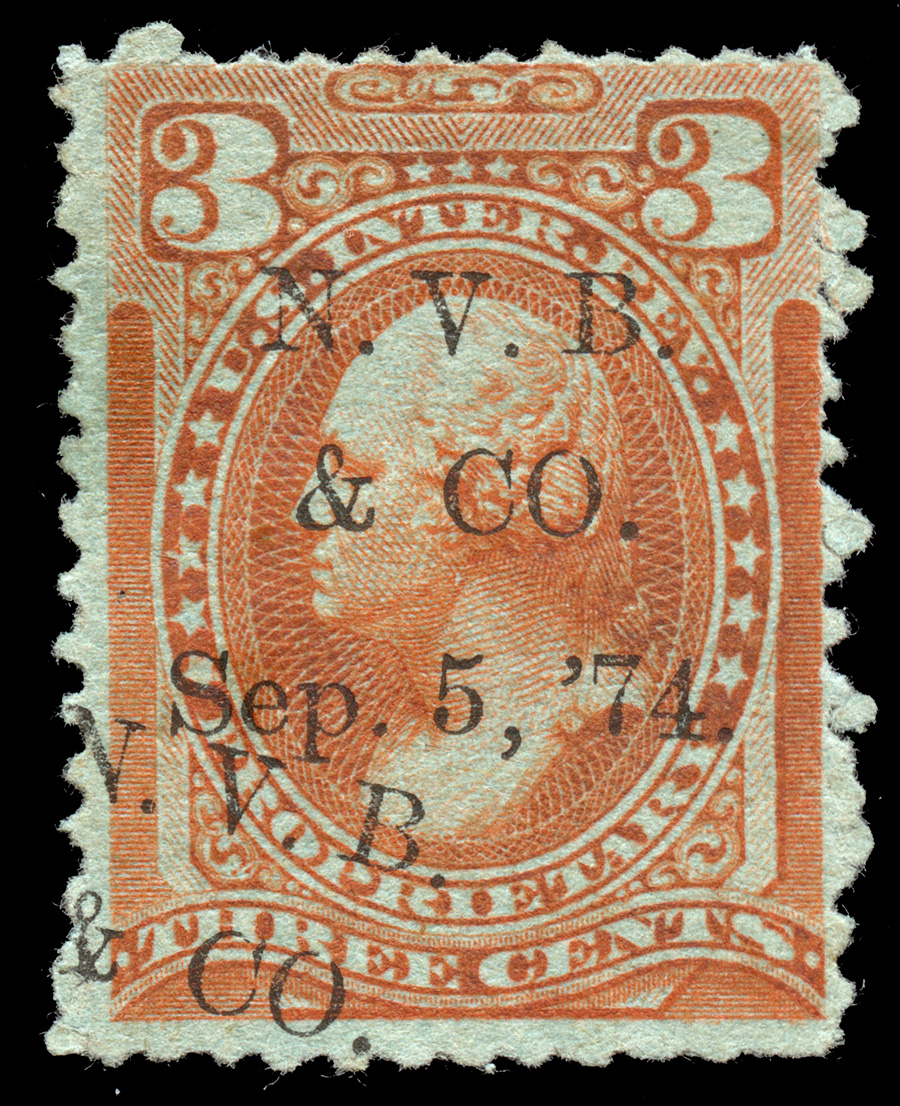
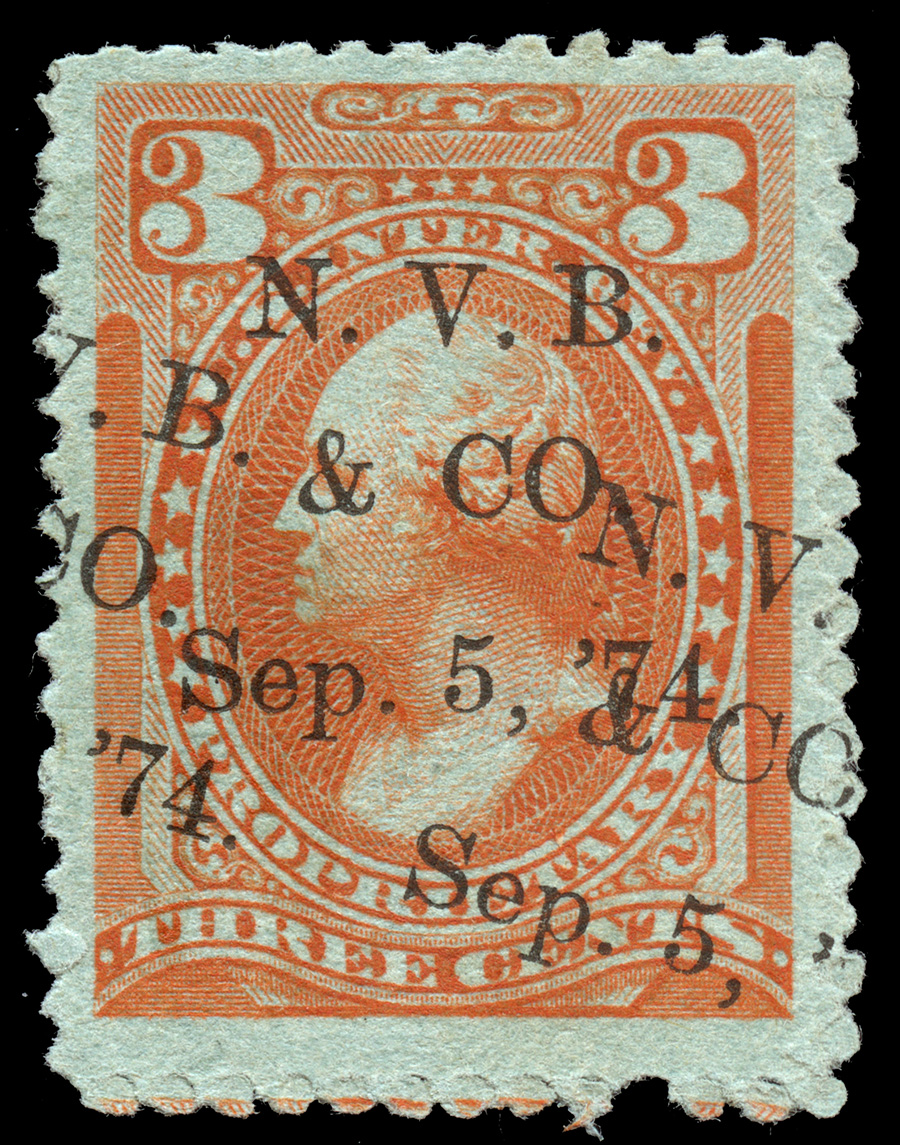
Two printed (letterpress) cancels from Nathan Van Beil & Co., proprietors of "Rye and Rock" proprietary medicine, which consisted of large sugar crystals dissolved in rye whiskey. These are fairly common cancels on the 2nd issue proprietary stamps, but these are interesting in that they show that the sheets were run through the printing press applying the cancels twice, at odd angles.
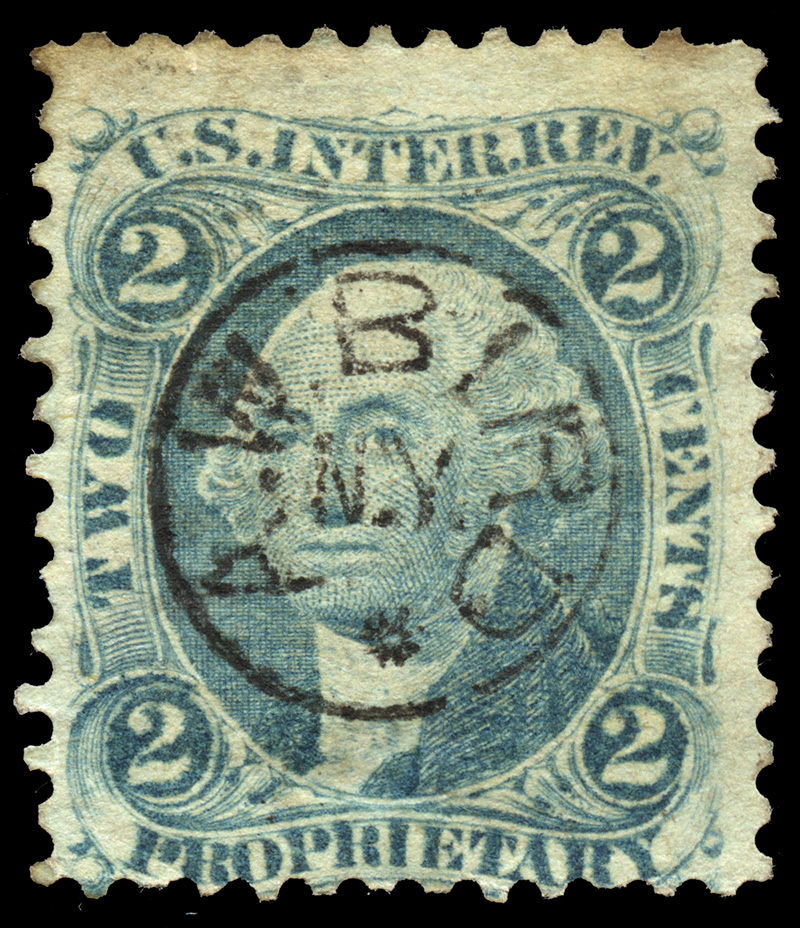
An unusual diminuitive circular handstamp cancel from A. W. Bird with "NY" in the center.
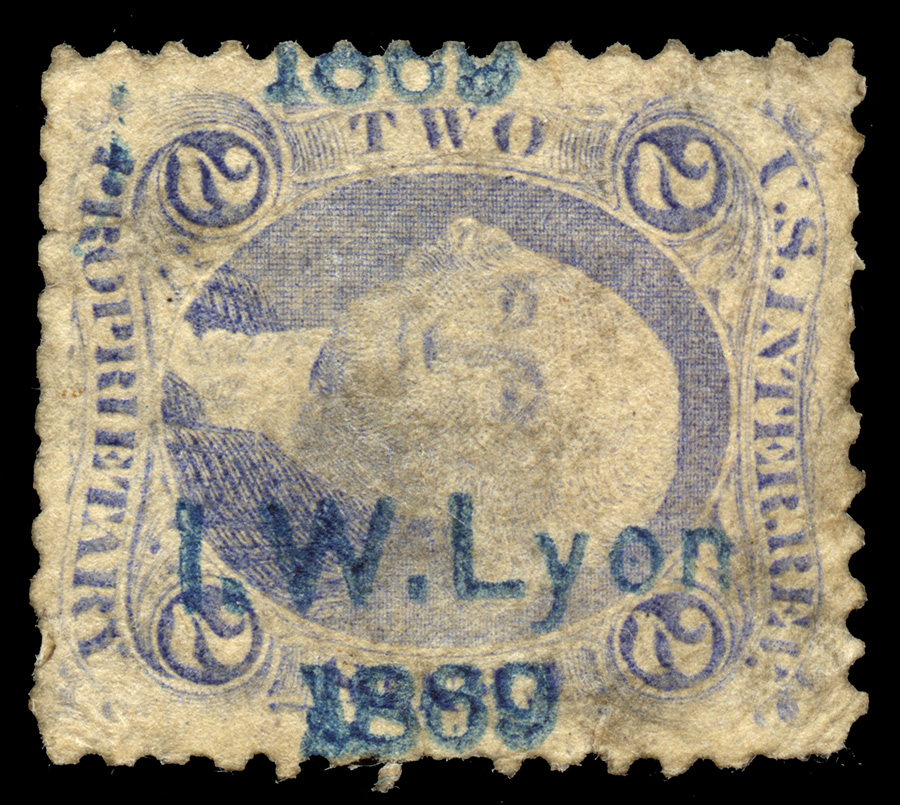
Whilst a bit rough conditionwise, a blue multiline handstamp cancel on the ultramarine R13e, a somewhat scarce stamp. L.W. Lyon, maker of Dr. Lyon's Tooth Powder
Diminuitive unattributed 1870 oval cancel on one of the 1st issue silk papers.
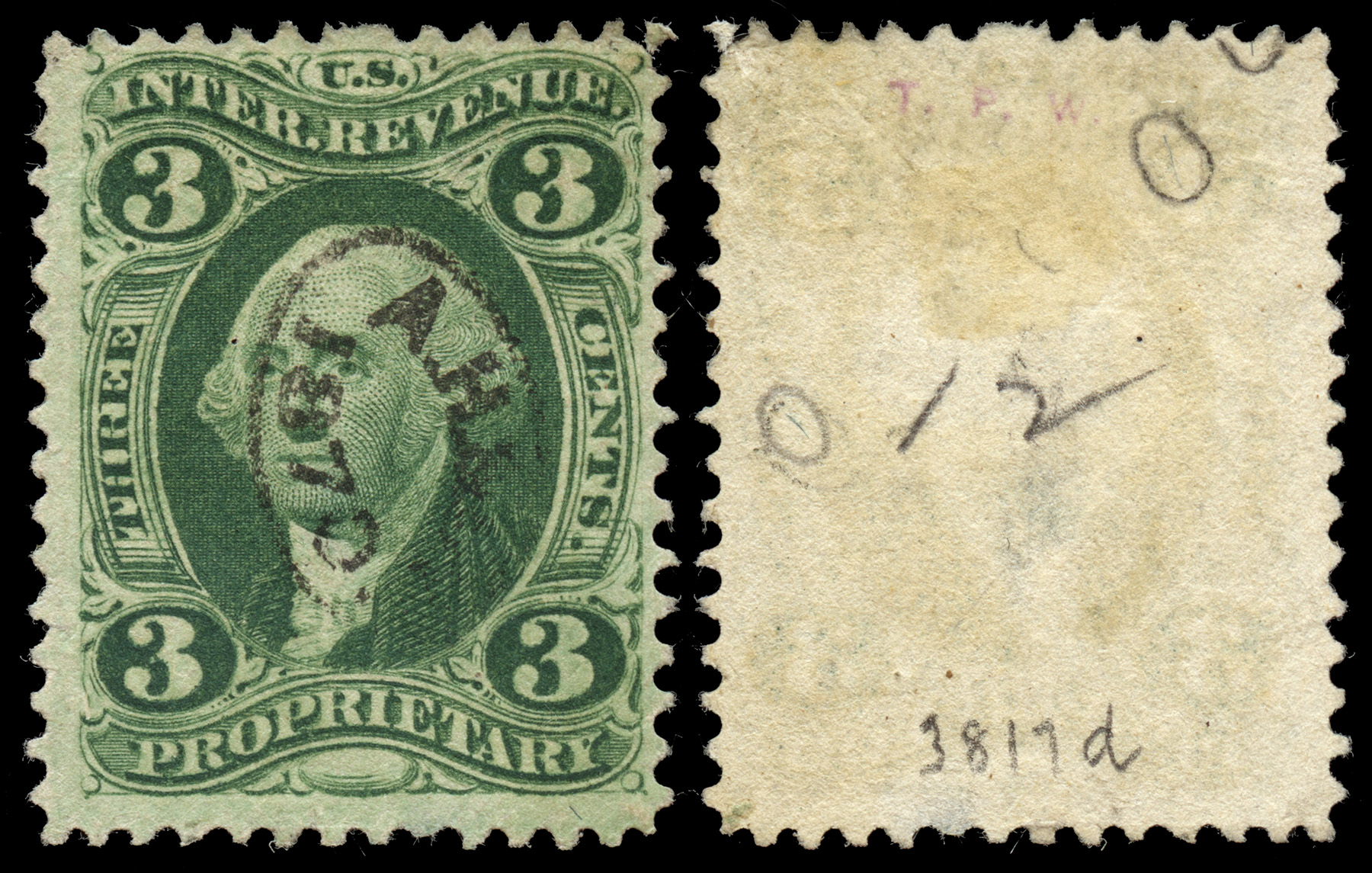
Unattributed "W Y L & Co." cancel with script letters for Alton Ind(iana).
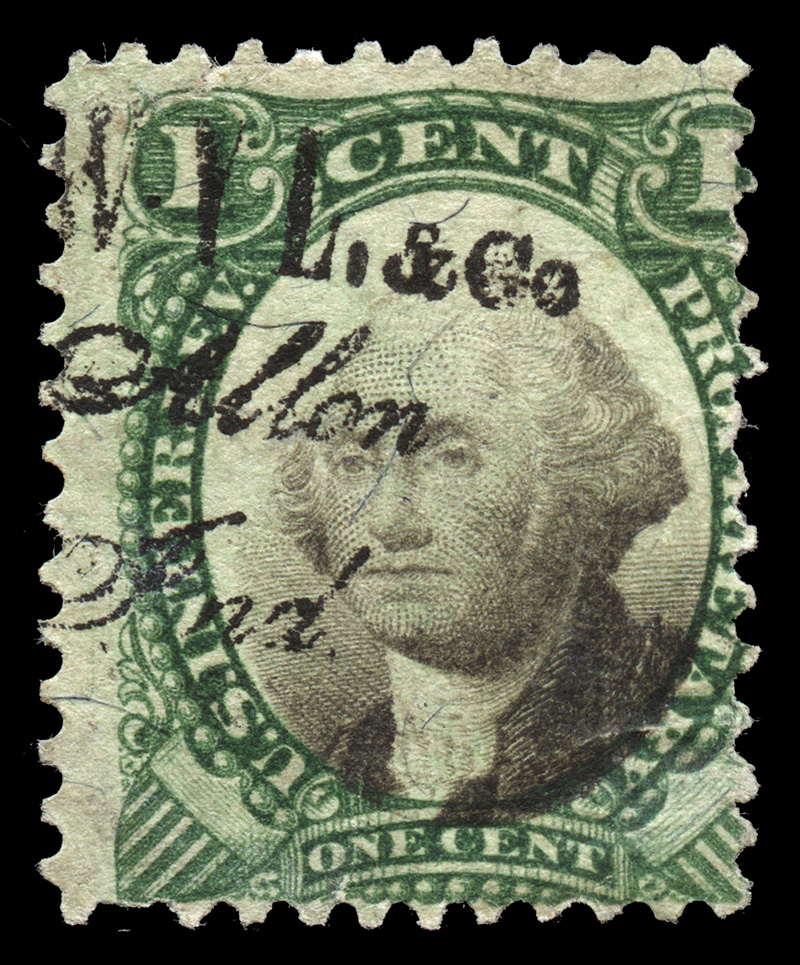
Meticulous manuscript cancel.
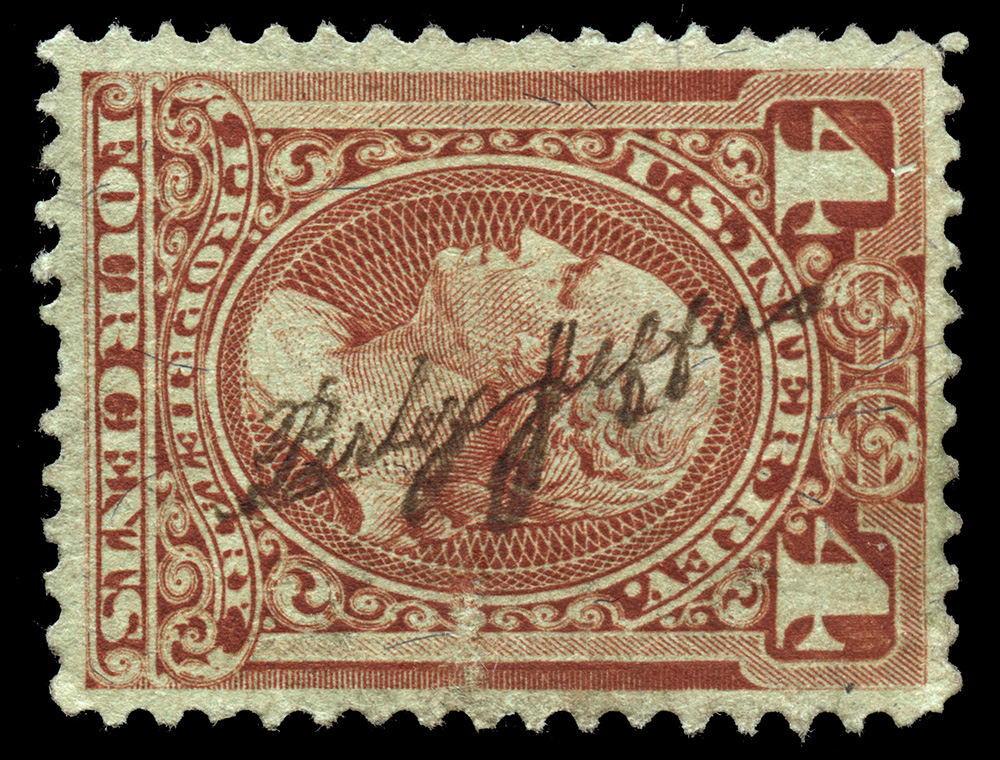
Dr. Henley's Wild Grape Root IXL Bitters was first introduced to the public in 1868 by William Henley who was listed as a physician practicing and residing at the corner of Fifth and Jefferson in Portland, Oregon. In 1869, Henley and Louis Gross, an established Portland druggist, associated themselves with Henry Epstein who was a commission merchant in San Francisco with an office at 312 Sacramento. The trio started selling Dr. Henley's Wild Grape Root IXL Bitters under the flag of L. Gross & Company at 518 Front Street in San Francisco. Louis Gross was now the manufacturer and sole proprietor of the IXL Bitters which were made from wild Oregon grape roots, among other herbs and spices.
Source:
https://fohbcvirtualmuseum.org/gall...ixl-bitters/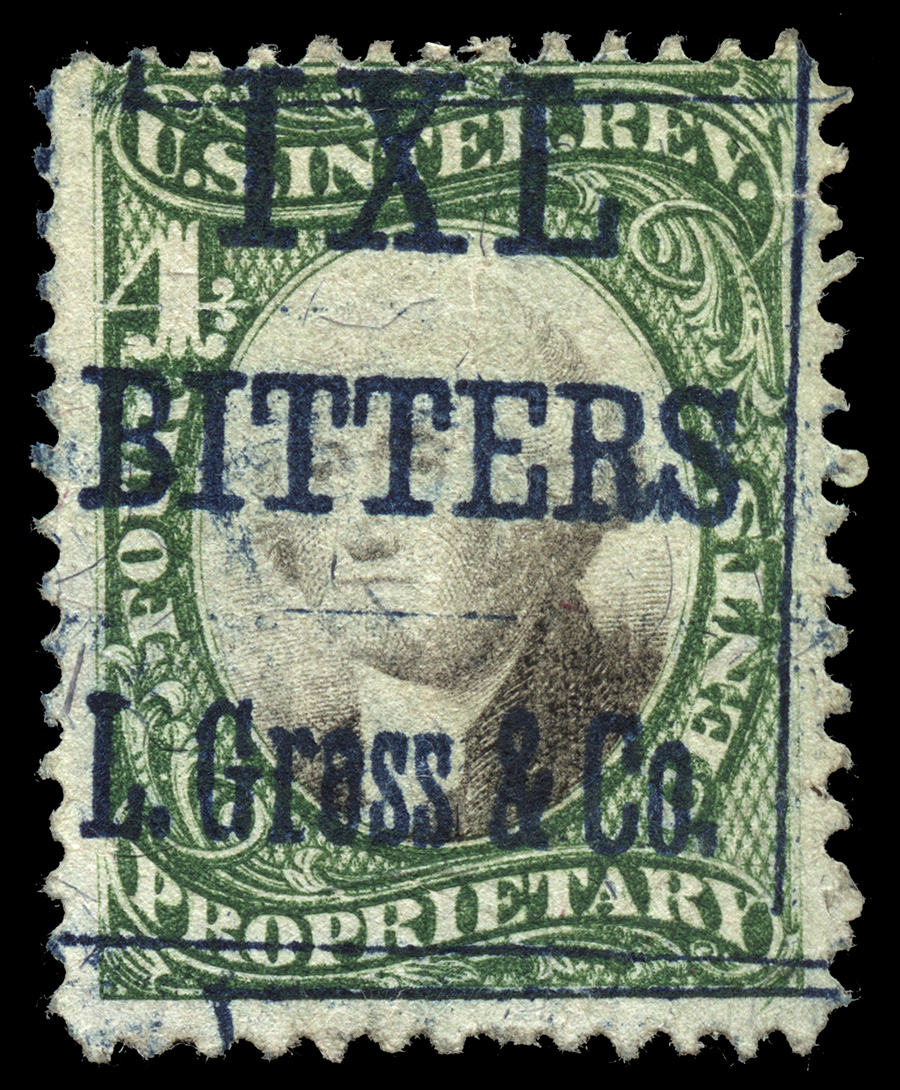
1879 H J & T stencil cancel.
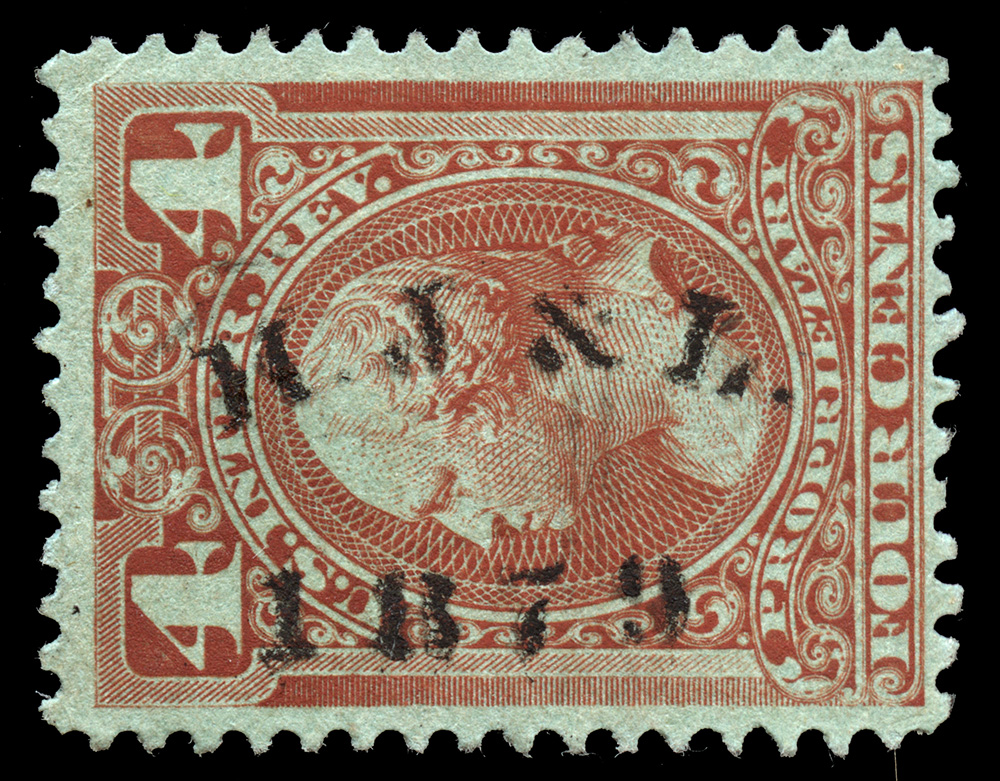
Unusual stylized "Cook" cancel on a 1st issue silk paper.
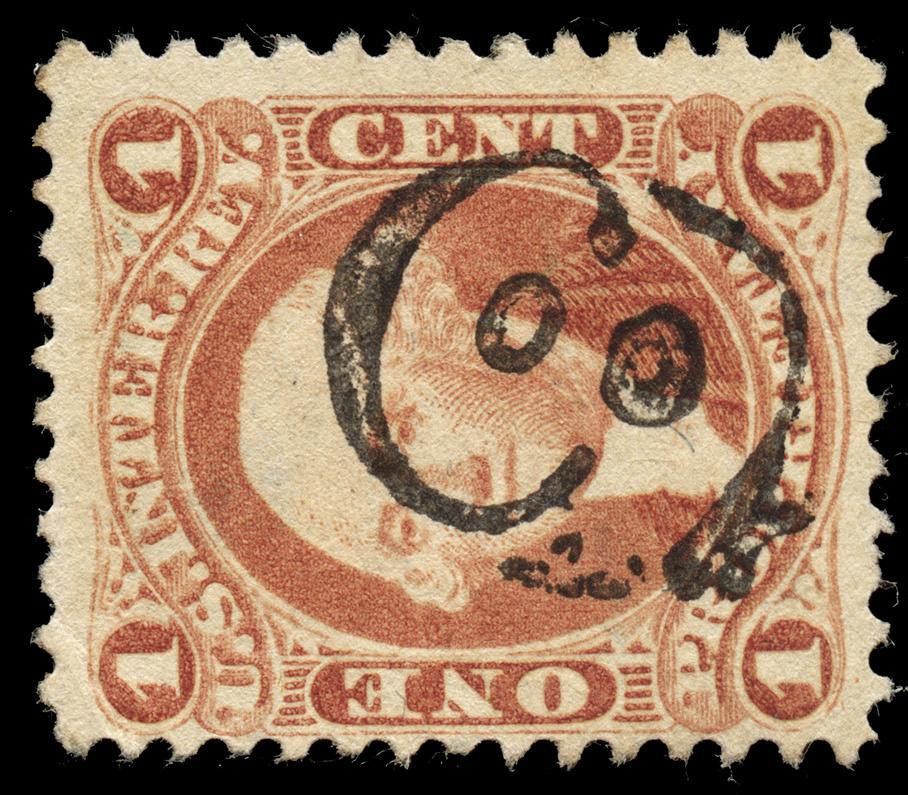
Horizontal pair of R3c with unattributed small circular handstamp, with what appear to be Chinese characters.
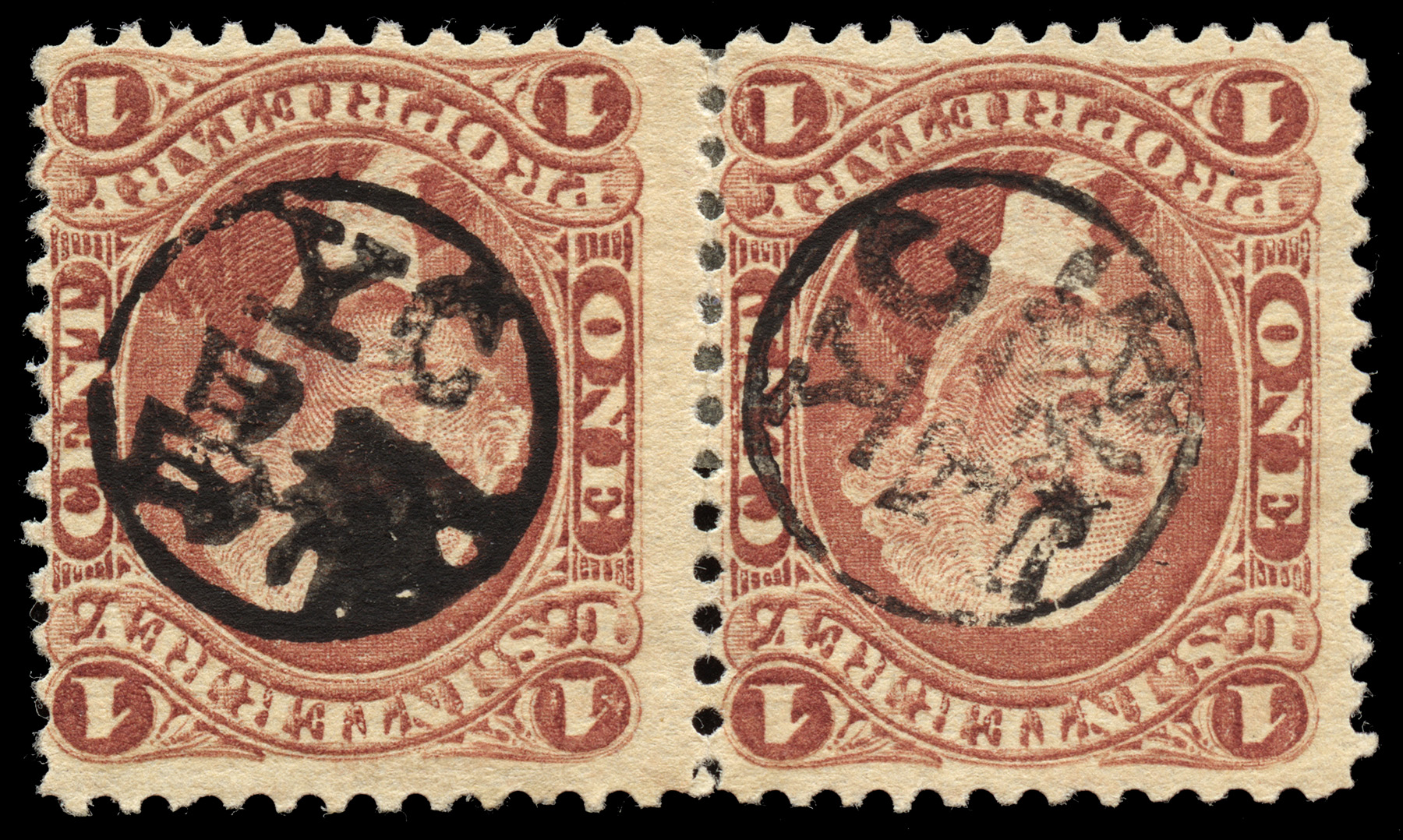
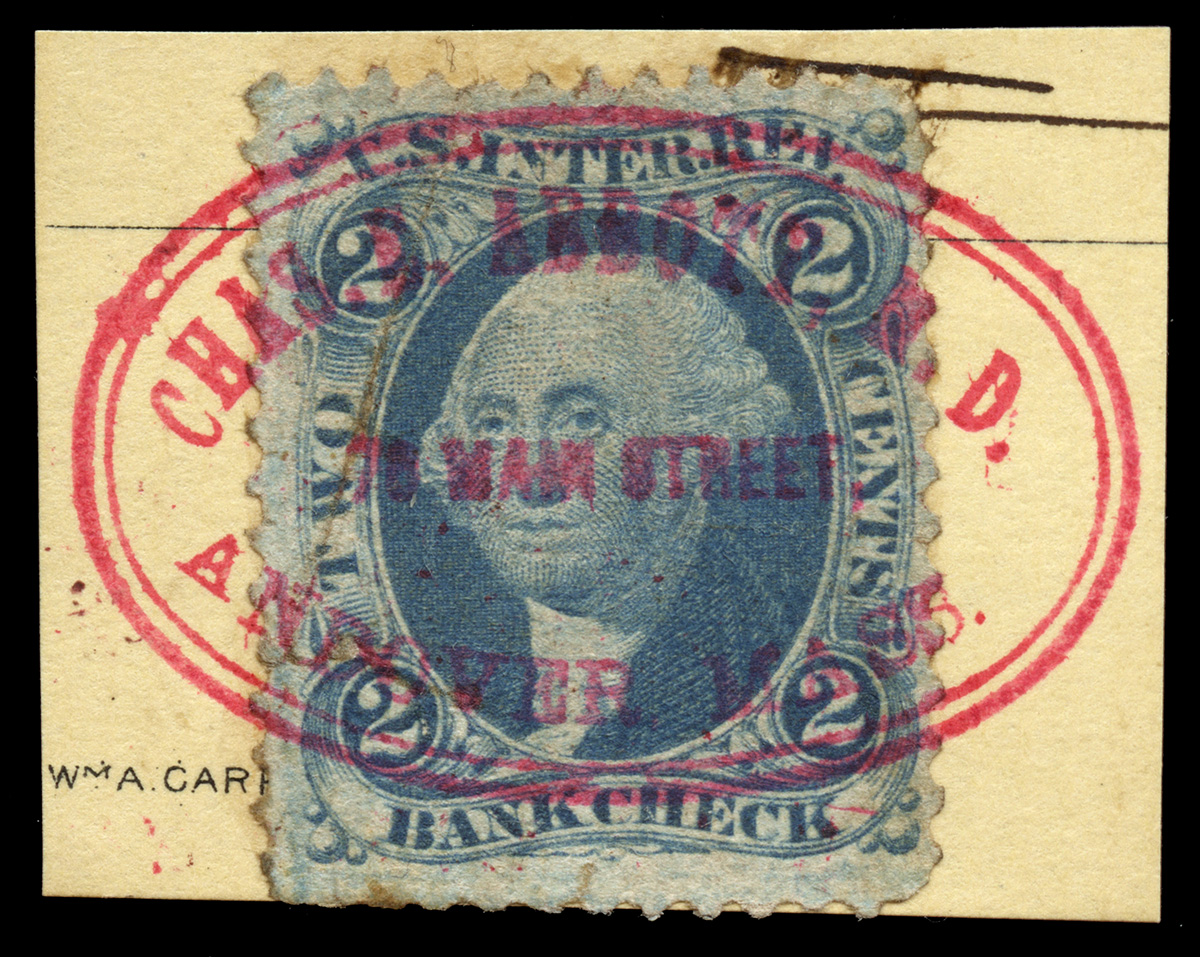
Just a lovely aesthetic piece, with the contrasting red cancel. Charles E. Abbott, MD. Andover, Mass.
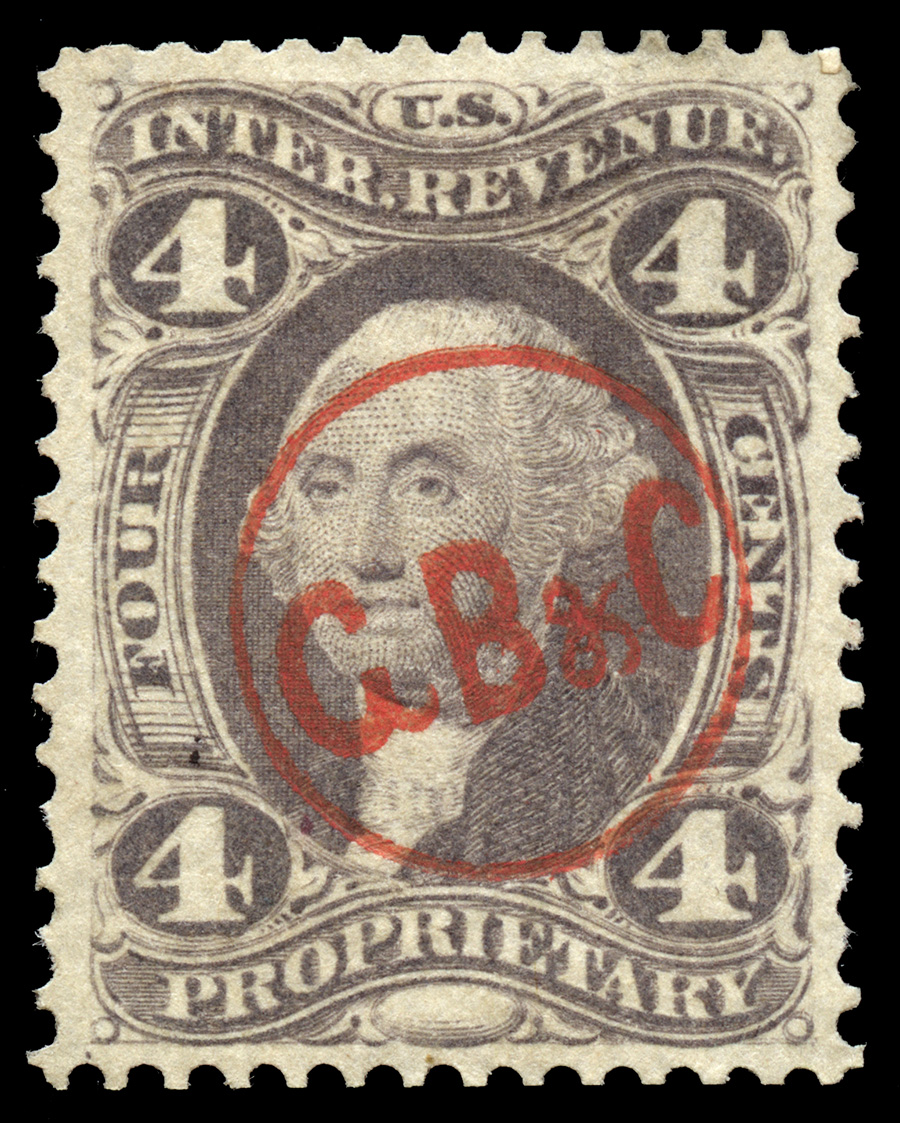
Another great looking piece. Cancel is unattributed.
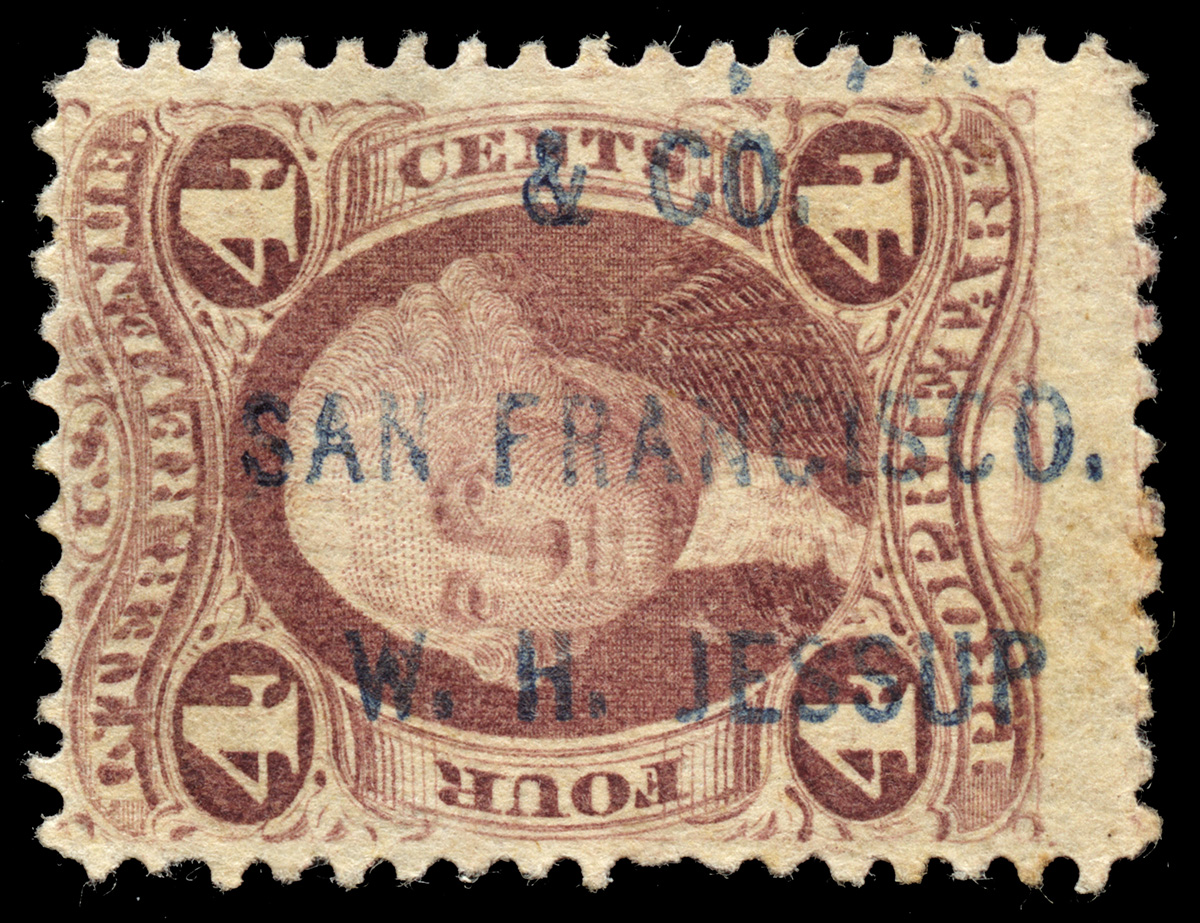
W. H. Jessup & Co. San Francisco, match company.
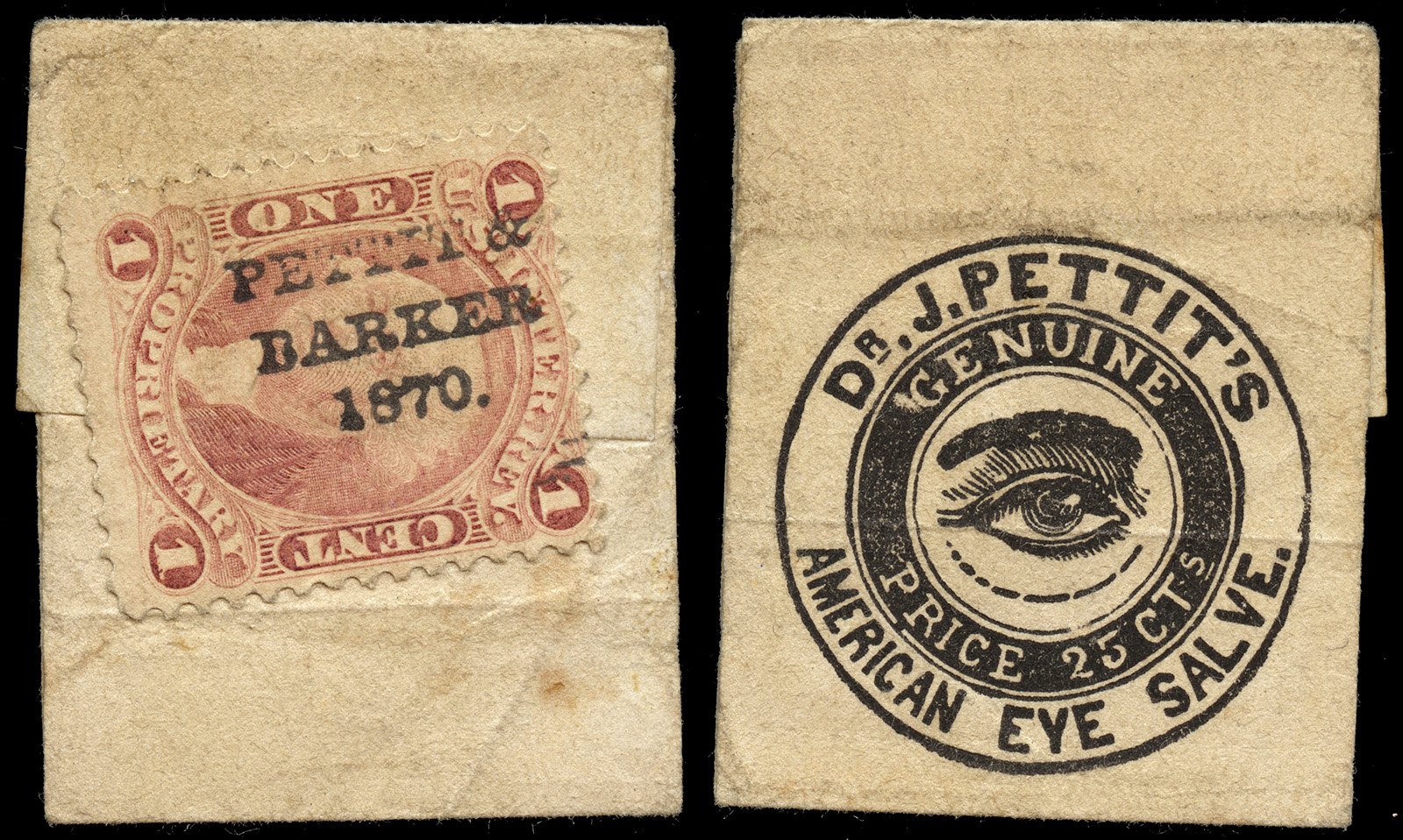
Pettit & Barker multiline handstamp cancel on a piece of packaging with perfectly placed branding on the reverse.
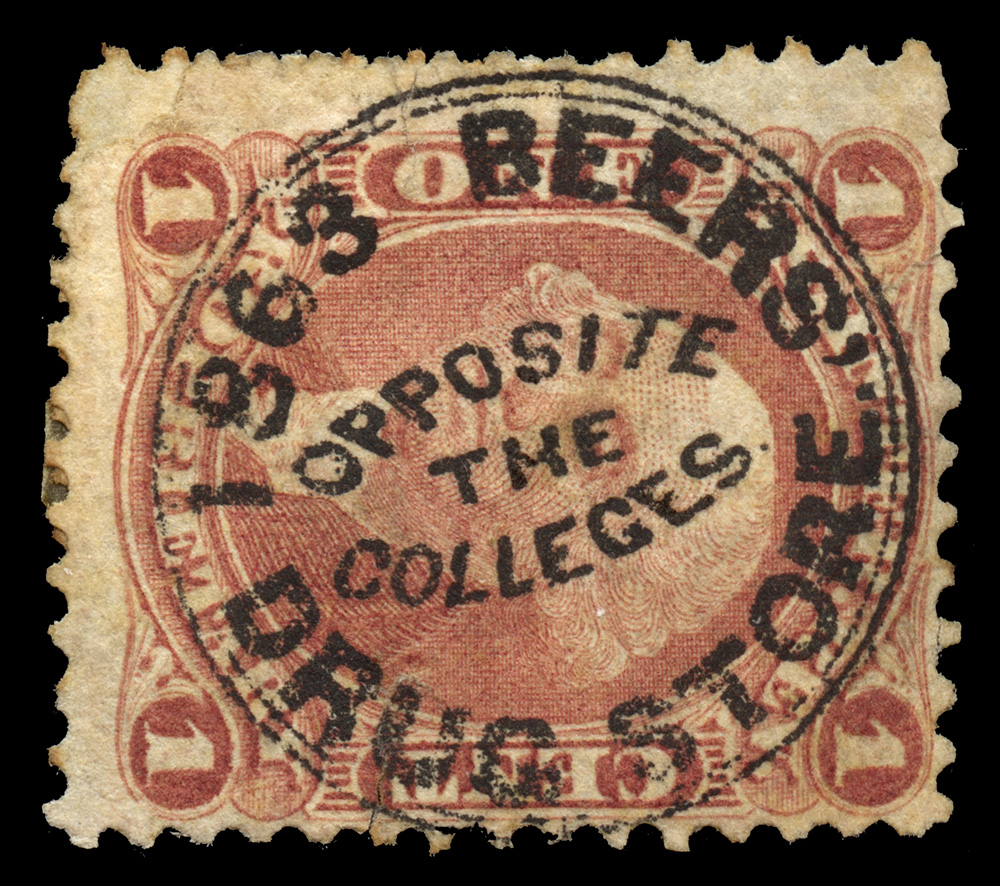
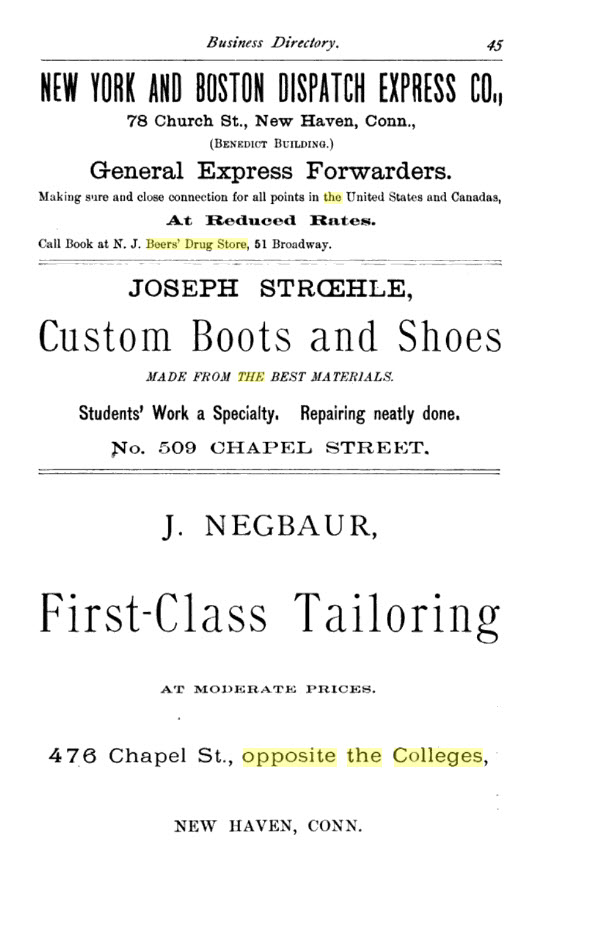
One of my favorite pickups. Beer and college go together like peanut butter and jelly. Unattributed. The only reference I could find with both phrases is in an 1881 issue of the Yale Banner, so perhaps this is N. J. Beers' Drug Store in New Haven, CT.
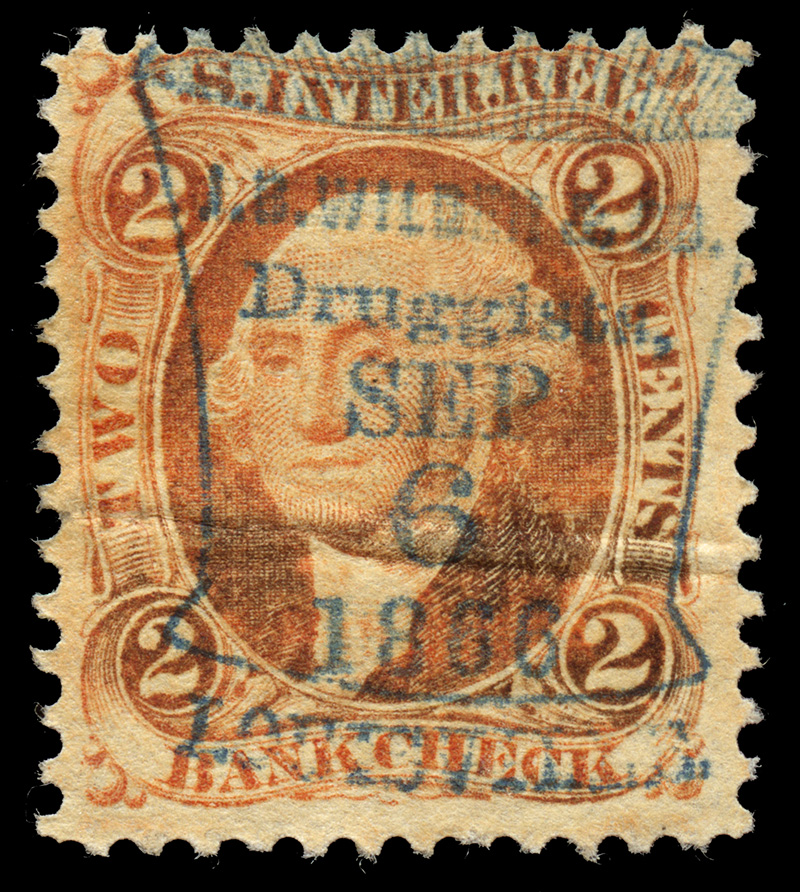
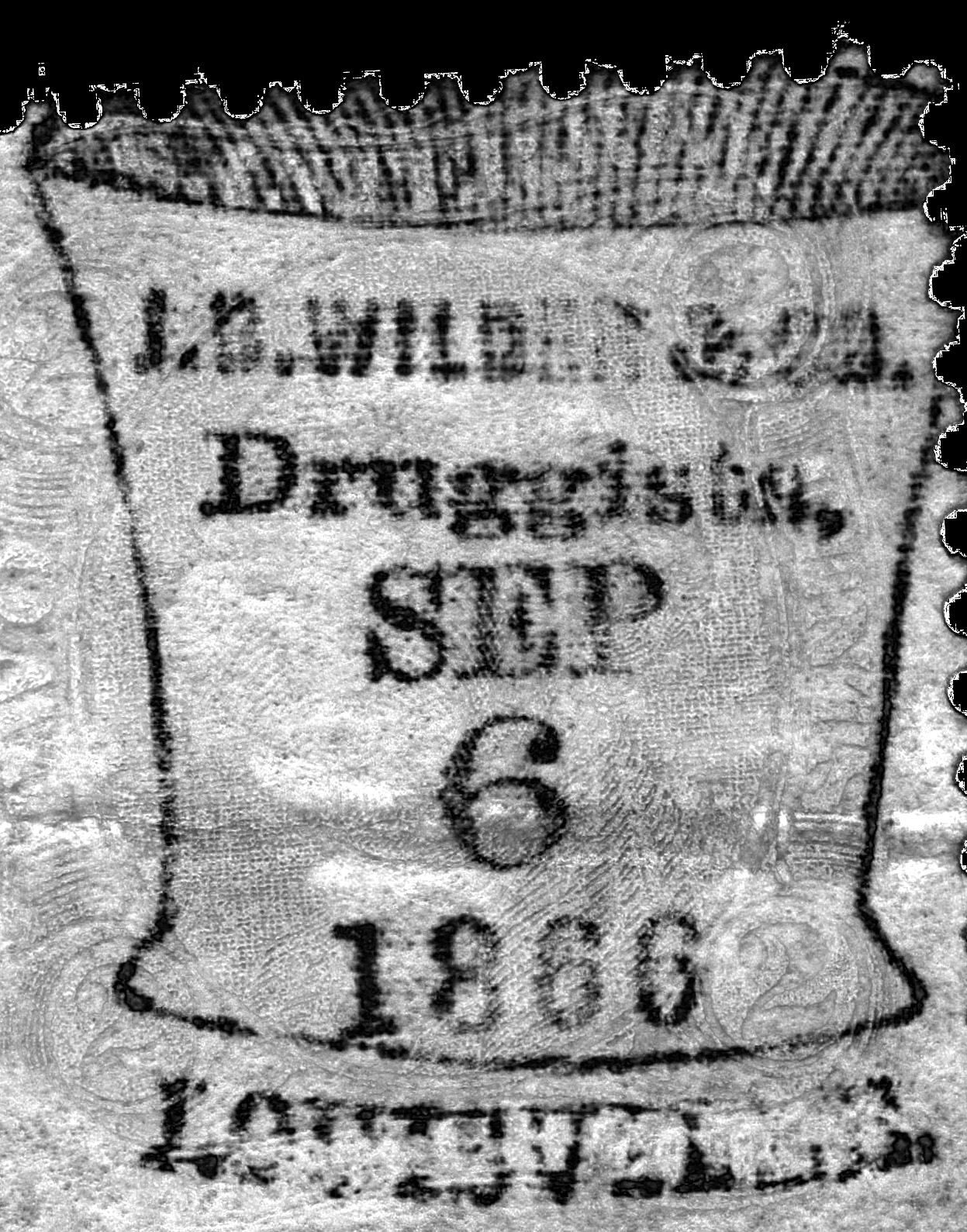
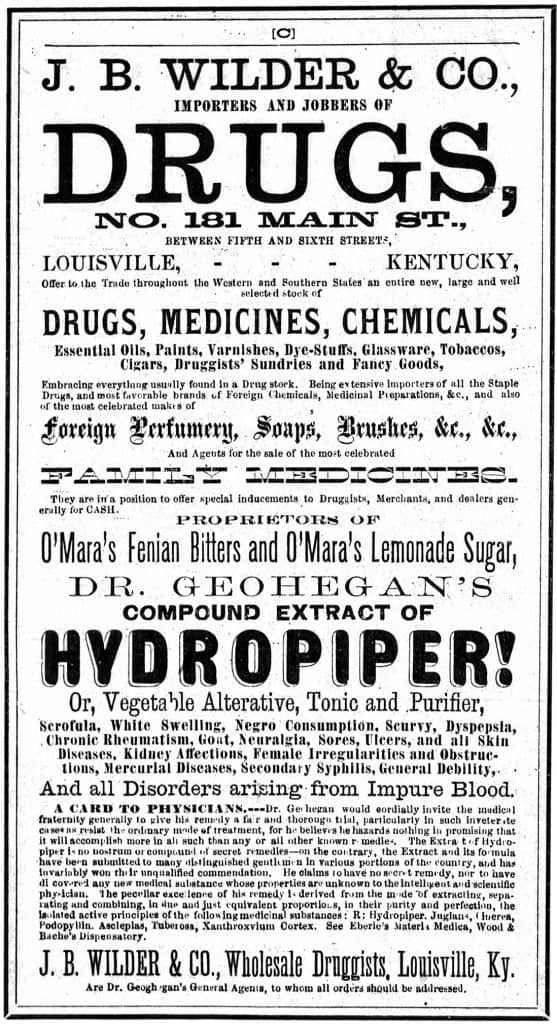
Fancy stylized cancel very similar in design to the famous Poland's Magic Powders cancel, but I had never seen this one before. J. B. Wilder & Co., Lousiville, KY.
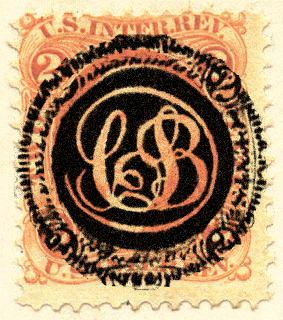
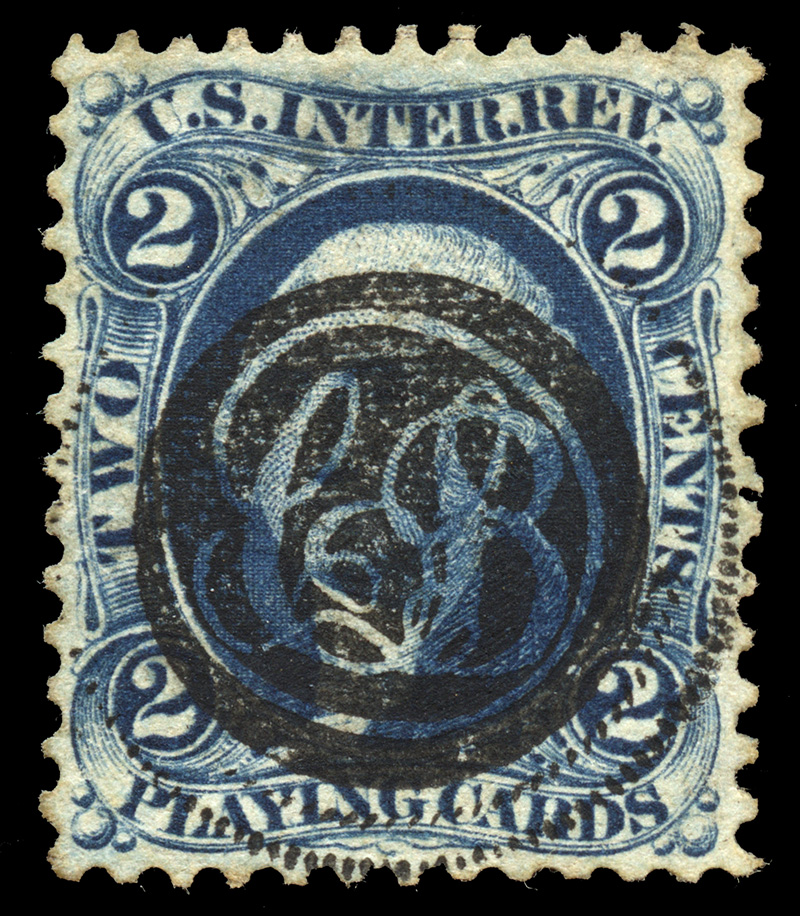
Absolutely gorgeous negative CB cancel, attributed to Charles Bartlett, but I question that. I'm aware of "Charles Bartlet" (note the single T) that was a playing card manufacturer, but cannot find any proprietary medicine reference to a Charles Bartlett.
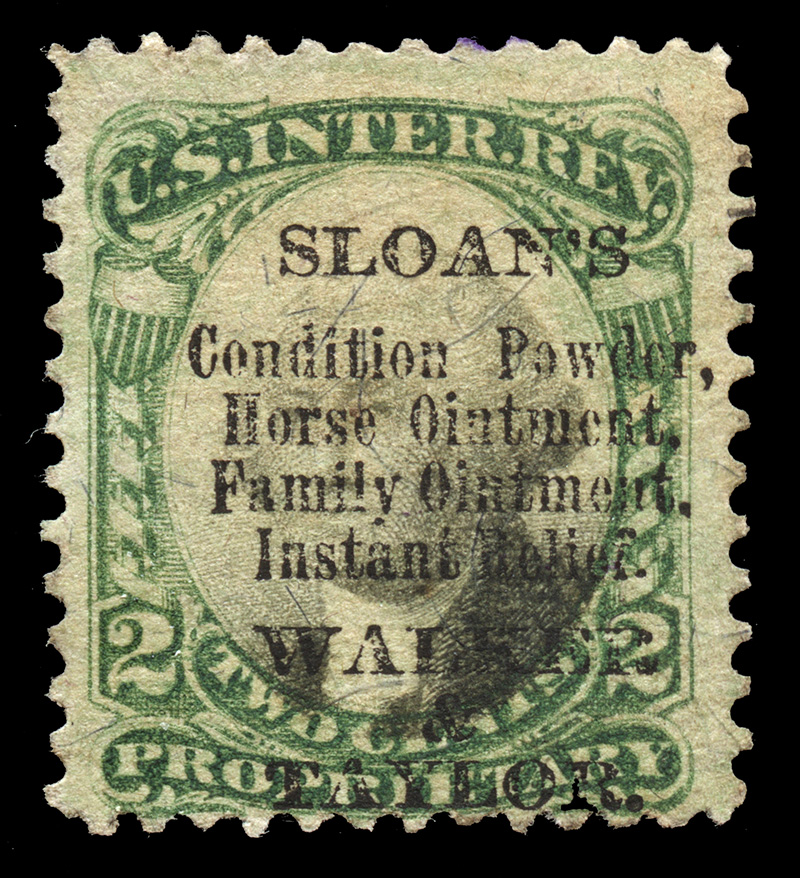
8-line Walker & Taylor printed cancel. This particular cancel is found most frequently on the 1-cent dednomination, not so much the 2-cent.
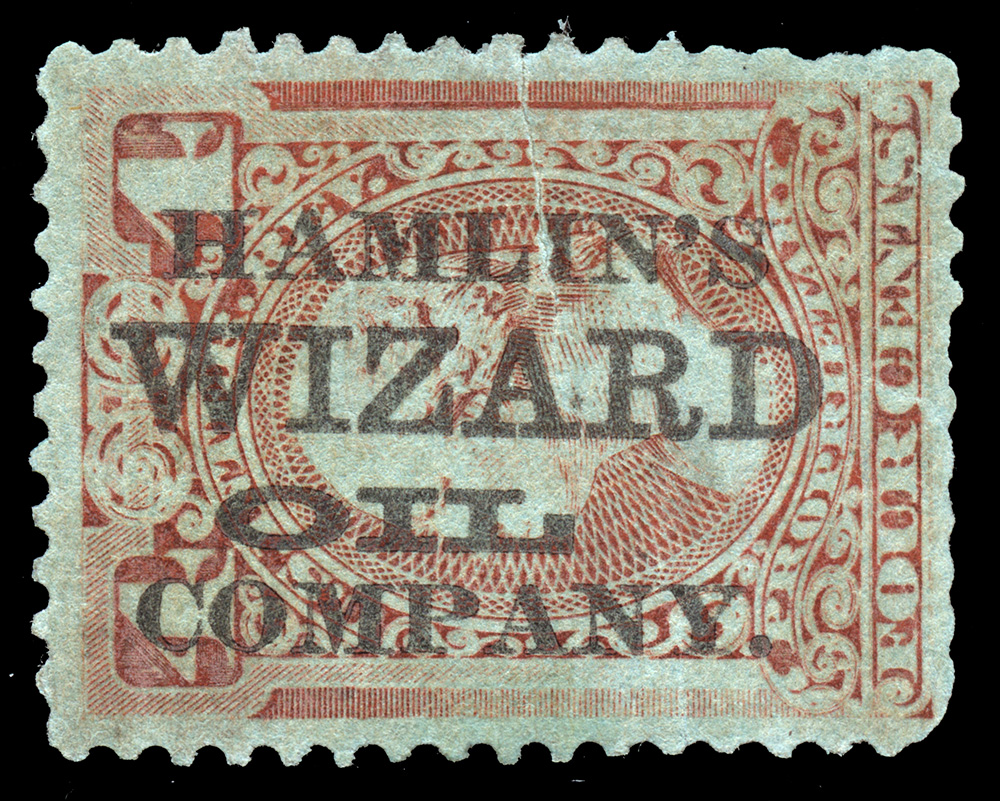
This next one is curious and I suspect may be a counterfeit. The cancel ink color is more gray than it should be, and the edge characteristics look more akin to a modern rubber stamp cancel than handstamps of that era.
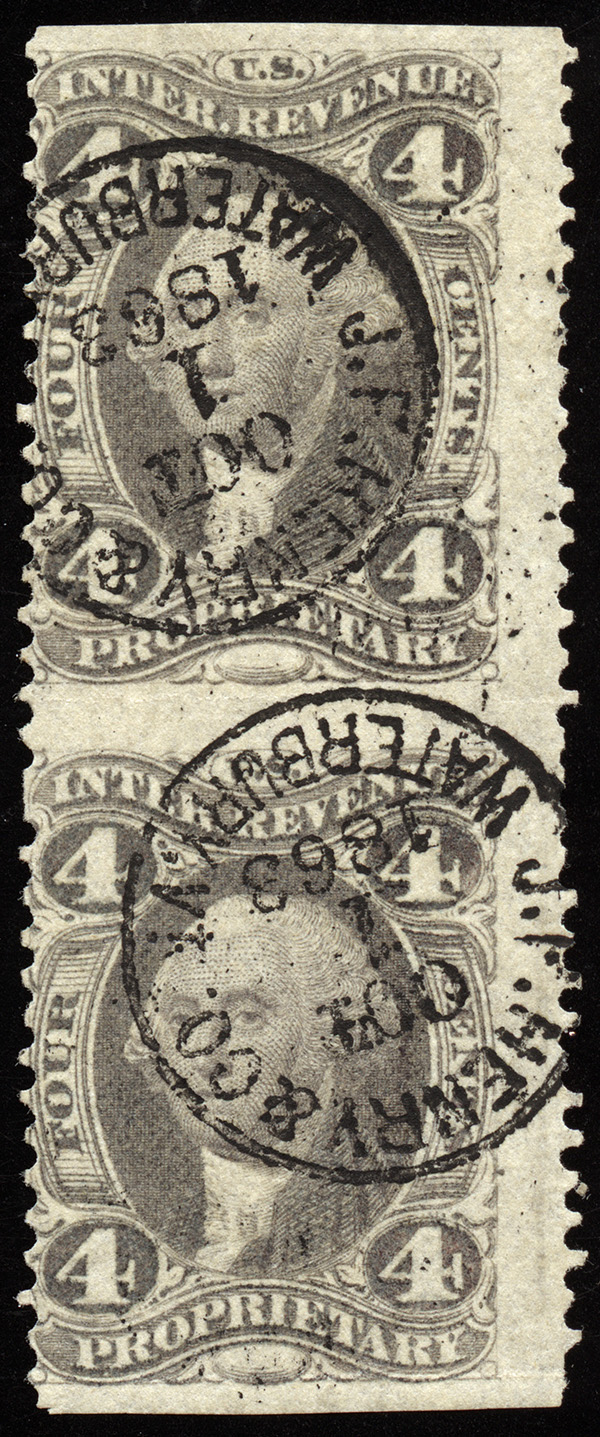
I have several examples of R22b as singles, but have always wanted a multiple. I've seen several pairs over the years with this same handstamp cancel, J.F. Henry & Co., but they've all had multipls severe faults and priced too high for my tastes. This one, while exhibiting typical (i.e., crappy) left-right centering common to 1st issue part perfs, is in reasonable condition, and was at a price I couldn't say no to. This is a pair that has climbed considerably in Scott since I started collecting U.S. revenues. In 2005 (the earliest Scott Specialized I saved) a pair was valued at $750. It's now $1,600.
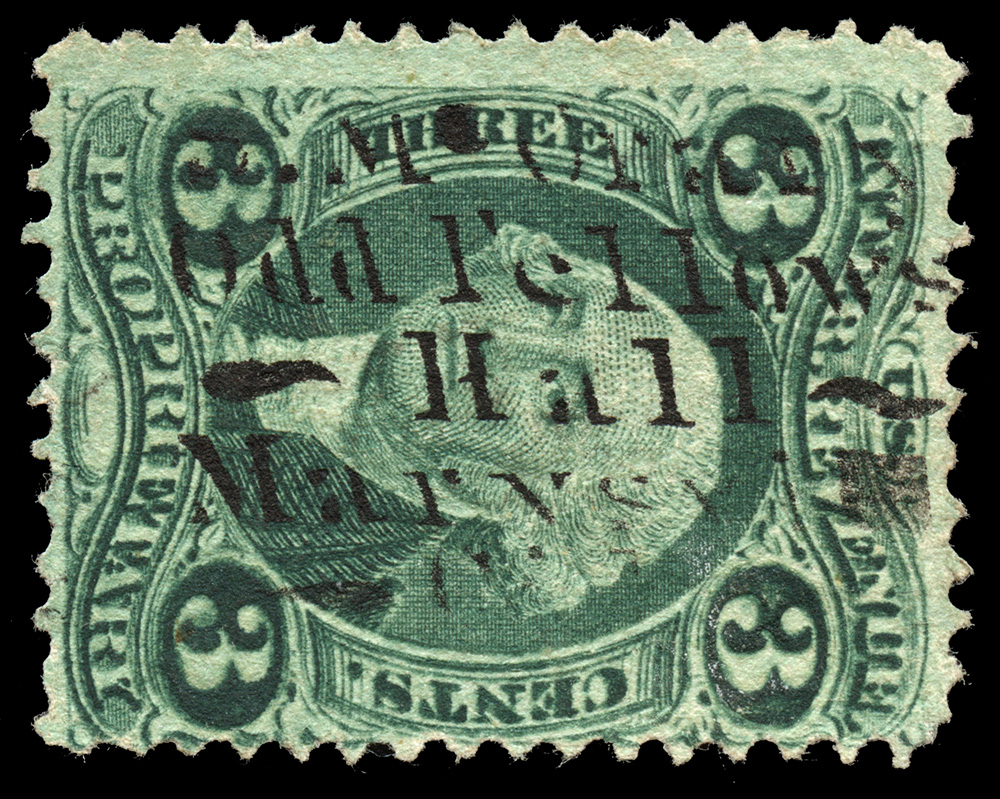
This one was a cherrypick. While it's not a complete strike, it's an example of the "Odd Fellows Hall" photographer cancel, one of the two rare Marysville, Cal. stencil cancels.
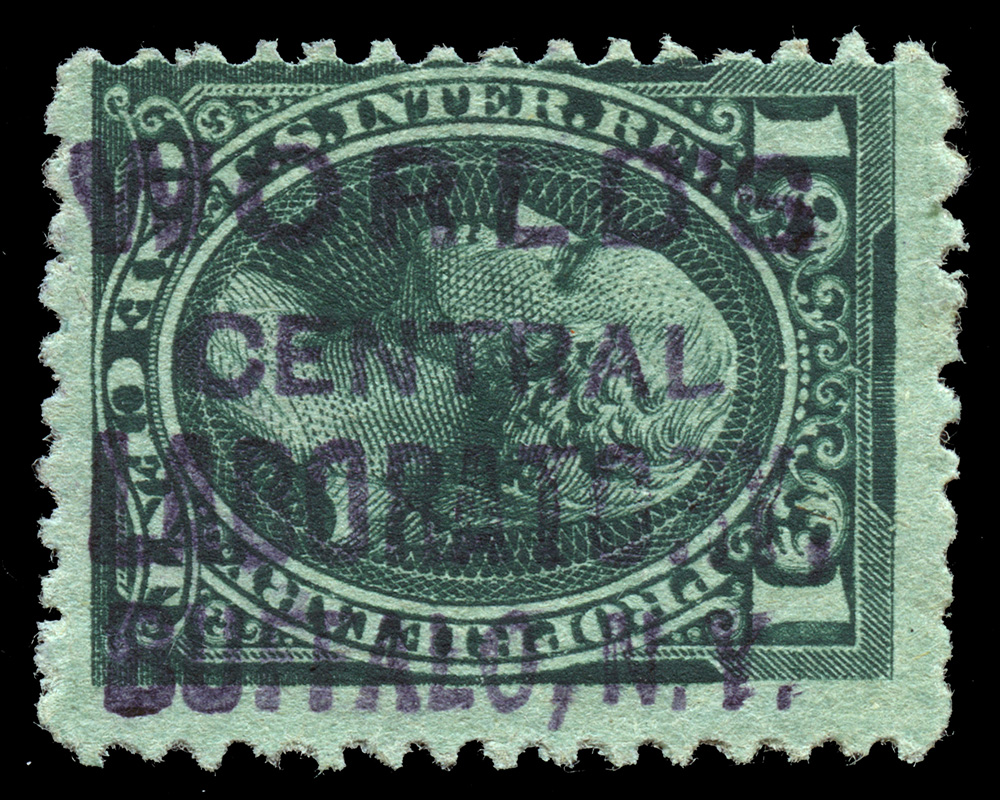
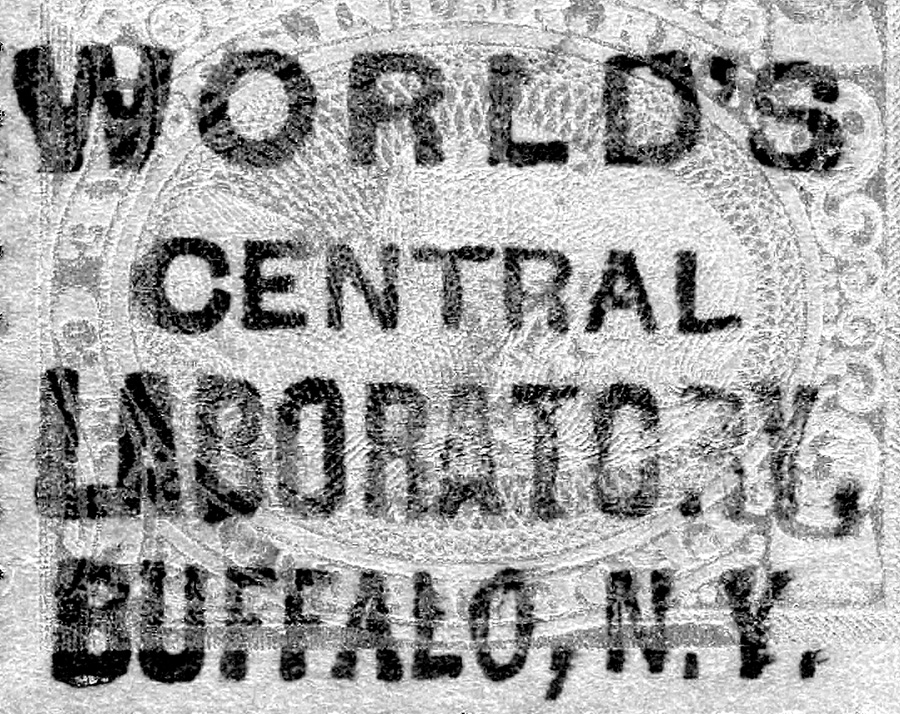
I hadn't seen this cancel before. World's Central Laboratory was apparently the manufacturer of Father Arent's Rheumatic Plaster.
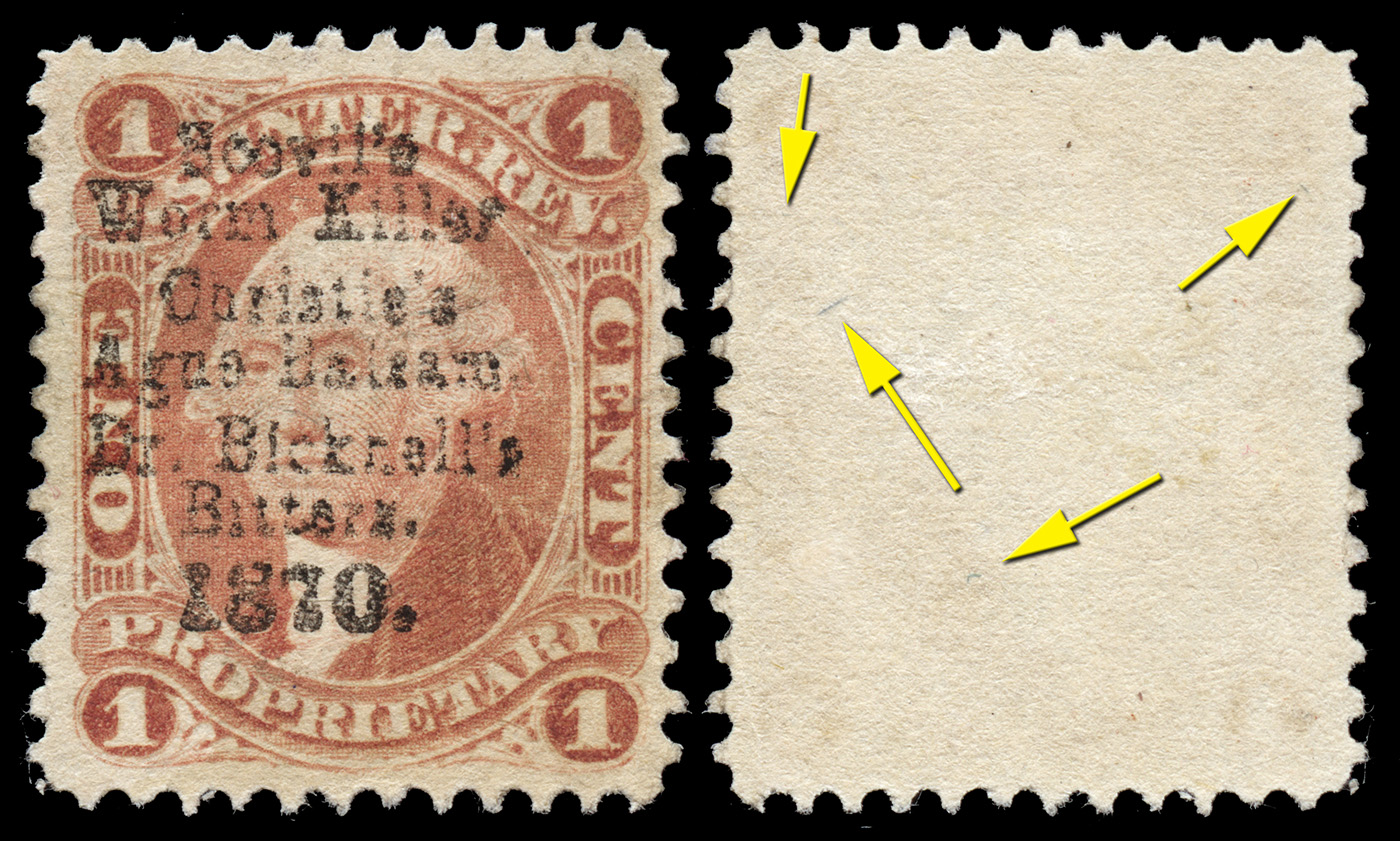
1870 7-line printed cancel for Scovill's Worm Killer on a 1-cent Proprietary silk paper. Very scarce cancel.
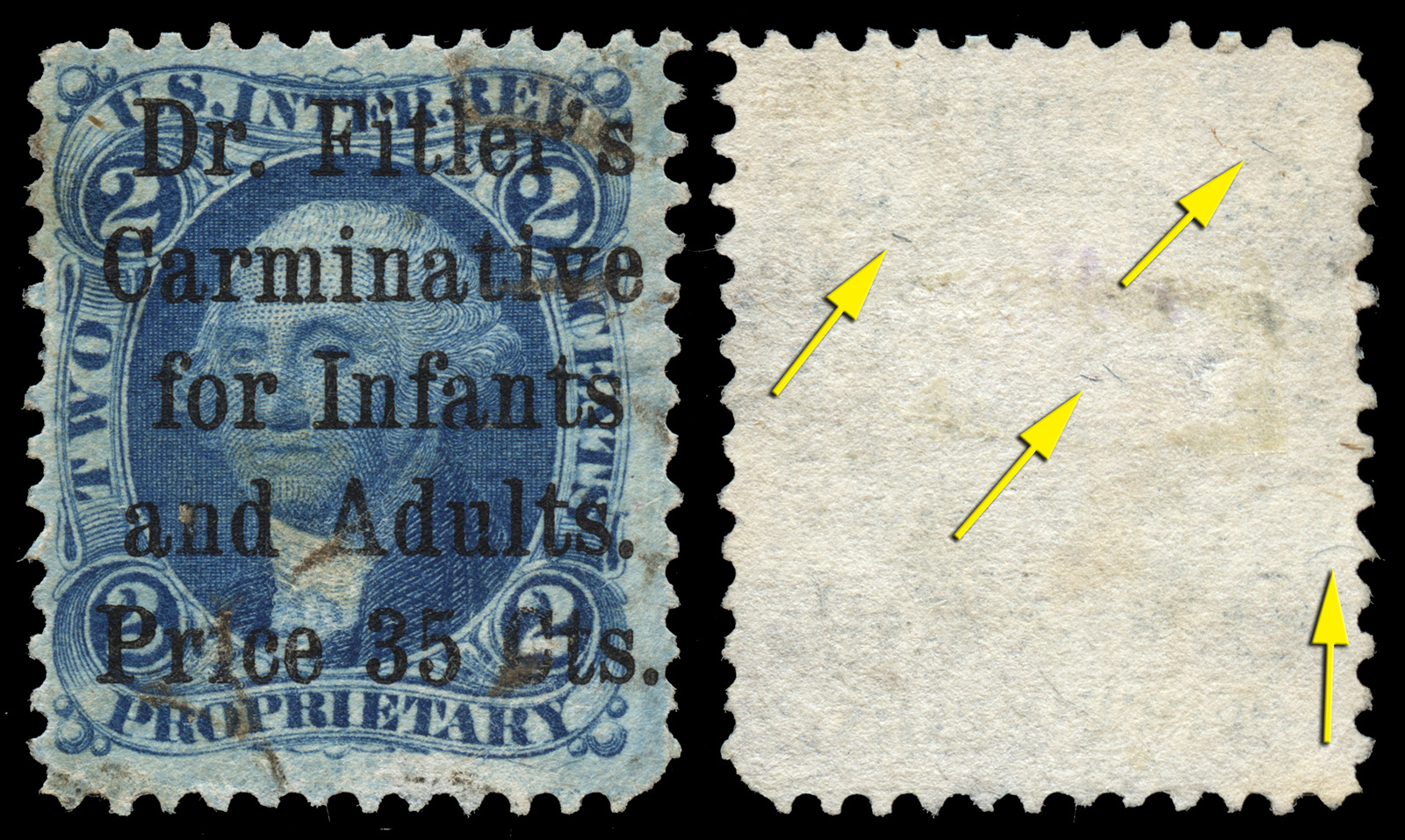
5-line typeset printed cancel from the firm of Wright & Siddall in Philadelphia, PA advertising "Dr. Fitler's Carminative for Infants and Adults". Also unusual in that the cancel mentions the price of the product. Very rare cancel.
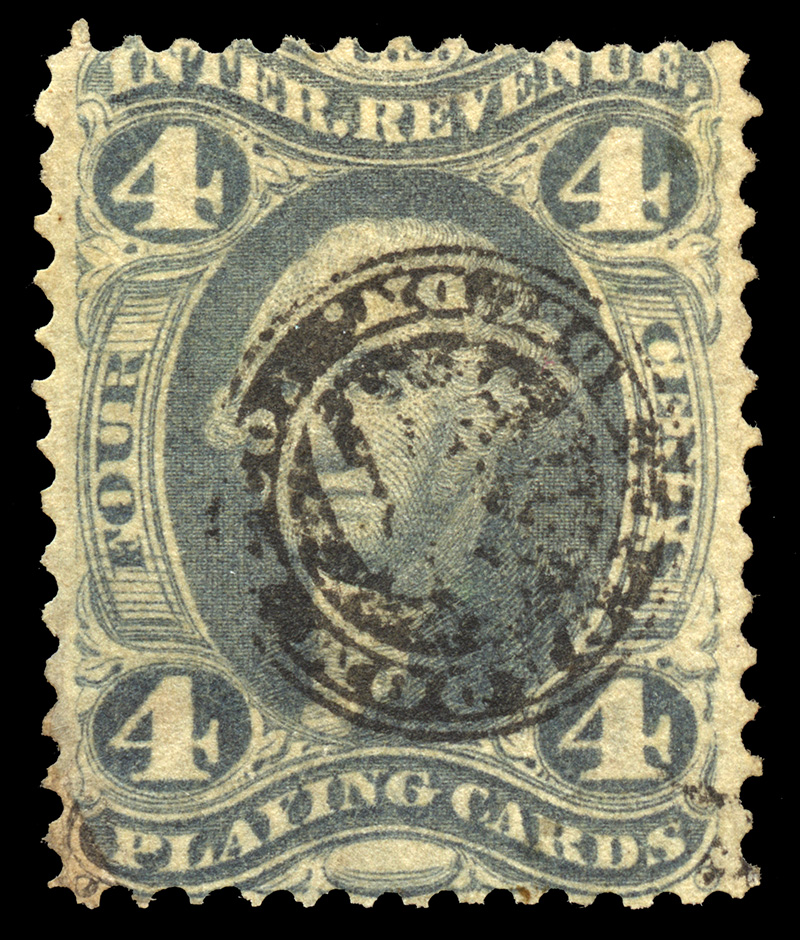
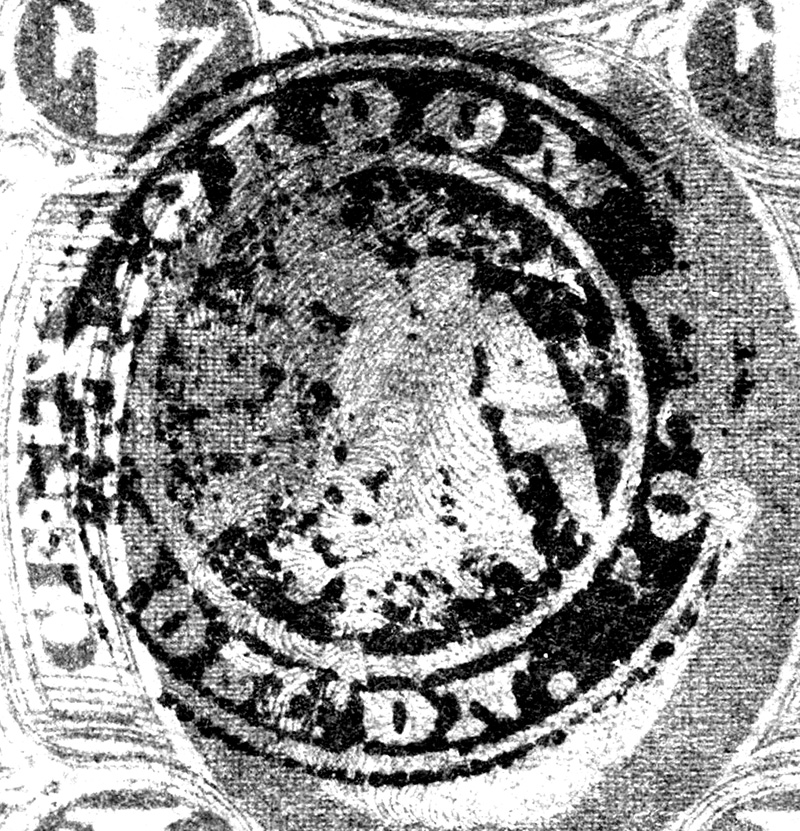
And lastly, the sole reported example of the Thomas Groom & Co., negative eagle handstamp cancel that exists on the 4-cent Playing Cards stamp (R21c). Thomas Groom & Co. was an importer of De L Rue playing cards. Stamp has been reperfed. Of the 4 reported examples of this cancel (two on 5-cent Playing Cards and one on 1c Telegraph), all are faulty in some manner.





 Posted 10/16/2023 5:03 pm