| Author |
 Replies: 25 / Views: 1,423 Replies: 25 / Views: 1,423 |
|
Valued Member
Japan
385 Posts |
|
|
Taken from "Shift Hunter" 1933: .?ies If lJNT RS - United States Stamp Society https://www.usstamps.org/wp-content...unter-74.pdfI would like to see references of the proofs used to make them, and images of the enlarged negatives that were retouched before being shrunken down if anyone knows where it can be found. I'd like to know particularly if the "bushy eyebrows" were the effect of poor inking, or were they retouched in such an exaggerated way on the enlarged negatives. Questions: Offsets appear to be significantly shorter than other Washington/Franklins, and their small design size never seems to vary even in the slightest. They are certainly the smallest of all the 1908-1921 definitives. However, I can't find this mentioned in conversation about distinguishing them from flat plate printings. Is there a reason why it shouldn't be noteworthy to the attribution? *Side note- I like how the letter refers to them as "Surface Prints" at the end. I wonder why "Offset" became the preferred nomenclature. |
|
Send note to Staff
|
|
|
|
|
Pillar Of The Community
6357 Posts |
|
|
Size: Because the offsets are quite visually distinct from the flat/rotary printings in appearance, I have never felt any need to measure them. |
Send note to Staff 
|
|
|
Valued Member
Japan
385 Posts |
|
|
Absolutely, and even for a novice like myself. I started measuring them because their size was also quite obvious. I figured that it may be a valid point of interest for anyone intending to study them. Apparently, it is possible to damage a stamp in such a way that it mimics an offset. I came across this piece recently: 1st image- 331/331(altered) 2nd image- 525/331(altered) 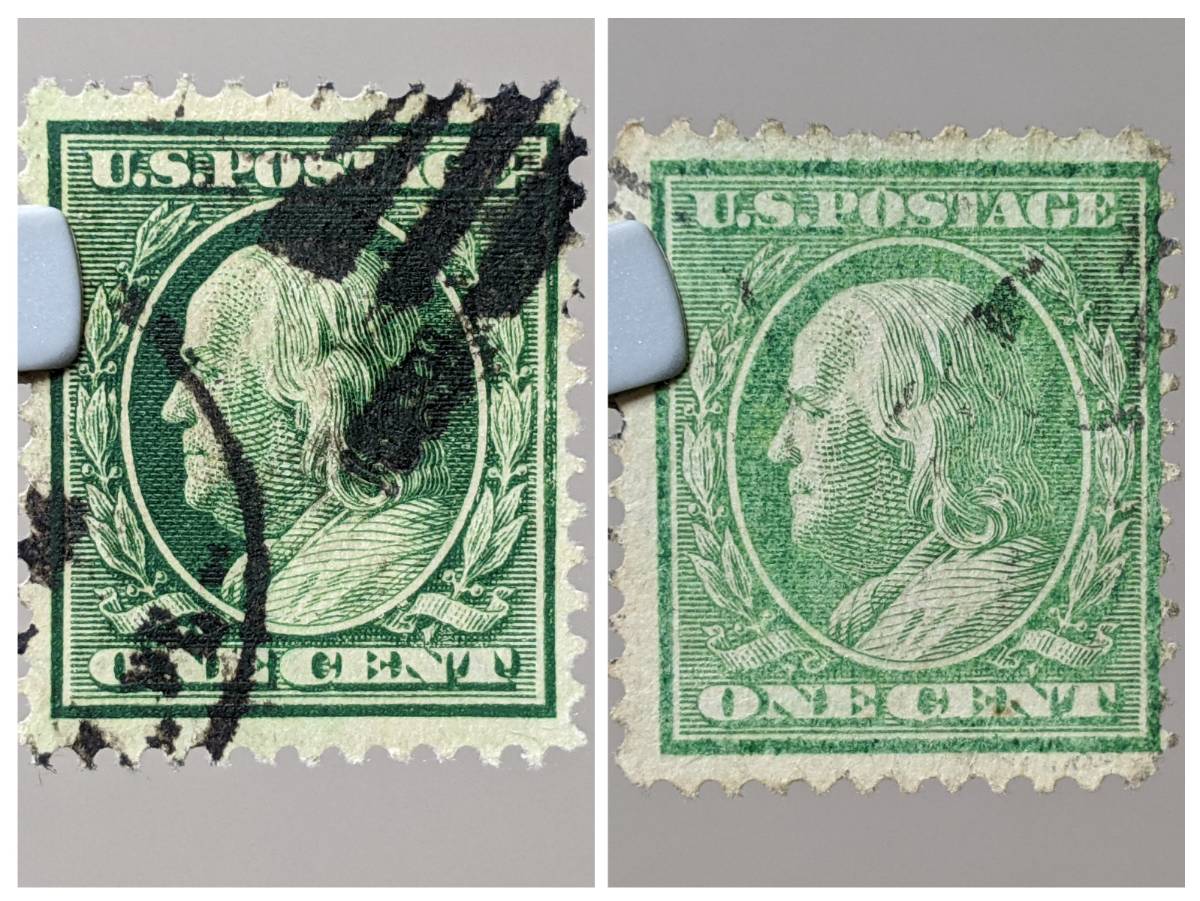 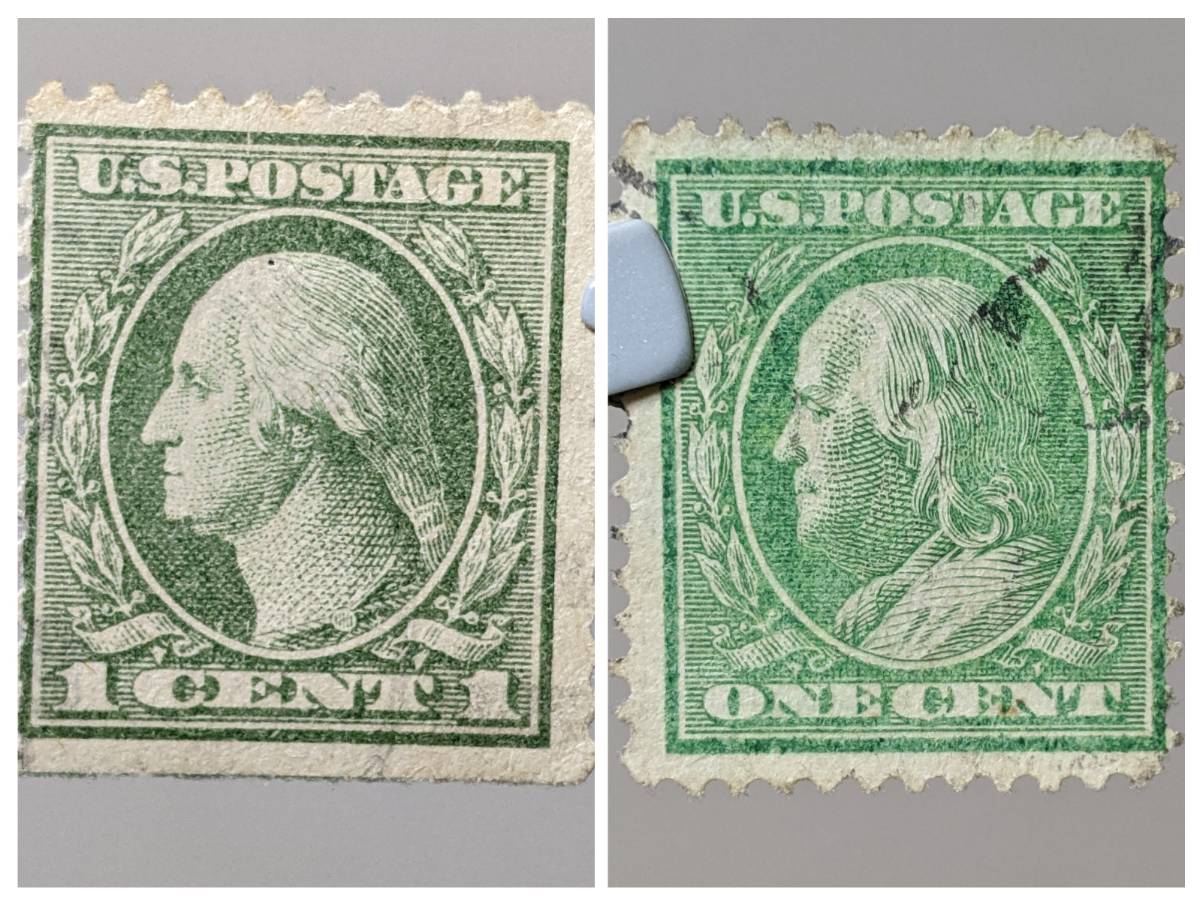 I don't know what happened to it, but the inking certainly resembles that of an offset. The design size is the exact same as the flat plate 331 unlike authentic offsets that are a bit shorter... but I think it was a 331 that was damaged in a particular way. What's everyone's insight? |
|
Send note to Staff
|
|
|
Bedrock Of The Community
12701 Posts |
|
|
Stephen - Not sure what this last post has to do with offset stamps as per the topic title. Anyway, there can be multiple reasons for your stamp to look like it does such as a "dry" print, inadequate inking etc.
PS: The Washington stamp you are using above is not offset printed. |
|
Send note to Staff
|
|
|
Pillar Of The Community
6357 Posts |
|
|
Stephen-P, I agree, the Washington stamp at the lower left is definitely an offset-printed stamp. (Not sure what rogdcam is seeing.)
For the Franklin stamp shown at right in both images, I'm not sure of the point of trying to utilize used/damaged stamps to build upon. It would not mislead anyone with any amount of study of the Washington/Franklin issue, either in design or general appearance. Yeah, it does look like it has gone through the washing machine in a back pocket. |
|
Send note to Staff
|
|
|
Bedrock Of The Community
United States
10824 Posts |
|
|
Bedrock Of The Community
12701 Posts |
|
|
The Washington is poor print quality but not offset I am afraid. PS: You guys travel in pairs.  |
|
Send note to Staff
|
|
|
Bedrock Of The Community
United States
10824 Posts |
|
|
It is definitely an offset, just look at the lines of the leaves around the portrait. And the impression differences in the lettering. I will leave out the shade, since it's on a PC screen. |
|
Send note to Staff
|
|
|
Pillar Of The Community
6357 Posts |
|
|
Valued Member
Japan
385 Posts |
|
|
That's totally okay, Roger. The stamp isn't in the best shape. The color of an offset is certainly unique as Bart pointed out, so it would be helpful if comparison stamps were in the same photo: 1st & 2nd picture - w/ 531 536 (offset) 3rd thru 5th - 498, 481, 462 (flat) 6th - 552 (rotary) 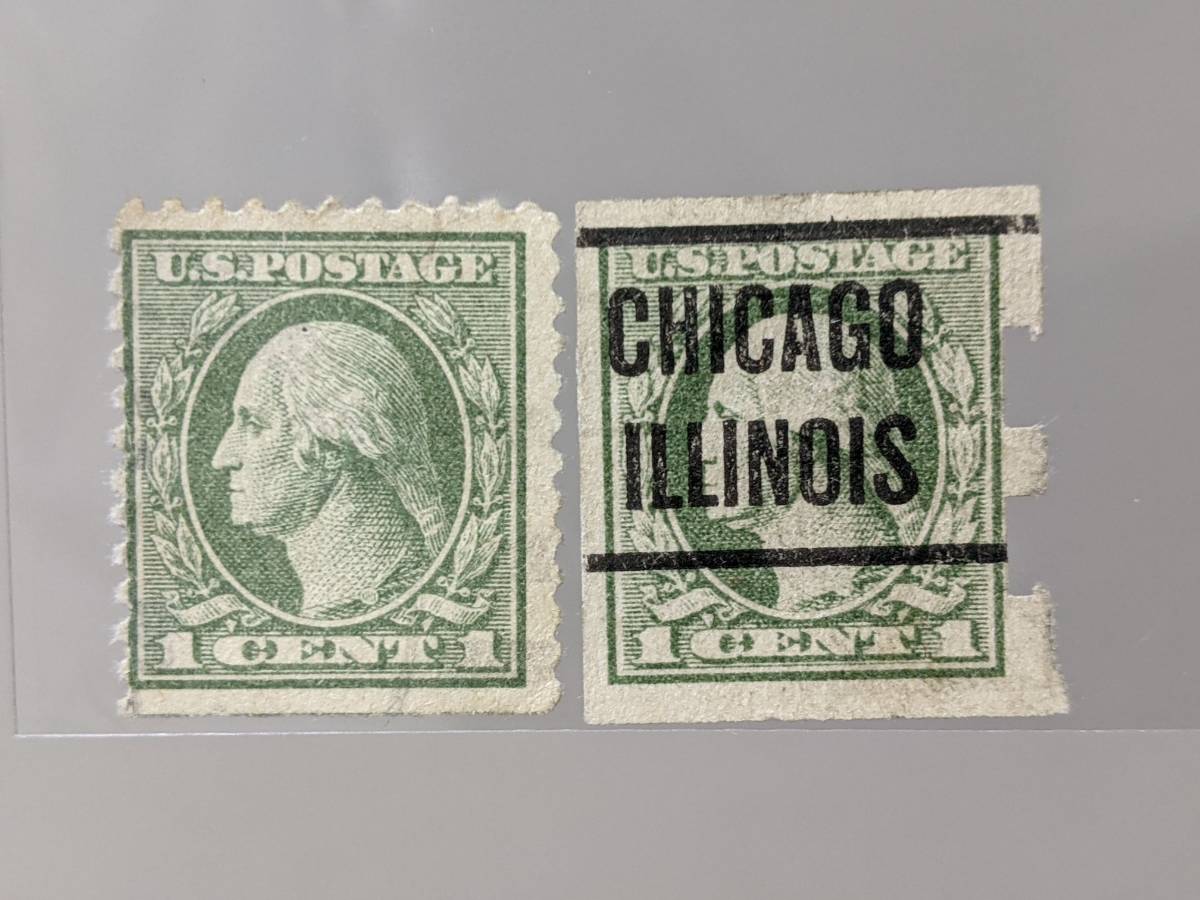 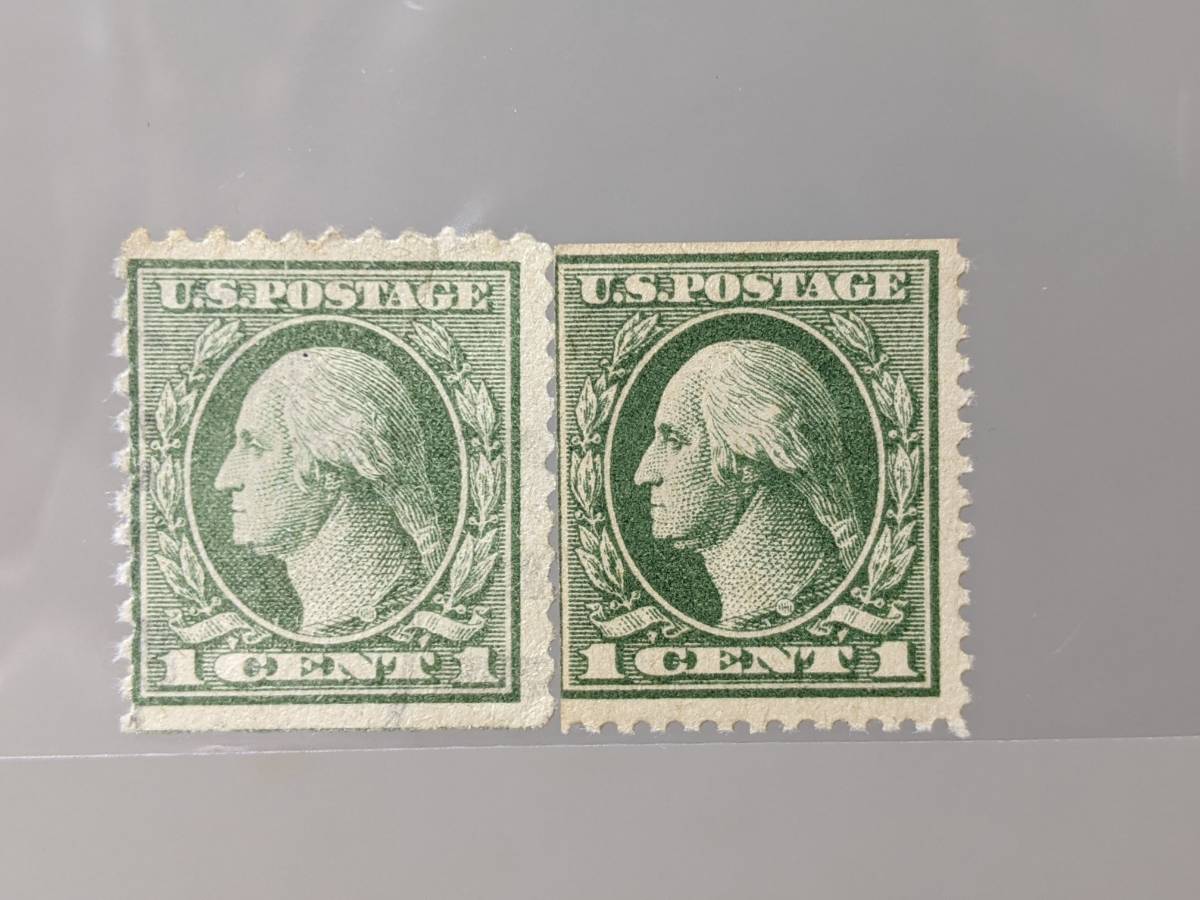 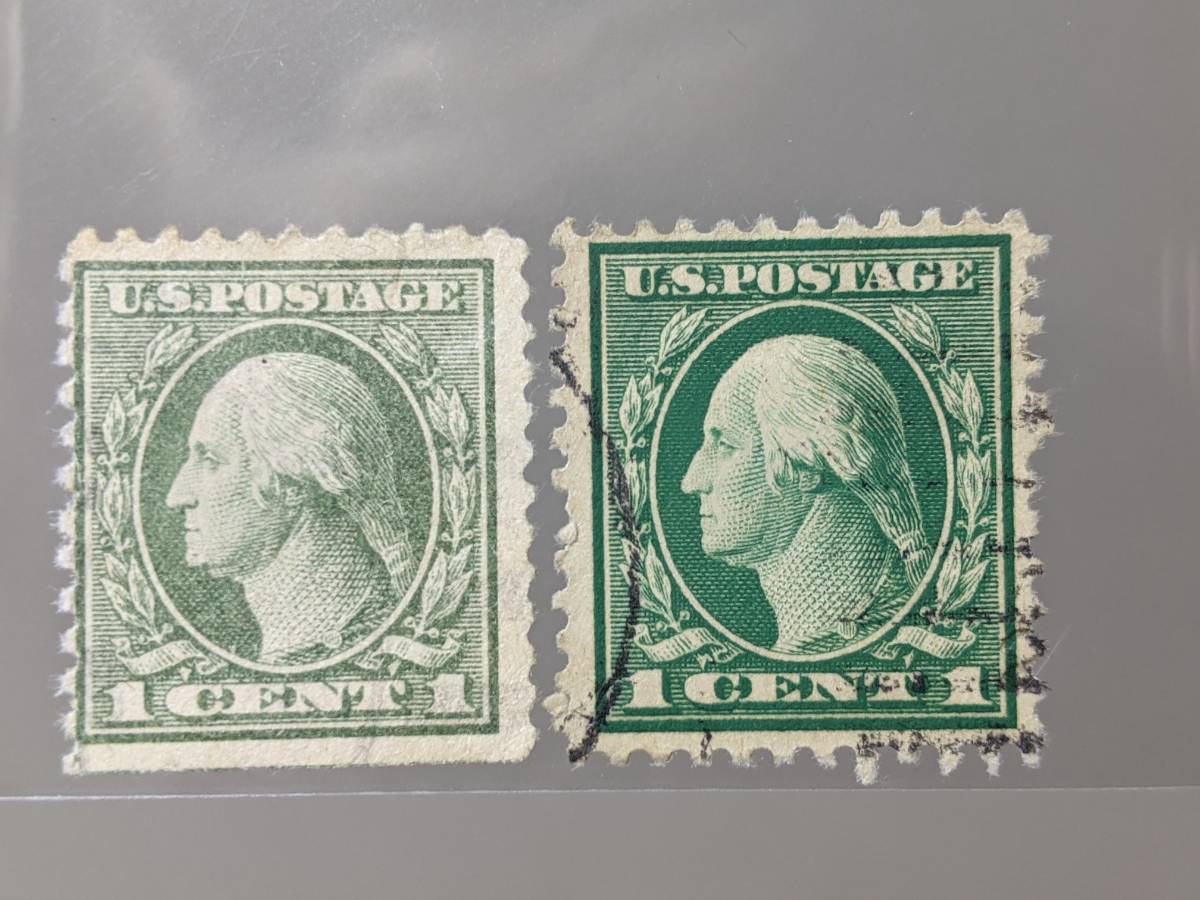 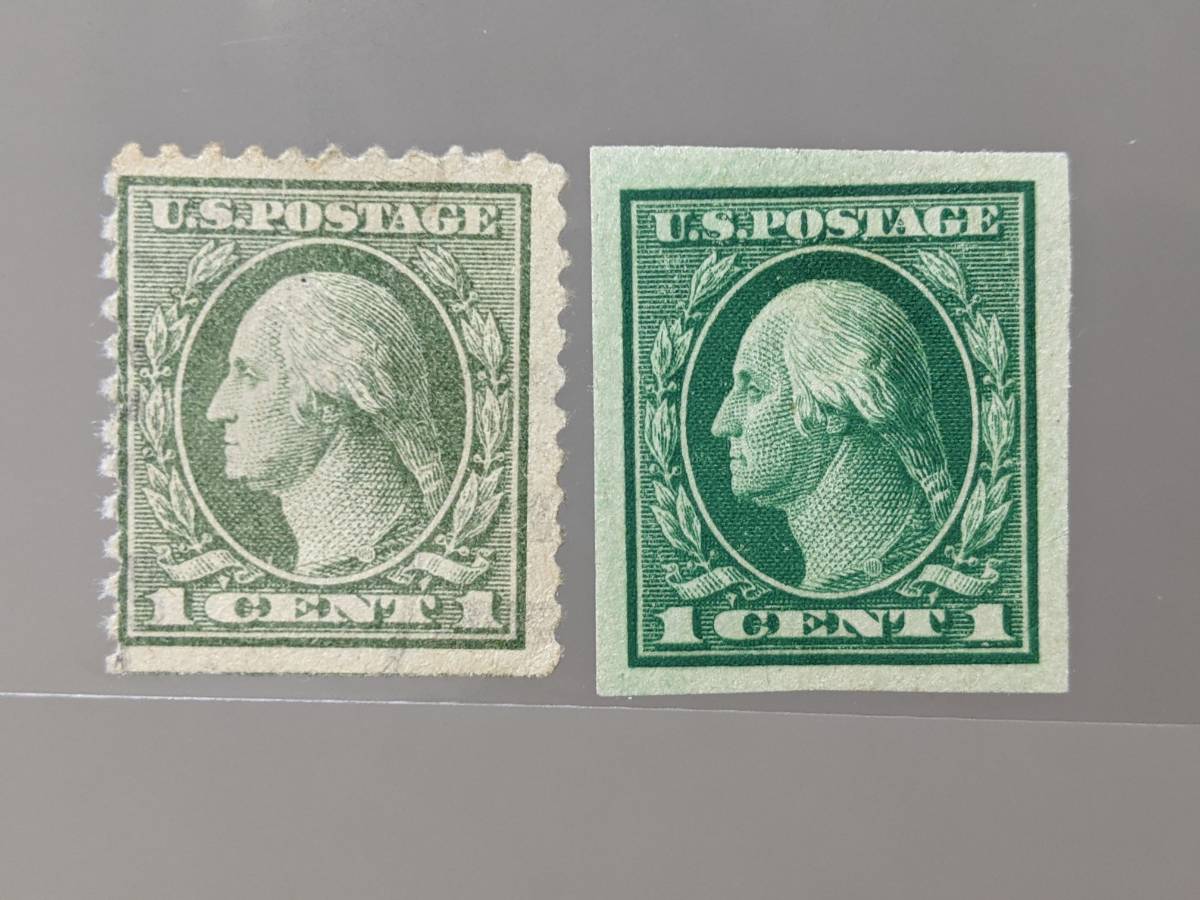 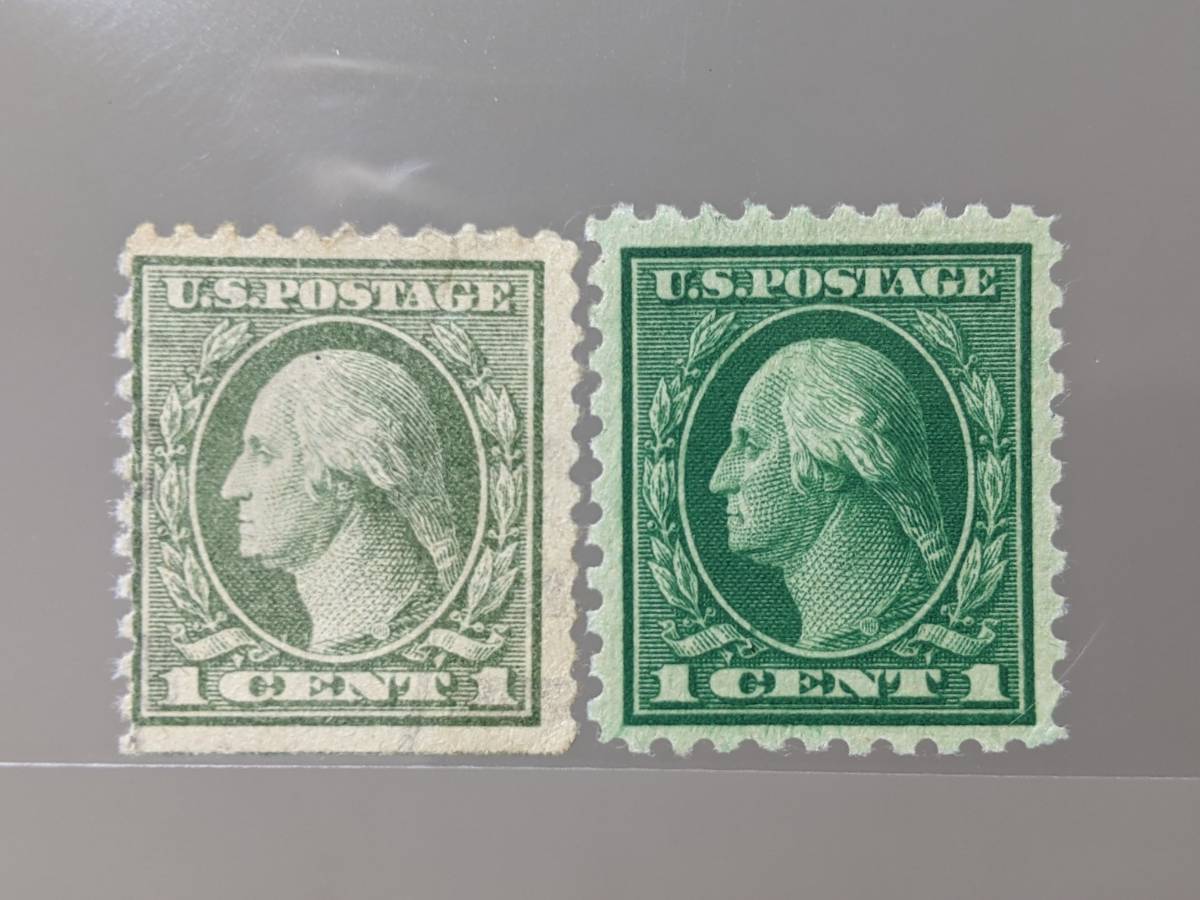 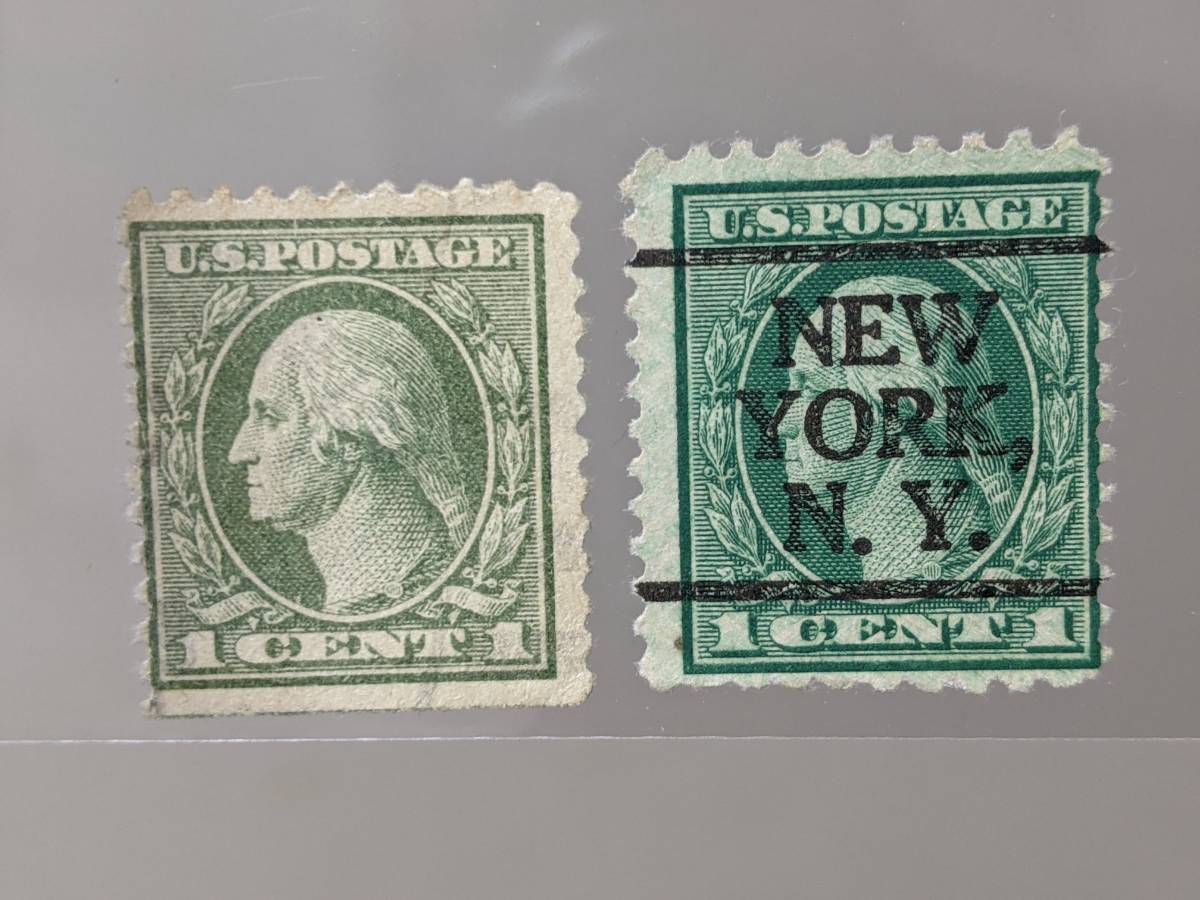 |
|
Send note to Staff
|
|
|
Valued Member
Japan
385 Posts |
|
|
Quote:
For the Franklin stamp shown at right in both images, I'm not sure of the point of trying to utilize used/damaged stamps to build upon. It would not mislead anyone with any amount of study of the Washington/Franklin issue, either in design or general appearance. Thank you, John. I should have clarified my point a bit more! The purpose of the Franklin in this thread was this: If the same thing happened to a perf 11 Washington, you could still rely on its measurements to add confluence to your judgement. According to what I've read, the flat plates are among the smallest type of Washington Franklins, despite the offsets being the real winner. They come in at almost a full cm shorter. Stampsmarter https://stampsmarter.org/1847usa/19...ntifier.html has them at 18.5-19x22, which is the smallest group recorded for the series (being tied-in with the flat plates), when in fact the offsets come in at 18.5x21.1-2. It doesn't seem like an insignificant detail to throw aside, and I believe any valid information for such a daunting series should be noted to help the collector. If I'm missing something, please let me know! |
|
Send note to Staff
|
|
|
Valued Member
Japan
385 Posts |
|
|
Also, I'd like to keep the focus of this thread on the proofs that were used to generate the images. Anything about that, or the enlarged photo which was then shrunken down to the proof's size would be extremely helpful. |
|
Send note to Staff
|
|
|
Pillar Of The Community
6357 Posts |
|
|
Stephen-P,
Based on this and many of your other threads, you seem to want to bypass the studies of the past century+ and jump to a new ways. Most of us see farther because we stand on the shoulders of these giants who came before us - who have built extensive collections and explored government records. I just don't see how measurement will be the critical/deciding factor in IDing whether a stamp is offset or not when there are so many other more convenient methods - like just looking at them - as you have clearly demonstrated you are able to do. I just don't see this idea getting any traction.
As for the production/proof process, I would start with a thorough review of the literature beyond the one citation in the first post. |
|
Send note to Staff
|
| Edited by John Becker - 10/19/2023 2:05 pm |
|
|
Bedrock Of The Community
United States
10824 Posts |
|
|
Of course, since they were surface printed, running a fingertip gently over the surface of any offset stamp will prove it to be totally smooth to the touch. Engraved stamps whether flat or rotary will have raised lines. They are easily distinguishable this way as well. |
|
Send note to Staff
|
|
|
Valued Member
Japan
385 Posts |
|
|
Quote:
Based on this and many of your other threads, you seem to want to bypass the studies of the past century+ and jump to a new ways. Most of us see farther because we stand on the shoulders of these giants who came before us - who have built extensive collections and explored government records. I just don't see how measurement will be the critical/deciding factor in IDing whether a stamp is offset or not when there are so many other more convenient methods - like just looking at them - as you have clearly demonstrated you are able to do. I just don't see this idea getting any traction. John, You acknowledged that even Roger was mistaken, but go on to say that experienced collectors don't need anything besides what's available. Roger is no spring chicken when it comes to stamp literature, and I certainly don't intend to hurt his character for making a singular mistake. Certain people are better at distinguishing certain criteria than others. Color, size, perforations, design details, etc. all should have their proper place in the literature when it's relevant to the stamp. It wouldn't make sense to leave it out for no reason. For me personally, being the one-eyed cyclops that I am, the dimension size is one of the first things I'll notice if it's even slightly off. It's easier for me to recognize the offsets (the ones I've seen) for their size, so it would be a massive help if either 1) my post is validated, or 2) someone posts an offset that's actually 18.5x22. Even (2) is helpful for me, because then I can move on knowing that not all of them share the same dimensions. Let me bring up this post of Sc#518 that you helped me with: https://goscf.com/t/83010I felt your response here was much more sincere and logical, and you correctly stated that the unique size of the 518 should be added to the catalogue so as to not create confusion. Has your attitude changed since then? |
|
Send note to Staff
|
|
|
Valued Member
Japan
385 Posts |
|
|
Quote:
Of course, since they were surface printed, running a fingertip gently over the surface of any offset stamp will prove it to be totally smooth to the touch. Engraved stamps whether flat or rotary will have raised lines. They are easily distinguishable this way as well. Thank you Bart. Very helpful! I think it's also possible to notice it under oblique lighting if I'm not mistaken. |
|
Send note to Staff
|
|
|
Replies: 25 / Views: 1,423 |
|




 Posted 10/17/2023 12:45 pm


