Quote:
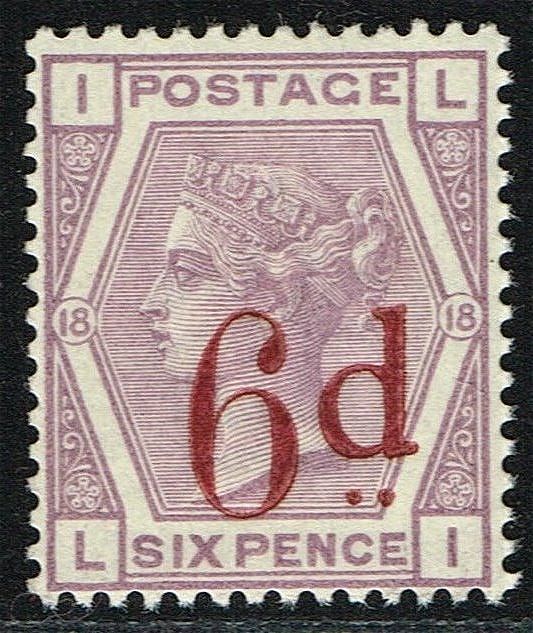
Trying to determine if the stamp on the right is the fabled Scott #63.
I am not sure which that is. However, 'fabled' makes me think of the 1873 'pale-buff' from plate 13. That stamp is one of the 'abnormals.' It was printed from plate 13, and had the 'Spray of Rose' watermark.
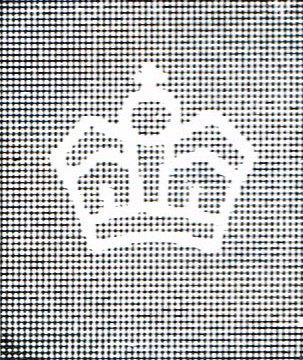
The stamp on the left is the 1881 grey issue on Wmk. Crown paper. The stamp on the right is one of the two 'unified issue' stamps issued in 1883. The intention was to print stamps for unified postage, telegraph, and revenue use. Designs used for postage stamps were chosen to be printed in a new colour with the value added in large numerals. These large numerals would make it easier for postal clerks to recognise the stamps' values. The clerks worked in badly-lit environments that made it difficult to recognise stamps. Also, literacy was an issue. A few existing values printed from existing plates were printed in lilac and, subsequently, the value was printed in numerals. Black was found to clash with the cancellations. Carmine was chosen. In the end, only the 3d and 6d were issued.
The big "6d.." makes this a no-brainer. Comparing colours, not only, is useless. Also, it will not help. the right stamp was never intended to be issued in the original colour. It was a completely new issue.
Would it not have had the "6d.." included in the design, as explained by others, the plate number is a clue. Also, the watermark is a clue.
Quote:
And then there's the 6d overprint
I understand what you are referring to. It is that stamp. But no 'overprinted' 6d exists. It was not an existing stamp that was overprinted. It was intentionally designed using existing designs. Using 'overprint' in this way would make any stamp printed in more than one run an overprinted stamp.
Stanley Gibbons calls it 'surcharged'. If you apply the French meaning of the word, you might use it. If you consider a surcharge a higher than original value, even that is not correct for the reason stated (not an existing stamp as it was printed with that 'surcharge' in a new colour), and the value is not changed by the 'surcharge'" the "6d.." was intended to identify the 'SIX PENCE' included in the original design.





 Posted 11/29/2023 9:07 pm