Quote:
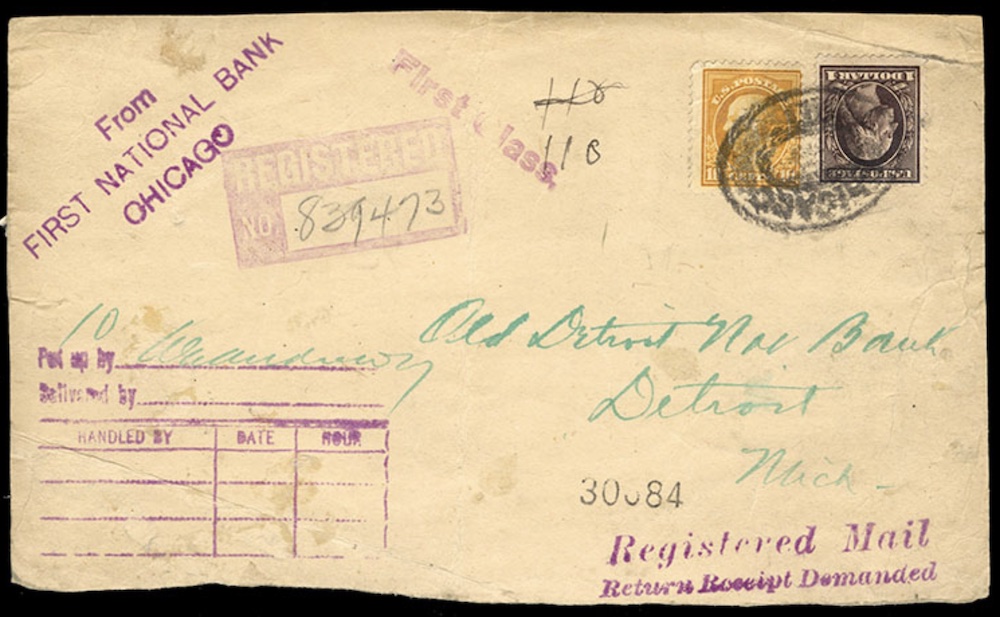
why Scott nos. 341 and 342, priced at just $20 and $90 in the 2019 catalog, are so frightfully expensive (i.e. rare) on cover at $5000 and $6000 (2006 catalog)
Those aren't the hard ones. 423 $7,000.00 and 460 $12,000.00 are tougher covers.
I believe the Late Al Kugel had the, the and in THE, meaning the one, 460 cover. I am sure of Al and 99% sure it was the 460. He had some of the others as well at times.
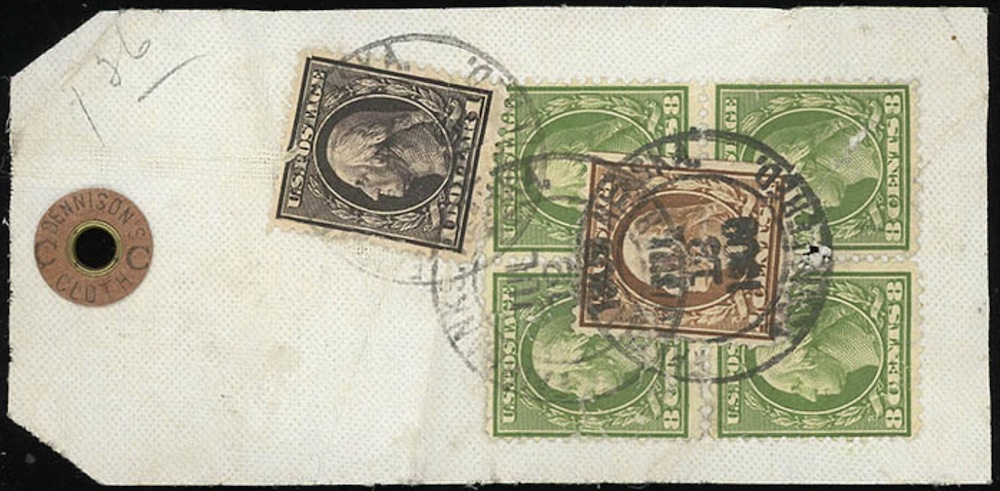
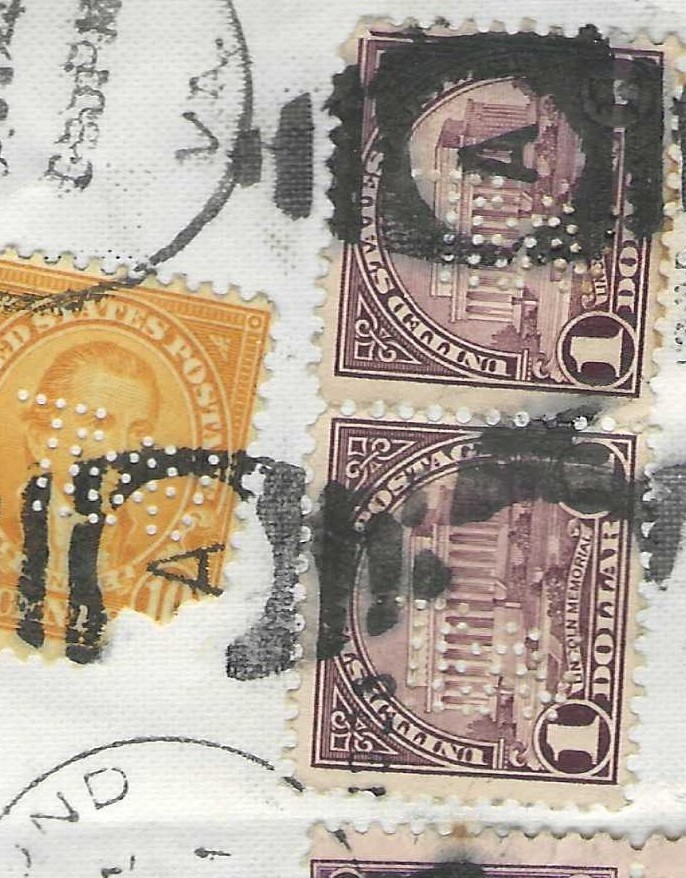
For a while I was trying to collect The Dollar Values of the 20th Century. Tags and wrappers were not too difficult pre-1937. Post 1937 Envelopes were not a problem for me as I had the prexies and Liberties covers (My $5 Liberty was a pair on an envelope, the first found a bit before the second found was publicized) My Prexie envelope, one of them anyway had the $5, $2, $1 and change on it. The point being I had reason to figure out what and where these cavers were. Back then the 460 was a problem for me. I since have it on tags.
The common usage of 423 is from Alaska on tags. Several of the tags have Q10 or Q-9 on board as well and in addition tow one or two 423s.. Earlier dollars are found on wrappers with usually 75 cent Q11 Parcel post. They, the Alaska items pass into four figures with ease.
Now I agree with ZerbaMan about
on tag listings but I do see it happening soon. Most of my documentation on the matter was destroyed by vandals.
What needs to be addressed is what I will call market dynamics. Prexie Collectors late in the 20th Century started the trend of "Solo Use" which caught on and even spread far beyond Prexies. Similarly the Classic Collectors started a trend in the 19th Century in which tags we considered red-headed step children of real postal history, envelopes. That took hold then a continued into the 20th century and onward to the 21st Century. It did not help that in the early to mid 20th Century, tags, especially registered high postage and fee value tag were every where. To say they were "common" is to greatly over state their ease being obtained. Thus the tag were seen as the source to supply of paper used stamps. Those same Classic Collectors also disliked large envelops and wrappers. If they did not remove the stamps for used copies, the envelop or wrappers were cut down to a smaller size.
Thus it is again the supply and demand tension at play and it matters not why demand is increased or decreased for an item in the moment.





 Posted 01/21/2024 6:41 pm