This may be old hat for some, but for me this came as a recent revelation.
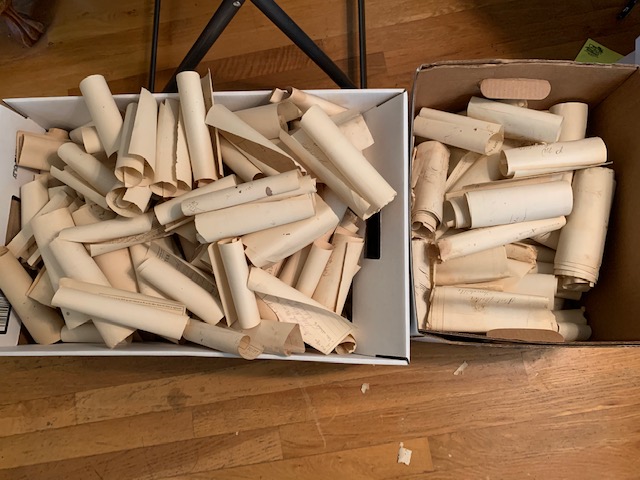
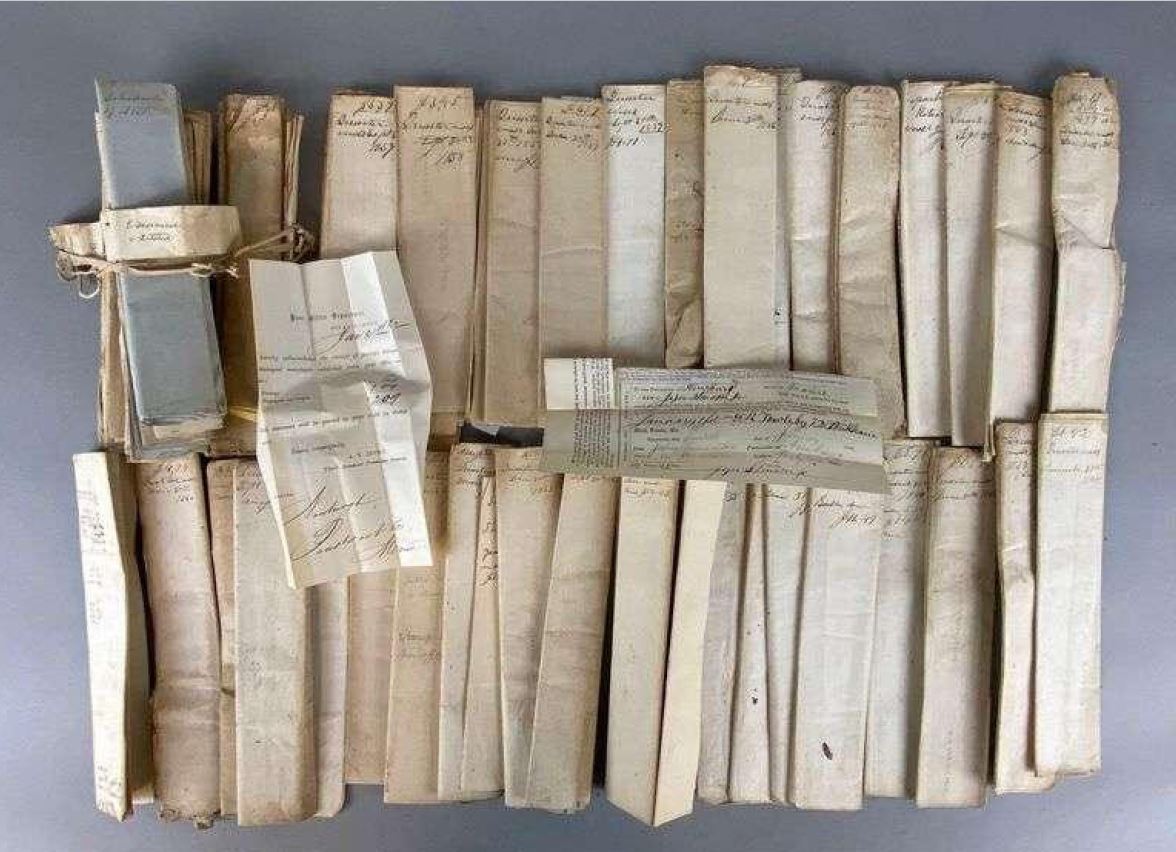
Being a collector of revenue documents, I frequently encounter documents that have been folded or curved for 150 years, and as the paper is extremely brittle or rigid from loss of moisture. Trying to get them to lay flat for scanning, presentation, or repair can be QUITE difficult.
Historically the solution other than reverse folding the document against the existing folds, which breaks or at the very least weakens the paper fibres and reduces document integrity, was to lay a document flat between two smooth surfaces and stack books/bricks/anvils on it for several days or weeks. Sure, it works in a pinch, but what if you don't want to wait a week to work with the document, or as I found myself after purchasing an accumulation of billheads, how/where to flatten several hundred documents?
P.S. Soaking/humidifying is absolutely NOT an option, even if the documents do not have stamps affixed. I learned this the hard way, unfortunately. Residual water of any kind, even vapor, will frequently cause spotting, toning, or smearing of manuscript ink on paper this old. Stay FAR away from water.
After doing some research online, I found some references to "ironing" documents to remove (or at least minimize) creases, folds, wrinkles, etc. I did some experimentation, and damned if it doesn't work extremely well... but with several caveats.
1. While you can use a normal clothes iron, that is NOT recommended as they are heavy and clumsy, and you run a very high risk of accidentally damaging the material you are working on. Also, the temperature controls on home irons can be very vague and inconsistent. Instead, you want to look for an "edge banding iron". This is a light hand-held iron with digital controls. I purchased the following ($62.99 at
Amazon):
https://www.amazon.com/dp/B07Y2X7JYW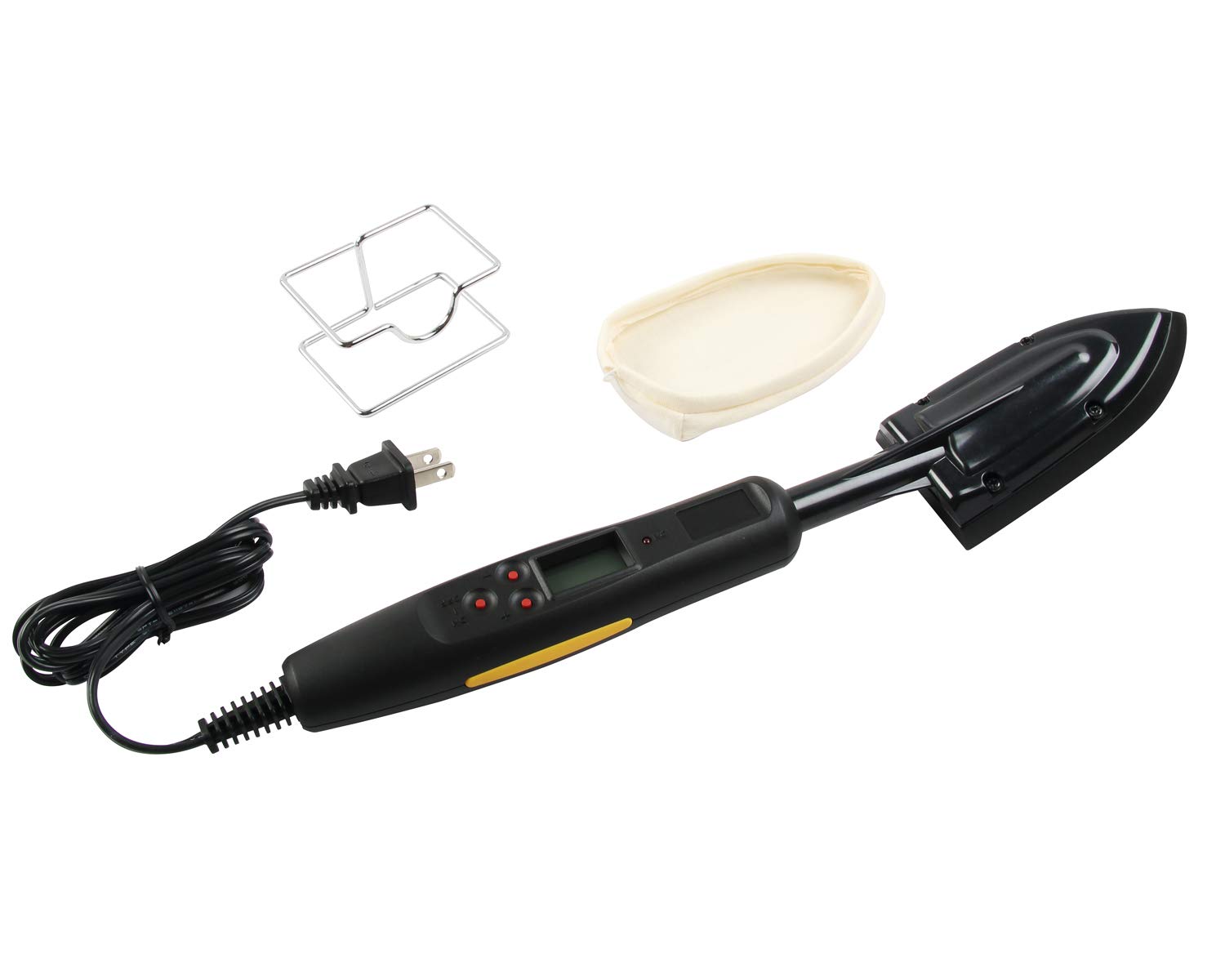
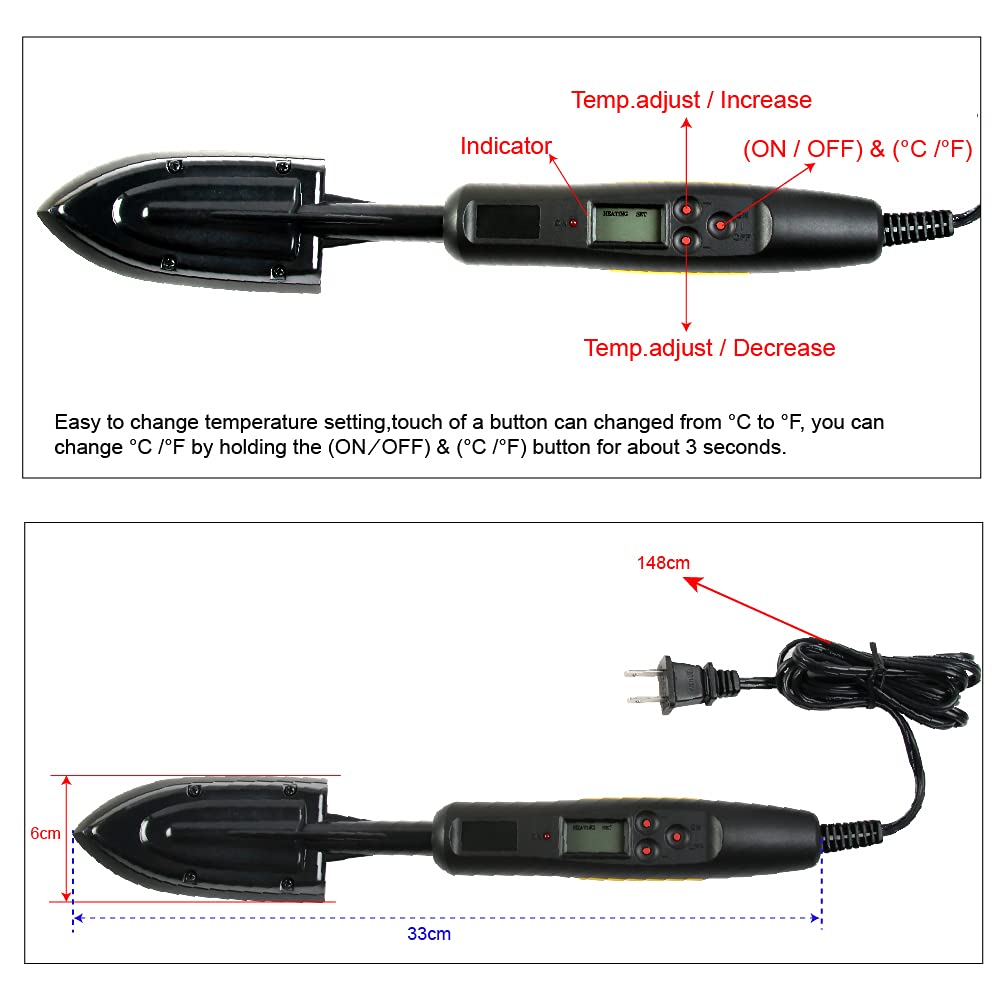
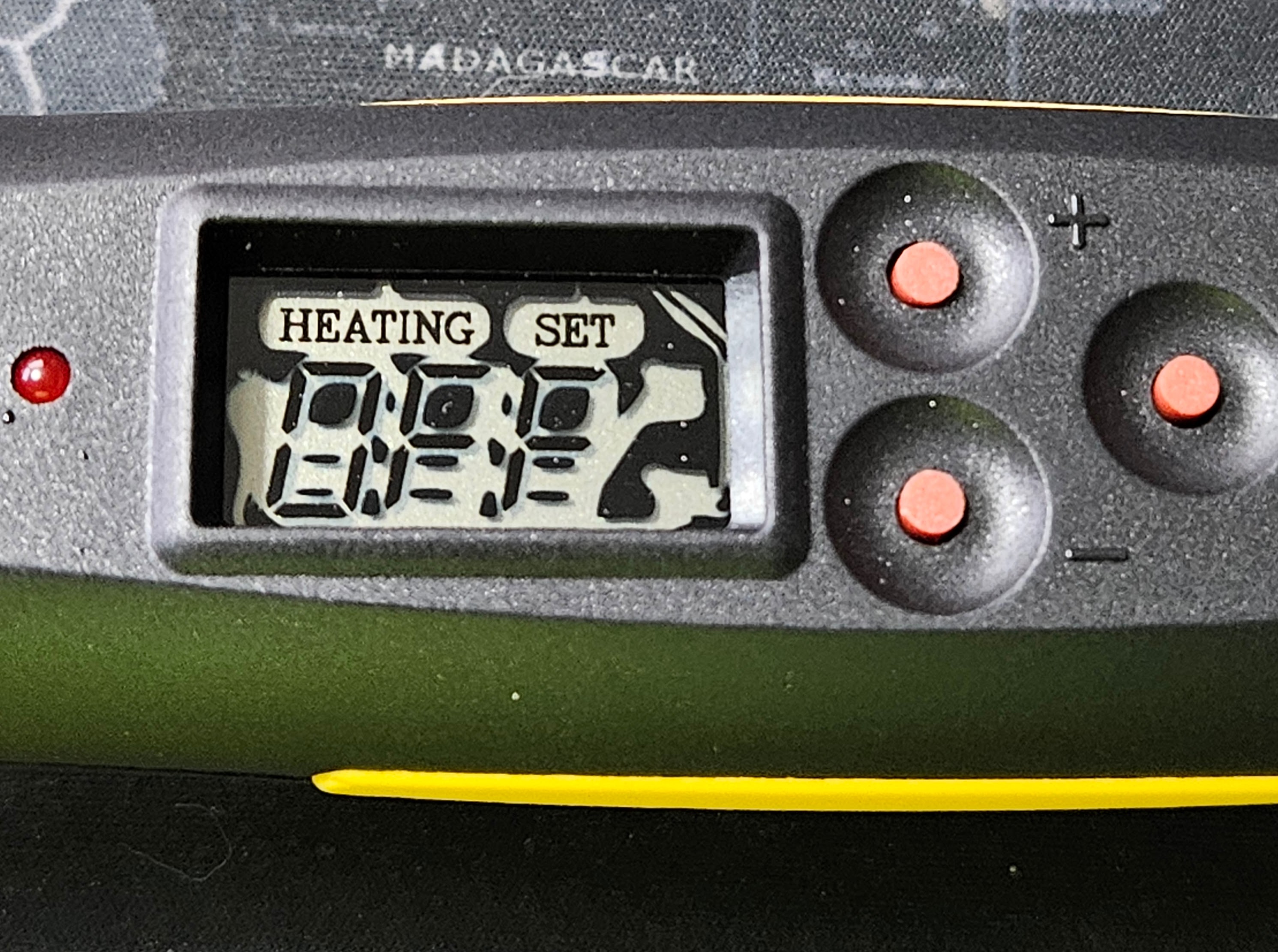
2. Even at its lowest setting, it is QUITE hot, so you want to be careful (100 degrees celsius = 212 degrees fahrenheit is the lowest temp). As shown above it comes with the holder, which you want to use.
3. You never want to apply the iron directly to the document or cover you want to flatten. Instead you want to place a piece of paper on top of the document and apply the iron to it, never allowing it to sit still, constantly move the iron. I use the following packing paper from Wal-Mart. It's cheap ($5.97 for 50 sheets) and it's large enough (22-inch x 22-inch) that it can be used for oversized documents or torn down for smaller documents... multipurpose.
https://www.walmart.com/ip/Pen-Gear...ts/440522923I use a sheet of tempered glass as my working area, as it's perfectly flat and won't be marred if the hot iron accidentally slips or rests on the surface.
Some pictures of my working area and before, during, and after shots:
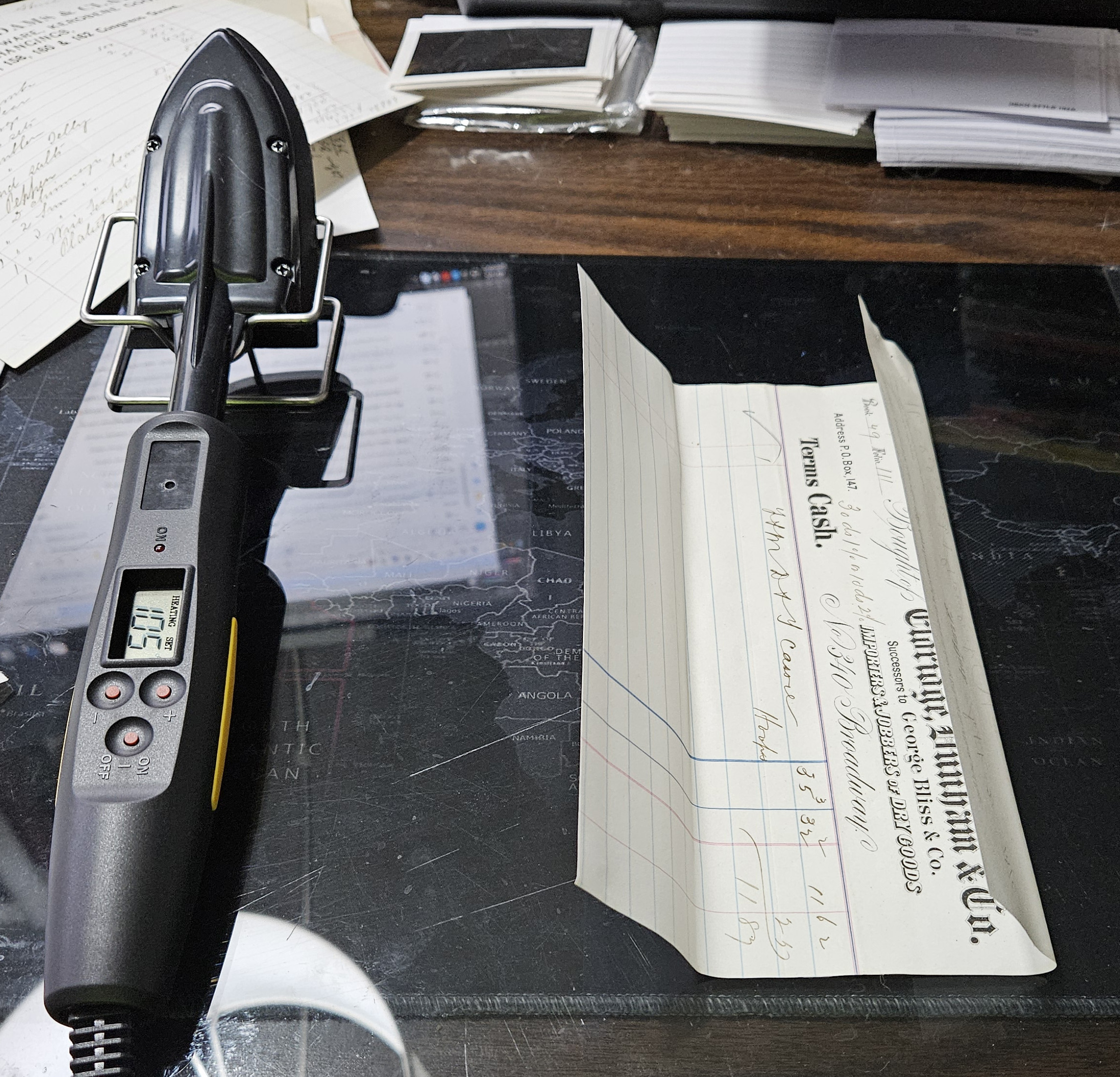
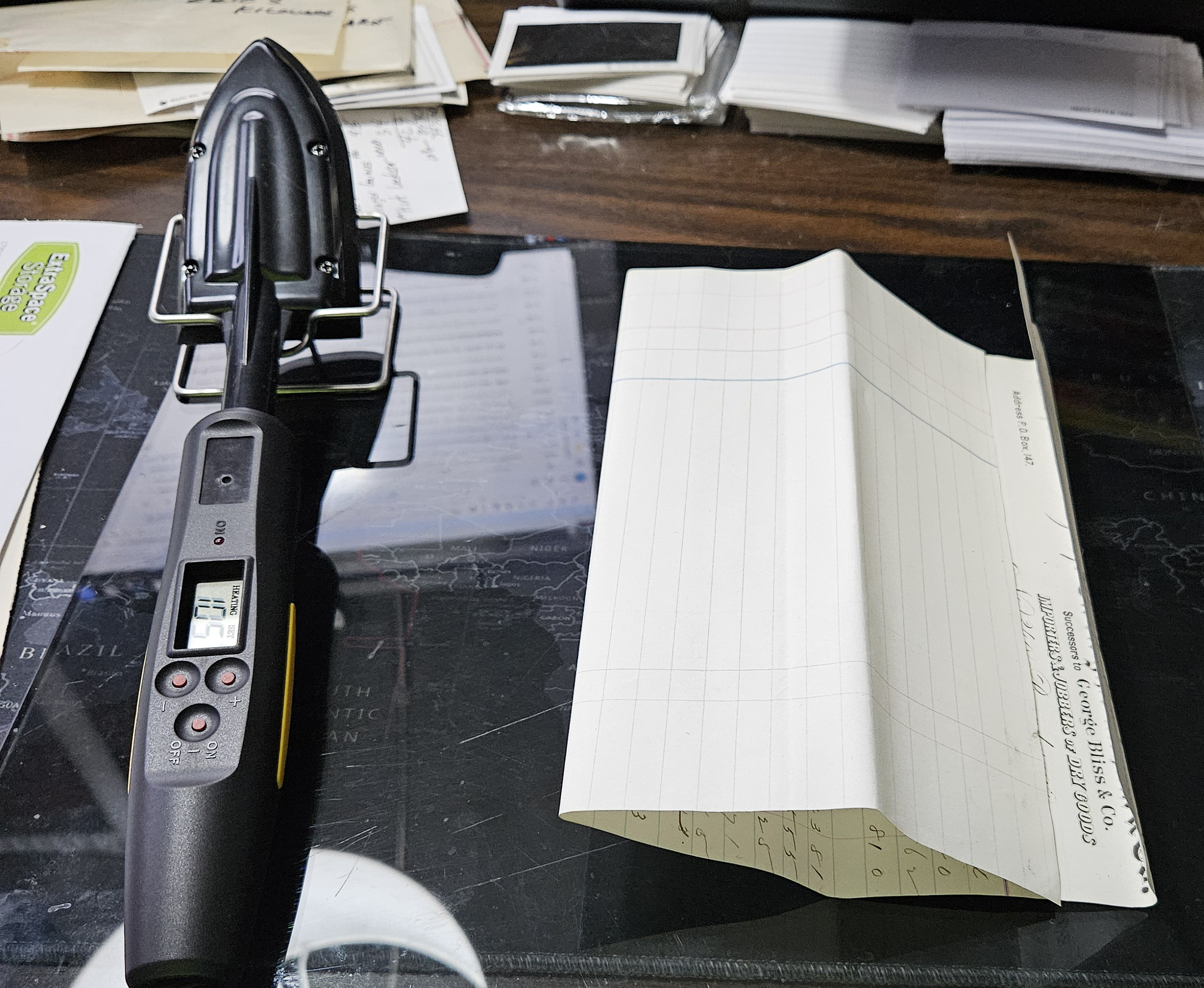
1. Iron in holder showing 105 degrees Celsius current temperature. As you can see, the billhead in question has curled over the last 160 years and does not want to lay flat.
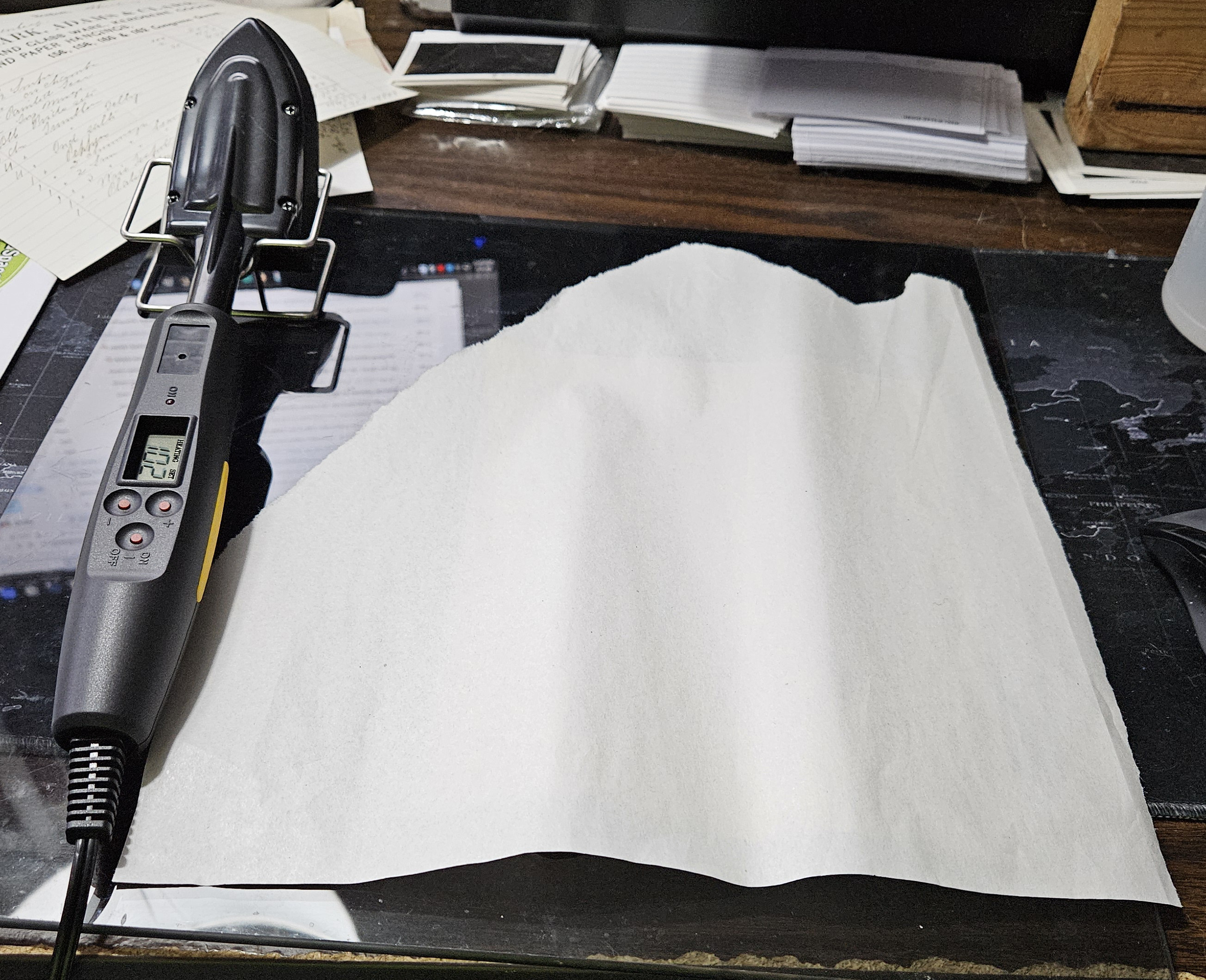
2. Torn sheet of the packing paper on top of the billhead. You can't see it, but I place the billhead face DOWN so the printing/stamp is away from the heat source.
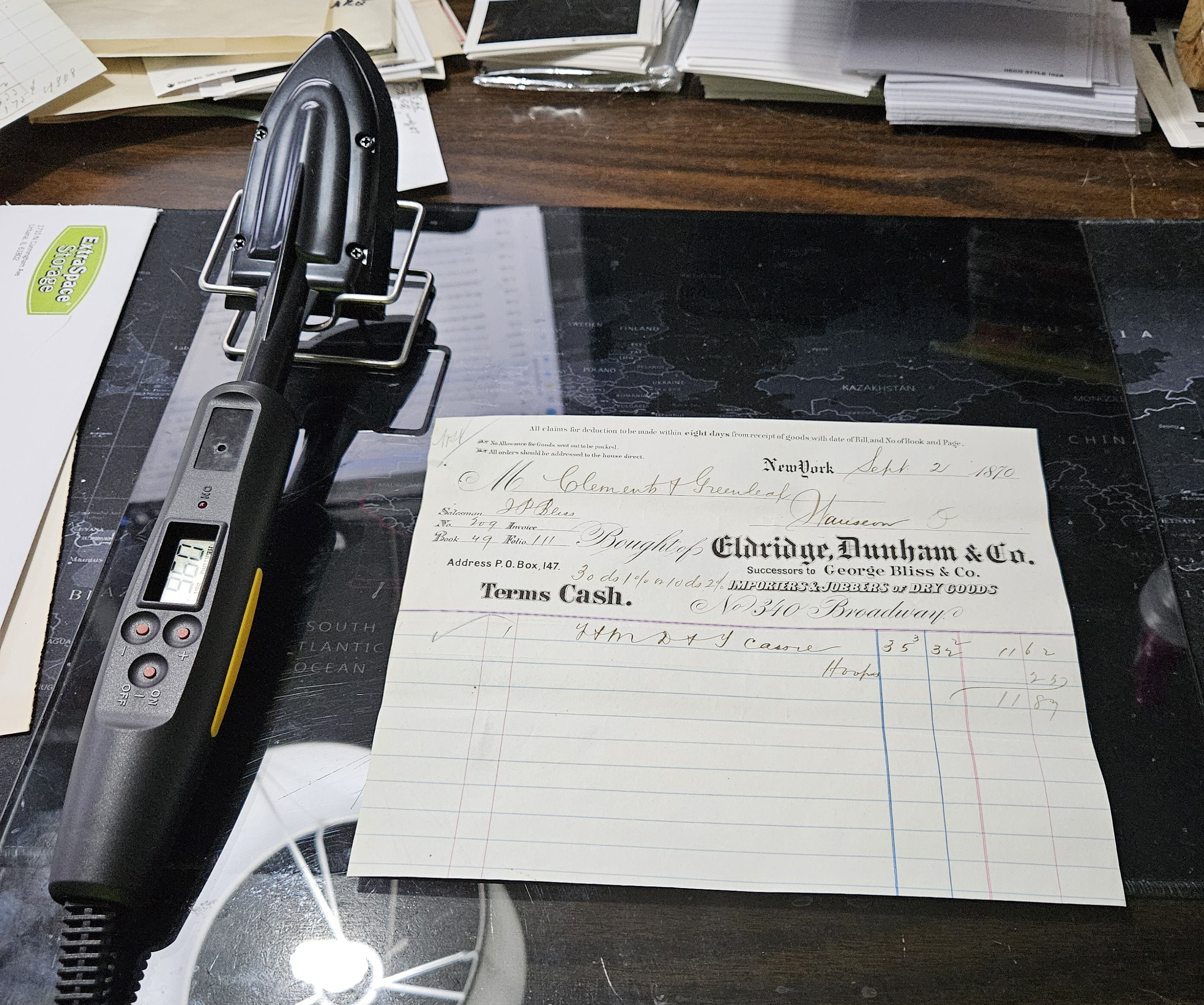
3. After 20-30 seconds of even pressure, focusing on the folds, the document now lays flat with no assistance.
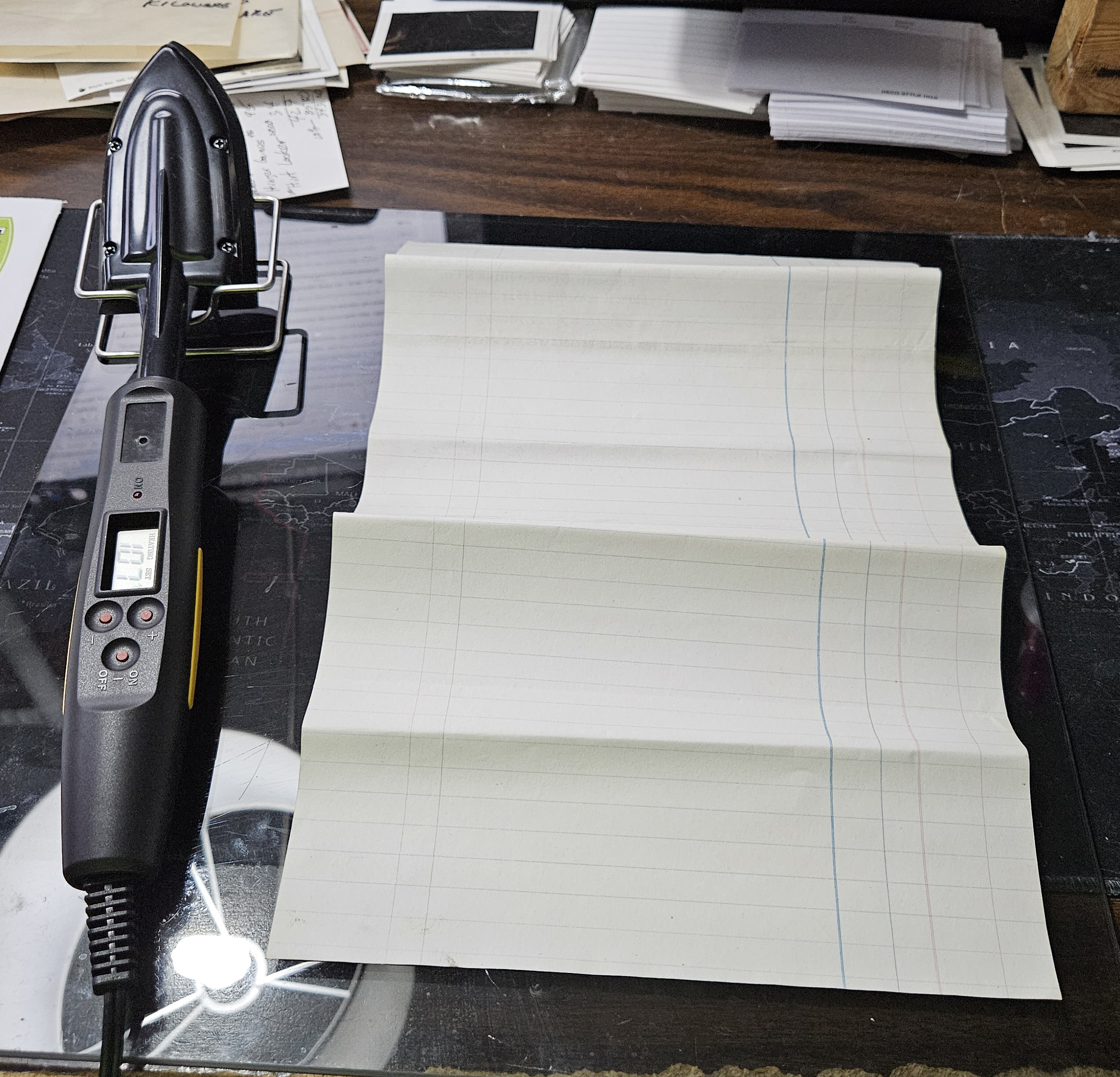
4. Now a slighly larger document with multiple folds, which would be a pain to deal with on the scanner or trying to insert into a page protector or sleeve.
5. Face down prior to using iron. As you can see, its "natural resting position" is quite janky due to years in folded storage.
6. One minute later... you can still SEE the folds, but they are no longer an impediment to working with or presentation of the document. With new/recent printed materials, lightly wetting the paper surface before ironing *might* eliminate the folds almost completely, but (1) as I originally mentioned, for documents this old we don't want water anywhere near them, and (2) technically, when paper is actually folded, paper fibres are broken, which is a destructive action, meaning you will never truly reverse it without major surgery.
The goal here isn't to make the folds or creases disappear, but to be able to effectively work with the documents.
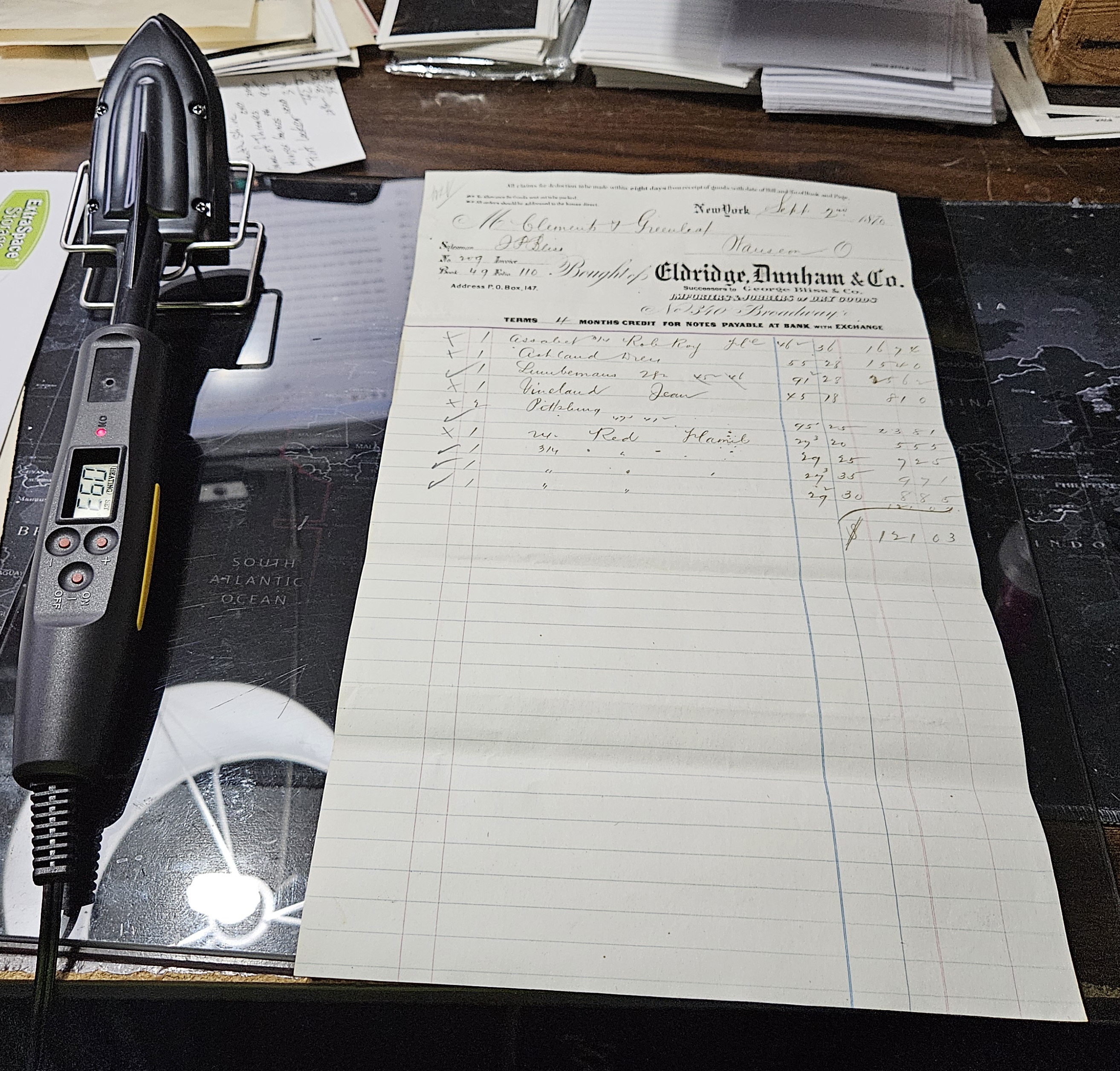
All in all, I'm thrilled with the results, and once you get in a rhythm, 30-60 seconds per document means you can go through quite a few in one sitting.
At some point I want to see if this same method works for large-format vellum indentures. I have several that I have never been able to image because the existing folds are so rigid.





 Posted 03/20/2024 12:02 pm