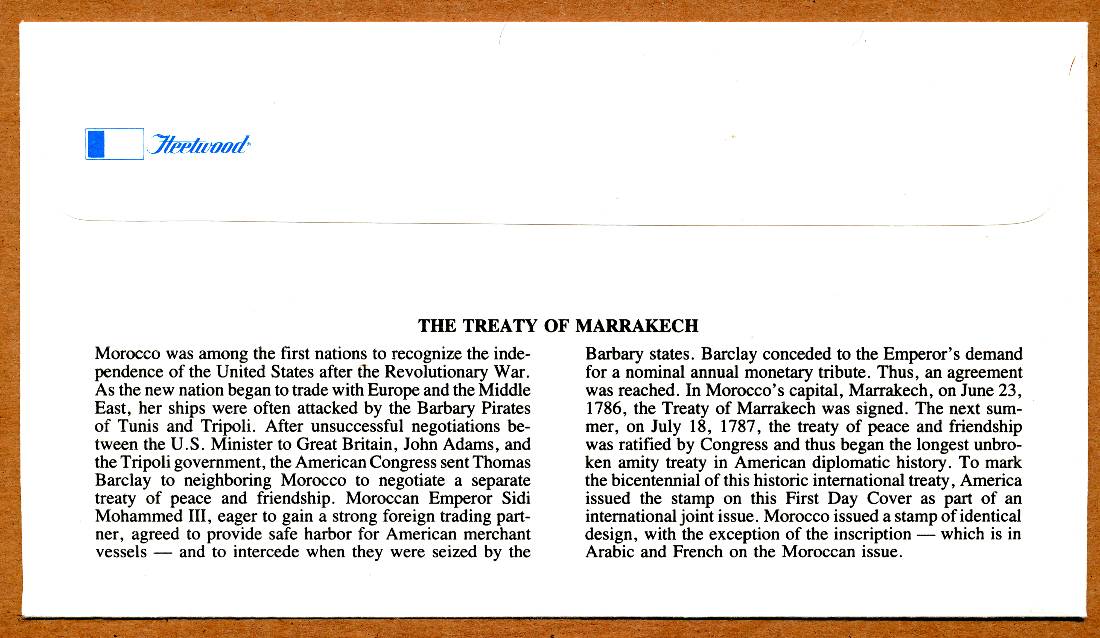
Here's a set of Fleetwood covers that marked the 200th anniversary of diplomatic ties between the United States and Morocco - yhey present a joint issue of stamps by the two countries.
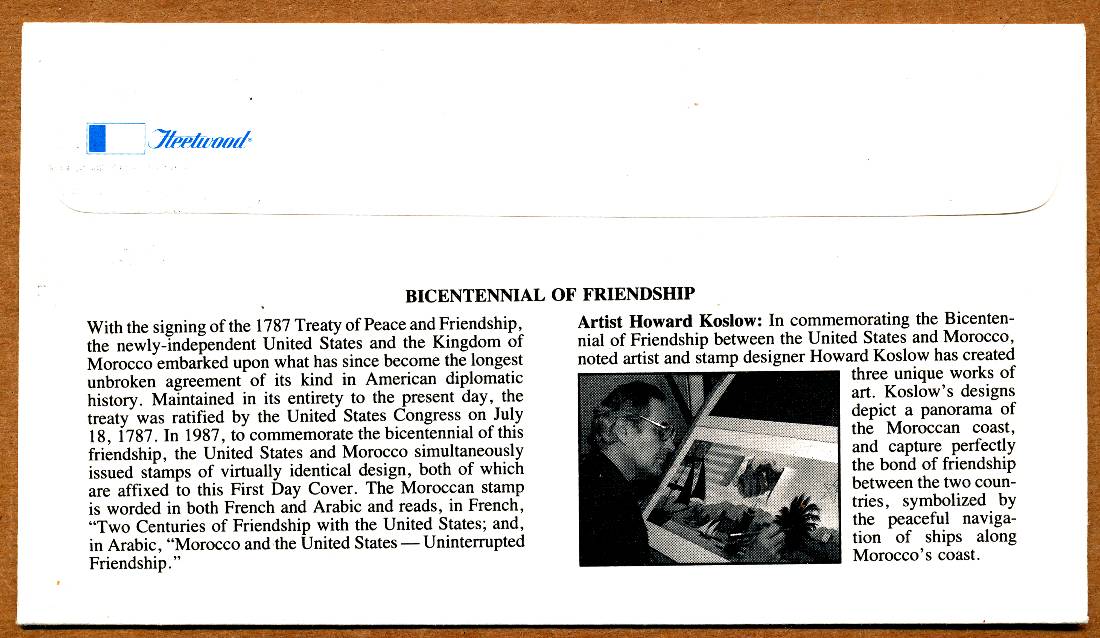
The event commemorated with the stamps is the 1787 signing of the Treaty of Peace and Friendship (aka Treaty of Marrakesh) between the fledgling United States and Kingdom of Morocco.
A Bit of HistoryFriendly relations with Morocco date to the earliest days of the United States. Morocco was the first country to formally recognize the newly-independent US when Sultan Mohammed III decreed that ships sailing under the US flag would be freely allowed to enter Morocco's ports on equal terms to countries with treaties already in place. This recognition began on December 20, 1777.
In 1784, John Adams, Thomas Jefferson and Benjamin Franklin were given the authority by Congress to represent the United States as its Ministers Plenipotentiary in negotiations with the Emperor of Morocco (Sidi Muhammad Ben Abdullah, aka Mohammad III) regarding a Treaty of Amity and Commerce. On March 1, 1785, Congress gave Adams, Jefferson and Franklin the authority to delegate the in-person negotiations to an appropriate agent. Thomas Barclay, the American consul in France, was selected and sent to Morocco to meet with Mohammed III and his representatives to conduct the face-to-face negotiations; Barclay arrived in June 1786. Barclay negotiated the Treaty based on the provisions drafted by Franklin, Jefferson and Adam.
The Treaty was signed, separately, by Jefferson (in Paris) on January 1 and Adams (in London) on January 27, 1787 (Franklin was back in the US at that point and, therefore, unavailable to sign the document). The Treaty was ratified by the US Congress in July 1787; the US Congress was operating under the Articles of Confederation at the time. On behalf of the Emperor, Taher Ben Abdelhack Fennish signed the Treaty for Morocco. (Note: I have seen multiple spellings of the name of the Morrocan commissioner, I have used the one listed by the Founders Online web site managed by the US National Archives.)
In short, the Treaty states that the two countries would not go to war against each other, that US ships would enjoy safe passage and harbor in the waters of Morocco and the two nations would enjoy mutual most favored nation status in matters of trade. The original Treaty had a term of 50 years. The US and Morocco renewed the Treaty in 1836; the renewed Treaty does not have an expiration date.
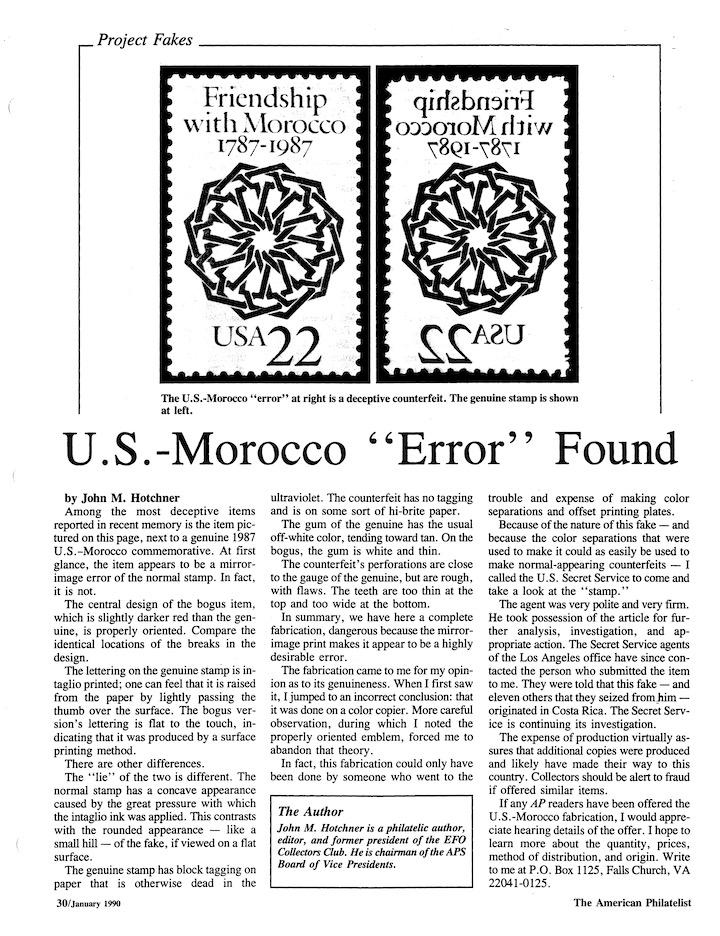
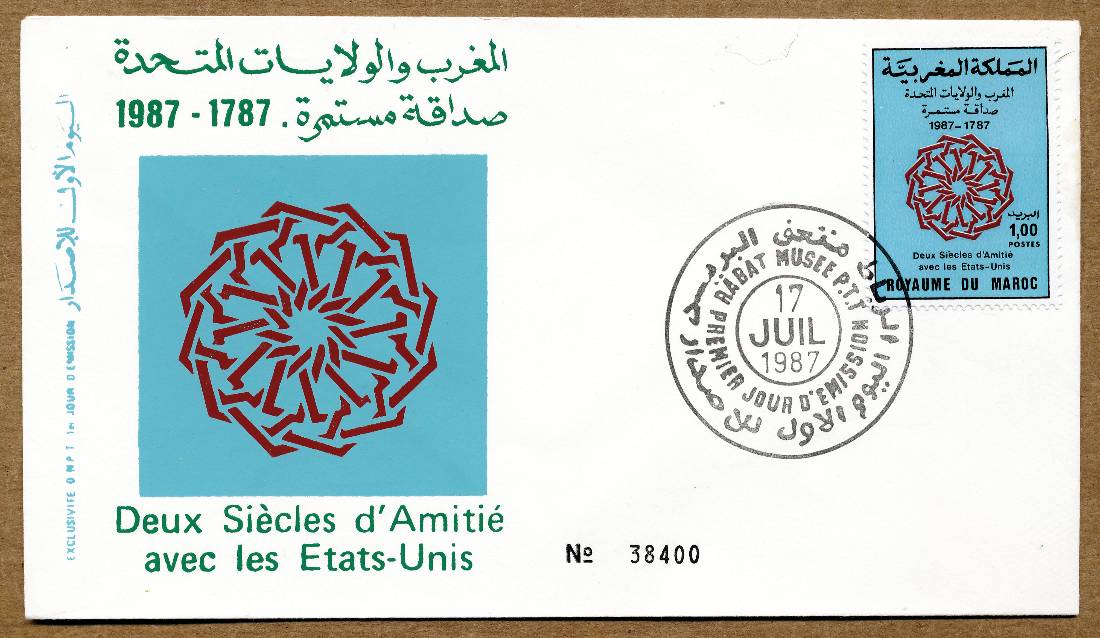
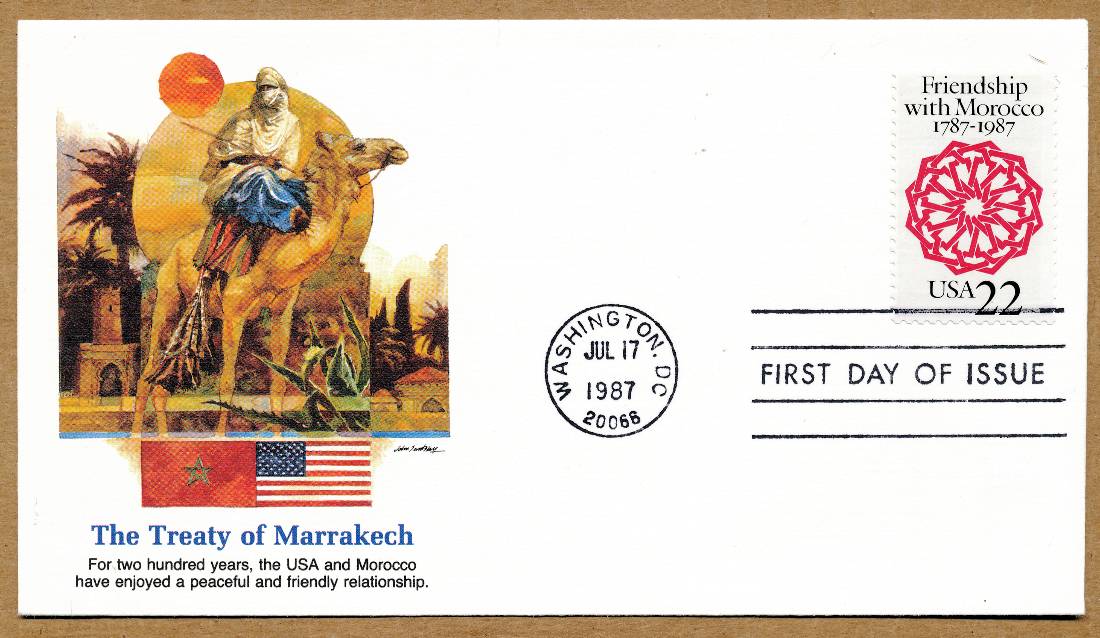
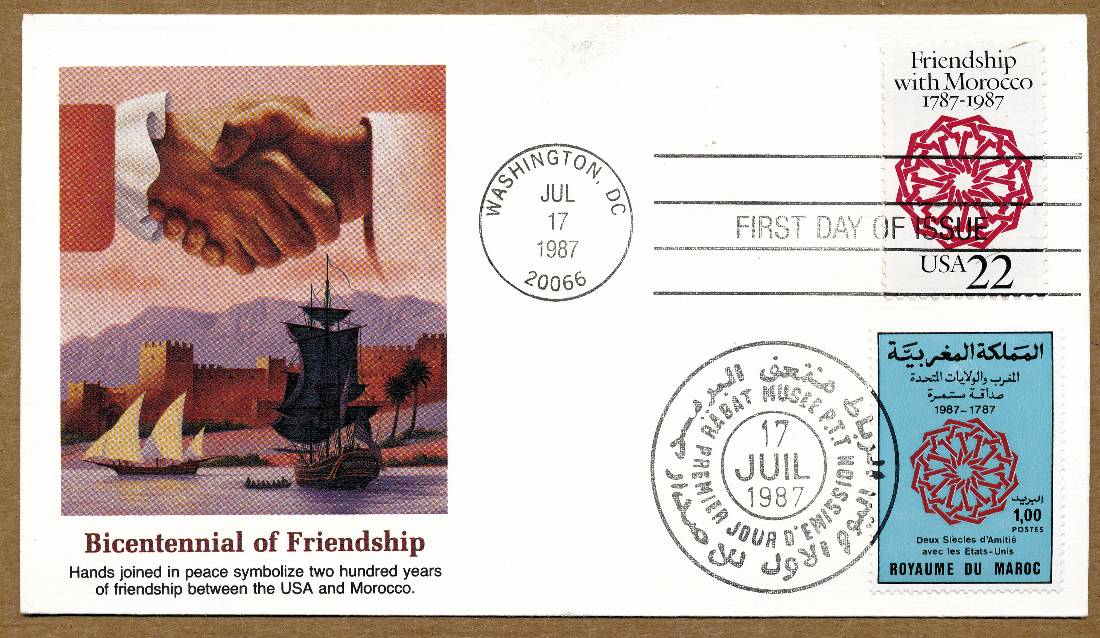
About the Stamps and CoversEach of the stamps features a 12-point arabesque star - an intricate decorative pattern of interwoven lines (arabesque designs have Arab / Islamic roots). The US commemorative stamp has a value of 22 cents; Morocco issued a 1-dirham stamp. The BEP-produced US stamp was designed by Howard Paine with the design engraved by Robert Culin at the BEP.
The First Day of Issue for the stamps was July 17, 1987. In the US, the First Day City was Washington, DC, in Morocco, the capital city of Rabat was the First Day City.
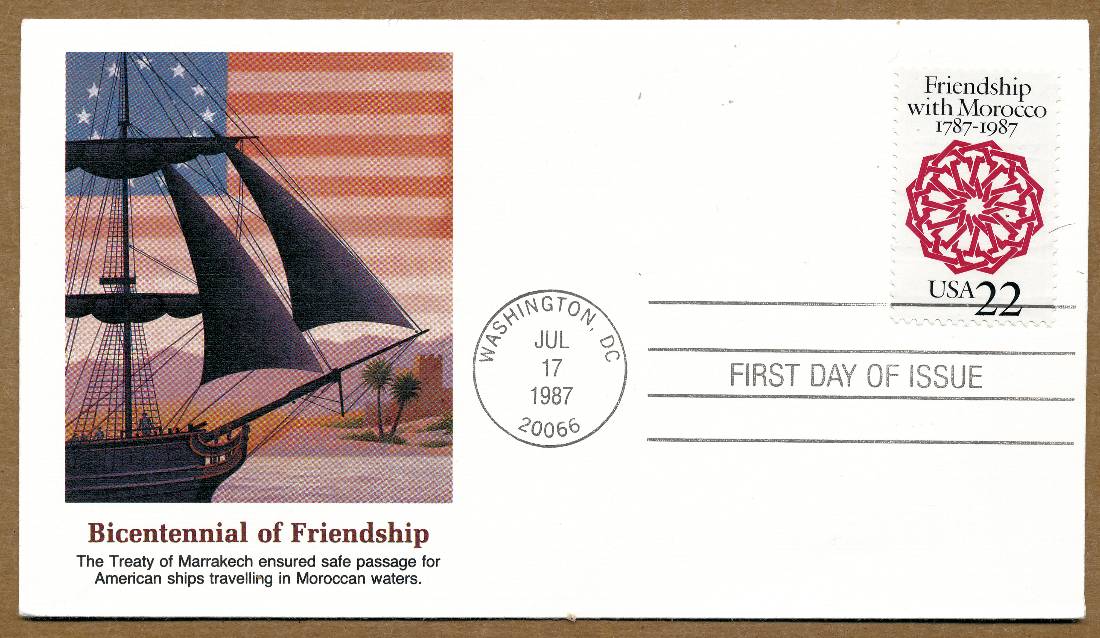
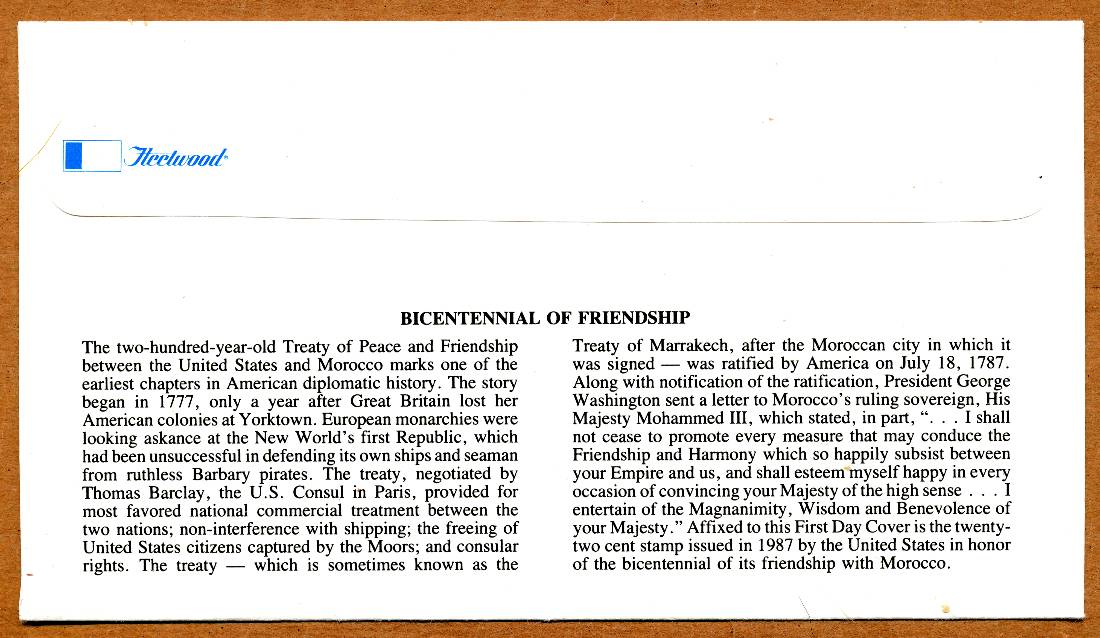
First up from the Fleetwood cover set is the individual US stamp cover. The cover's cachet presents a US ship visiting a Moroccan port with a 13-Star US flag forming part of the background.
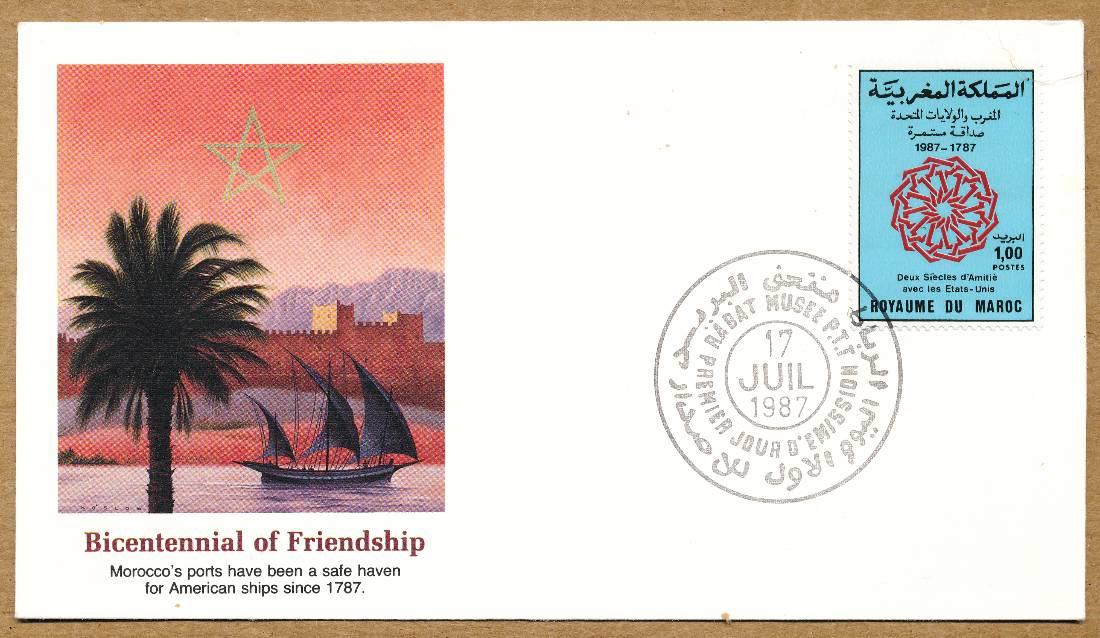
Next is the Fleetwood cover that features the stamp from Morocco - note the Rabat cancellation. The cachet again features a Moroccan port, this time with a Moroccan sailing ship and the flag of Morocco with its five-pointed star in the background.
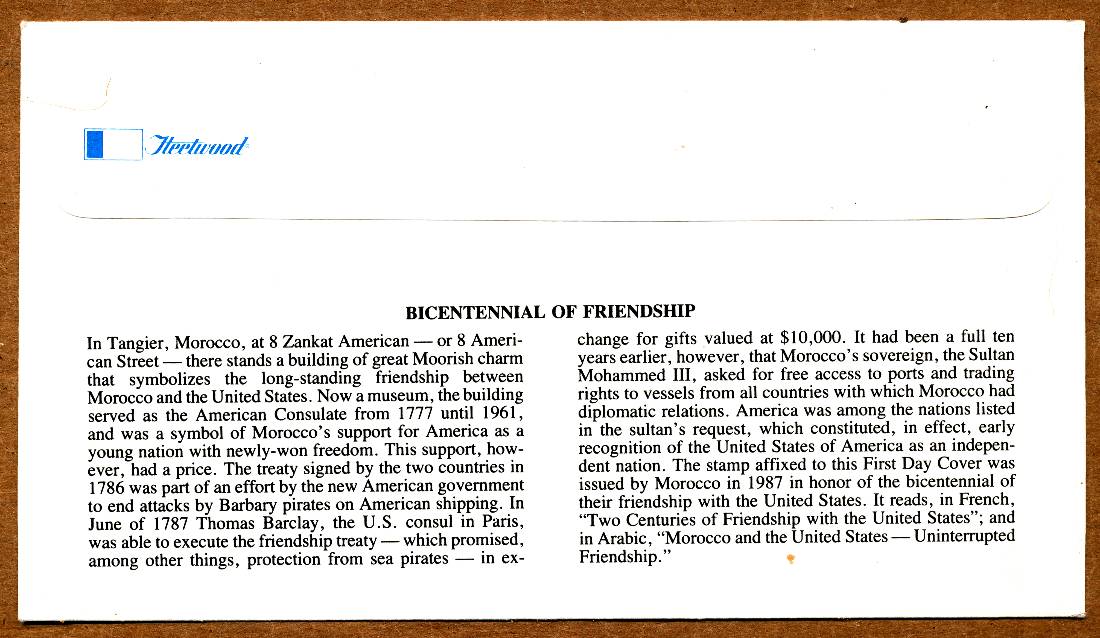
Last up, is the Fleetwood combination cover that features both stamps of the joint US-Morocco issue. The cachet features sailing ships of Morocco and the US in the foreground, with clasped / shaking hands above / in the background. The cover features FDI postmarks from Washington, DC (US Stamp) and Rabat, Morocco (Moroccan Stamp).
More to follow soon!





 Posted 04/07/2024 7:16 pm