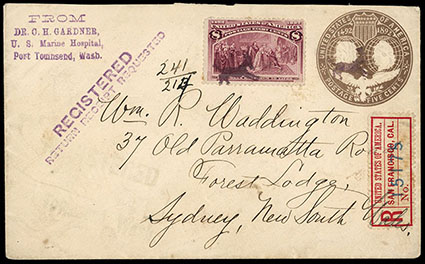
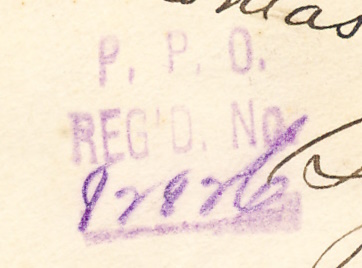
Bobby:Thanks for helping rule out Sydney as the source of the "P.P.O." registration mark.
parcelpostguy:Thanks for the suggestion about the Presidio. I think the only practical way to identify the mark from Presidio or other California post office is a similar marking on another cover with a more clearly defined origin.
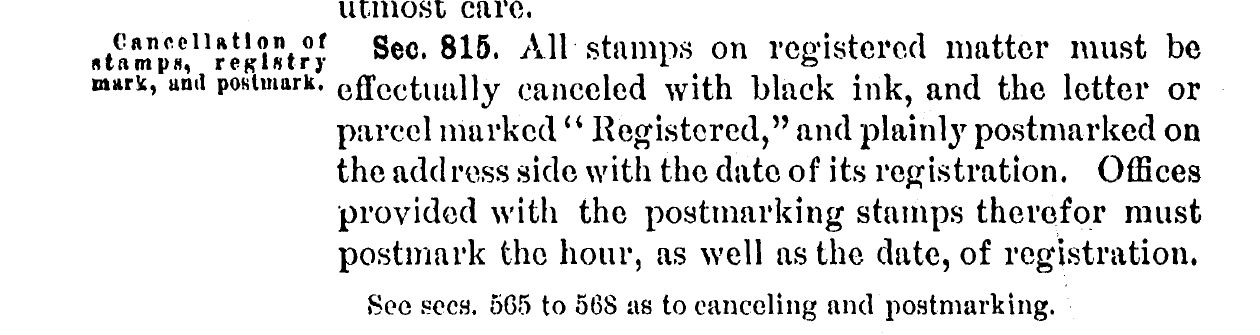
John Becker & parcelpostguy:A review of the PL&R for 1902, Sec.815, confirms that there was no requirement to apply a backstamp to the reverse of the cover.
The postmaster was instructed to include the registration number on the envelope at Sec. 817 paragraph 6 here:
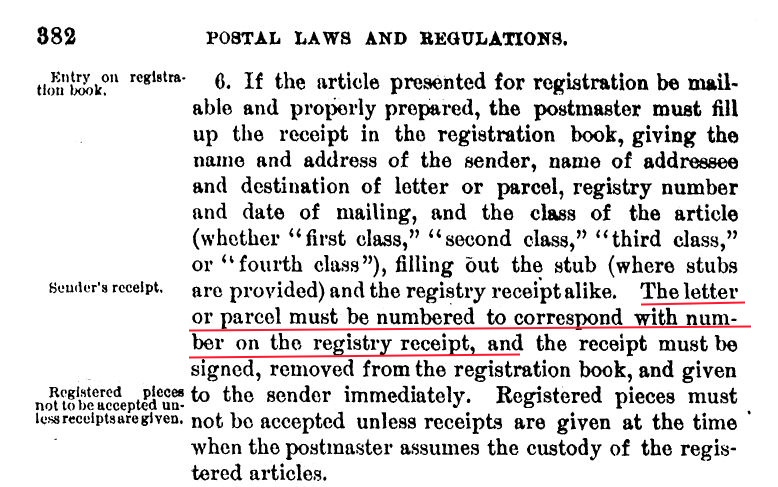
On most registered letters where the postmaster provides this number, he would preface it with a manuscript "Reg", or perhaps place the number in proximity to the handstamped "REGISTERED" marking, and our Key West postmaster did not do this, so we are left to speculate whether the "1298" or the "28286" was the Key West registration number, or if the "1298" might have been applied by the recipient to identify this letter or for some other purpose.
Section 565 (mentioned above in Sec. 815) addresses the canceling of stamps .
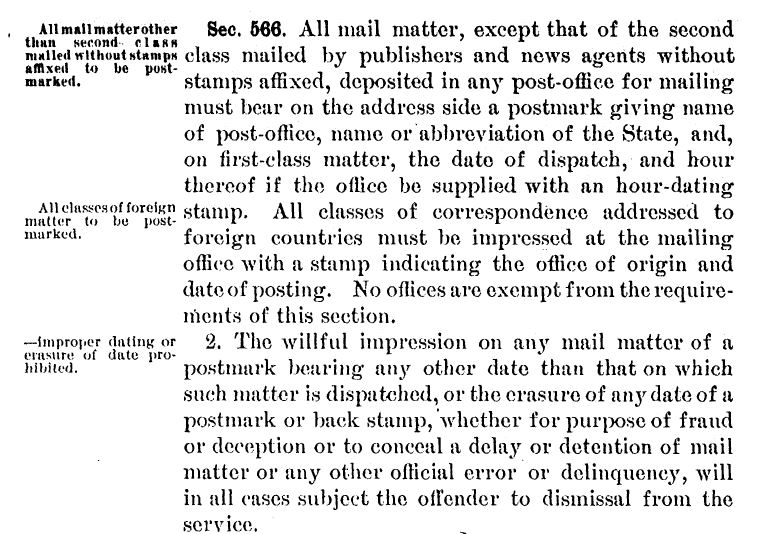
Section 566 defines the use of the postmarking stamp on the
address side of the envelope:
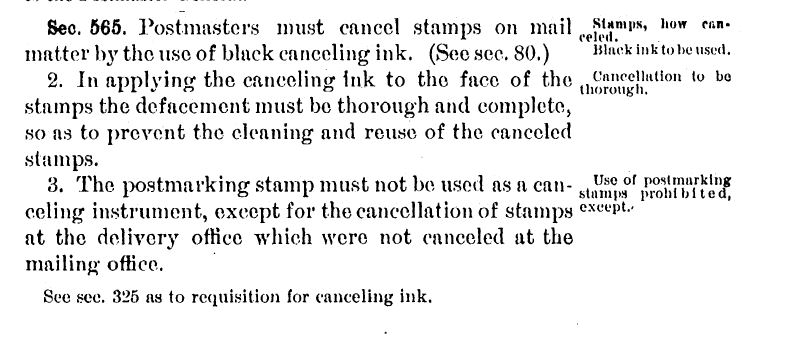
Section 567 deals with adjusting the date, while Section 568 addresses the requirement that only USPOD supplied ink must be used. These are not shown here.
By the above instructions, the letter was properly prepared, but we can only assume that the postmaster actually placed this registered letter in the required Registered Package Envelope addressed to the San Francisco Exchange Office, as instructed at Sec. 944.
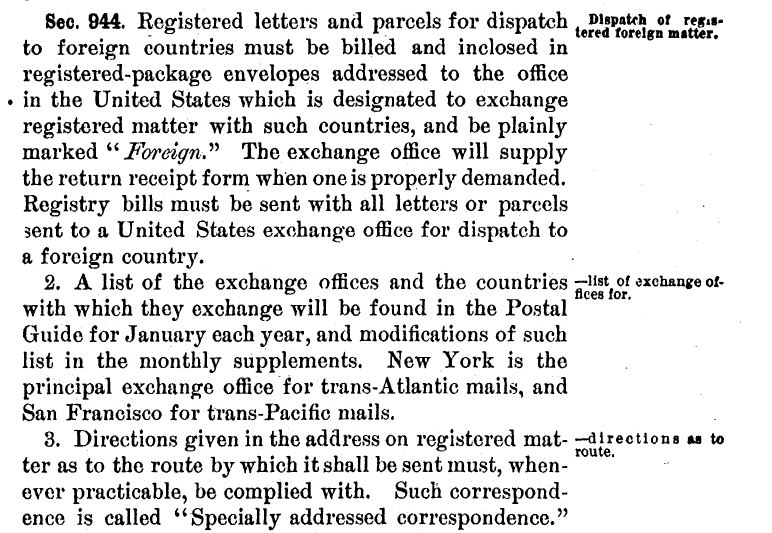
If he did, then the letter would have been delivered directly to the San Francisco post office and its Registry Division.
The general instructions for the handling of outbound registered mail to a foreign destination at the Exchange Office begin at PL&R1902, Sec 955:
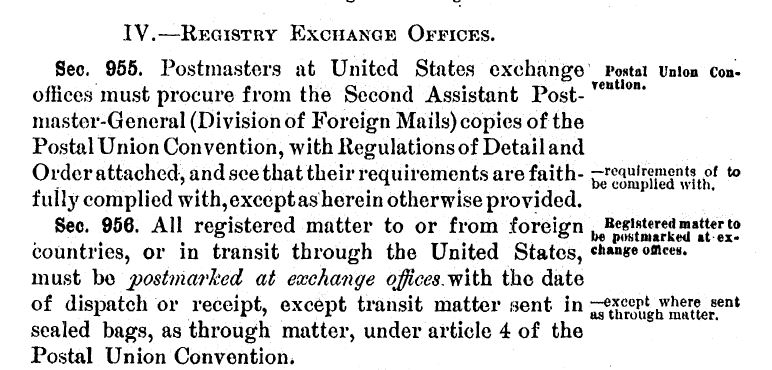
Postmasters (clerks) at the Exchange Office are instructed to postmark all such registered matter, but no instruction states whether this is to be on the front or reverse, although in practice, it is typically done on the reverse. At the same time, at Sec. 957, the Exchange Office is instructed to add the UPU mandated exchange label and to strike out other registration numbers. I rarely see this latter instruction to strike out previous registration numbers followed.

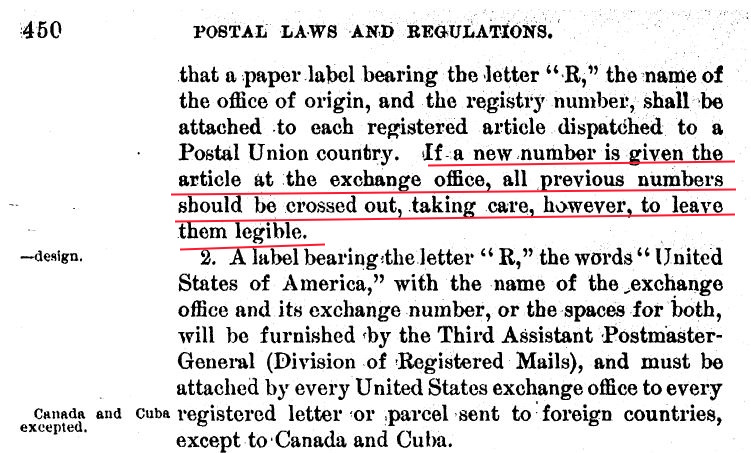
Once the exchange label is applied, and the Registered Letter Bill prepared, the registered letter and all others to the same destination are placed in a sealed bag and dispatched to the ship which will carry the mail to its foreign destination. This would end the processing at the Exchange Office.
So where did the "P.P.O." registration marking get applied?

Thanks to those who provided their thoughts. Keep the ideas coming, please.
Mike





 Posted 05/26/2024 1:10 pm


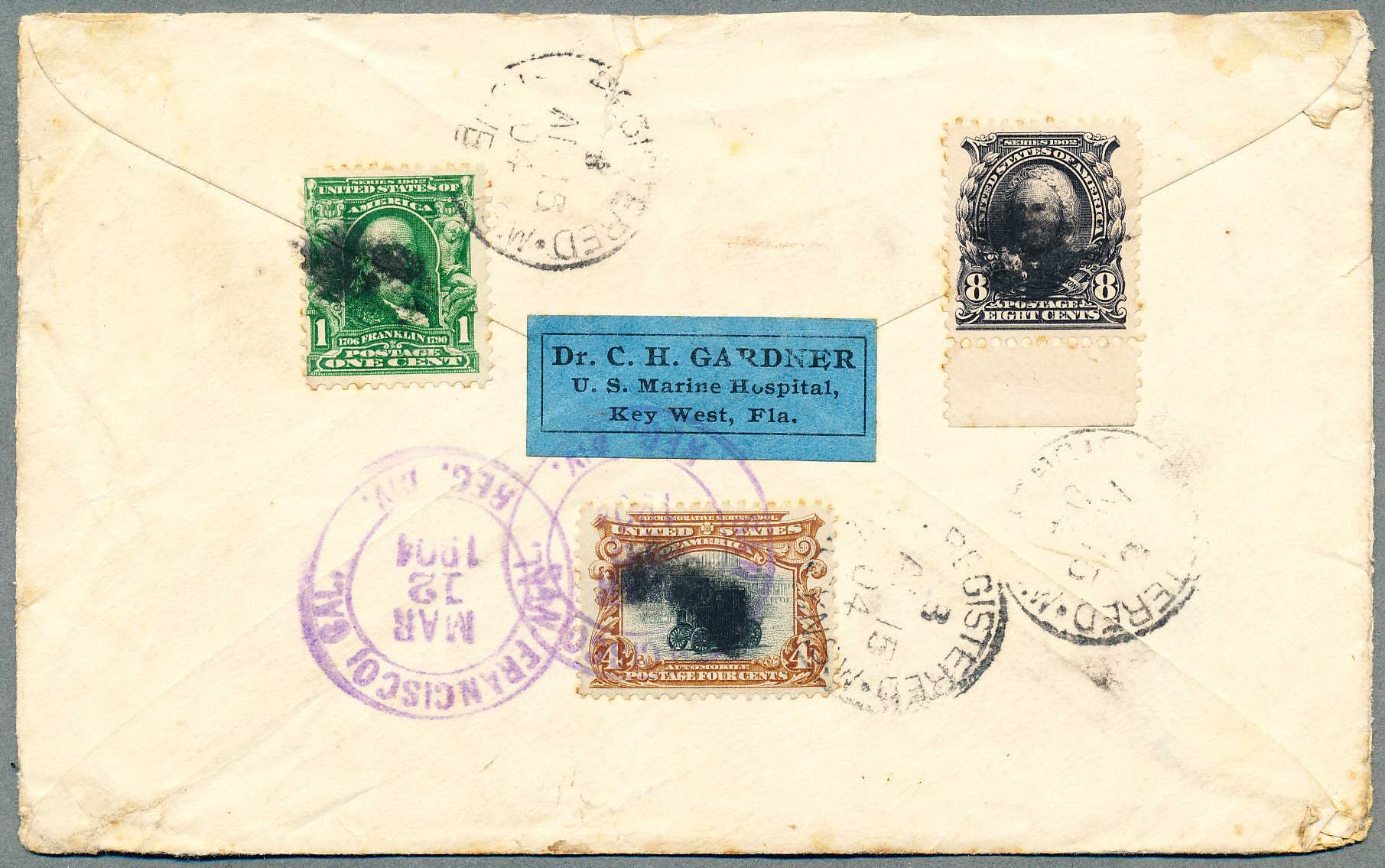

 Please share any info or other examples you find.