|
This page may contain links that result in small commissions to keep this free site up and running.

Welcome Guest! Registering and/or logging in will remove the anchor (bottom) ads. It's Free!
To participate in the forum you must log in or register.
| Author |
 Replies: 35 / Views: 3,748 Replies: 35 / Views: 3,748 |
|
Valued Member
98 Posts |
|
|
|
Hello, I thought that this was for sure discussed somewhere in the forum, but I did not find any topic, so I open this. If I missed the other topic, please let me know and perhaps delete this one.
In the new Scott specialized the introduction "identification by paper type" was changed to my surprise. Now the ABN paper is called "soft porous linen paper" for all stamps that follow Scott 182.
Does this change in general the collecting of the Bank Note stamps?
(Probably not as it is still about hard vs. soft paper?)
How could this be discovered now after 150 years that the paper fibers are not rag (cotton) but linen? This should be an obvious thing for microscopy experts.
And does the "linen" mean that the paper is really just made of linen (more than let's say 90%)? And is this valid for all ABN stamps then with the large design, so until Scott 218?
|
|
Send note to Staff
|
| Edited by littbarski - 04/18/2025 11:57 am |
|
|
|
|
Pillar Of The Community
United States
1946 Posts |
|
|
Could you please provide a reference to the year of the catalog, page number, and the wording of the "header" that includes discussion of "linen paper?" My last full Specialized was 2023, and the 2025 edition of the Essay-Proof material omits the introductory pages.
If the notation only occurs in the latest edition, would you be willing to reproduce it here in its entirety?
|
Send note to Staff 
|
|
|
Valued Member
98 Posts |
|
|
It is about the Scott Specialized 2025, and the introduction text ("Identification by paper type") before Scott 182. To start with, here is where I found the information: https://www.linns.com/news/us-stamp...s-and-coversThe text seems the same overall as in earlier versions. I usually don't post text and images with copyright. But perhaps I may just give the information how I read it. The new information is actually quite short. They say that in January 1878 Continental Bank Note could not get their rag paper anymore, wood pulp was not used either, but the supplier suggested their raw flax based linen paper. First stamps on linen paper appeared in July 1878. When the consolidation came in 1879, American Bank Note company took over many things (plates, paper, employees) from Continental. The paper of the American Bank Note stamps (beginning in June/July 1879) was always considered by collectors on similar soft (they say here again "linen") paper. All American Bank Note stamps in the new Scott Specialized then have as heading "Soft porous linen paper". Unfortunately I don't know about the Continental headings (probably not changed), as I don't own the Scott Specialized 2025 neither here at home, but only saw a library copy. My last one is from 2013 :). After all there is no source in terms of a paper fiber analyzing study, but more the history (probably letters) that the supplier could only deliver linen paper in 1878. This is Continental, indeed, but the new name is for the American paper :). I am not an expert, but it surprises me that the used paper fibers (=the paper) of the American Bank Note stamps are now defined or discovered in a new way. I read earlier that some collectors think that the soft paper was soft because of the usage of wood pulp, which is to that time really not likely (neither in small percentages). Most of the articles I read said that the Bank Note era stamps are 100% (cotton) rag paper, and this is what I would expect as well from the paper history. But of course new information can happen. Just wanted to know if this has been discussed. |
|
Send note to Staff
|
| Edited by littbarski - 04/29/2025 3:39 pm |
|
|
Bedrock Of The Community
12778 Posts |
|
|
A bit strange that the terminology changed after these many decades. I wonder who pushed this. On its face it doesn't seem to mean much if anything practically speaking because as you say it is still soft vs hard. Kind of like saying that the sun is no longer hot but scorching. |
|
Send note to Staff
|
|
|
Valued Member
153 Posts |
|
|
Valued Member
98 Posts |
|
|
Yes, of course, we would appreciate it, although not sure as his last posts are some years ago.
But after all, the new terminology, new headings and so on, this is the decision of the Scott editorial team. They probably had different sources and input for this decision. And I don't think Scott team will answer here :).
That is why I wanted to know if anybody else here has some background information about it. Or information about recent research about the Bank Note stamps paper. How can it be that even today with all the technology, some collectors of US stamps say all stamps are 100% cotton rag, some say there is wood pulp in it, now some say it is (from 1878) only linen raw flax :). I am not a longterm US collector, but I used a microscope in other areas, and if there is a cotton fiber or a linen fiber in a stamp, should see it, I guess.
|
|
Send note to Staff
|
|
|
Pillar Of The Community
United States
4520 Posts |
|
|
I would assume specialists could figure out who convinced Scott to make the editorial changes. |
|
Send note to Staff
|
Al |
|
|
Pillar Of The Community
United States
3532 Posts |
|
|
Quote:
Maybe it's best to ask him? Al's id here is locked. It does appear as though he instigated the change. I don't know what kind of peer-review his update got. I have found at least two mistakes in the latest Scott on EDU's, which were not properly vetted before getting udpated, and as such, took us backwards, sadly. |
|
Send note to Staff
|
|
|
Valued Member
United States
51 Posts |
|
|
I think that change has been long overdue. The part about it being linen paper is new to me, but that there are papers that don't fit a firm division between the companies has been known for a long time. A small book I have on the 3 cent banknotes claims 11 different papers, but only details a few. There was also a paper from the analytic philately group that used xrf to see if the stamps of the two companies during that 1878-9 transition could be told apart with science. The conclusion was that there were differences in papers and inks that could be identified with the right equipment like an XRF machine.
Collecting the officials, I have separated what I call intermediate paper, neither the hard paper like the early issued and 1869s, or the later soft paper that looks more like cloth when held up to a light. There's at least one that's usually on very soft paper too.
I haven't made pages for that paper division yet, but should soon. |
|
Send note to Staff
|
|
|
Valued Member
98 Posts |
|
|
Thank you all.
plate40: The change and my topic here is indeed only about the "paper to linen paper", all the other information, that also you give, is not new and has not made any change in Scott Specialized (at least as far as I can compare to my 2013 version, where many parts of the introduction text is already the same).
So it is no question of course, that there was a consolidation with a transition, and that there was already a "soft" paper by Continental. The important change is that for American Bank Note paper the paper is defined by its paper fibers (raw flax linen, so does this mean, not even linen rag?). For other stamp issue this is not the case.
Do we really not know any research the last decades where somebody looked if he finds linen or rag or wood pulp fibers in the Bank Note stamps (and which company)?
I also know many articles by the Institut for Analytical Philately, but the material from which the paper is made, is mostly only a very small part of the research. From what I saw, the result was always cotton rag.
---
PS: Why is this important at all to talk about the change... well, first it is a surprising and large change, then secondly indeed the paper fibers (like linen if you want) could be some hint or new discovery when it is about the transition and the difference between the Continental transitional paper, the early American and then - most interesting - later American paper, to see if we can find different papers under the American papers. So in theory this could be important, but then we need sources for the later and latest American paper as well, which is not mentioned in the introduction. The new information is mostly what I wrote. Perhaps somebody with a new Scott at home could check as well. |
|
Send note to Staff
|
| Edited by littbarski - 04/30/2025 12:48 pm |
|
|
Valued Member
98 Posts |
|
|
I just saw that the new 2026 US Scott Specialized has been published (printed and maybe also digital), so it is perhaps time to write something here in my topic again.
There had been changed the introduction before Scott 182 adding that those then following stamps were printed on linen paper. This introduction was still called "Identification by paper type" which seems to have nothing to do with the new added information of linen paper :). I guess there is still no need to look under microscope if those are linen fibers to make any paper identification.
So in the 2026 edition, has anybody already the new edition and can see if the introduction before Scott 182 has been perhaps revised / corrected as it was before? Or is there still being explained that about the linen paper and the stamps from 182 have the heading "Soft porous linen paper" ?
I still wonder why in this issue and only this issue the plant used for the paper is so important :).
|
|
Send note to Staff
|
|
|
Pillar Of The Community
United States
1946 Posts |
|
|
littbarski asked: Quote:
Do we really not know any research the last decades where somebody looked if he finds linen or rag or wood pulp fibers in the Bank Note stamps (and which company)? I have a call out to Jim Kloetzel at Scott about this very question. In particular he and I are to discuss an article by Al Valente in Eighty-Ninth APC Congress Book for 2023 under the title: "Papers of the US Banknote Era, 1870-1889" (pp194-222). This I believe is the study upon which the new statement in the Specialized is based. Jim does plan to speak with me about this matter sometime after the beginning of February. I will have more to say after that. However, I can admit here that I have serious doubts about the reliability of at least some of the claims made by Valente. My concern is that in this article, as in so much of his published research, Valente resorts to speculation, sometimes in layers, in his understandings of historical details. For example, on page 205 he discusses the distinctiveness of Intermediate paper: [speculative details highlighted] "In the latter half of 1877, there necessarily had been a change in management of the stamp department at Continental with Charles Steel leaving. Charles Steel had preferred high quality papers.  With his absence, it can be speculated that the new executive in charge of stamp printing approached the Crane Brothers asking for something a bit more cost-effective than the paper previously used. To satisfy this request, what the mill might have done if(sic) to use less expensive rags and forego advanced finishing of the paper. [New Paragraph] Sometime in mid-to-late 1877 US postage paper began being made on a Cylinder machine. It is only a speculation, but as the old Fourdrinier was being outfitted for linen fiber and moved to a new wing of the plant it seems the only option was to use the Cylinder machine." I will speak more of all this after Jim Kloetzel and I have our conversation and I have a more solid understanding of how (and why) this change came about. I would be remiss not to point you to an important study by John Barwis, "Paper Characteristics of U.S. 3c Stamps, 1870-1881" published in Proceedings of the First International Symposium on Analytical Methods in Philately, (Smithsonian Institution Scholarly Press: Washington, D.C.), p5-18. Note, however, that Barwis devotes more attention to sizing agents than paper fiber in his analysis. He makes allusion to the fact that fibers have distinctive observable characteristics but does not discuss the fiber types in the various papers in great detail. |
|
Send note to Staff
|
| Edited by essayk - 01/31/2026 6:36 pm |
|
|
Valued Member
98 Posts |
|
|
Thank you, that will be interesting.
One thing is what a collector or researcher finds out and defines as his idea what could have happened - this is ok to me, even if I don't have the same opinion (like with the "chain link watermarks" which also appear in many other issues also in other countries without being a hint to any printing machine).
But the other thing is if I take such an idea and make it valid for a whole catalogue section.
So there are two questions in this:
- is it possible to show that most (all) Bank Note stamps after Sc. 182 are on linen paper? Yes or no is possible or different opinions, but probably quantitative studies to be done.
- more important: why does Scott list the stamps after 182 by defining it by plant fiber? Maybe I don't know enough but I don't know any stamp in Europe's catalogues or even in the US Specialized where the heading lets us know the plant which was used to make the paper. Because in this case nothing else changes in Scott 182 and following :).
In general I find the idea good to look for plant fibers, for example in cases where you find a stamp that is different from other of the same issue and you can not really explain the paper difference (like very thick paper in the American Bank Note area), then it would help e.g. to say "ok most stamps from that time were made from cotton rag but here we find linen so that could be a paper variety". But unfortunately there has never been made any statistics about that. And this does not change with the new listing in Scott, or can I now send a stamp from 182 and following to the PF when I see only cotton fibers under microscope and say, this is a very unique stamp because normally it must be on linen paper :). |
|
Send note to Staff
|
|
|
Bedrock Of The Community
United States
10869 Posts |
|
|
It's long been known that the Bank Note companies used multiple sources for paper. And that even from one company that there were going to be some differences in production. After all, the intermediate paper mentioned above has been known about for a long time. It's great if some collectors want to get microscopic about the various papers, but I suspect that the average collector is only going to care about thin hard or thick soft. And whether linen or cotton or wood pulp will not really matter much, if at all. |
|
Send note to Staff
|
|
|
Valued Member
63 Posts |
|
|
Littbarski, good point !
Scott changing the header to soft porous linen paper is not a trivial wording tweak, soft porous is a collector operational description, but linen is a furnish fiber claim. That's a much stronger statement, and it needs stronger support than this is the same soft paper we've always meant.
A couple points that matter:
1. Rag doesn't automatically mean cotton. Historically, rag papers can be made from cotton, linen flax, hemp, or blends. So the idea that flax linen could be involved isn't crazy but it doesn't mean all post 182 equal linen.
2. Fiber id is not just look under a microscope and it's obvious. In the paper industry and conservation world, proper fiber identification usually involves skilled microscopy plus stains and often sampling prep which is not something most collectors can do on a stamp. Tappi's standard fiber analysis method exists for this reason.
3. The best analytical philately examples I know are Farley Katz and Maisa Mansour that treats paper as a multi variable system and notes that fiber discrimination cotton vs linen vs wood used Tappi style staining and required cutting and chemical processing. That's exactly why it's odd to elevate linen to a section heading as if it's an everyday diagnostic.
4. Even reference descriptions, the Smithsonian's description of the large bank note issue stick to soft porous paper rather than a botanical label.
So, I'm not saying linen is impossible. I'm saying a catalog header implies a standard, and unless Scott (Scott and standards?) can point to a quantitative, well scoped furnish study showing that linen applies broadly across the post 182 material and define what linen means, dominant flax vs blend vs trade term. The safest most honest approach is, keep the heading soft porous paper, and put linen in a qualified note with sourcing and scope.
|
|
Send note to Staff
|
| Edited by Am Teck - 02/02/2026 05:31 am |
|
|
Valued Member
98 Posts |
|
|
revcollector, yes I agree and this is one of the reasons for this topic, because there is now a new description which only can be verified in the collector's stamps under microscope. Am Teck, thanks - also good points! I am not a paper researcher, not a chemist or biologist. And I don't have any expensive equipment. Nevertheless it is not so hard to look at stamps under microscope (I have one for 80 USD, but improved with own LEDs and handmade filters). I share some images, most of them with 4x object lens + USB camera, I am not sure how to calculate this with the pixels, but I think it should be around 120x. In addition I want to show examples that it is indeed possible to look at the paper fibers (but I don't want to prove or disprove anything). With enough knowledge I guess most of the fibers could be defined by some degree. With the Bank Note issue it is even easier as we don't have wood pulp. Cotton and more so linen fibers have some characteristics which are obvious, although not always typical to be found in stamp paper because of the paper production process which destroys of course some structures. The first image shows quite good the linen fibers. I took just some example of a pile of re-engraved 10c ABN Sc. 209. 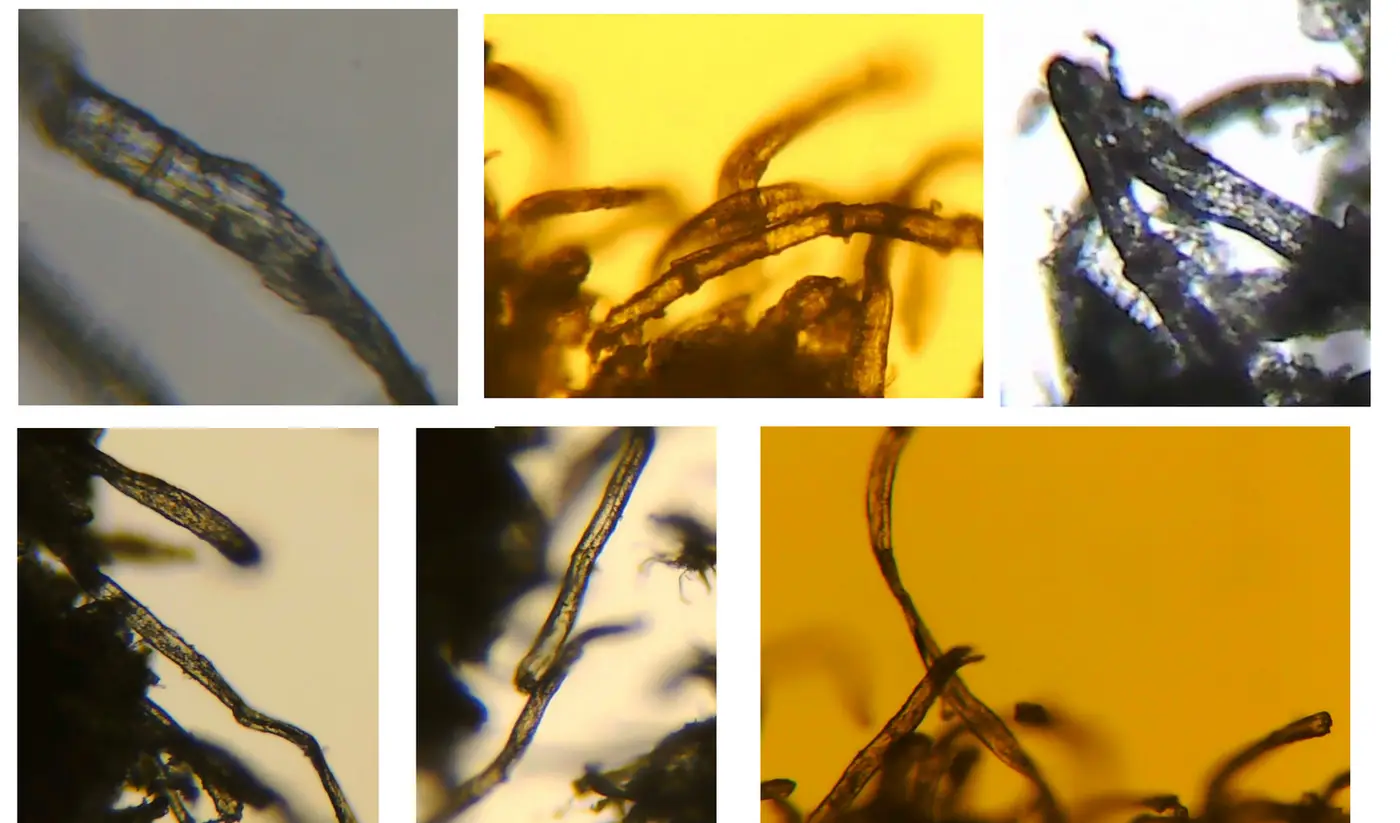 The second image is also from the same pile but another Sc. 209. I would say I can see linen but also cotton fibers. 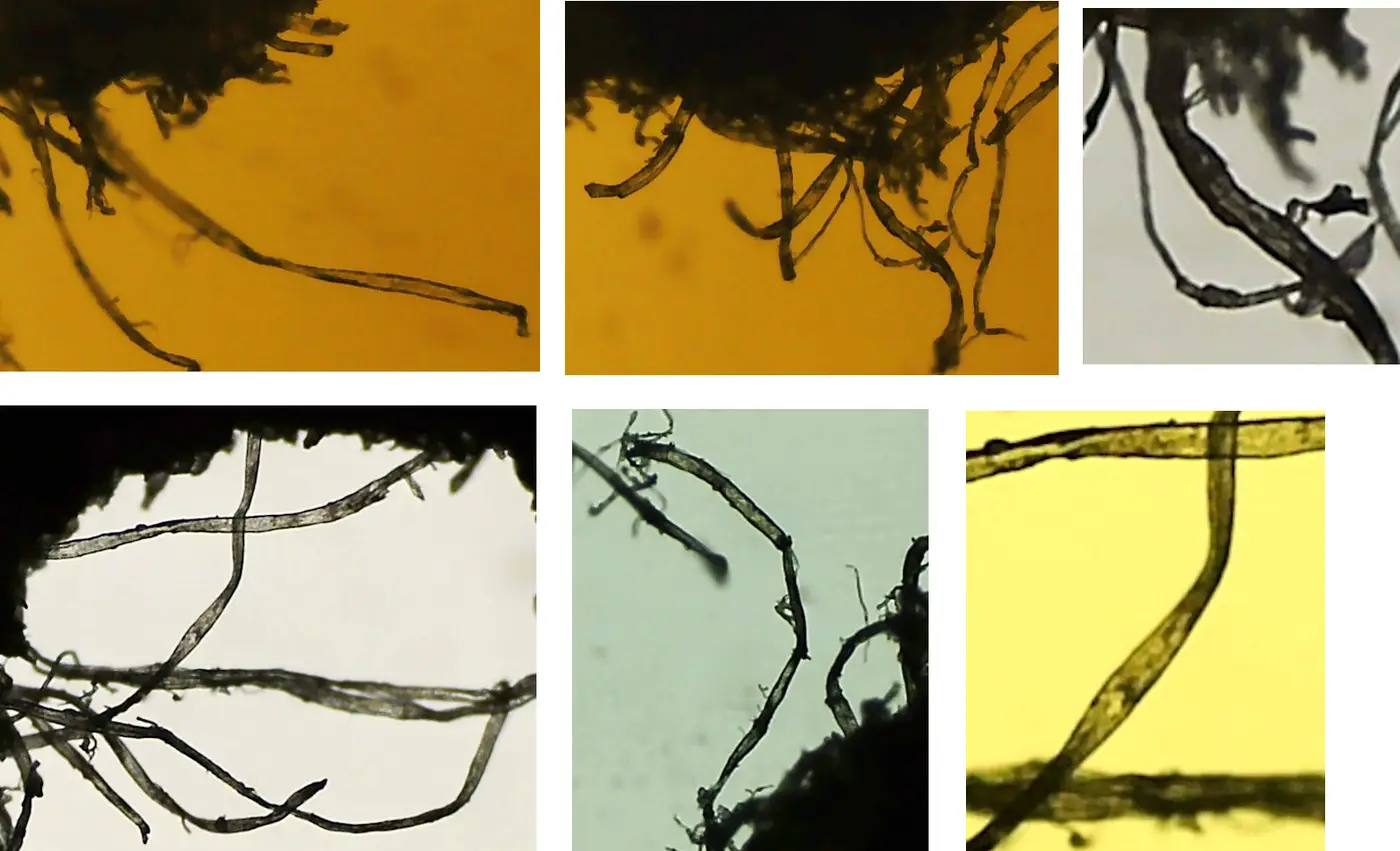 And finally to make it more complicated I just looked at another pile of common bluish paper W-F stamps, and I think I can see cotton rag - perhaps :). By the way: do we know for sure that the bluish paper stamps were ONLY made from cotton rag and not also linen rag ? Could be a linen fiber there as well in the middle. 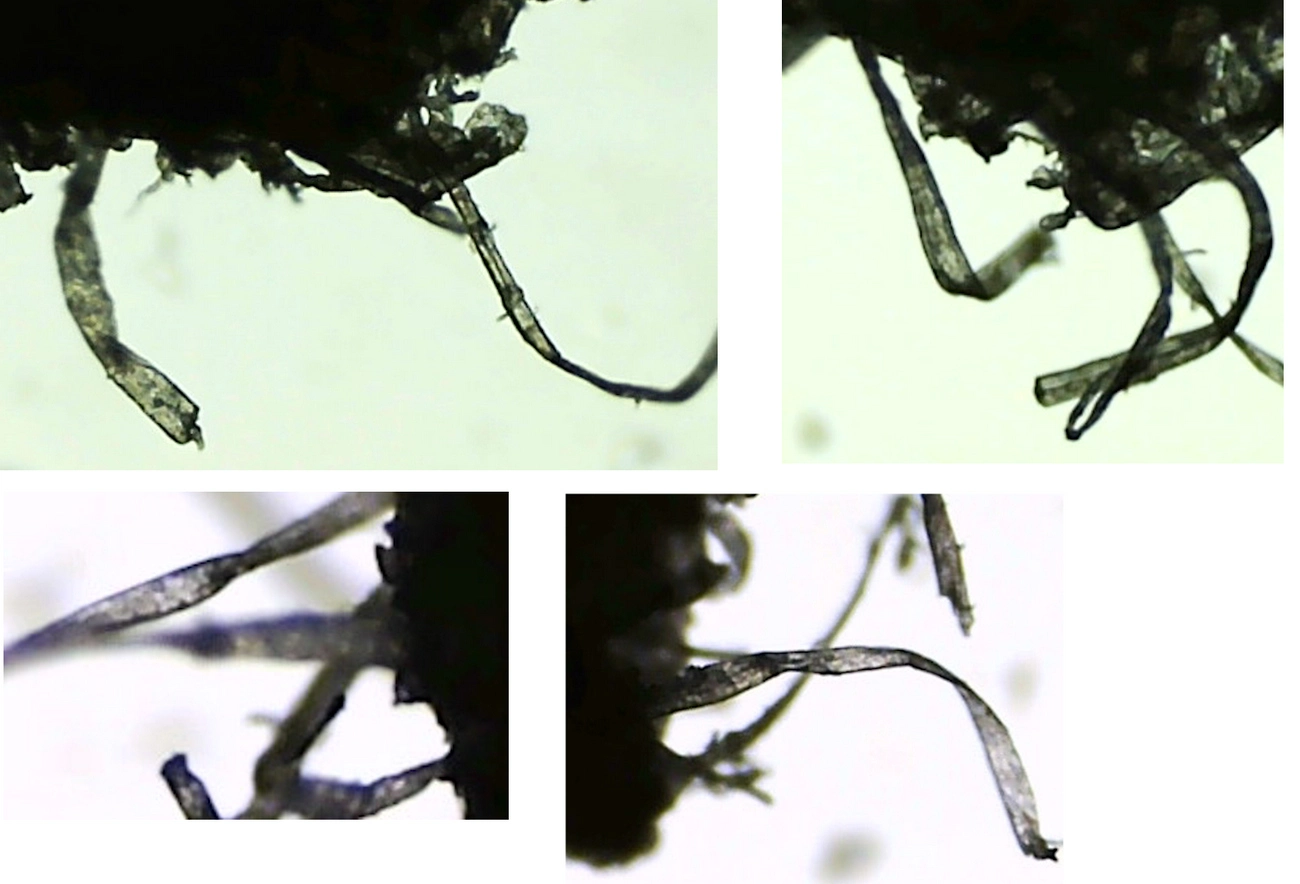 So again, not to prove anything here but to show what is even possible with cheap equipment and limited knowlegde :), because there is now a new paper fiber heading in Scott Specialized and collectors may perhaps look at their stamps under microscope now. Perhaps somebody in the forum knows more about paper fibers and can agree or disagree with my example identification. |
|
Send note to Staff
|
| Edited by littbarski - 02/02/2026 4:58 pm |
|
|
Replies: 35 / Views: 3,748 |
|
|
To participate in the forum you must log in or register. | |
 Finally Found This R88A Plate Variety. Been Looking For One For Years Can USPS Imperforate Stamps Be Used For Postage? Hello From Albany, Oregom US Scott #rb11 Fake Or Facsimile? Scott #498 (1917-1919) Avatar Change Request 2023 Freedem Stamp. Is This Stamp Fake? Transvaal Postal History Help Earliest Stamp With In-Design Date? My First Stamps Help Newbie.help With Stamp Identification (J29) Inherited These Stamps, Are They Genuine? APS Membership Discount Metropex Stamp Show: Roseville, Minnesota October 23-24 Weird Covers, 1885,1886, And 1982 For Users Of Two-Post Blue International Albums What Is Your Experience With Binders. New Member Posting Image Of Avatar, Front And Back Of U2 Cut Square, Market Value Or References? Working On An Offline Collection George Washington 3 Cent 1861 With Print On The Back Hello From The Netherlands - New Member Then And Now, From Old Postcards New Member Wanting To Add An Avatar Sparks Auction Fees? 163 VF Nyfm Vertically Ribbed 163 XF Quartered Cork, Labeled Jumbo Finally Found This R88A Plate Variety. Been Looking For One For Years Can USPS Imperforate Stamps Be Used For Postage? Hello From Albany, Oregom US Scott #rb11 Fake Or Facsimile? Scott #498 (1917-1919) Avatar Change Request 2023 Freedem Stamp. Is This Stamp Fake? Transvaal Postal History Help Earliest Stamp With In-Design Date? My First Stamps Help Newbie.help With Stamp Identification (J29) Inherited These Stamps, Are They Genuine? APS Membership Discount Metropex Stamp Show: Roseville, Minnesota October 23-24 Weird Covers, 1885,1886, And 1982 For Users Of Two-Post Blue International Albums What Is Your Experience With Binders. New Member Posting Image Of Avatar, Front And Back Of U2 Cut Square, Market Value Or References? Working On An Offline Collection George Washington 3 Cent 1861 With Print On The Back Hello From The Netherlands - New Member Then And Now, From Old Postcards New Member Wanting To Add An Avatar Sparks Auction Fees? 163 VF Nyfm Vertically Ribbed 163 XF Quartered Cork, Labeled Jumbo
Disclaimer: While a tremendous amount of effort goes into ensuring the accuracy of the information contained in this site, Stamp Community assumes no liability for errors. Copyright 2005 - 2026 Stamp Community Family - All rights reserved worldwide. Use of any images or content on this website without prior written permission of Stamp Community or the original lender is strictly prohibited.
Privacy Policy / Terms of Use Advertise Here |
| Stamp Community Forum |
© 2007 - 2026 Stamp Community Forums |
| It took 0.25 seconds to lick this stamp. |
 |
|
|
|


 Posted 04/18/2025 11:56 am


