Stamp Community Family of Web Sites
Thousands of stamps, consistently graded, competitively priced and hundreds of in-depth blog posts to read


Stamp Community Forum
 
Username:
Password:
Save Password
Forgot your Password?

This page may contain links that result in small commissions to keep this free site up and running.

Welcome Guest! Registering and/or logging in will remove the anchor (bottom) ads. It's Free!

Great Britain Scott 116, Sg 205/205A

Previous Page
 
To participate in the forum you must log in or register.
Author Previous TopicReplies: 21 / Views: 2,348Next Topic
Page: of 2
Valued Member
Learn More...
United Kingdom
197 Posts
Posted 05/04/2025   3:40 pm  Show Profile Bookmark this reply Add pjr to your friends list  Get a Link to this Reply
Breefmack USA, in my opinion your 4d, 4½d and 1s red-and-green are badly affected by soaking.

floortrader, in my opinion only your last stamp, with its nice 19 March 1902 cancellation, is unaffected by soaking.

NSK, in your beautiful set of unused stamps, the 1½d, 2d and 1s green look slightly faded to me, but your 4d, 4½d and 1s red-and-green are perfect. And by the way (for the information of beginners, not for experts like you) the ½d green is a different shade, because different inks were used for it (and two of the three inks weren't fugitive).

solomons_prayer, slight water damage makes the doubly fugitive green turn blue. More extensive water damage makes it turn yellow.

I still honestly can't see any significant variation of the green colour in undamaged 4d stamps. Is there any historical evidence that the ink was changed?
Send note to Staff  Go to Top of Page
Pillar Of The Community
Netherlands
6530 Posts
Posted 05/05/2025   02:55 am  Show Profile Bookmark this reply Add NSK to your friends list  Get a Link to this Reply

Quote:
NSK, in your beautiful set of unused stamps, the 1½d, 2d and 1s green look slightly faded to me


No they are not.

They a) are NHM, b) are exactly the same as 25 years ago, when I bought them, c) are from a reputable dealer that does not sell faded stamps.


Quote:
And by the way (for the information of beginners, not for experts like you) the ½d green is a different shade, because different inks were used for it (and two of the three inks weren't fugitive).


It appears you are implying the other stamps that had a green head or duty plate should be the same 'shade.' That is completely impossible and not based on anything.
The ½d was printed in a blue-green colour. The early printings did have a pigment soluble in water. That is why you can find examples that are blue.


Quote:
I still honestly can't see any significant variation of the green colour in undamaged 4d stamps. Is there any historical evidence that the ink was changed?


Four print runs using more than 20 head plates and you think they kept mixing the ink with computers? Those are quite a number of ink batches, each mixed by eye and used on plates that varied in depth.
Look at the preceding "Lilac and greens" how they varied.
Send note to Staff  Go to Top of Page
Edited by NSK - 05/05/2025 03:53 am
Valued Member
136 Posts
Posted 05/05/2025   10:42 am  Show Profile Bookmark this reply Add solomons_prayer to your friends list  Get a Link to this Reply
Thank you very much PJR. Now that I know that the ink of this series is very fugitive, is it probably best to not soak them at all, even briefly? People would have had to of soaked them off the cover, so is this the reason that most used examples are faded?

I kind of want to soak the blue one a bit more now to watch it turn yellow
Send note to Staff  Go to Top of Page
Valued Member
136 Posts
Posted 05/05/2025   10:48 am  Show Profile Bookmark this reply Add solomons_prayer to your friends list  Get a Link to this Reply
NSK, that's very neat! I'm just learning about the Somerset House printings as per your suggestion. The colors on this one are "bright", rather than "deep", however.. so do you think this is also an effect of water damage? The colors do appear to be washed around the edges of the design.

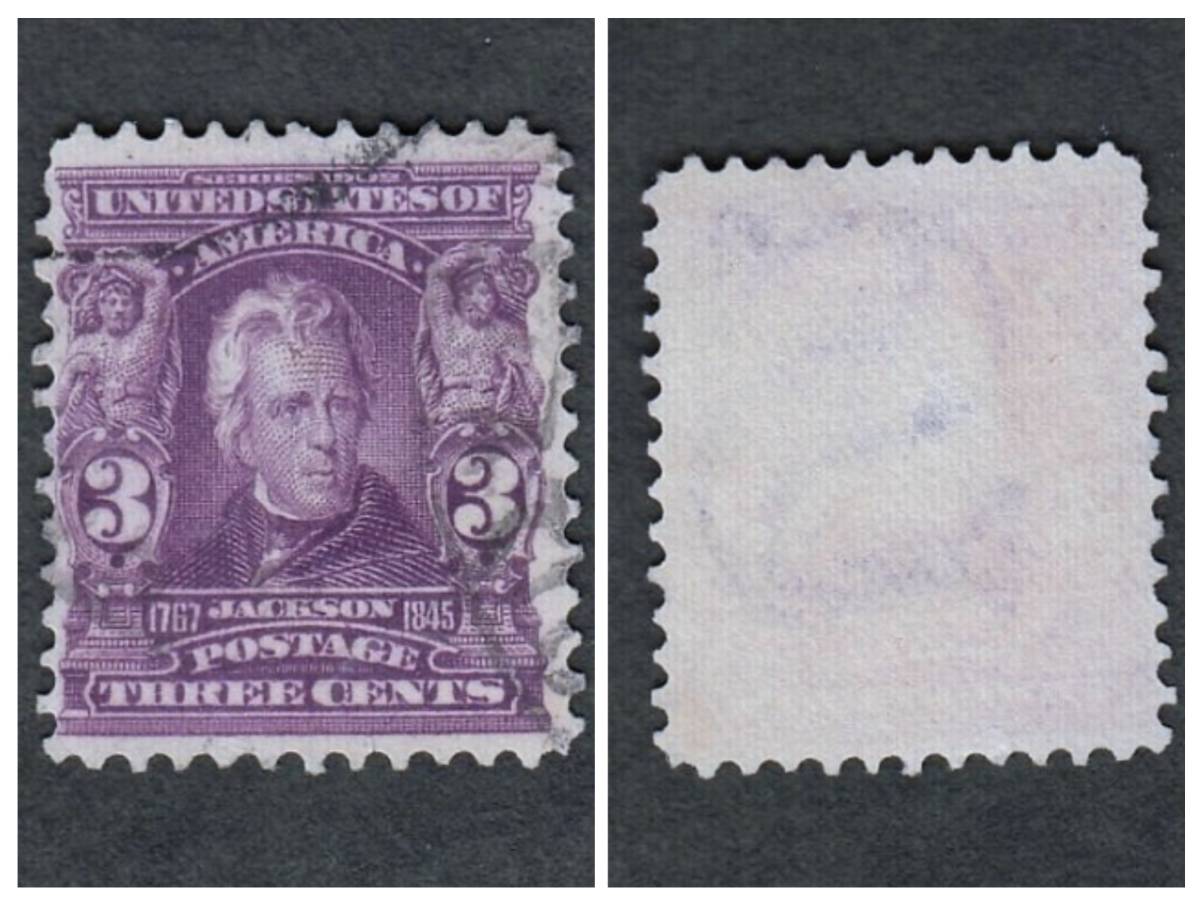
On the same vein of thinking, and this is just meant to be a quick reference rather than to derail the topic, but I have this US #302 that is on different paper and has a much brighter shade than other 302s. I believe it comes from a stock that was created for the Special Printings of "PHILIPPINES" overprinted stamps that share the same characteristics. Interestingly enough, these were made at around the same year as the Somerset House examples, and share similar differences.

Send note to Staff  Go to Top of Page
Pillar Of The Community
Netherlands
6530 Posts
Posted 05/05/2025   11:26 am  Show Profile Bookmark this reply Add NSK to your friends list  Get a Link to this Reply

Quote:
I kind of want to soak the blue one a bit more now to watch it turn yellow


That would be very interesting to see a green lose its yellow to become blue and, therafter, its blue to become yellow.
Send note to Staff  Go to Top of Page
Pillar Of The Community
Netherlands
6530 Posts
Posted 05/05/2025   12:03 pm  Show Profile Bookmark this reply Add NSK to your friends list  Get a Link to this Reply

Quote:
NSK, that's very neat! I'm just learning about the Somerset House printings as per your suggestion. The colors on this one are "bright", rather than "deep", however.. so do you think this is also an effect of water damage? The colors do appear to be washed around the edges of the design.


Your stamp is either a De La Rue stamp on chalk-surfaced paper, or a Somerset House stamp. If the month in the date17 ??? (19)11 is August or later, it, likely, is a Somerset House stamp.

The colour has run. I am not very sure the reddish appearance of the purple is wholy due to water damage, or original. If it is reddish purple, it would be a Somerset House printing. If it is a De La Rue printing, it must be a washed-out slate-purple that is known to come from a 1908 printing.

The whole impression is that of a De La Rue stamp. The colours I am perceiving suggest Somerset House. I doubt the month in the date stamp is later than July. This too points at De La Rue. However, with two printings in 1910 that were in a dull purple, that reddish appearance makes me doubt.

I had another look at my own stamps, and I do think it is a washed-out De La Rue stamp.


Quote:
On the same vein of thinking, and this is just meant to be a quick reference rather than to derail the topic, but I have this US #302 that is on different paper and has a much brighter shade than other 302s. I believe it comes from a stock that was created for the Special Printings of "PHILIPPINES" overprinted stamps that share the same characteristics. Interestingly enough, these were made at around the same year as the Somerset House examples, and share similar differences.


I am not familiar with US stamps. I do not know where the US got its pigments from, but it may not have been Germany. If not, I doubt the similarity is anything but a coincidence.
Send note to Staff  Go to Top of Page
Edited by NSK - 05/05/2025 12:05 pm
Page: of 2 Previous TopicReplies: 21 / Views: 2,348Next Topic  
Previous Page
 
To participate in the forum you must log in or register.

Go to Top of Page

Disclaimer: While a tremendous amount of effort goes into ensuring the accuracy of the information contained in this site, Stamp Community assumes no liability for errors. Copyright 2005 - 2026 Stamp Community Family - All rights reserved worldwide. Use of any images or content on this website without prior written permission of Stamp Community or the original lender is strictly prohibited.
Privacy Policy / Terms of Use    Advertise Here
Stamp Community Forum © 2007 - 2026 Stamp Community Forums
It took 0.14 seconds to lick this stamp. Powered By: Snitz Forums 2000 Version 3.4.05