Stamp Community Family of Web Sites
Thousands of stamps, consistently graded, competitively priced and hundreds of in-depth blog posts to read


Stamp Community Forum
 
Username:
Password:
Save Password
Forgot your Password?

This page may contain links that result in small commissions to keep this free site up and running.

Welcome Guest! Registering and/or logging in will remove the anchor (bottom) ads. It's Free!

Mammoths, Mastodons And Other Prehistoric Elephants

Previous Page | Next Page    
 
To participate in the forum you must log in or register.
Author Previous TopicReplies: 52 / Views: 5,890Next Topic
Page: of 4
Valued Member
United States
194 Posts
Posted 08/11/2025   8:14 pm  Show Profile Bookmark this reply Add Nils Helstrom to your friends list  Get a Link to this Reply
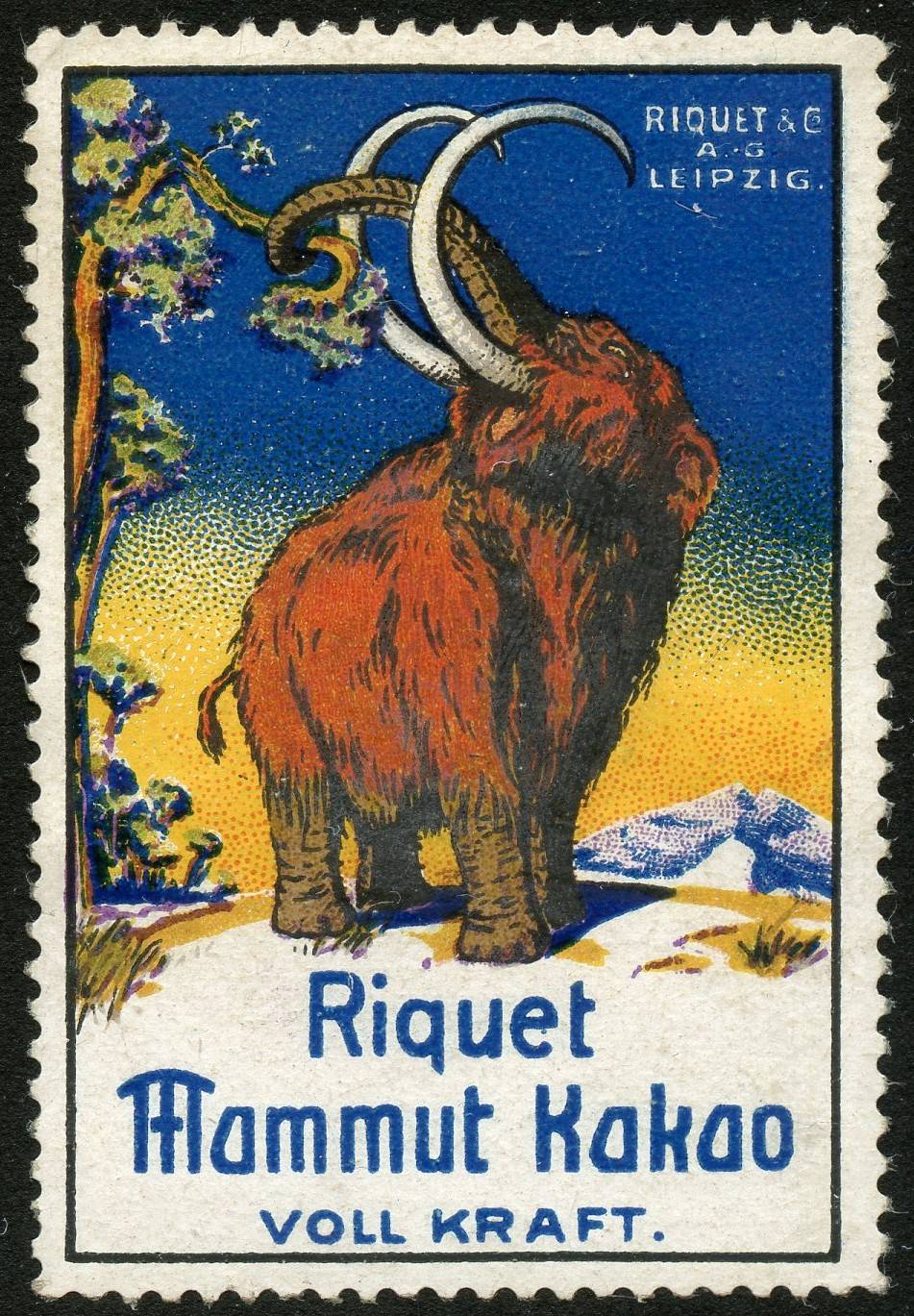
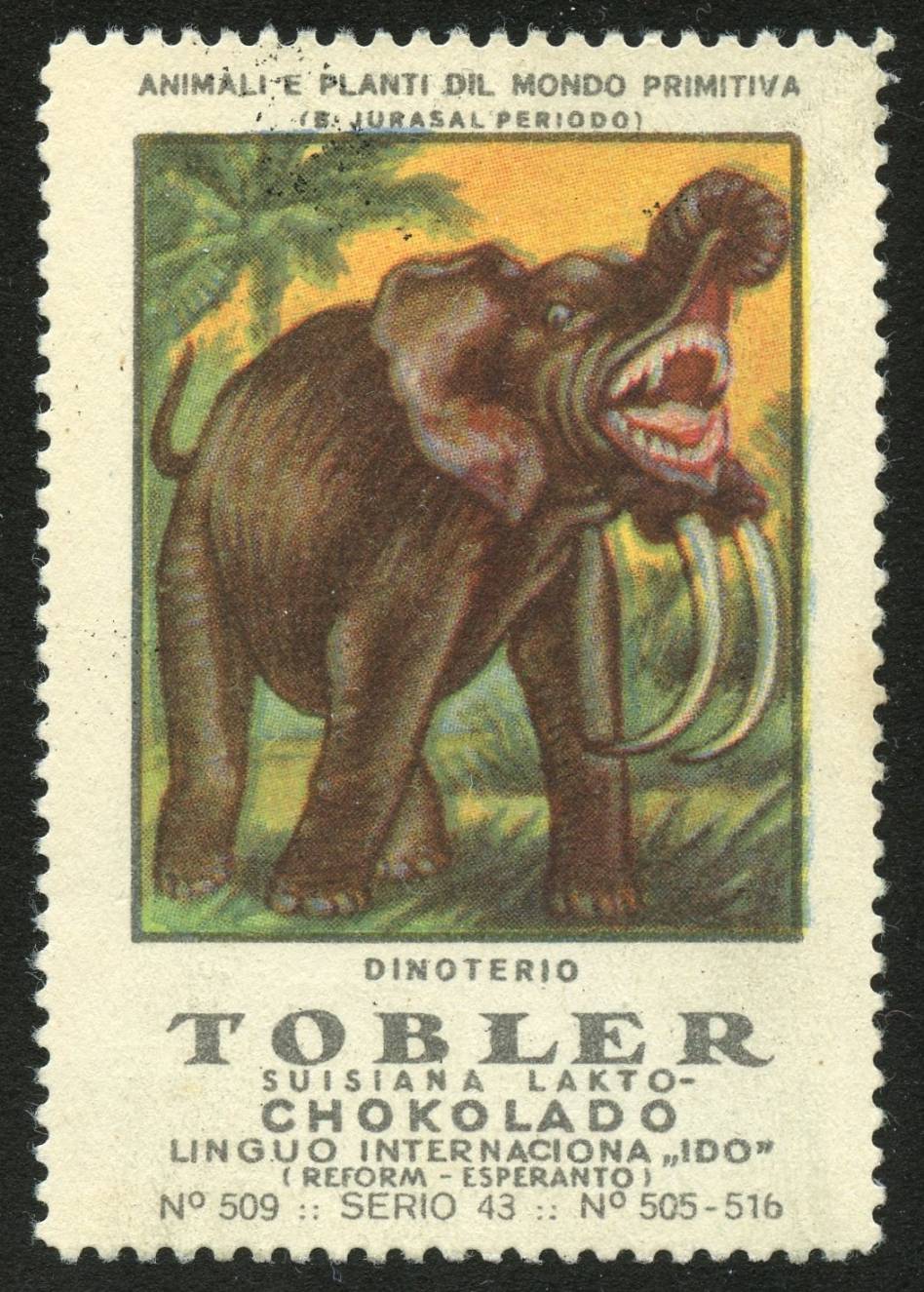
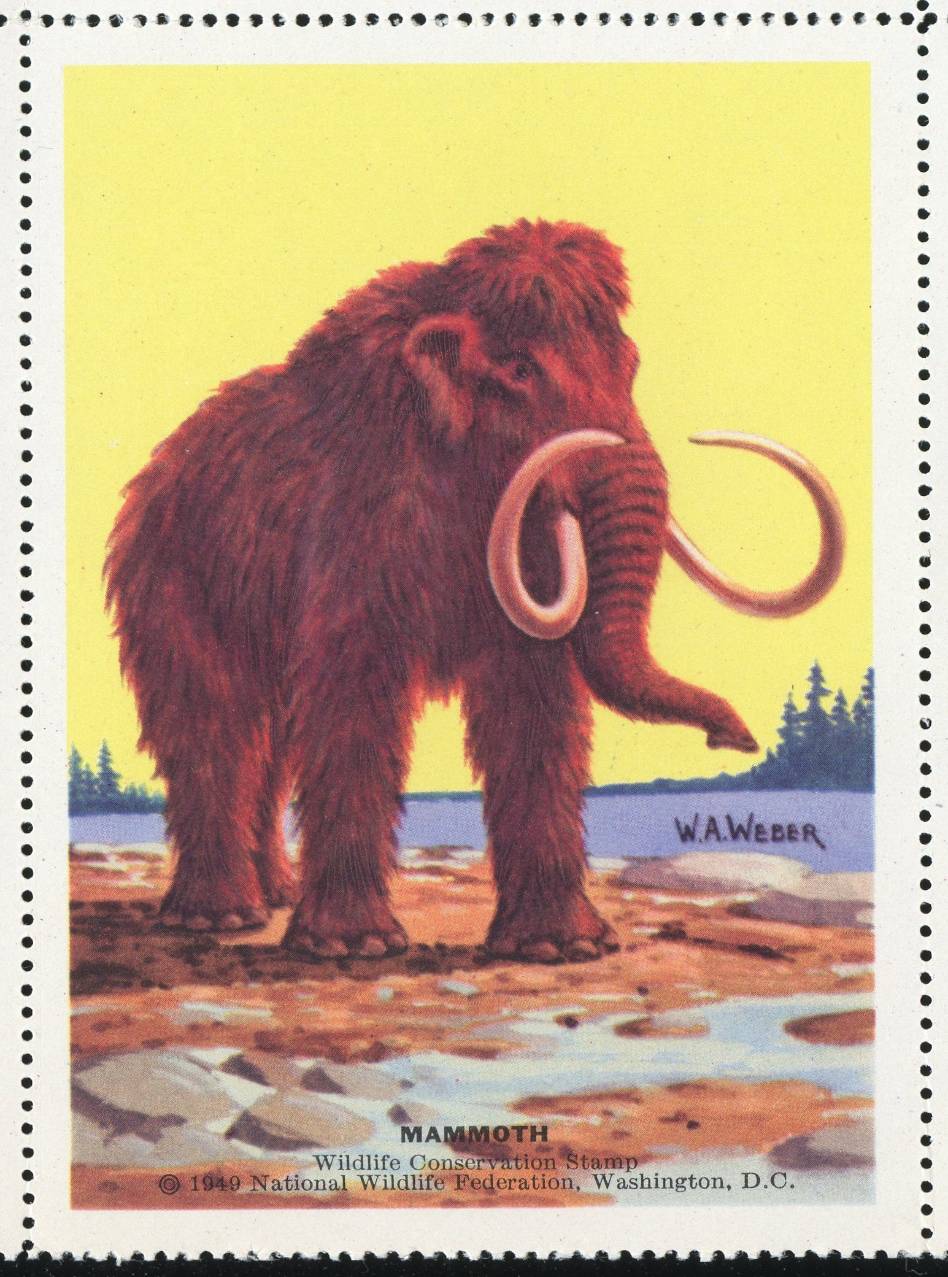
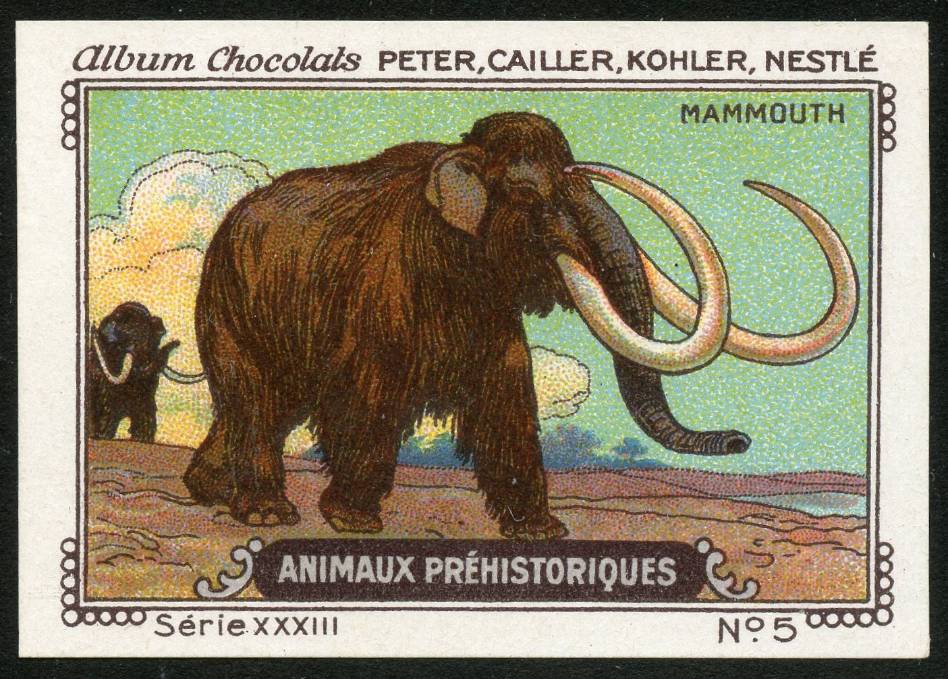
LaoPhil, you hit on one of my favorite topics! And when you dig into it, you realize just what a huge topical it is. Here are some relevant poster stamps and other cinderellas of note...


Send note to Staff  Go to Top of Page
Edited by Nils Helstrom - 08/11/2025 8:19 pm
Pillar Of The Community
Israel
4661 Posts
Posted 08/12/2025   2:55 pm  Show Profile Bookmark this reply Add LaoPhil to your friends list  Get a Link to this Reply
Great Cinderella labels, Nils! like very much the last colorful Mammoth. Thanks for sharing.

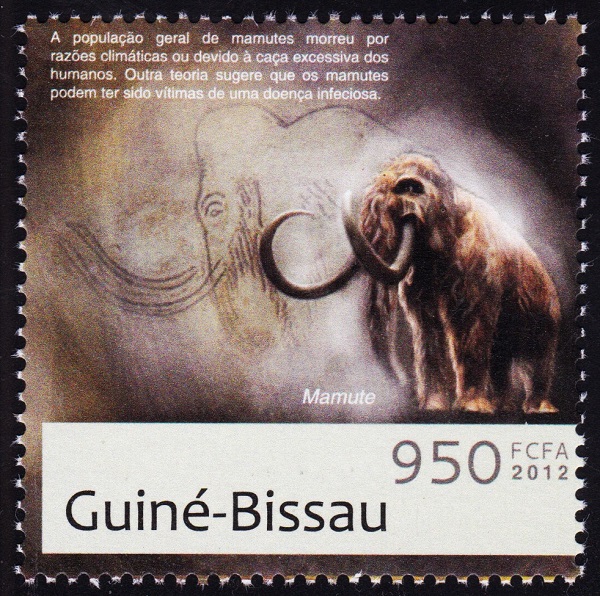
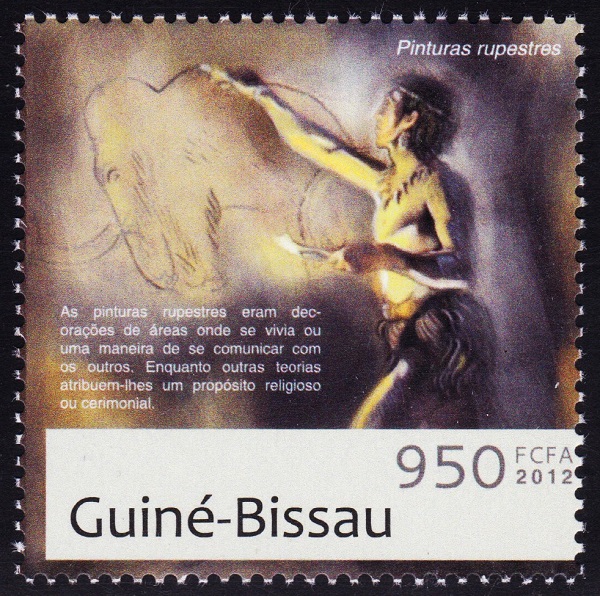
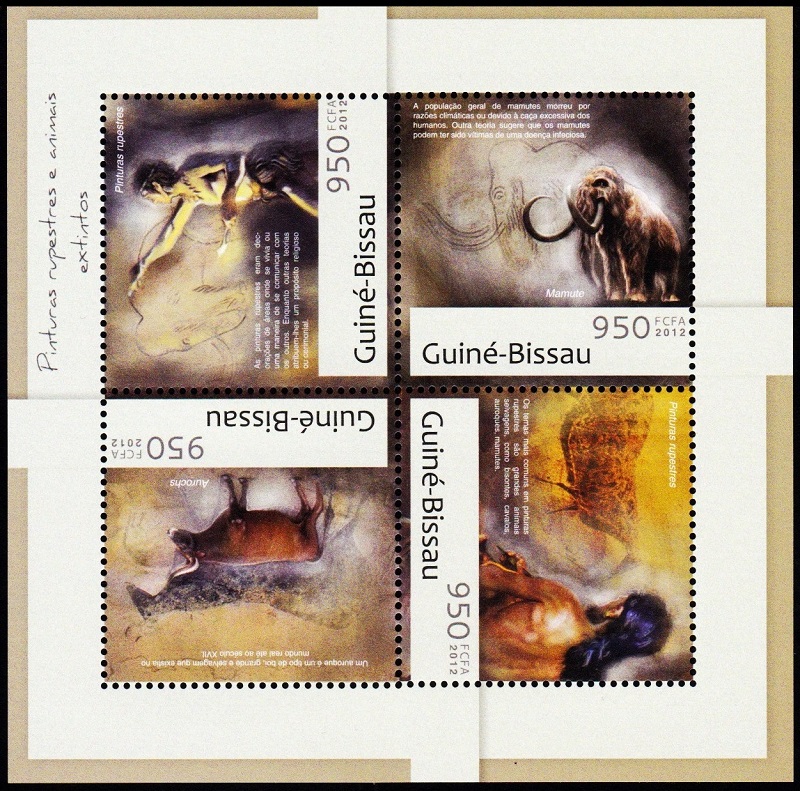
Mammoths on cave painting, Guinea Bissau, 2012.


Send note to Staff  Go to Top of Page
Pillar Of The Community
Israel
4661 Posts
Posted 08/13/2025   02:22 am  Show Profile Bookmark this reply Add LaoPhil to your friends list  Get a Link to this Reply
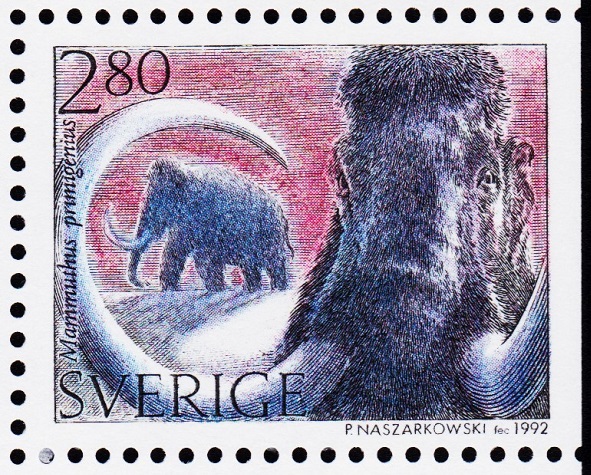
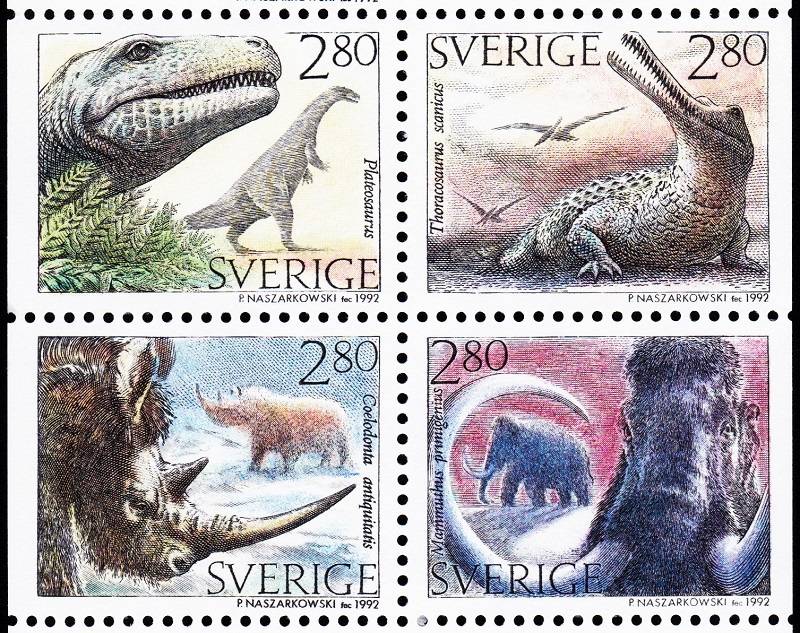
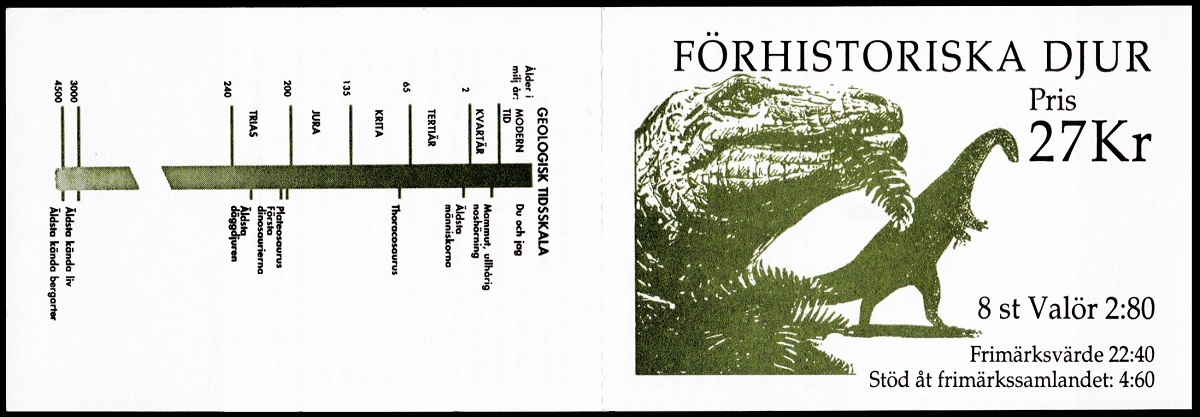
A very attractive set of four stamps features prehistoric animals was designed and engraved by Piotr Naszarkowski and issued by Sweden in 1992. One of them shows Woolly Mammoth (Mammuthus primigenius).


Issued in a booklet contains two copies of the set. The cover shows time scale, place the Mammoth in the late Quaternary, the most recent geologic period, spanning the last 2.6 million years to the present day.
Send note to Staff  Go to Top of Page
Valued Member
United States
194 Posts
Posted 08/13/2025   5:13 pm  Show Profile Bookmark this reply Add Nils Helstrom to your friends list  Get a Link to this Reply
That Swedish set is one of my favorite prehistoric stamp issues.
Send note to Staff  Go to Top of Page
Pillar Of The Community
Israel
4661 Posts
Posted 08/14/2025   01:08 am  Show Profile Bookmark this reply Add LaoPhil to your friends list  Get a Link to this Reply
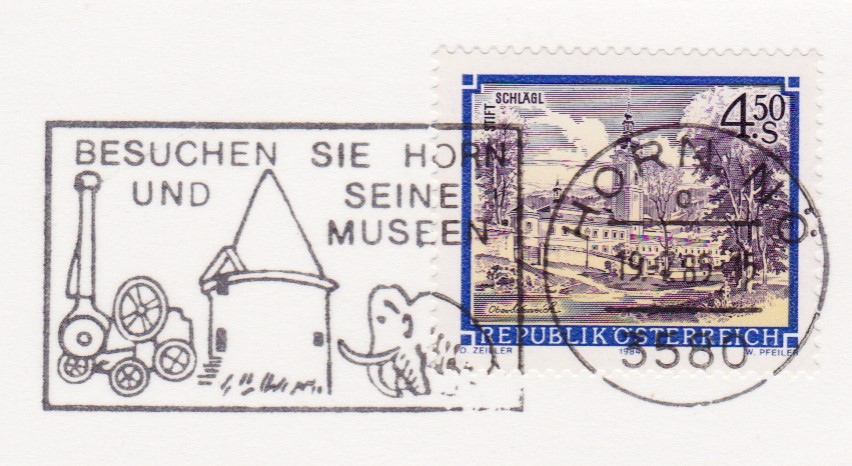
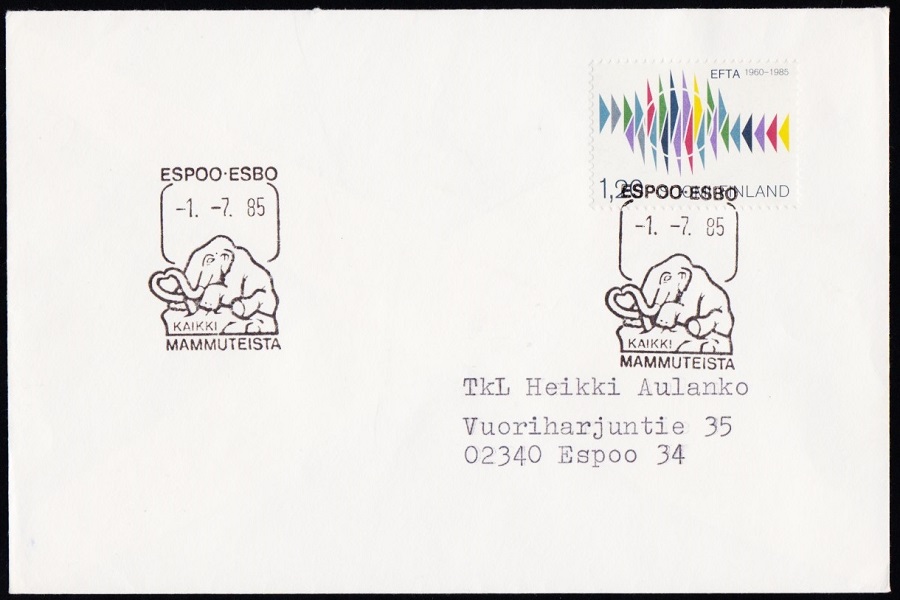
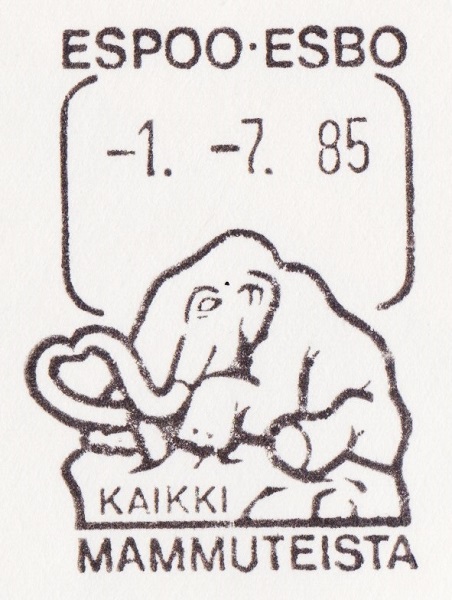
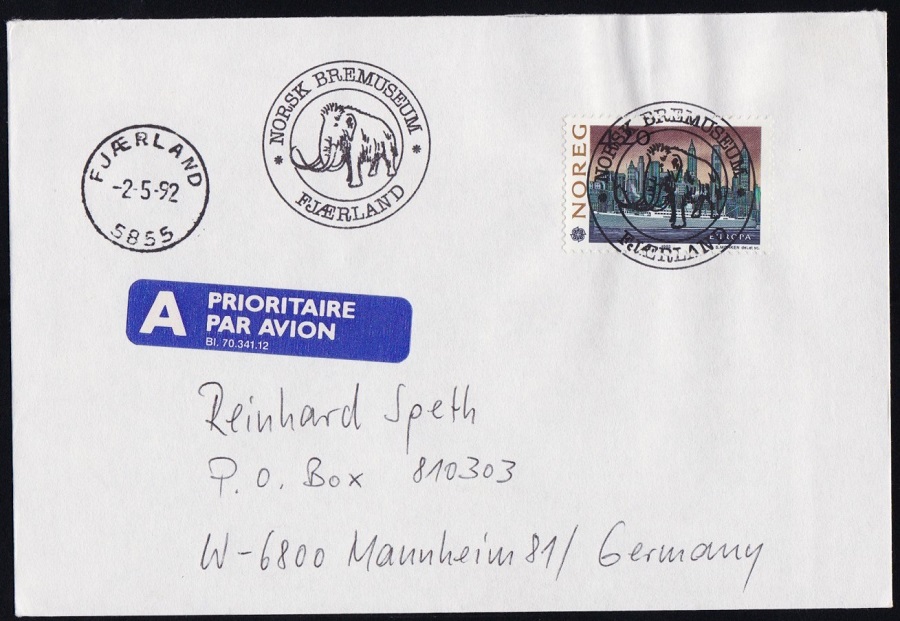
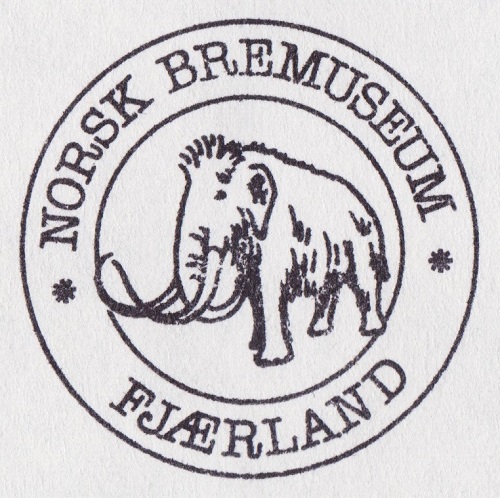
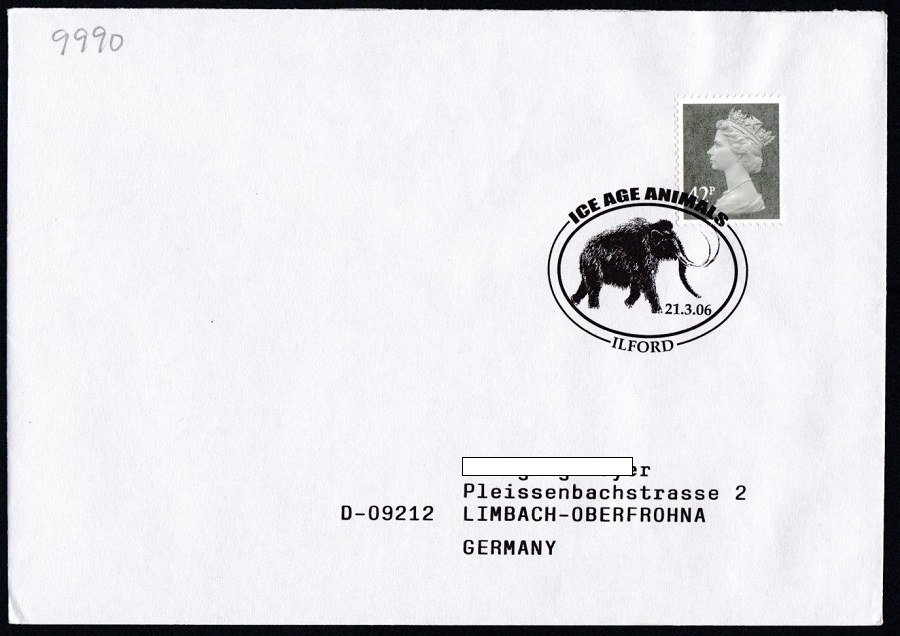
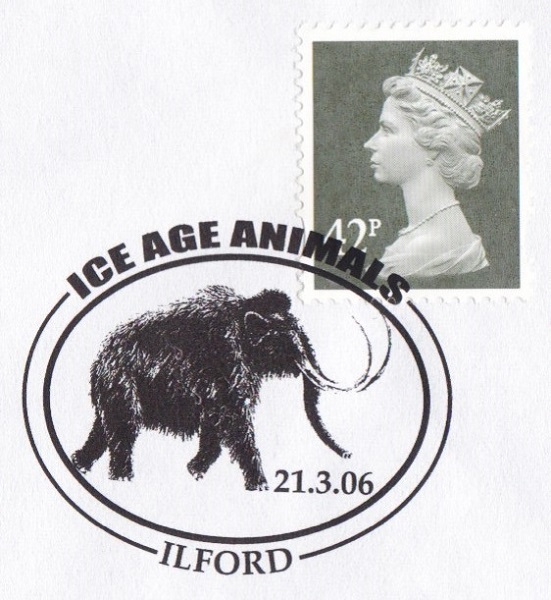
Mammoths on postmarks from different countries.

Visit the museums of Horn", Austria, 1985".

"All about Mammoths" exhibition, Finland, 1985.


Norsk Bremuseum, Norway, 1992.


Ice age animals, UK, 2006.

Send note to Staff  Go to Top of Page
Pillar Of The Community
Israel
4661 Posts
Posted 08/15/2025   12:37 am  Show Profile Bookmark this reply Add LaoPhil to your friends list  Get a Link to this Reply
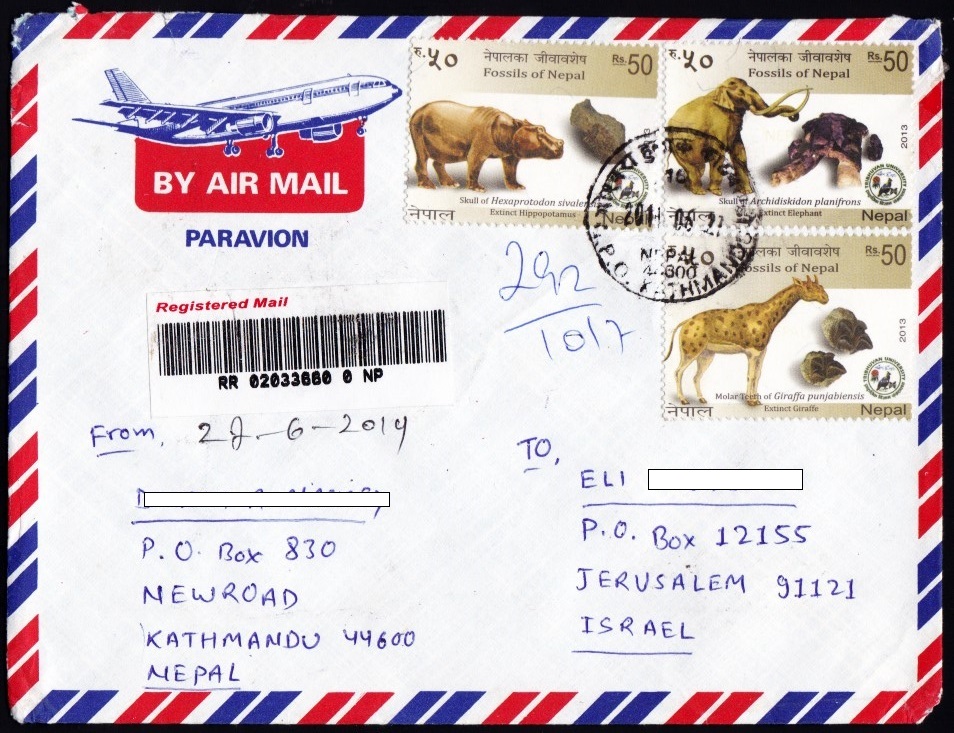
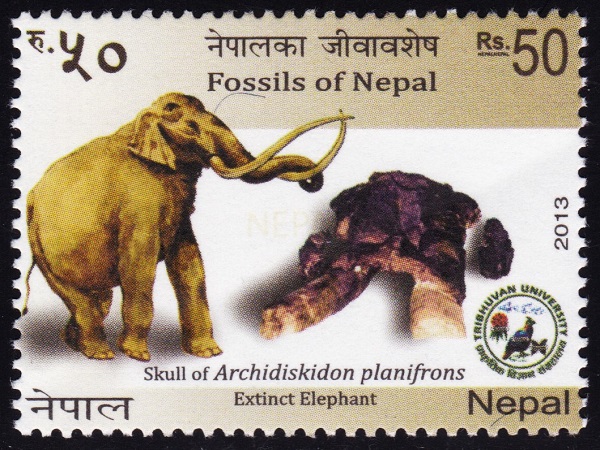
A prehistoric proboscidean, Archidiskodon planifrons (Elephas planifrons) was an elephant-like mammal from the Pliocene–Pleistocene, closely related to stegodonts and early elephants. Its fossil record spans large parts of Asia, with notable discoveries in Nepal, including a tusk-bearing skull found near Rato Khola and other fragments from Babai Khola and the Kathmandu Valley, highlighting its presence in the region's ancient ecosystems.

Archidiskodon planifrons and its fossilized skull, Nepal, 2013.
Send note to Staff  Go to Top of Page
Edited by LaoPhil - 08/15/2025 12:40 am
Pillar Of The Community
Israel
4661 Posts
Posted 08/16/2025   01:17 am  Show Profile Bookmark this reply Add LaoPhil to your friends list  Get a Link to this Reply
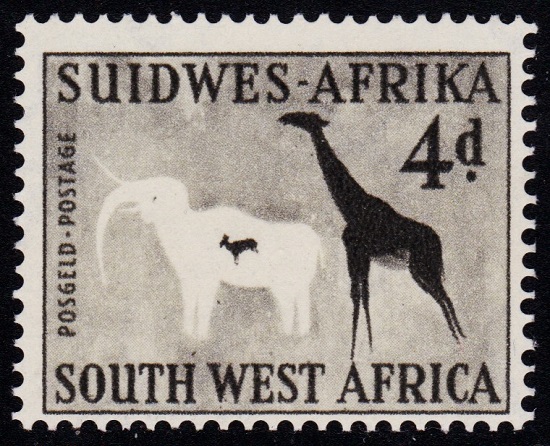
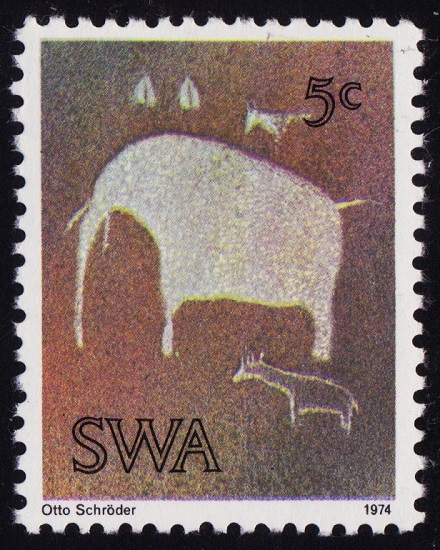
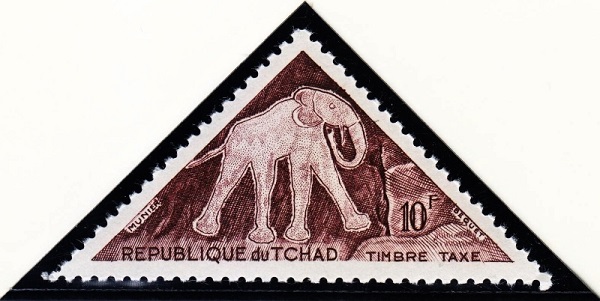
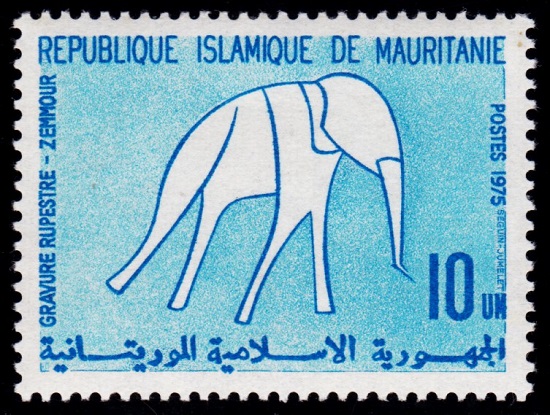
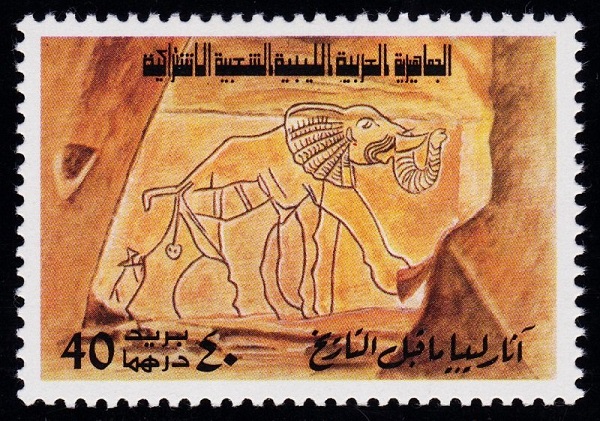
A small selection of stamps show elephants on prehistoric cave and stone paintings from South West Africa (Namibia), Chad, Mauritania and Libya.


Send note to Staff  Go to Top of Page
Pillar Of The Community
Israel
4661 Posts
Posted 08/16/2025   4:37 pm  Show Profile Bookmark this reply Add LaoPhil to your friends list  Get a Link to this Reply
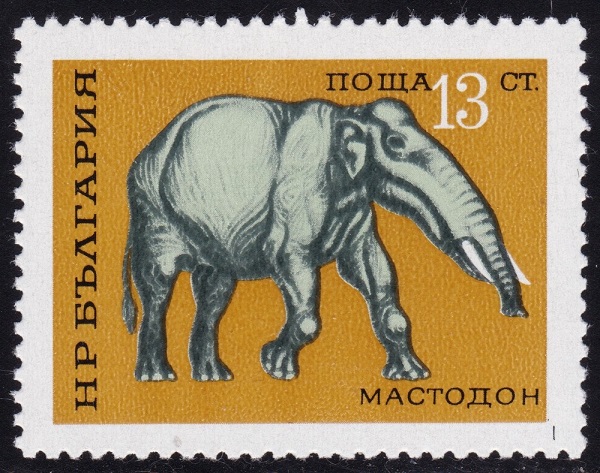
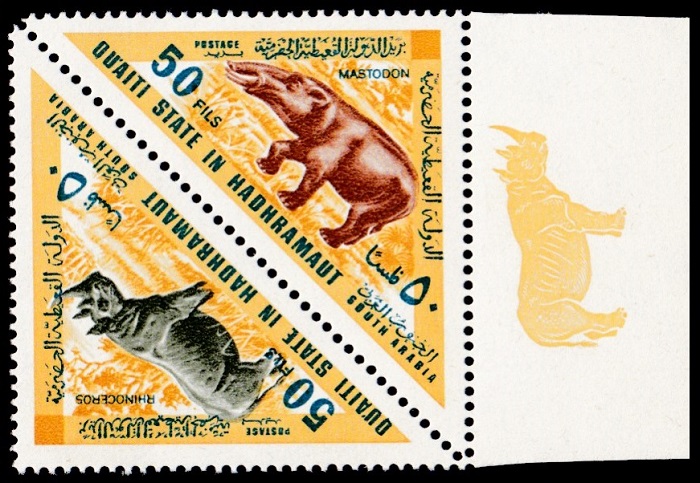
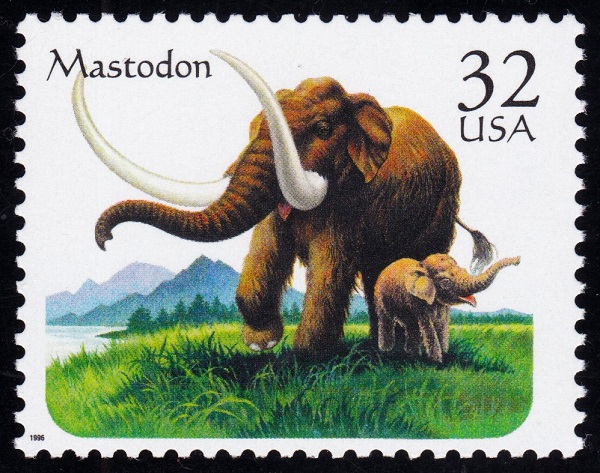
Mastodons were large, prehistoric relatives of elephants that lived in North and Central America until about 10,000 years ago. They belonged to the genus Mammut and are often confused with mammoths, but they were a distinct group. Mastodons had shorter, stockier builds, long curved tusks, and a covering of hair. Unlike mammoths, whose teeth were adapted for grazing grasses, mastodons had cusped molars suited for browsing on leaves, twigs, and shrubs in forested environments. They coexisted with early humans and likely became extinct due to a combination of climate change and overhunting.

Here is a selection of Mastodon stamps from the USA, Bulgaria, Mongolia, Manama and Qu'aiti State of Hadhramaut.


Send note to Staff  Go to Top of Page
Edited by LaoPhil - 08/16/2025 4:39 pm
Valued Member
Slovenia
159 Posts
Posted 08/17/2025   05:34 am  Show Profile Bookmark this reply Add zomirp to your friends list  Get a Link to this Reply
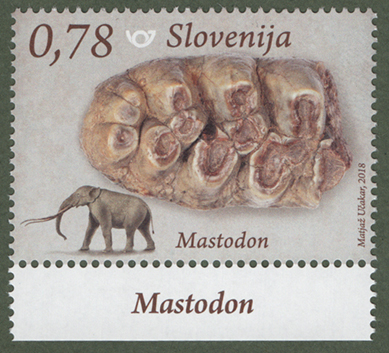
Fossil Mammals of Slovenia - Mastodon

The mastodon Anancus arvernensis was a towering presence in prehistoric Europe, roaming vast forested landscapes from the late Miocene through to the early Pleistocene.
Though it resembled modern elephants in stature, Anancus stood apart with its extraordinarily long, flattened tusks and distinctive tooth structure, adapted to its ancient diet.
A striking example of this species' legacy is featured on a Slovenian postage stamp,
which depicts a mastodon molar discovered over seventy years ago in a gravel pit near Sveti Andraž in Slovenske gorice.
The tooth, notable for its robust root, comes from the lower jaw, offering valuable insight into the anatomy of this extinct giant.

Send note to Staff  Go to Top of Page
Pillar Of The Community
Israel
4661 Posts
Posted 08/18/2025   10:03 am  Show Profile Bookmark this reply Add LaoPhil to your friends list  Get a Link to this Reply
Thanks for sharing, Zomir!

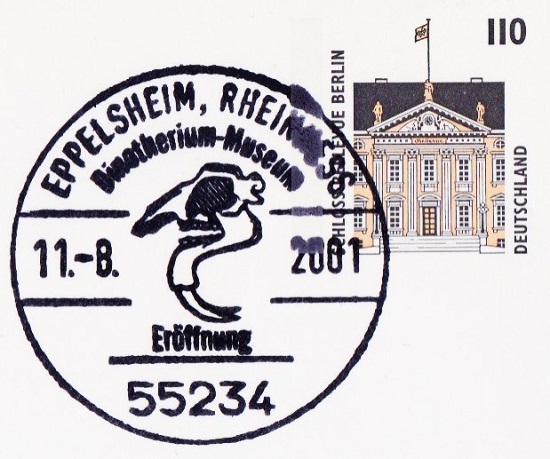
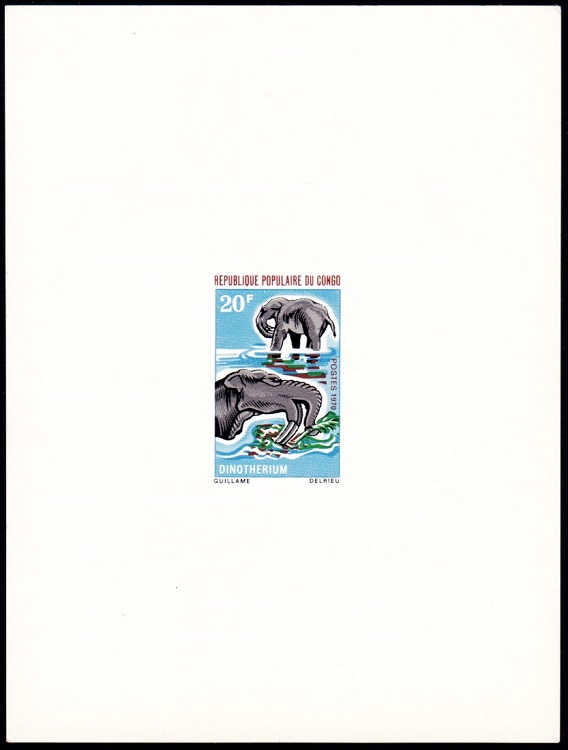
Deinotherium was a very large prehistoric relative of modern elephants that lived in Africa, Europe, and Asia from the Miocene to the Pleistocene (about 20 to 2 million years ago). Unlike mammoths and mastodons, it had downward-curving tusks attached to the lower jaw rather than the upper. These tusks were likely used to strip bark or pull down branches for feeding. Fossils suggest it inhabited warm, forested environments, where it browsed mainly on leaves rather than grazing on grass.

Here are two stamps from Bulgaria and Republic of Congo show Deinotherium


Eprevue de Luxe
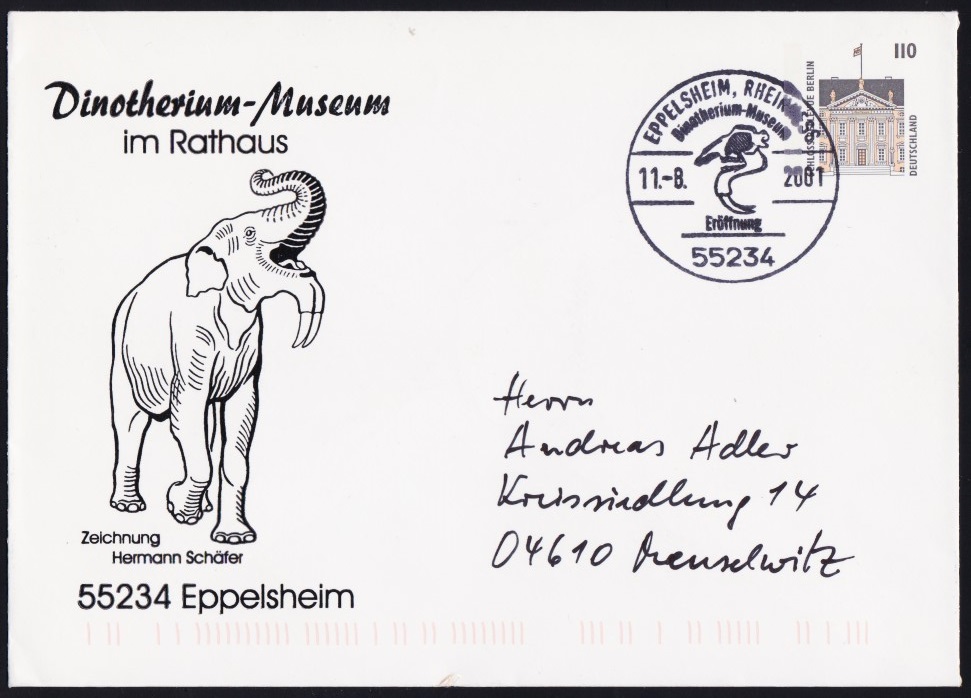
Fossilized Deinotherium skull on German postmark publicizing the Deinotherium museum in Eppelsheim, Germany. 2001.
Send note to Staff  Go to Top of Page
Pillar Of The Community
Israel
4661 Posts
Posted 08/19/2025   08:59 am  Show Profile Bookmark this reply Add LaoPhil to your friends list  Get a Link to this Reply
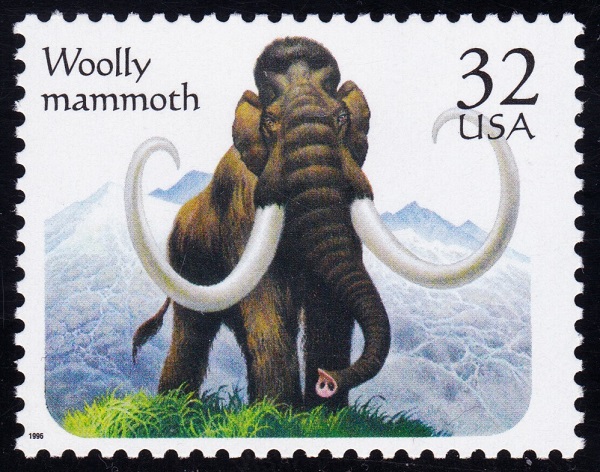
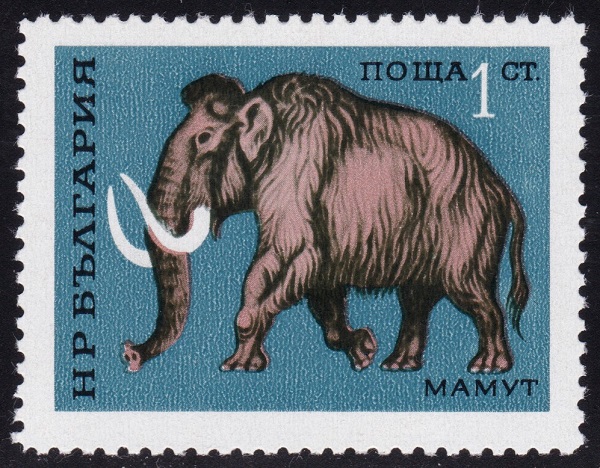
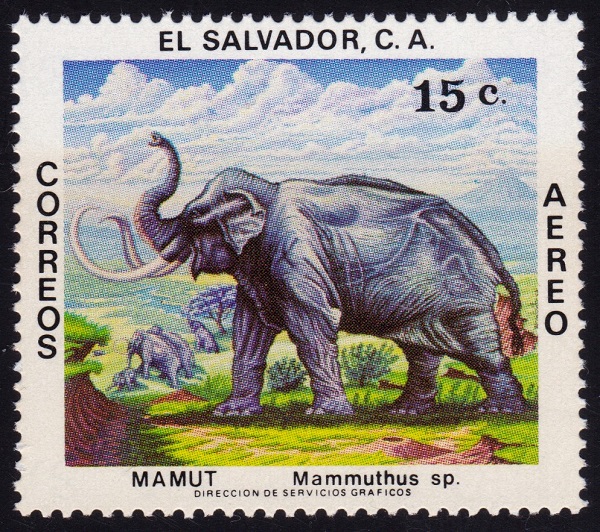
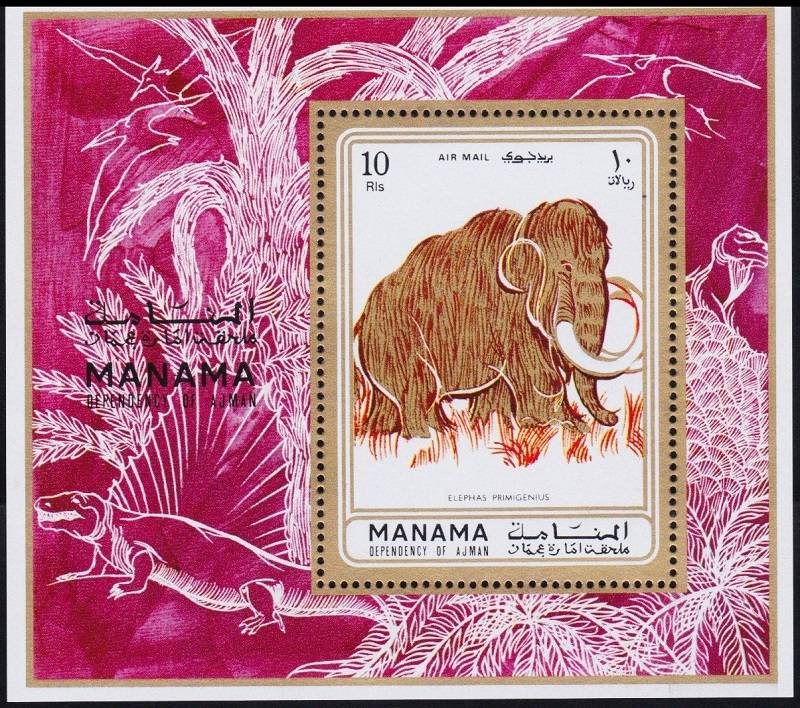
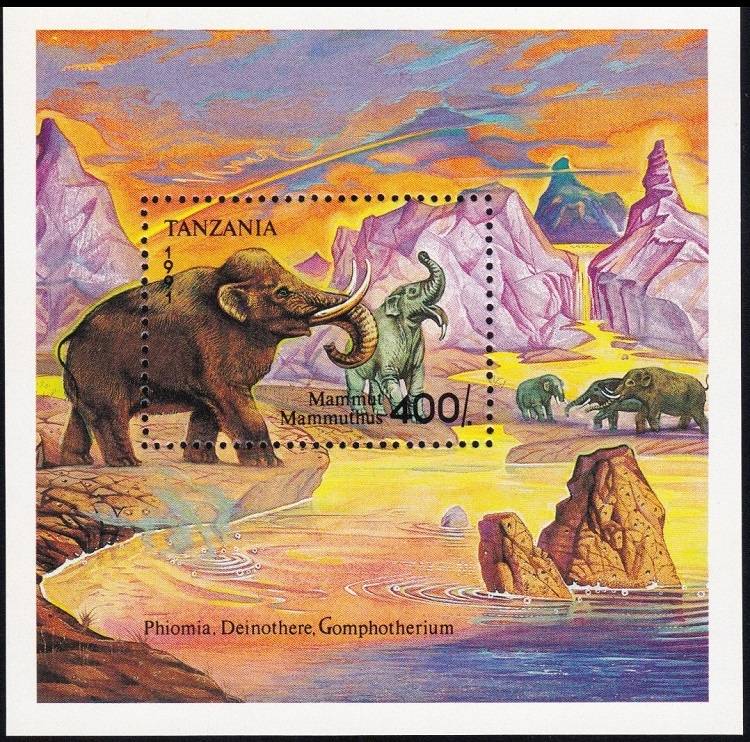
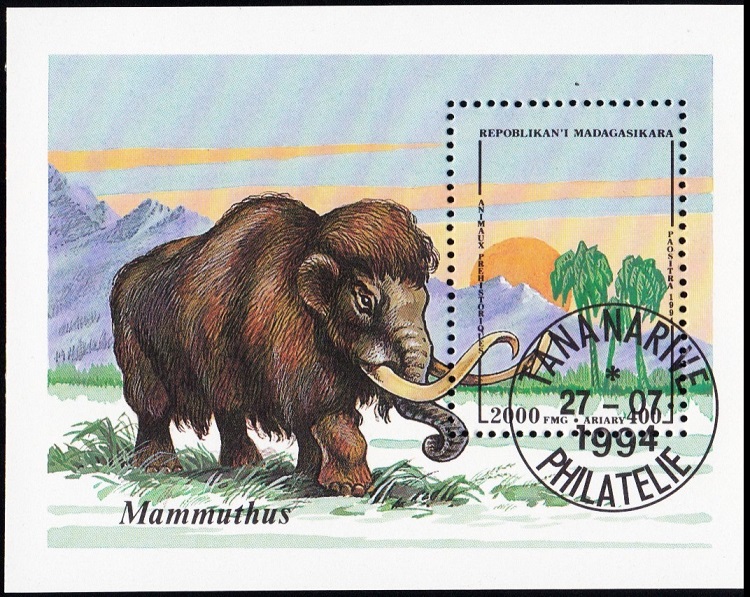
A small selection of Mammoth stamps and sheet from: USA, Bulgaria, El salvador, Manama, Tanzania and Madagascar.


Send note to Staff  Go to Top of Page
Pillar Of The Community
Israel
4661 Posts
Posted 08/20/2025   10:53 pm  Show Profile Bookmark this reply Add LaoPhil to your friends list  Get a Link to this Reply
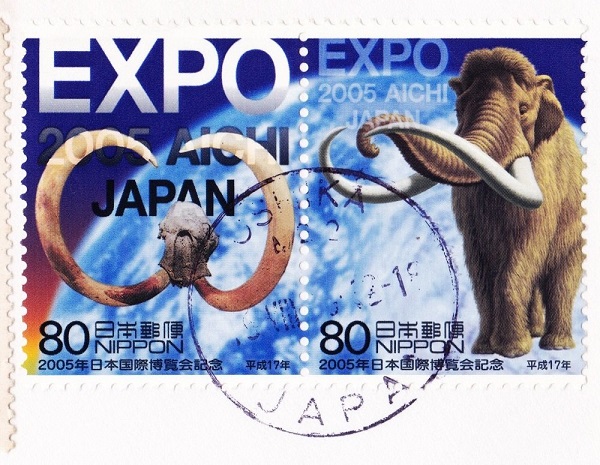
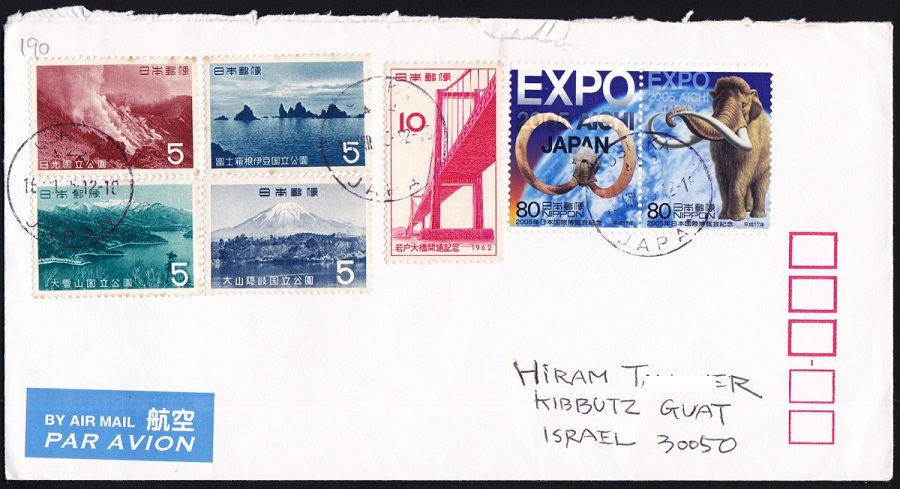
Mammoth fossil skull and a Mammoth reconstruction, Japan, 2005.


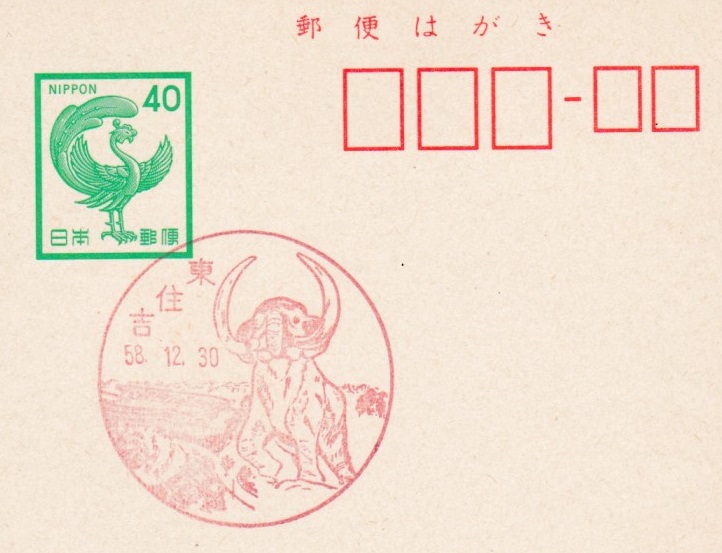
Mammoth in Museum of Natural History in Osaka, Japan, postmark 1982.
Send note to Staff  Go to Top of Page
Pillar Of The Community
Israel
4661 Posts
Posted 08/21/2025   11:37 pm  Show Profile Bookmark this reply Add LaoPhil to your friends list  Get a Link to this Reply
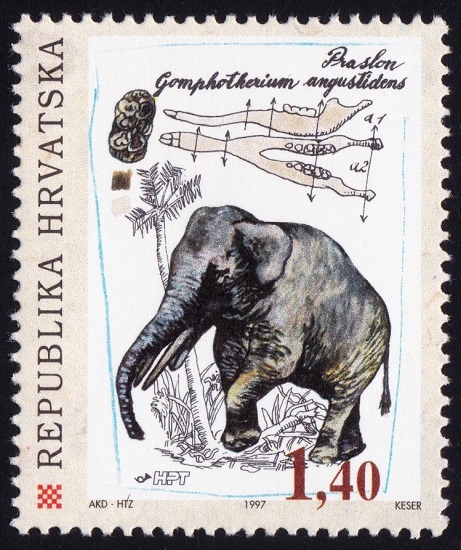
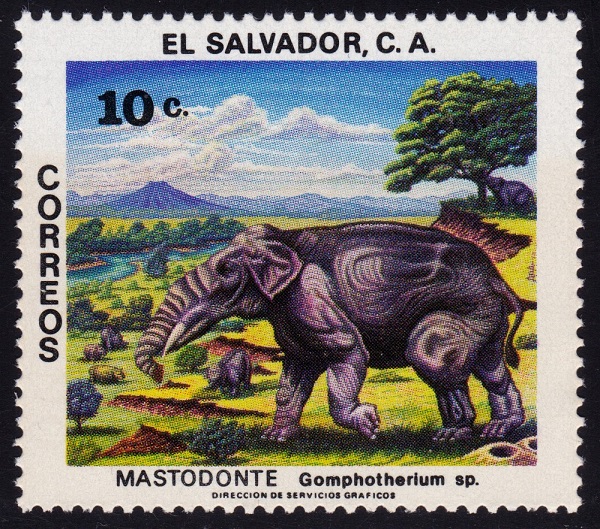
Gomphotherium was an extinct proboscidean that lived from the Miocene to early Pleistocene (13–1.7 million years ago), characterized by a long trunk and four tusks—two upper curved and two lower shovel-shaped. It had a varied diet of leaves, fruits, and aquatic plants and was widespread across Africa, Eurasia, and North America, making it a key ancestor of later elephant lineages.

Gomphoterium, El Salvador 1979 and Croatia 1997.

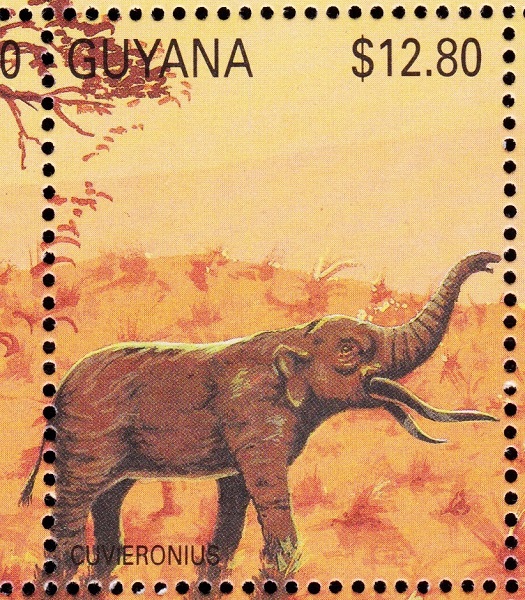
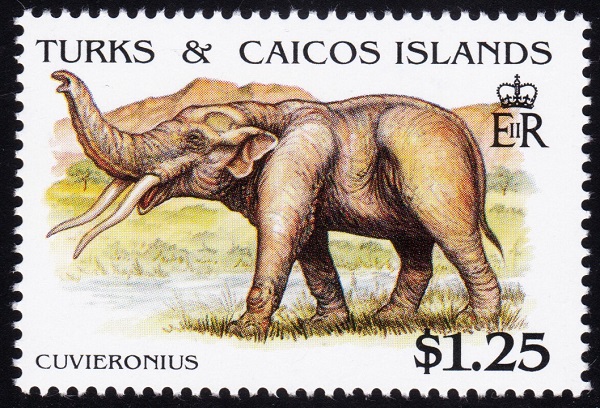
Cuvieronius was a later gomphothere from the Pliocene and Pleistocene (5 million–10,000 years ago) of the Americas, with a long trunk and spiral-shaped upper tusks adapted for browsing. Among the last of its kind, it vanished at the end of the Ice Age, likely due to climate change and human hunting.

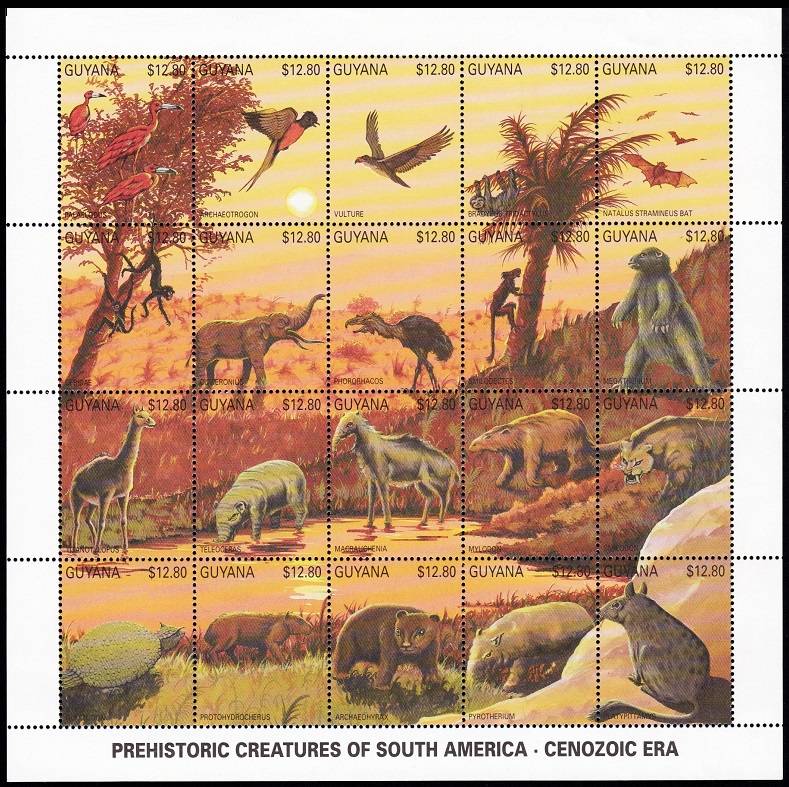
Cuvieronius, Turks and Caicos Islands 1991 and Guyana 1990.

The Guyana stamp issued in a sheet shows prehistoric animals of South America from the Cenosoic era.

Proboscideans are modern elephants and their extinct relatives like mammoths and mastodons.
Send note to Staff  Go to Top of Page
Edited by LaoPhil - 08/21/2025 11:39 pm
Pillar Of The Community
Israel
4661 Posts
Posted 08/22/2025   5:23 pm  Show Profile Bookmark this reply Add LaoPhil to your friends list  Get a Link to this Reply
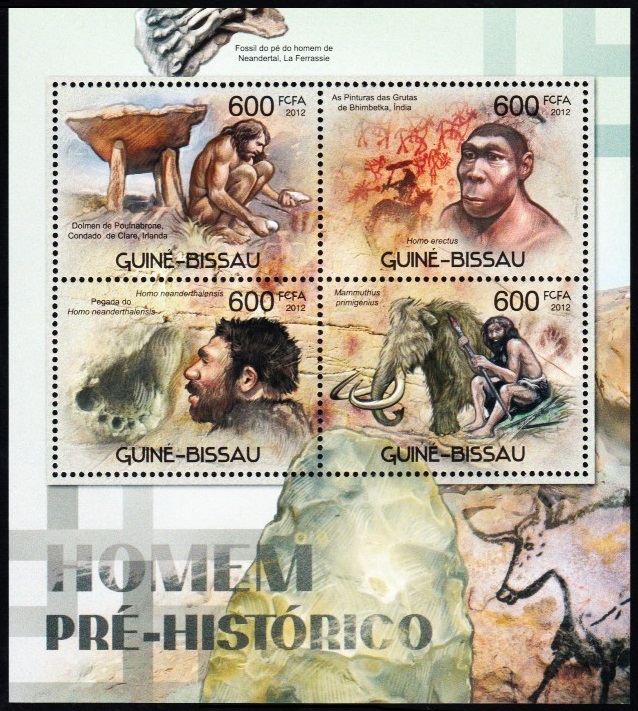
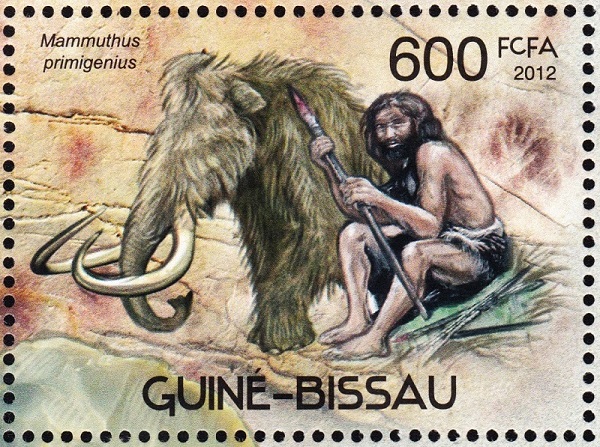
Woolly Mammoth and a Neanderthal friend...
Guinea Bissau, 2012

Send note to Staff  Go to Top of Page
Pillar Of The Community
Israel
4661 Posts
Posted 08/24/2025   2:41 pm  Show Profile Bookmark this reply Add LaoPhil to your friends list  Get a Link to this Reply
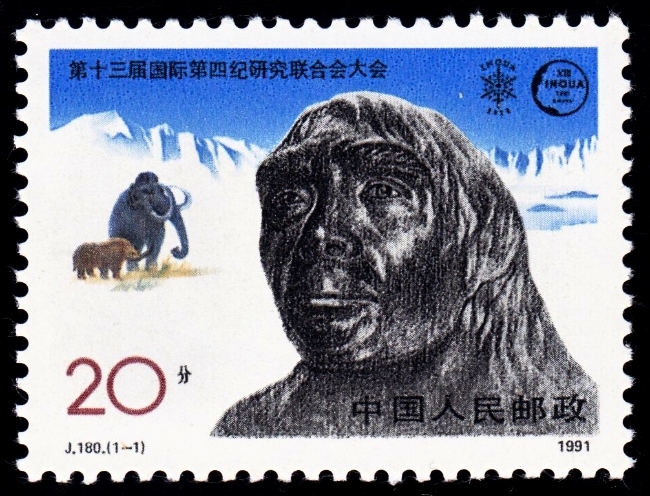
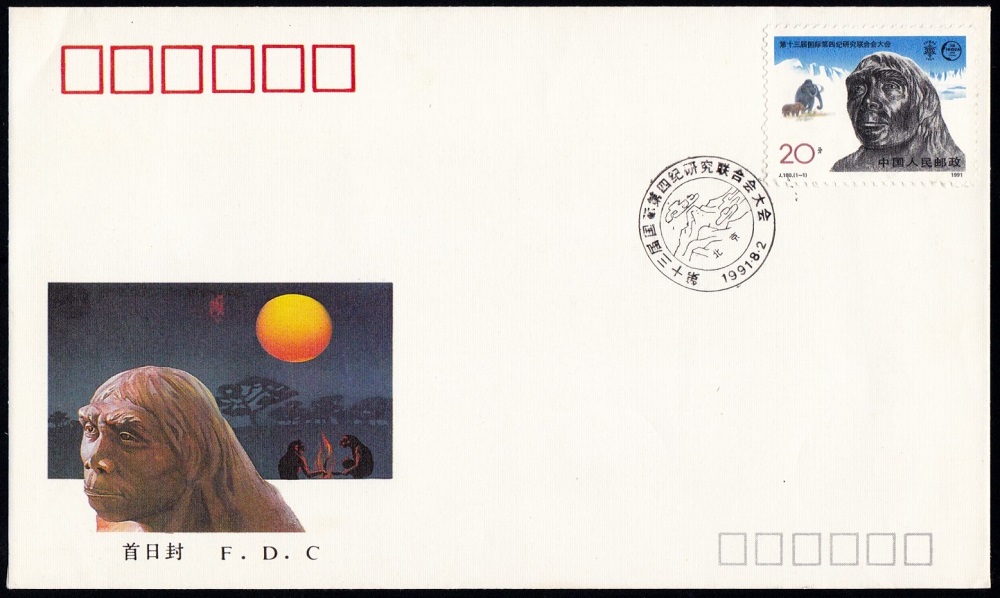
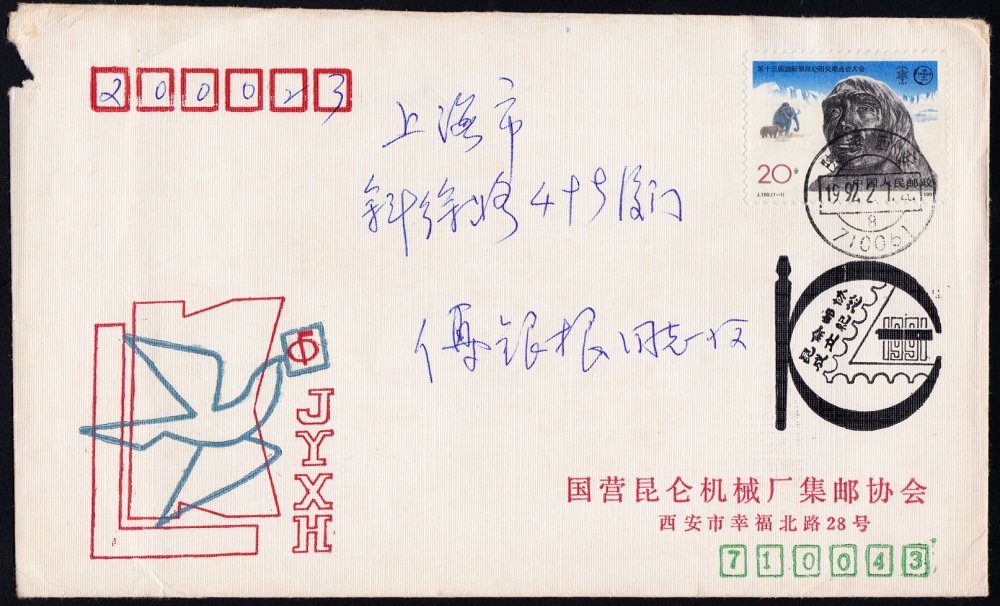
To commemorate the 13th Conference of the International Union for Quaternary Research, held in Peking, The PRC issued in 1991, a stamp depicting a head statue of Peking Man (Sinanthropus pekinensis) exhibited in Zhoukoudian, with mammoths on the background.


Send note to Staff  Go to Top of Page
Page: of 4 Previous TopicReplies: 52 / Views: 5,890Next Topic  
Previous Page | Next Page
 
To participate in the forum you must log in or register.

Go to Top of Page

Disclaimer: While a tremendous amount of effort goes into ensuring the accuracy of the information contained in this site, Stamp Community assumes no liability for errors. Copyright 2005 - 2026 Stamp Community Family - All rights reserved worldwide. Use of any images or content on this website without prior written permission of Stamp Community or the original lender is strictly prohibited.
Privacy Policy / Terms of Use    Advertise Here
Stamp Community Forum © 2007 - 2026 Stamp Community Forums
It took 0.19 seconds to lick this stamp. Powered By: Snitz Forums 2000 Version 3.4.05