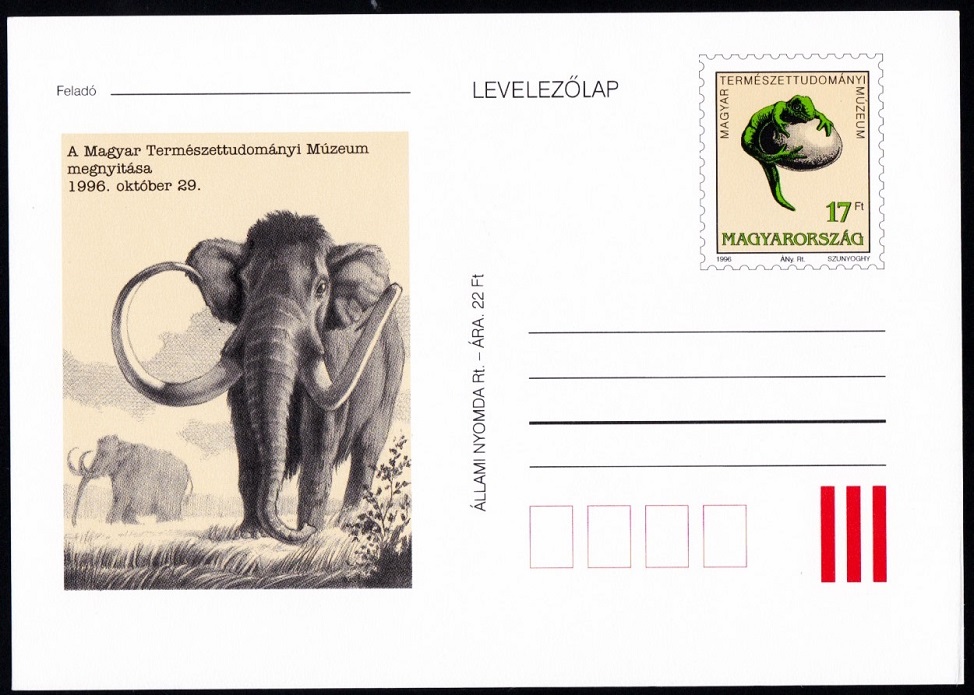
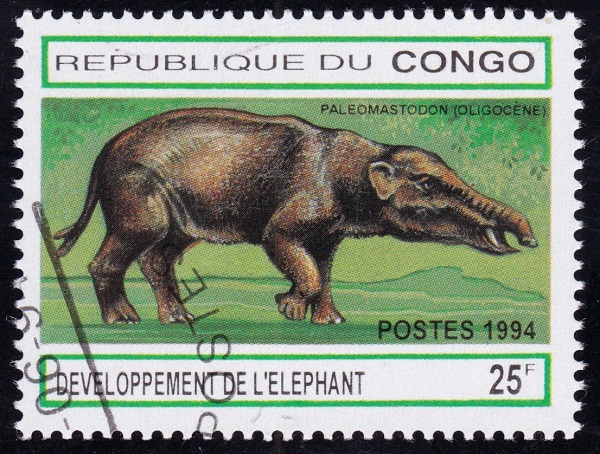
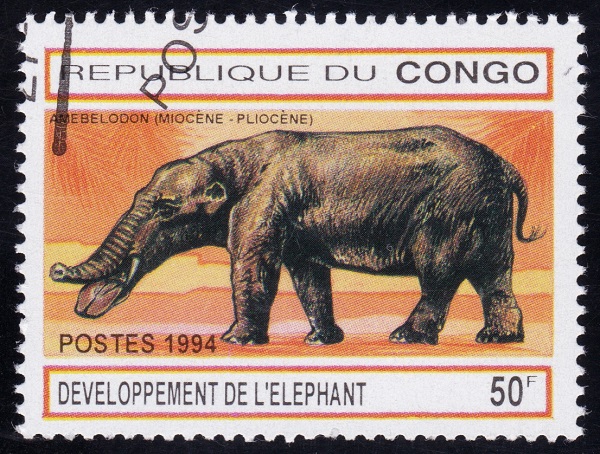
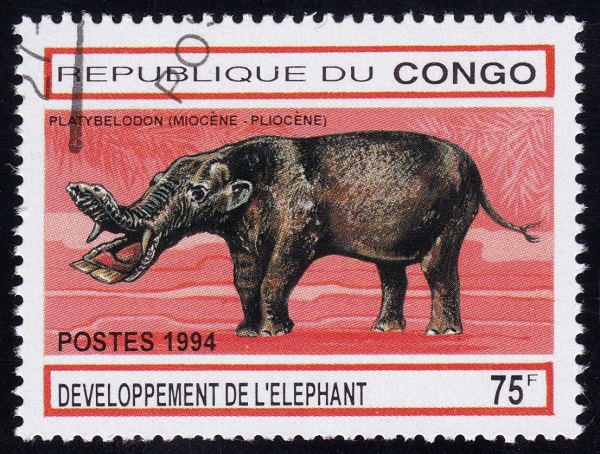
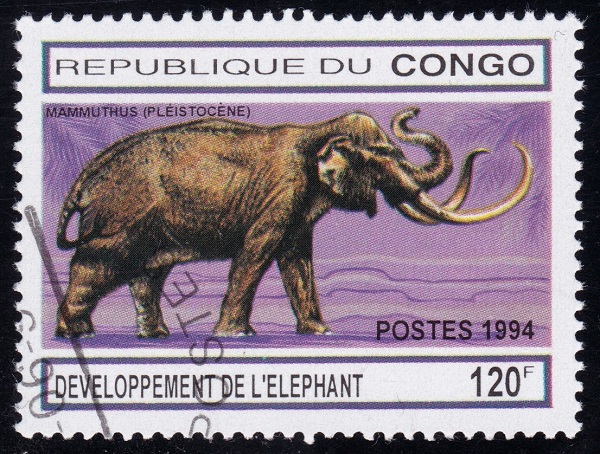
Palaeomastodon was an early proboscidean from the late Eocene to early Oligocene of Africa, showcasing both upper and lower tusks and a short trunk—marking a transitional stage between primitive ancestors and modern elephants. Millions of years later, during the Miocene, shovel-tusked elephants like Amebelodon and Platybelodon evolved in Asia and North America, both distinguished by their flattened, elongated lower tusks, likely used to scoop or cut vegetation in swampy environments. These genera reflect a phase of experimental tusk morphology in proboscidean evolution. Later, during the Pliocene and into the Ice Age, the genus Mammuthus (mammoths) emerged, with early mammoths appearing in Africa and Eurasia during the Miocene–Pliocene and gradually adapting to colder climates. By the Pleistocene, woolly mammoths (M. primigenius) became iconic Ice Age megafauna, with long, curved tusks and thick fur, well-adapted to glacial environments. Together, these species illustrate the evolutionary diversity and ecological adaptability of ancient elephant relatives across millions of years.
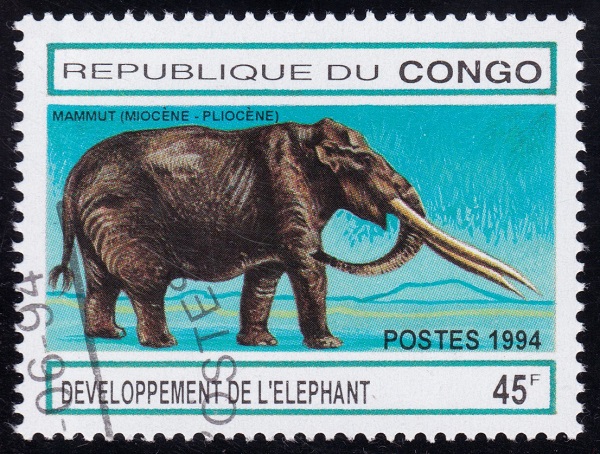
Evolution of the elephant, issued by the Republic of Congo, 1994.
- Paleomastodon
- Mammoth (Miocene-Pliocene)
- Amebelodon
- Platybeledon
- Mammoth (Pleistocene)





 Posted 09/08/2025 09:27 am