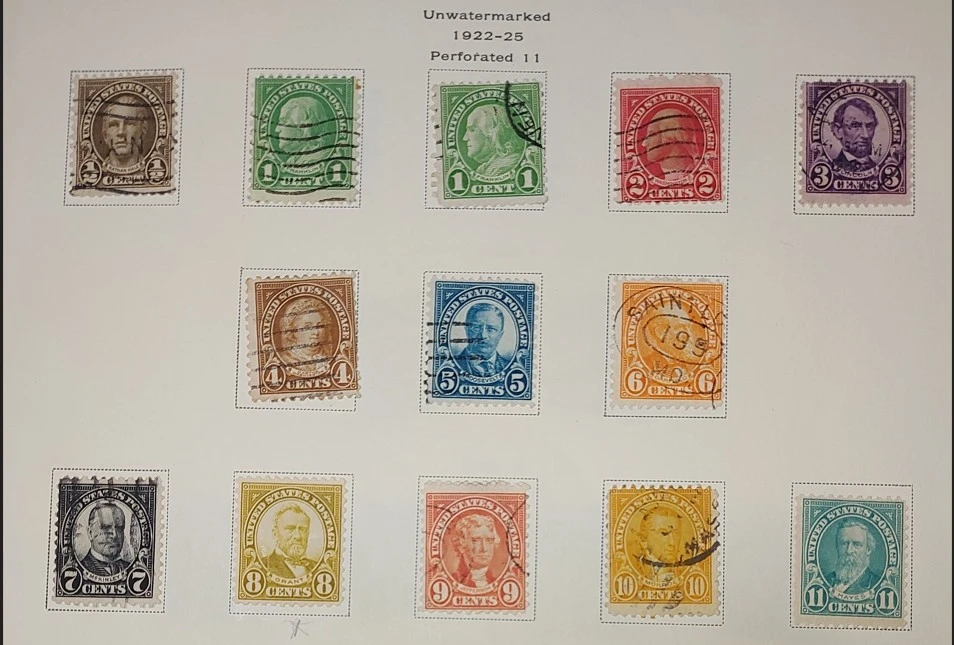
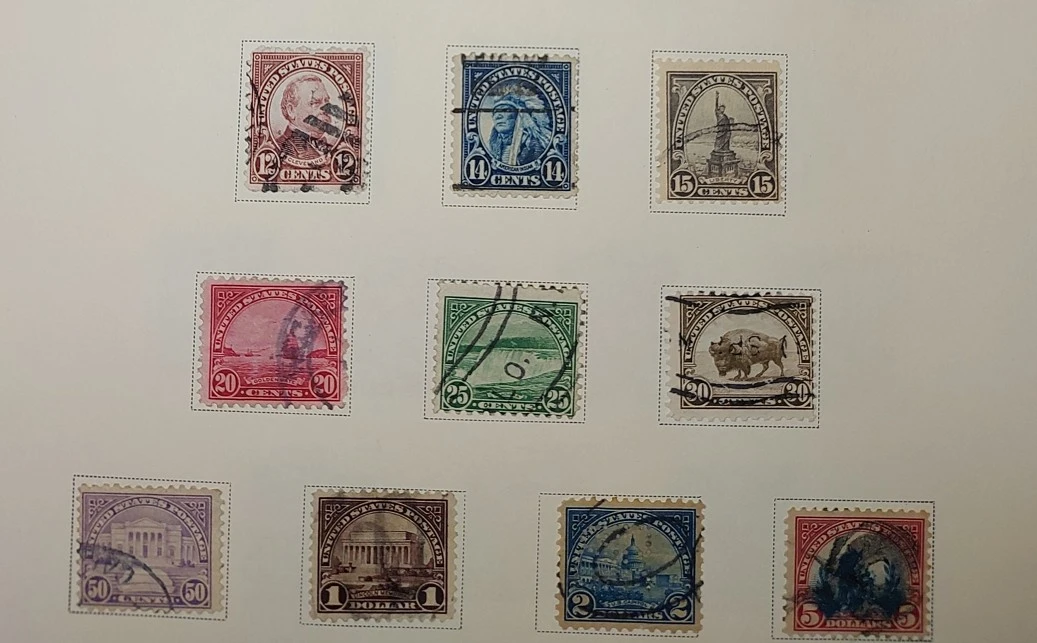
Hello and welcome.
The 551-573 set from 1922-1925 is "perf 11x11" meaning that there are 11 perforations every 2 centimeters, both horizontally and vertically.
The same stamp designs were printed again from 1926-1934 using a different printing mechanism (rotary press instead of flat press) and those perforations measure 11x10.5, that is 11 perforations every 2 centimeters on the top and bottom, and ten-and-a-half perforations every 2 centimeters on the sides.
It is very hard to count the number of perforations by hand to that degree of accuracy, so using a perforation gauge is the easiest. If you don't have one, you can buy one on the Internet, or even download one and print it out on your own printer.
Without a perforation gauge, for this particular set, you can easily take one of the stamps off the page and compare the perforations with the other stamps. If they are all perforated 11, then all the perforations should match all the other stamps on all sides.
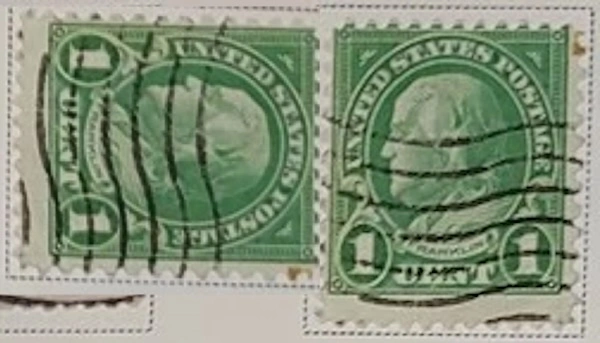
Here is an example, I took the 1 cent from your picture and rotated it to compare the top row of perforations to the side perforations. If 11x11, the holes should line up exactly. But in this example they do not. The holes align at one end, but by the other end they are not aligned. Because of this, I predict that the 1 cent stamp is not a #552 perf 11x11 but is instead a #632 perf 11x10.5 from the later series. (I picked that stamp because also the color does not look like the typical dark green of #552 but more like the yellow green of #632, but there were many shades of color for the different stamps of this series so measuring the perforations is the primary method of identification).
Summary:
Perf 11x11 -- Scott #551-573
Perf 11x10.5 -- Scott 632-642 plus 692-701
Perf 10x10 -- Scott 581-591
There are also coil and imperforate and other variations, but these are the 3 basic sets of this stamp.
The one dollar denomination was only made as perf 11x11 so that is a good example to use for the above perf comparison test. (The $2 and $5 were only perf 11x11 as well, but those are more expensive stamps so I wouldn't recommend rough handling them for this perforation comparison, but the $1 is very common and easy to replace if you manage to damage it).
Enjoy!





 Posted 03/02/2026 4:48 pm