| Author |
 Replies: 3,980 / Views: 1,934,902 Replies: 3,980 / Views: 1,934,902 |
|
|
|
Pillar Of The Community
7838 Posts |
|
|
jorgesurcl - This is excellent information about the engravers of these American Bank Note Company stamps issued by Panama. Please share with us the name of the reference book or other resource from which you obtained this detailed information. Thanks! - nethryk |
Send note to Staff 
|
|
|
Pillar Of The Community
7838 Posts |
|
|
Here are images of the four stamps in a set depicting traditional arts and crafts, designed and engraved by Albert Decaris, and issued by Niger on April 12, 1966 to publicize the World Festival of Negro Arts, held in Dakar, Senegal, April 1-24, Scott Nos. 168-171. - nethryk Carvings, masks and headdresses  Carvings and wall decorations  Carvings and arch  Architecture and handicrafts  |
|
Send note to Staff
|
|
|
Pillar Of The Community
Canada
5821 Posts |
|
|
Albrecht Dürer's Praying Hands engraving was used for the 1966 Canadian Christmas stamps. Designer : Geoffrey Holloway and modeled by Harvey Thomas Prosser. There wasn't really much the designer had to do except add some lettering and a simple Christmas star I mean Dürer's engraving is the design. And what, some one please tell me, does the modeler do? Engravers : Yves Baril (vignette) Gordon Mash (lettering) Scott/Unitrade 451, 452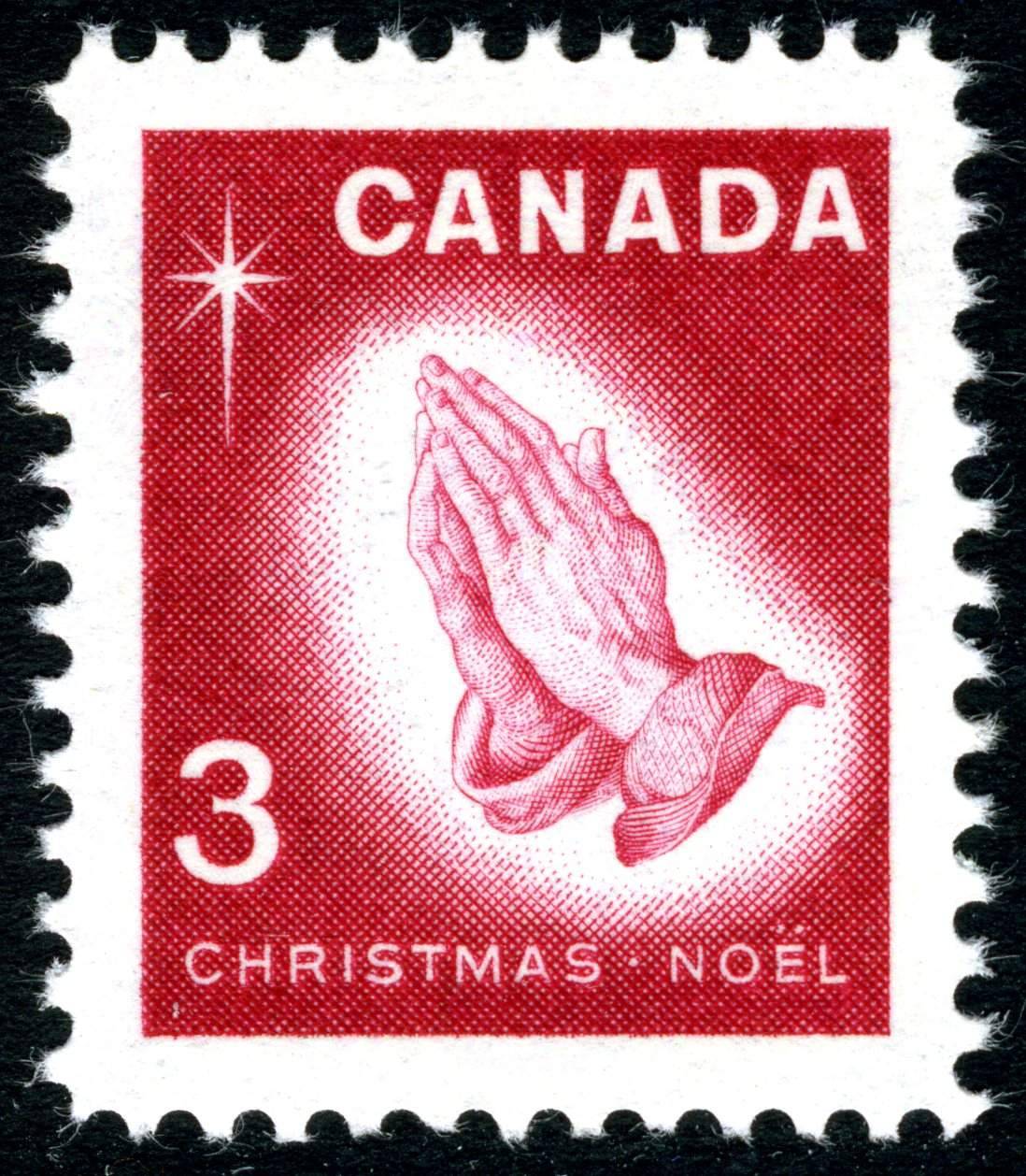 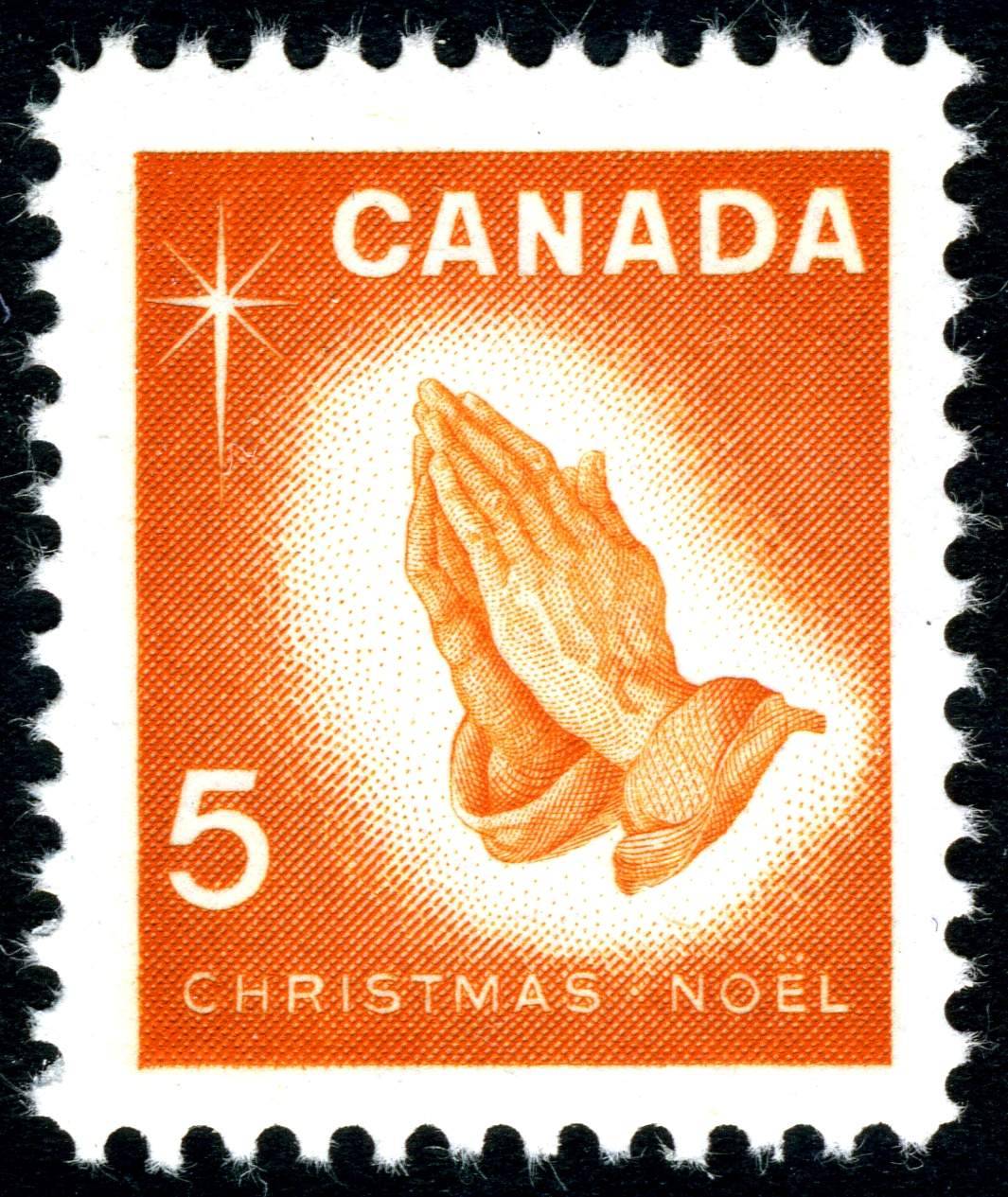 |
|
Send note to Staff
|
| Edited by lithograving - 10/09/2019 01:07 am |
|
|
Pillar Of The Community
Czech Republic
623 Posts |
|
|
graphis - There's a little story behind your lovely Decaris block of four signed by the Master himself (France Scott 1120). I leave it in the French original for someone competent to translate, myself not being a native English speaker. Published e.g. in the June 1981 issue of Le Monde des Philatélistes, it runs like this:
"Je peux vous dire que celui qui m'a donné le plus de peine, c'est le timbre que j'ai gravé sur la Semaine de l'Amitié."
/Actually, La Campagne de l'Accueil et de l'Amitié 1965./
"J'ai fait au moins une douzaine d'esquisses. L'administration trouvait toujours que les dames que je représentais pour symboliser l'amitié avaient mauvais genre. Finalement, cela a rendu la chose assez difficile. Je me demandais ou ils avaient l'esprit. J'ai mis un chapeau. Ah! Ils on dit, cela fait plus sérieux. C'est celui-la qui fut choisi."
Sorry about the French "accents aigus" that won't appear in the text.
|
|
Send note to Staff
|
| Edited by florian - 12/04/2012 08:11 am |
|
|
Pillar Of The Community
Czech Republic
623 Posts |
|
|
lithograving - I am not very computer-literate. Actually, I registered with SCF on Nov. 22, 2011 and was unable to start posting until Jan. 12, 2012 when advised what to do by a grandson of mine. I still marvel at your, nethryk's and AnthonyUK's ability to post those magical images that can be still more magnified without losing anything of their sharpness.
In fact, I am just an old amateur student blundering about, hoping someone more knowledgeable might explain things.
Take the case of the Monaco 1962 Multiple Sclerosis stamp (Scott 506) shown by graphis in his post of Dec. 2.
When I asked alfred in Pierre Albuisson's gravure-philatélie how this stamp had been printed, I was given the following explanation:
"Bonjour Florian,
Pour répondre a votre question ce timbre est réalisé par un double encrage, un "camaieu" terme impropre employé par les imprimeurs de l'ITP.
Ce timbre est donc encrée succéssivement par le découpage approprié du rouleau, du rouge et celui du noir superposé au méme endroit.
Cette l'impression de couleur est extrémement difficile a tenir dans la teinte. Utiliser a Monaco ou a l'époque pour certain pays d'Orient, comme le Cambodge ou le Laos, qui ont eu aussi des tirages en camaieu, en raison d'un pourcentage élevé de feuilles fautées.
Cordialement
alfred"
Again, although I understand I leave the French text as it is, hoping for a proper translation into English technical terms by a native speaker.
The Monaco stamp can serve as a readily available object of study for this method of printing. I have found two specimens of it that differ in colouring (mainly in the area of the rising sun) and that of graphis' represents a third.
By the way, the US 1964 Nevada Statehood Centenary will have been printed by the same method, "en camaieu" as the French printers call it. What is the English technical term?
|
|
Send note to Staff
|
| Edited by florian - 12/05/2012 10:37 am |
|
|
Pillar Of The Community
7838 Posts |
|
|
Costume of Provence, semi-postal stamp designed and engraved by Albert Decaris, and issued by France on December 27, 1943, Scott No. B172. - nethryk  |
|
Send note to Staff
|
|
|
Pillar Of The Community
669 Posts |
|
|
Pillar Of The Community
Canada
5821 Posts |
|
|
graphis, I love that Decaris engraving. It's amazing how with only a few lines he can create such a beautiful face.
A true artist.
Thanks for showing it. |
|
Send note to Staff
|
|
|
Pillar Of The Community
Canada
5821 Posts |
|
|
florian, even though Canada is officially a bilingual country(unofficially we are multi multi lingual) my French is bad to non existent even though I was forced to take it in High School. Therefore I really don't understand your quotes. As far as "en camaieu" here is something from Wikipedia Quote:
is a technique that employs two or three tints of a single color, other than gray, to create a monochromatic image without regard to local or realistic color. Can't see how it applies to the Monaco 1962 Multiple Sclerosis stamp (Scott 506) Who is alfred ? |
|
Send note to Staff
|
|
|
Pillar Of The Community
Canada
5821 Posts |
|
|
The 1971 Canadian Christmas stamps pictured snowflakes. Designer : Lisl Levinson Engraver : ? There is no engraver listed in my old Unitrade but probably it was by Yves Baril who engraved just about all the stamps for the CBNC at that time. Scott 554,555 1 colour engraved Scott 556,557 1 colour engraved, 2 colour lithography 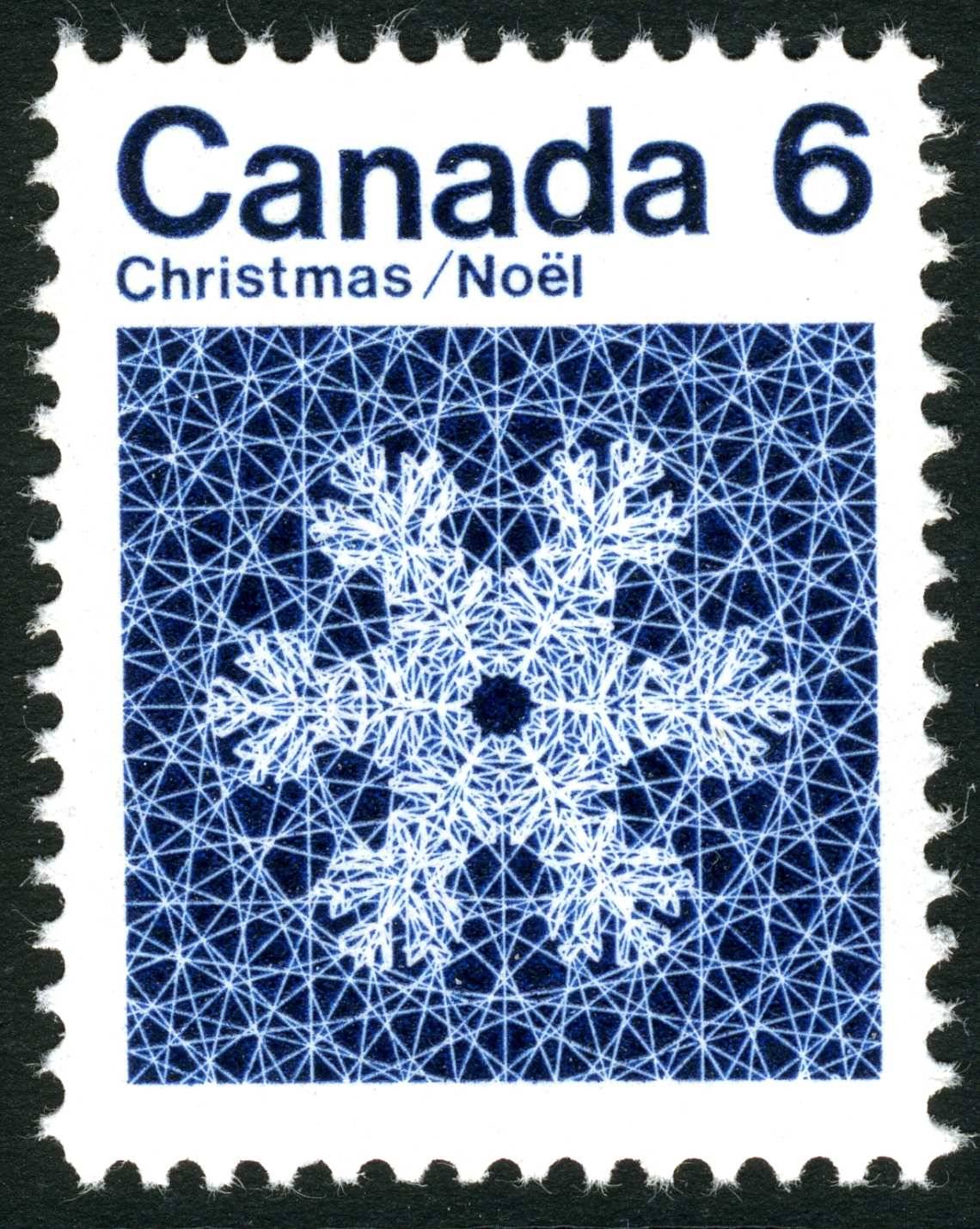 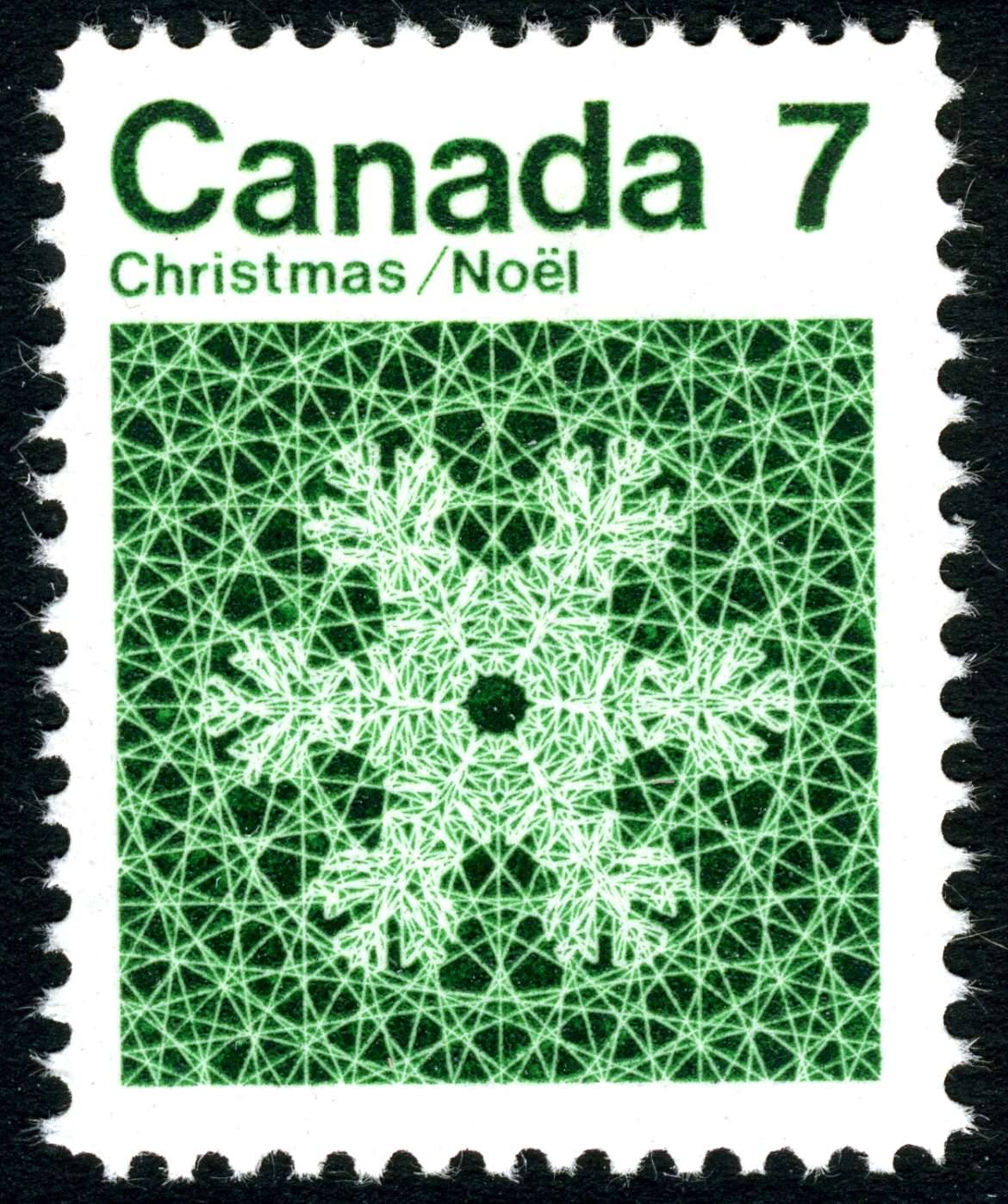  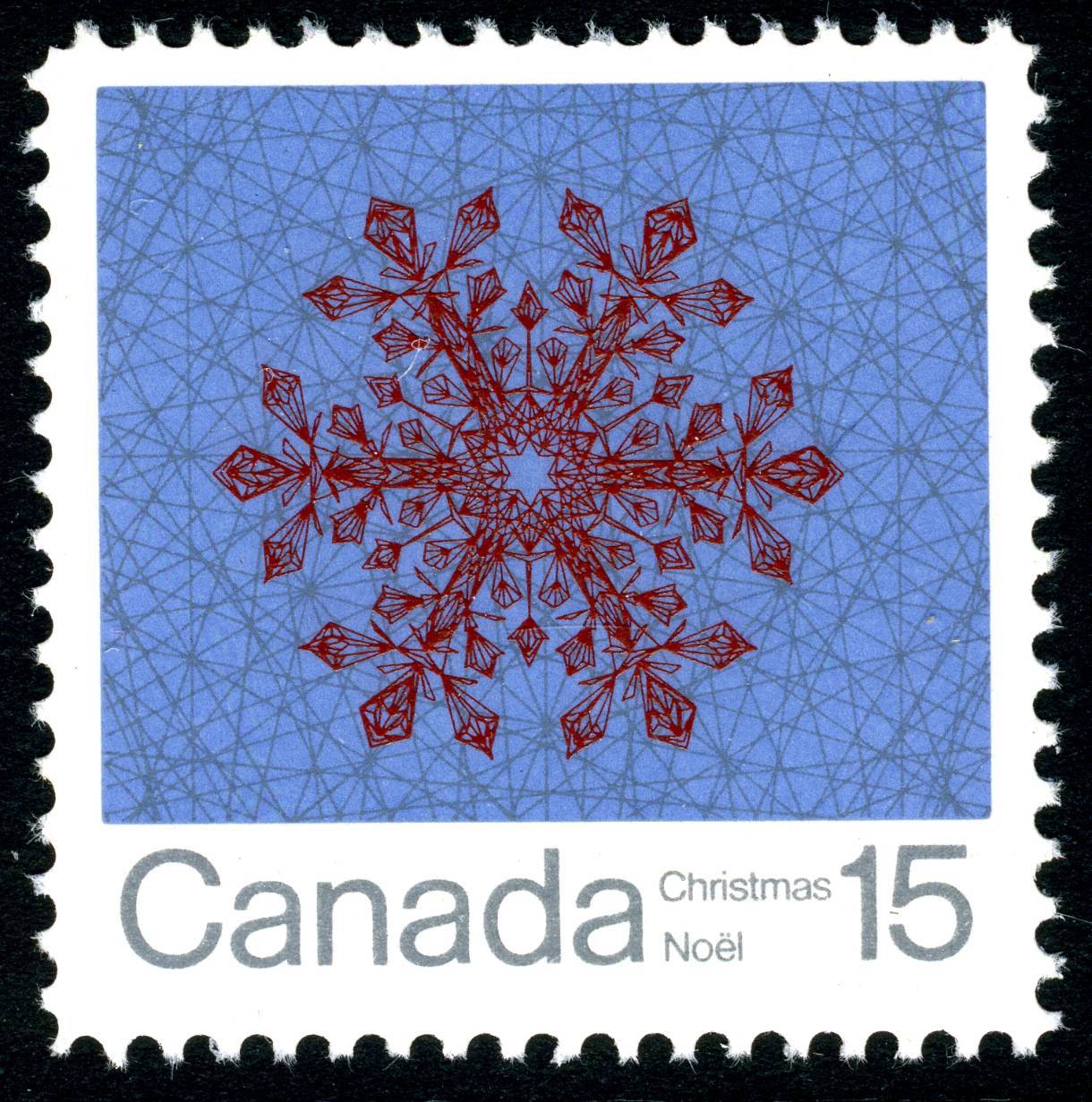 These were the last Canadian Christmas stamps printed via recess engraving. |
|
Send note to Staff
|
| Edited by lithograving - 10/09/2019 01:19 am |
|
|
Pillar Of The Community
1918 Posts |
|
|
nethryk - Since a couple of months ago I have been researching about ABNCO engravers that engraved stamps for Chile (1867-1912 app.)
So far I have identified around 70% of them and still I'm work in this.
A good source of information are the "Index Copy" that ABNCO kept as file of every stamp produced by them.
These files were sold in 1990 (Christie's - Robson Lowe) and occasionally can be seen in some auctions.
Much of the information that I have I got directly from fellows philatelists here in my country, and others from USA and Europe.
I will upload in this thread what I have in this topic. |
|
Send note to Staff
|
|
|
Pillar Of The Community
Czech Republic
623 Posts |
|
|
lithograving - O.K. I'll try to approximate to the French but cannot guarantee success.
The first posting:
"I can tell you what I really had to labour over was the stamp I engraved for the Friendship Week."
"I had done at least a dozen studies. The administration always found the ladies I had chosen to symbolize friendship inadequate for the occasion. Finally, this made the whole thing pretty difficult. I questioned their feelings. I tried putting on a hat. Oh, they said, this makes her look more respectable. So this one was chosen."
|
|
Send note to Staff
|
| Edited by florian - 12/05/2012 06:22 am |
|
|
Pillar Of The Community
Czech Republic
623 Posts |
|
|
lithograving - The second posting: alfred answers questions on the French engraver Pierre Albuisson's site http://gravure-philatelie.e-monsite.com/or la gravure et les timbres , Pierre Albuisson - E-monsite Here, however, you'd better ask a question in French, otherwise the question is translated into French by machine and might become unintelligible. I asked a question in French about the method used in printing the Monaco 1962 Multiple Sclerosis stamp (Scott 506) evidently printed on a Taille-Douce-3-colour press (TD-3) in more than three colours in just one run. Here's my tentative translation of alfred's answer: "Hello Florian, In answer to your question: this stamp was printed by means of double inking, improperly called "camaieu" by the I.T.P. printers. The inks are applied successively to parts of the same printing cylinder by means of precise cutting of the inking rollers, the red ink and the blue ('black' used here by mistake) ink are superimposed in the same place. This method of colour printing is extremely difficult to keep in tone/tint. Used for Monaco or, at one time, for some oriental countries, such as Cambodia or Laos, which also had camaieu printings, due to an increased percentage of defective sheets. Regards, alfred" In my opinion, the French expression "en camaieu" or "tint/tone on tint/tone" leads, by extension, to "ink on ink", which explains the French I.T.P. printers' new use of the old term. "Camaieu" printings were used extensively for most French-speaking countries of Africa as well (these ordering small printings only where the danger of defective sheets printed was not great). Later on, an additional post on Pierre Albuisson's site appeared reading: 1. Rein (site web) 05/10/2012 This is a question I asked myself too! There were just 3 ink-rollers and by precise overlapping of the red, blue and yellow you can get the additional brown, purple and green! |
|
Send note to Staff
|
| Edited by florian - 12/05/2012 10:38 am |
|
|
Pillar Of The Community
7838 Posts |
|
|
jorgesurcl - Thank you for sharing the fruits of your admirable research efforts about ABNC engravers here. Unfortunately, the material I have found to date about the work of the various engravers at the major printing houses (ABNC; Waterlow; Perkins, Bacon; Bradbury, Wilkinson; De La Rue; etc.) is fragmentary at best. Ever since the ABNC archives auction I have been hoping and searching to find a published comprehensive book or series of books listing the pertinent data on all of the stamps produced by that company. I would also like very much to obtain any available publications listing similar data from the other major printing houses. Frankly, at times my quest seems to me to be, in a word, quixotic. :) - nethryk |
|
Send note to Staff
|
|
|
Pillar Of The Community
7838 Posts |
|
|
Atlantic Museum, Port Louis, and the Duchesse Anne, designed and engraved by Albert Decaris, and issued by France on December 4, 1976, Scott No. 1506, Y&T No. 1913. - nethryk  |
|
Send note to Staff
|
|
|
Replies: 3,980 / Views: 1,934,902 |
|




 Posted 12/03/2012 09:08 am