| Author |
 Replies: 3,980 / Views: 1,934,897 Replies: 3,980 / Views: 1,934,897 |
|
|
|
Pillar Of The Community
669 Posts |
|
|
Back in the USSR...hard pressed to find many engraved stamps in my collection of stamps. This is a mix of engraved and photogravure. 1972 -Centenary of the Polytechnic Museum in Moscow. Scott 4043  |
Send note to Staff 
|
|
|
Pillar Of The Community
669 Posts |
|
|
Pillar Of The Community
669 Posts |
|
|
Pillar Of The Community
669 Posts |
|
|
Canada 1934...maybe lithograving could supply details on engraver? Scott 210  |
|
Send note to Staff
|
|
|
Pillar Of The Community
Canada
5821 Posts |
|
|
Quote:
maybe lithograving could supply details on engraver? I'm afraid not, graphis. There is no engraver listed neither in Unitrade nor in the Canadian Postal Archives Database. http://data4.collectionscanada.ca/n...anet/020117/ a href= /go/link.asp?target=https://www.ebay.com/itm/-/020117030107 target= _blank rel= nofollow 020117030107 /a _e.html&r=1&f=G&SECT3=POST Interestingly this 1934 New Brunswick issue was the last stamp the British American Bank Note Company printed for the Post Office Department until they received a new contract in 1968. The Canadian Bank Note Company took over in 1935 and printed every Canadian stamp until 1967. The CBNC and the other security printer Lowe-Martin presently share Canadian stamp production. |
|
Send note to Staff
|
|
|
Pillar Of The Community
669 Posts |
|
|
lithograving..thanks for your input..another challenge for me when I eventually make it to the National Archives in Ottawa. |
|
Send note to Staff
|
|
|
Pillar Of The Community
Canada
5821 Posts |
|
|
Some believe that these two Austrian stamps were the first stamps issued for Christmas mail. They were actually meant for posting holiday greeting cards but had no real Christmas scene. Issued on December 12, 1937 they were the last Austrian stamps of the First Republic prior to the Nazi annexation in April 1938. Scott 388, 389 Designer : William Dachauer Engraver : ?  The pictorial postmark on this uncacheted FDC states Tag Der Briefmarke (Day of the Stamp) 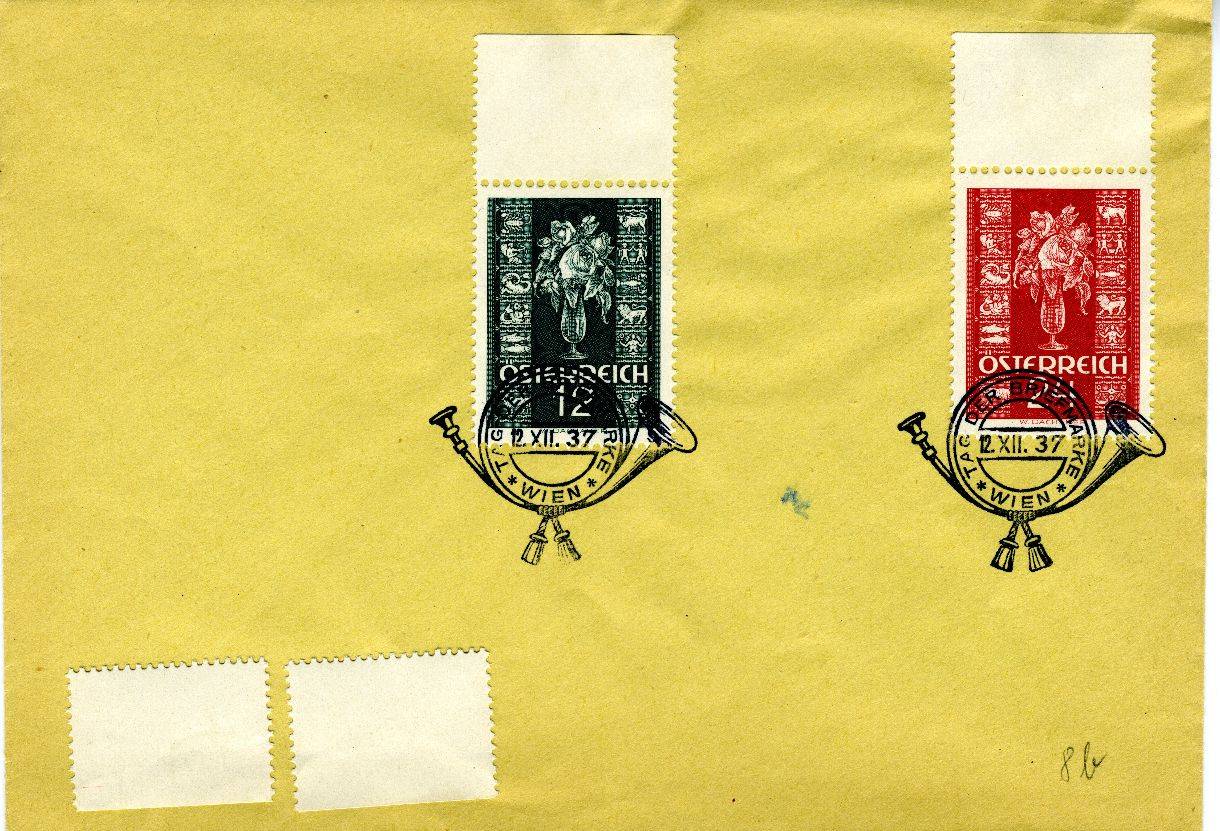 |
|
Send note to Staff
|
| Edited by lithograving - 10/09/2019 01:23 am |
|
|
Pillar Of The Community
Canada
5821 Posts |
|
|
Florian I'm still not sure what you meant here. Quote:
By the way, the US 1964 Nevada Statehood Centenary will have been printed by the same method, "en camaieu" as the French printers call it. What is the English technical term? I don't have that particular US stamp but do have many of the earlier all engraved multicolour Giori stamps. How was the Nevada Statehood (Scott 1248) any different from the other Giori Press printings? Like for instance the 1963 Audubon Scott 1241 engraved by Matthew D. Fenton (vignette) and Howard F. Sharpless (lettering) 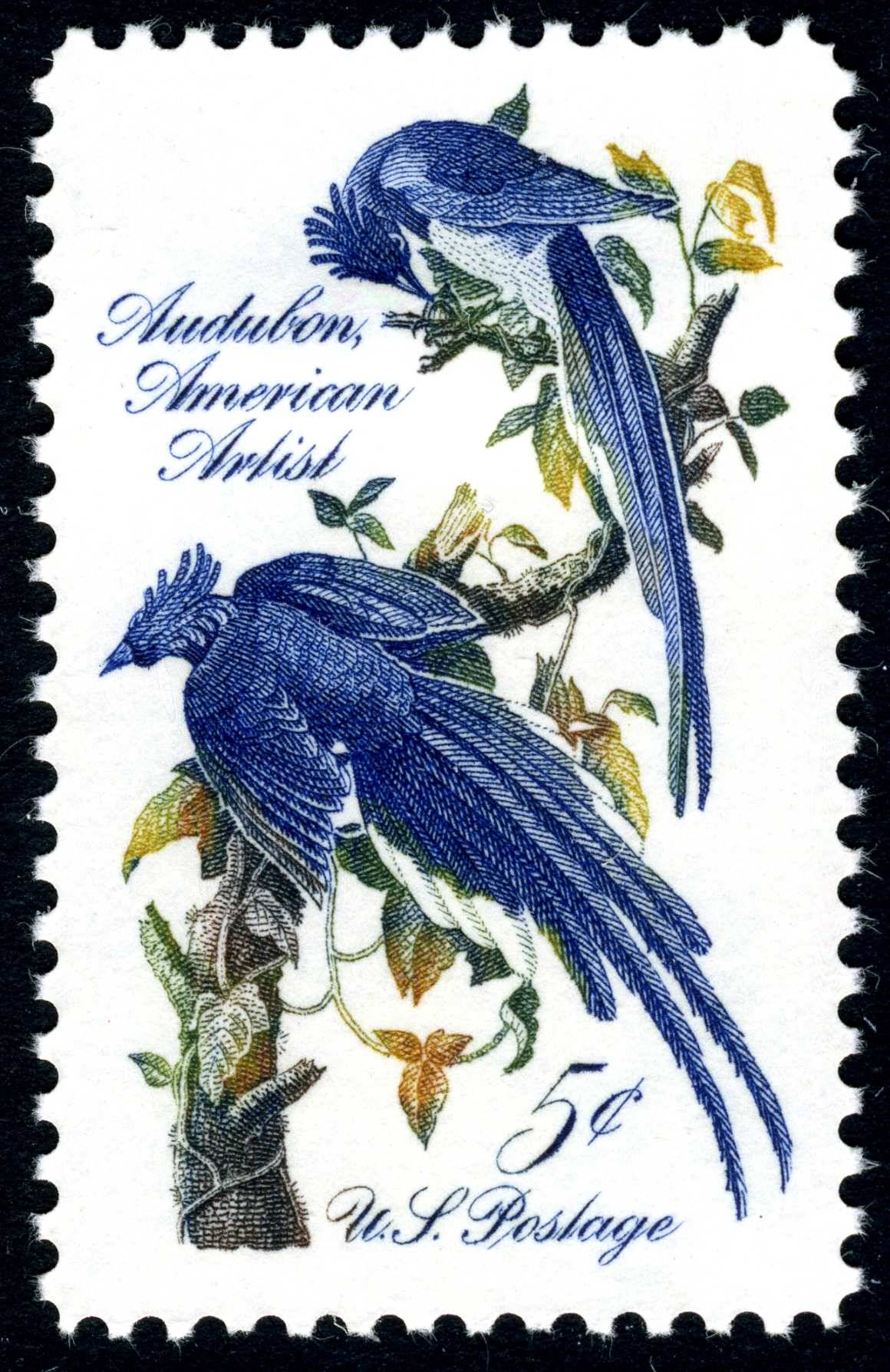 or the 1964 John Muir, Scott 1245 engraved by Matthew D. Fenton and Kenneth C. Wiram (lettering) 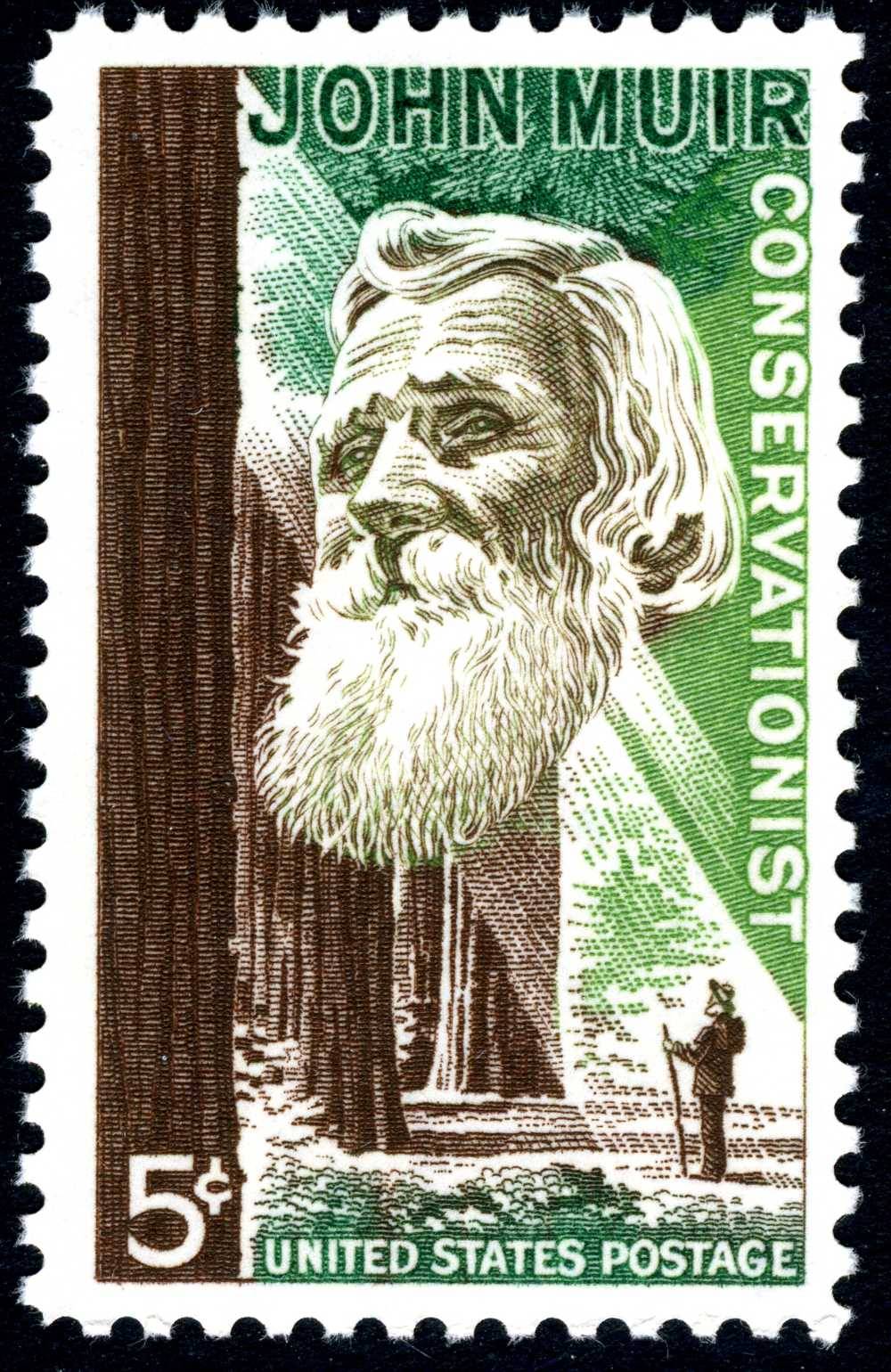 Like you mentioned before they all show to some extent "bleeding" of ink from one colour to another. This characteristic of the Giori Press appears to be evident whether on US, French or Spanish stamps. |
|
Send note to Staff
|
| Edited by lithograving - 10/09/2019 01:28 am |
|
|
Pillar Of The Community
Canada
5821 Posts |
|
|
Pillar Of The Community
Czech Republic
623 Posts |
|
|
lithograving - The printing of the Monaco 1962 Multiple Sclerosis stamp (Scott 506) was not a case of allowing two (or three) inks to accidentally "bleed" from one colour to another.
It is evident that three different inks (yellow, red and blue) were used in printing the stamp in one pass through the press. However, the rollers purposefully applying the red ink and the blue one to the same place made it possible for the inks to combine and create the purple colour of the chest featured on the stamp.
Similarly, the yellow ink mixed with the blue ink produced the green colour while similar processes yielded brown or rose colours.
Of course, some imprecise cutting of the inking rollers, uneven wiping of the cylinder or what you call (and I believe accidental) "ink bleeding" will have led to colouring defects.
I mentioned the Nevada Statehood (Scott 1248) as the most striking example of the U.S. Giori Press printings presumably using the "camaieu" (i.e. two inks purposefully applied to the same place) method hoping someone might show colour effects (or rather defects) similar to those appearing on the Monaco 1962 Multiple Sclerosis (Scott 506). Or are there not any because the U.S. printers perfected the method?
Thank you for your splendid images of the 1963 Audubon (Scott 1241) and the 1964 John Muir (Scott 1245). The Nevada Statehood (Scott 1248) just happens to present more colours but I find the two Giori Press printings of your selection even more glamorous in every respect prizing them highly in my mini-collection of U.S. stamps. |
|
Send note to Staff
|
|
|
Pillar Of The Community
Czech Republic
623 Posts |
|
|
Quote:
graphis, I love that Decaris engraving. It's amazing how with only a few lines he can create such a beautiful face.
A true artist.
Thanks for showing it.
---
lithograving - I share your view. I have a row of stamps featuring women's faces in my Decaris dreamland mini-collection: 1946 Paris Peace Conference, 1965 Campagne de l'Accueil (Scott 1120), 1970 Lutte contre le cancer, 1985 Sainte Thérese d'Avile, 1985 La Gravure.
What variety, what imagination, what beauty, what gentleness of expression ... everything expressed through audacious draughtsmanship in lustrous colours (as the French say: la hardiesse du trait, l'éclat de la couleur), a joy to pore over and know all this art can be magnified and viewed in the minutest detail without anything being lost to the eager eye! |
|
Send note to Staff
|
| Edited by florian - 12/06/2012 07:14 am |
|
|
Pillar Of The Community
Czech Republic
623 Posts |
|
|
Quote:
Some believe that these two Austrian stamps (Scott 388, 389) were the first stamps issued for Christmas mail.
They were actually meant for posting holiday greeting cards but had no real Christmas scene.
Issued on December 12, 1937 they were the last Austrian stamps of the First Republic prior to the Nazi
annexation in April 1938.
---
I remember having read, as a young boy, somewhere in the philatelic press that some Austrians could see the menacing face of Hitler hidden in the bouquet of roses. I could not see it whichever way I turned the stamps then.
Last January, I bought a copy of the Czech edition of The World Encyclopedia of Stamps and Stamp Collecting by James Mackay at a fraction of the original price in the sales because it showed all the stamps I used to collect as a child and lo and behold the story popped up again!
Again and again, I turned the stamps upside down on various occasions until, months later, I discovered it.
The face is a steel-helmeted one, turned to the left and leaning downwards, shown in profile, the contours of the steel-helmet are represented by those of the large central rose and the nose, mouth and chin of the face leaning downwards and sticking out of the helmet are suggested by the small leaf and the cross-hatching to its right just below the central rose.
A predator in for the kill. |
|
Send note to Staff
|
| Edited by florian - 12/08/2012 03:32 am |
|
|
Pillar Of The Community
7838 Posts |
|
|
Beneficent bleeding: Blood donors, designed and engraved by Albert Decaris, and issued by France on October 17, 1959, Scott No. 931, Y&T No. 1220. - nethryk  |
|
Send note to Staff
|
| Edited by nethryk - 12/06/2012 08:29 am |
|
|
Pillar Of The Community
669 Posts |
|
|
Pillar Of The Community
7838 Posts |
|
|
graphis - Re your URL link: Gene Hessler wrote two profusely illustrated books about the art of paper money and postage stamp engraving entitled "The Engraver's Line: An Encyclopedia of Paper Money & Postage Stamp Art" (1993) and "The International Engraver's Line" (2005). I treasure my own copies of these beautifully produced reference books, and I highly recommend them to all fans of fine engraving work. - nethryk |
|
Send note to Staff
|
| Edited by nethryk - 12/06/2012 09:51 am |
|
|
Replies: 3,980 / Views: 1,934,897 |
|




 Posted 12/05/2012 09:57 am