The late Jim Drummond absolutely loathed the term "sewing machine perforations" understandably, as these privately made perforations were most likely not done on sewing machines. He and I would occasionally spar about the issue, as I viewed it as a descriptive term, not necessarily a technically accurate term.
Philatelists know what you mean when you use the term, even if the perforations were made by various rotary perf wheels, etc. Mike Morrissey's response to Jim's article in the Q1 2016 issue of
The American Revenuer used the term "pin-rouletted".
That said, not all sewing perforations on U.S. revenues have the same characteristics. I categorized them as two distinct types: "fluffy" and "pin-perforated." The former I've seen on R19, R112, and R115, and the latter on R120, RB3, and a single example of R112.
Some of the "pin-perforated" examples could also be a result of being scissor-cut along the perforations as opposed to being manually separated.
Examples from my collection follow.
Fluffy:
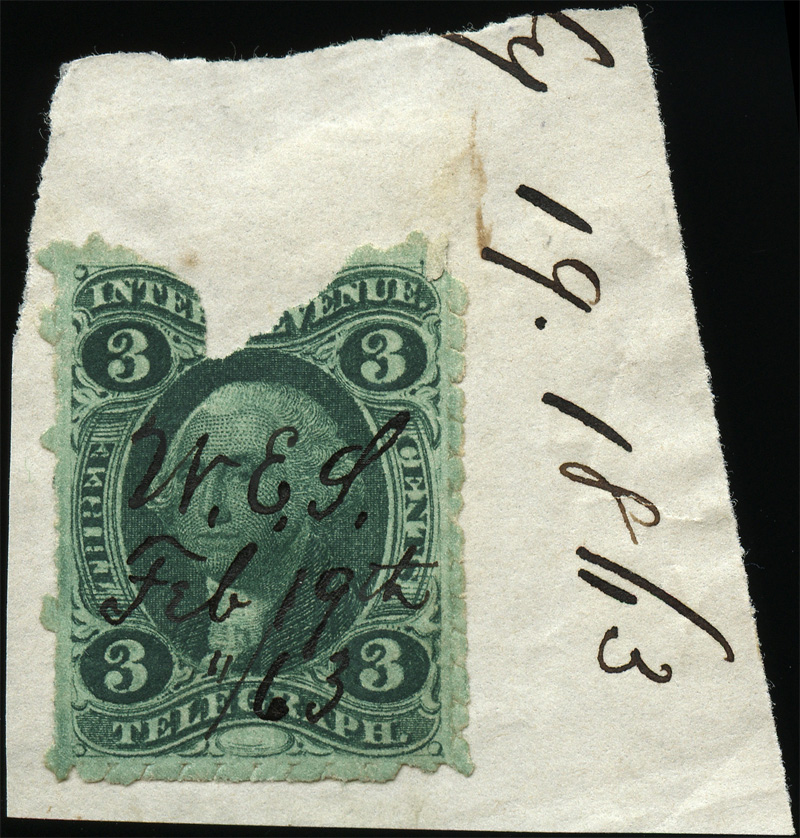
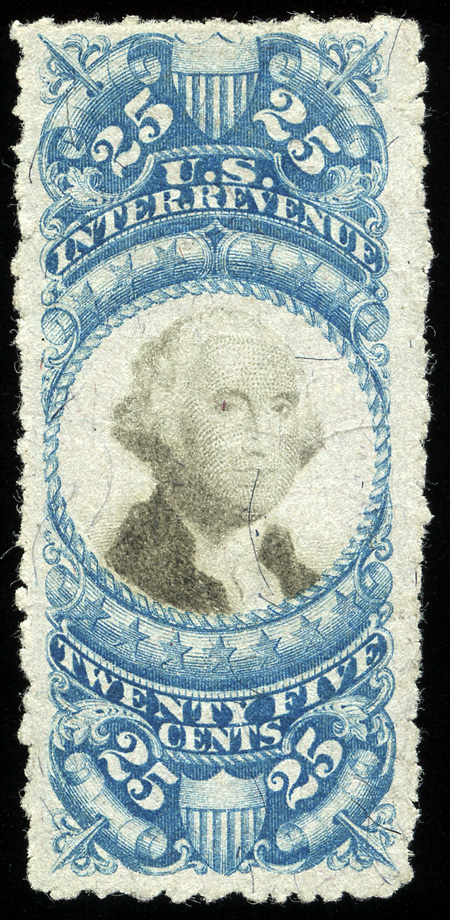
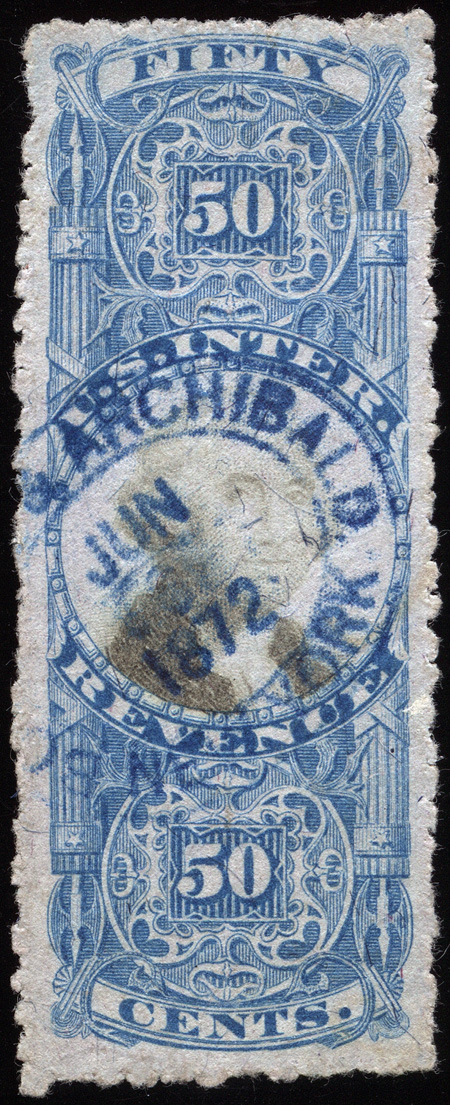
Pin-perforated:
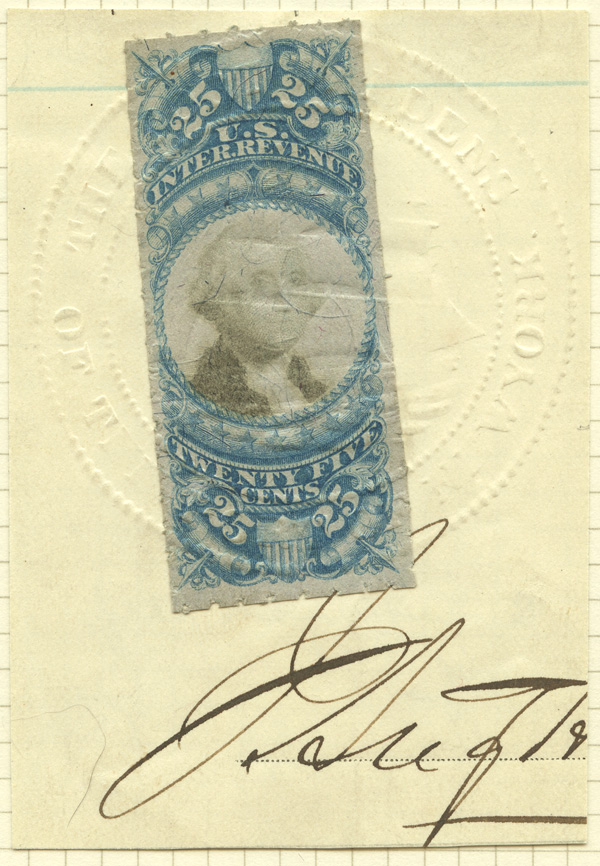
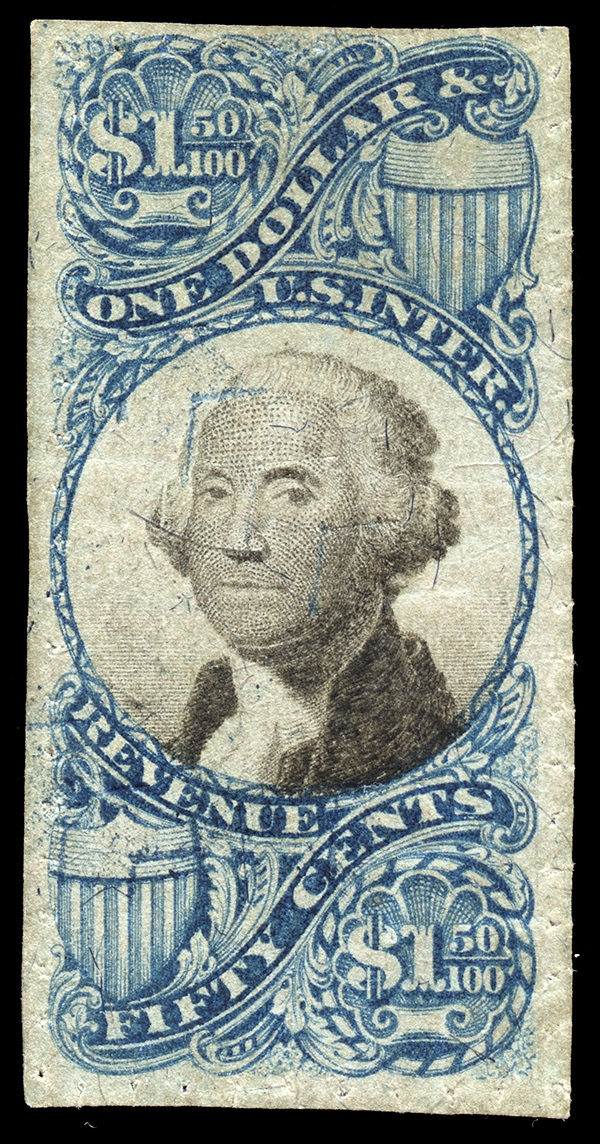
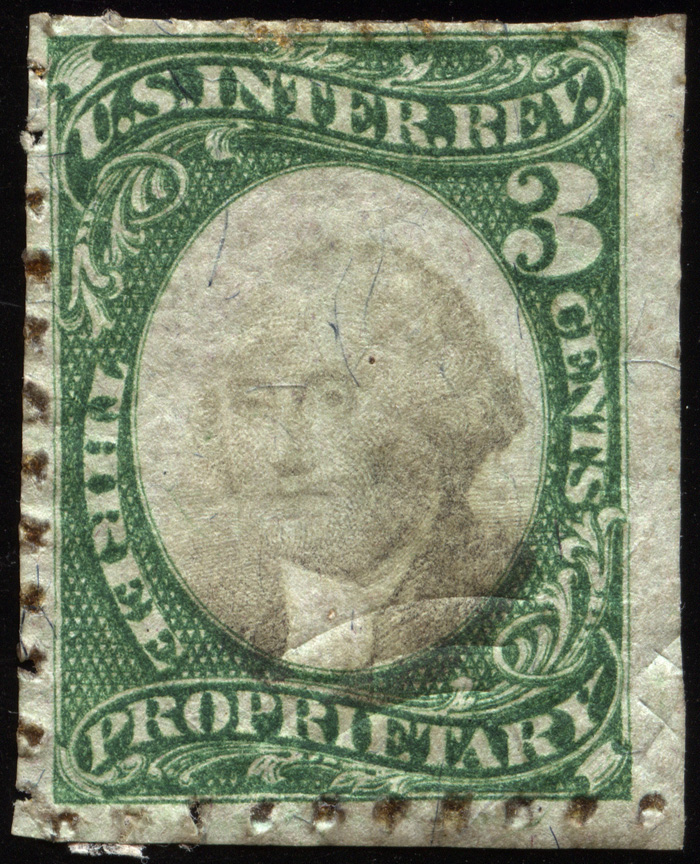
No matter how you slice it, it's pretty apparent that they weren't all perforated on the same equipment, nor at the same time (especially as the R19 private perfs preceded the rest by almost a decade).
Now comes yet another "type" that has characteristics unlike the two prior groups. I picked this up in January of last year at an MSDA stamp show. Even though I have numerous examples of the sewing machine perfs, this one just looked different from all the others I had seen with respect to the shape of the perforations.
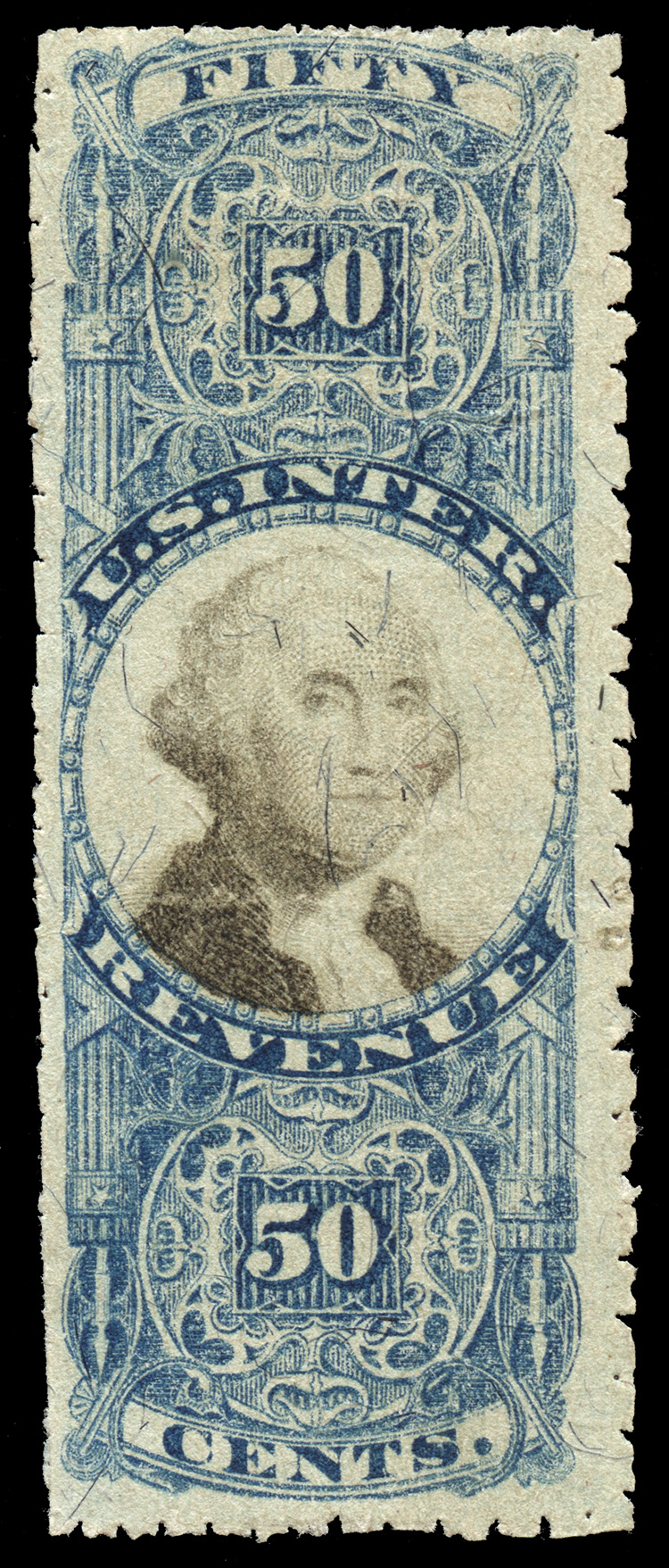
Jim, in his article, maintained that these "not-sewing-machine perfs" came from a single centralized source, which he opined was Joseph R. Carpenter. Most of the responses to his article disagreed, believing it more likely that one or more revenue agent offices may have perforated them prior to delivery to companies, or perhaps larger companies themselves upon receipt.
The more variance in perforation types/shapes that are discovered, the more it favors a decentralized perforating than centralized, in my opinion.
Thoughts?





 Posted 03/28/2026 8:09 pm





