| Author |
 Replies: 11 / Views: 4,181 Replies: 11 / Views: 4,181 |
|
|
Pillar Of The Community
United Kingdom
1356 Posts |
|
|
I am researching British military Field Post offices, specifically in Allied Occupied Berlin. I have a number of envelopes with letters sent from my Grandfather to my Grandmother. He was in the British Army, attached to the Public Safety Branch in Berlin, 1945/6. There are no postage stamps, just the circular marks of various numbered FPOs. Here's an example. 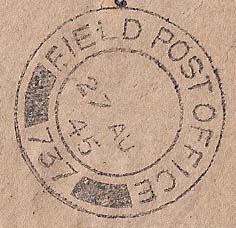 Some also have a Censors stamp. If I could find out the locations relating to the numbers, it would help me to build a picture of my Grandfathers life there. Does anyone know of any online or other research materials on this topic? Thankyou! |
|
Send note to Staff
|
|
|
|
|
Pillar Of The Community
Australia
578 Posts |
|
|
Have you had any luck discovering more about the disposition of the BFPO's in Berlin Stampgal?
I have a big pile of my late grandfathers mail from North Africa and Tunisia in 1942-3, and am hoping to add more information regarding the various FPO's both inward and outward mail used. |
Send note to Staff 
|
|
|
Pillar Of The Community
United Kingdom
1356 Posts |
|
|
Afraid not, Plateflaw. I couldn't find anything on the internet - although that doesn't mean there is nothing there. Now you've reminded me I might try another couple of avenues I had thought of. I'll let you know if I have any luck. |
|
Send note to Staff
|
|
|
Pillar Of The Community
United States
2480 Posts |
|
|
Stampgal, Here is an out of print book (in German) that is said to contain a list of British FPO locations. Quote:
Post der befreiten Zwangsarbeiter (Displaced Persons Mail Paid in Deutschland) 1945-1949 written in German by Wolfgang Strobel. 160 pages. Out of print; author W. Strobel, Nietzschestrasse 23, 53177 Bonn, Germany. Postpaid for $24 U.S. cash. Book review by Walter Farber in German Postal Specialist, June 2001
There were millions of Displaced Persons in Germany at the end of World War II, most of whom had been brought in for forced labor during the war effort. Surviving Jews were also subsumed under this designation. The repatriation or emigration of these people was one of the most daunting tasks faced by the Allies after the liberation of the camps. This was exacerbated by the fact that many of the DPs from Eastern Europe (mainly Russia, Ukraine, Poland and the Baltic republics) did not wish to go back to their countries of origin, fearing rataliation by the new Communist regimes there. The process thus continued well into the 1950s, when finally all remaining DPs were granted the status of "expatriate residents" in Germany. This book is the first comprehensive study of the free mailing privilege granted to Displaced Persons in the British Zone of Germany in 1945-49. Mail service for Displaced Persons mail was allowed by the British and Americans long before similar services became available again for the German populace. As an added complication, the British Military Government assigned coded addresses to the camps located in their zone, and until now it had been virtually impossible to decode this system. Strobel has finally been able to do so through intensive study of formerly inaccessible documents in German and British archives. The book has charts listing all known camps and centers in the British Zone of Occupation by code number, alphabetically by location, and by the numbers of the United Nations Relief and Rehabilitation Administration, the International Refugee Organization und private relief teams responsible for them. In addition, a list of British Field Post Office numbers in Germany, as well as of unit numbers of the Britsh Army of the Rhine help to make the history of Displaced Persons and their mails far clearer and easier to understand than they ever were before.
You might also want to ask the British Field Post Office Enquiries Team if they can identify a source -- most military organizations maintain fairly detailed unit history information. Here is their contact information: Quote:
BFPO Enquiries Team
British Forces Post Office
West End Road
Ruislip
Middlesex
HA4 6DQ
Tel: 08457 69 79 78
Email the BFPO Enquiries Team at desbfpo-enquiries@mod.uk
|
|
Send note to Staff
|
|
|
Pillar Of The Community
United Kingdom
1356 Posts |
|
|
Bedrock Of The Community
Australia
38679 Posts |
|
|
Pillar Of The Community
Australia
578 Posts |
|
|
Thanks for the bump Rod.
I had forgotten about this thread.
I recently bought a copy of Gould & Proud History of British Army Postal Service Vol III 1927-1963.
Regarding FPO 737, on page 457 it says that this cancel was assigned to Army Post Office E.560 in Berlin from 1 October 1945 until 17 July 1949.
The date on the cancel posted by stampgal (27 August 1945) is from the period when the FPO 737 cancel was in use in the Munster Area, June 1945 - 3 September 1945. |
|
Send note to Staff
|
|
|
Bedrock Of The Community
Australia
38679 Posts |
|
|
Bravo! Plateflaw. My new toy............... (Gives a broad outline of pmks along the lines of the condensed Stanley Gibbons SOTW) BFPO were listed till 120, thereafter just quoted as a "thick arc" with ID number at 50c each No id as to usage. Not a bad reference for WW1 material 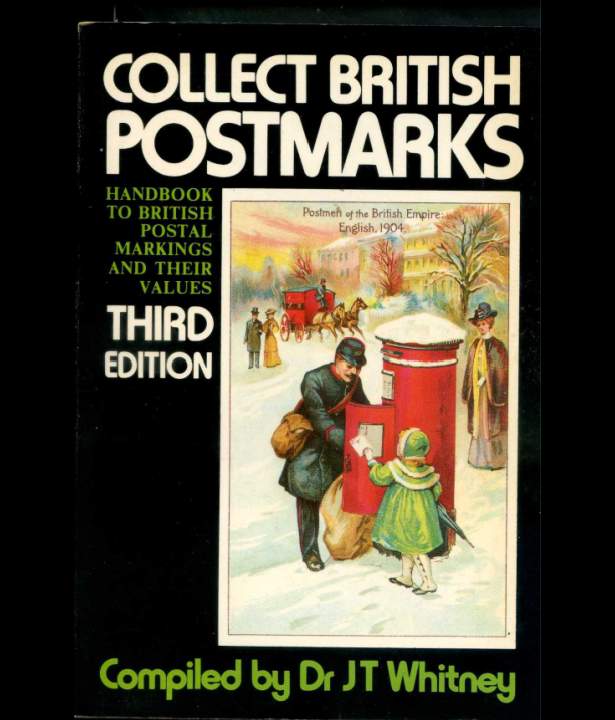 |
|
Send note to Staff
|
|
|
Bedrock Of The Community
Australia
38679 Posts |
|
|
BTW, another member was chasing BFPO postage rates
in the decimal era, does your book address rates?
(I realise 1963 is too early for that, but I don't recall seeing
ever special rates for FPO's apart from "free")
|
|
Send note to Staff
|
|
|
Pillar Of The Community
Australia
578 Posts |
|
|
A truly great book Rod.
Stanley Gibbons are about to release the latest edition. Long overdue, as they have been promising it for some years now.
Can't wait for it to hit the shelves. |
|
Send note to Staff
|
|
|
Pillar Of The Community
Australia
578 Posts |
|
|
I don't know about Decimal-era BFPO rates.
There is plenty in Gould & Proud History of British Army Postal Service Vol III 1927-1963 about WW2 rates.
Army postage from Egypt was complicated by the Anglo-Egyptian Postal Treaty - remember the Egyptian Army stamps? In 1940, each 20 grams, whether it was a letter, parcel or postcard was charged at 10 Mills using the army Postage Stamps. This rate applied to UK, Australia, NZ, India, Rhodesia, Ireland, Malta and Cyprus. Other destinations had other rates.
These rates changed several times over the 1939-45 period.
There are pages of airmail rates in a range of different currencies. For instance, as of February 1945, by air ex-Ceylon to UK was free under 1 oz. 1 oz to 1½ ozs was 35 cents, and each additional ½ oz a further 35 cents. Then there were the surface rates, free up to 2 ozs, and on it goes.
I suspect you could quite easily fill volumes recording all the different rates. |
|
Send note to Staff
|
|
|
Bedrock Of The Community
Australia
38679 Posts |
|
| |
Replies: 11 / Views: 4,181 |
|




 Posted 08/08/2010 09:23 am


