| Author |
 Replies: 14 / Views: 2,501 Replies: 14 / Views: 2,501 |
|
|
Bedrock Of The Community
United States
12128 Posts |
|
|
Just curious about a cover I have with this cancel. Nothing too much out of the ordinary, except that I've never seen one before with the "17" and "R" in the killer bar section of the cancel. 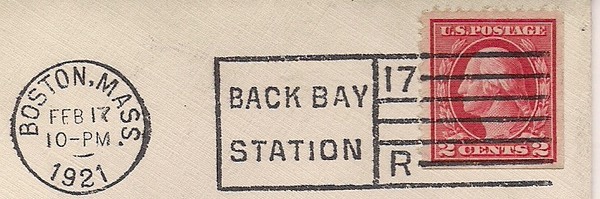 If this had to do with identifying a postal clerk or window number, I wouldn't think it would be a machine cancel. Anyone know what the designation might have represented? |
|
Send note to Staff
|
|
|
|
|
Pillar Of The Community
United States
2547 Posts |
|
|
wt1, it is a slogan type machine cancel from an International machine. This one uses 2 slugs. One slug is normally used to ID the machine but I am not sure about the second slug. |
Send note to Staff 
|
|
|
Rest in Peace
Canada
6750 Posts |
|
|
Perhaps the R is the actual postal depot or office.
I noticed while researching a Canada cover sent to New York that at the turn of the century the post offices in different parts of the city were designated by letters. Station A, B , C, etc. Perhaps Boston uses (used) this method also being a larger city.
I would gues the 17 is the actual machine used in that hub or area or postal district, for accounting purposes.
Just guesses. |
|
Send note to Staff
|
|
|
Pillar Of The Community
United States
2547 Posts |
|
|
wt1, Research shows that this was Boston Back Bay Station machine 17R with EDU of 1921. International canceling machine model D42. This machine also did a cancel with 17Q EDU 1924) and with 17 and no letter designation (1925-29). No record of this machine after 1929. Hope this info helps |
|
Send note to Staff
|
|
|
Bedrock Of The Community
United States
12128 Posts |
|
|
Thanks for the info. If I understand it correctly, the 17R stood for the cancelling device rather than the post office. I found a couple of other of the 17R's (all dated 1921), as well as this one (which is very light and difficult to read). I think it looks like a 17Q, with a date of 01/24/1921, which predates the EDU you reference for a 17Q by 3 years: 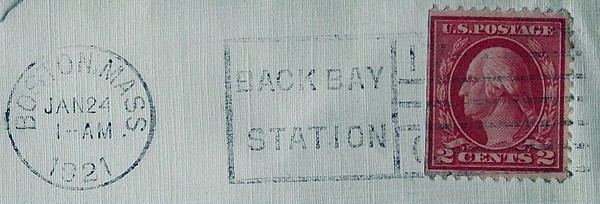 |
|
Send note to Staff
|
|
|
Pillar Of The Community
United States
2547 Posts |
|
|
wt1, I just re-checked my database and it shows EDU 1924. I will find my contact info so that you can report the date. The early post office stations for Boston were:
MASS, BOSTON Sta A - South End Sta
MASS, BOSTON Sta B - Back Bay Sta
MASS, BOSTON Sta D - Brookline Sta
MASS, BOSTON Sta E - Cambridge Sta
MASS, BOSTON Sta F - Cambridgeport Sta
MASS, BOSTON Sta G - Charlestown Sta
MASS, BOSTON Sta H - Chelsea Sta
MASS, BOSTON Sta K - Dorchester Sta
MASS, BOSTON Sta L - East Boston Sta
MASS, BOSTON Sta T - Roxbury Sta
MASS, BOSTON Sta "U" - Somerville Sta
MASS, BOSTON Sta V - South Boston Sta
Edit: Added "U" to prevent spell check from changing to you. |
|
Send note to Staff
|
| Edited by Russ - 12/22/2010 03:53 am |
|
|
Pillar Of The Community
6366 Posts |
|
|
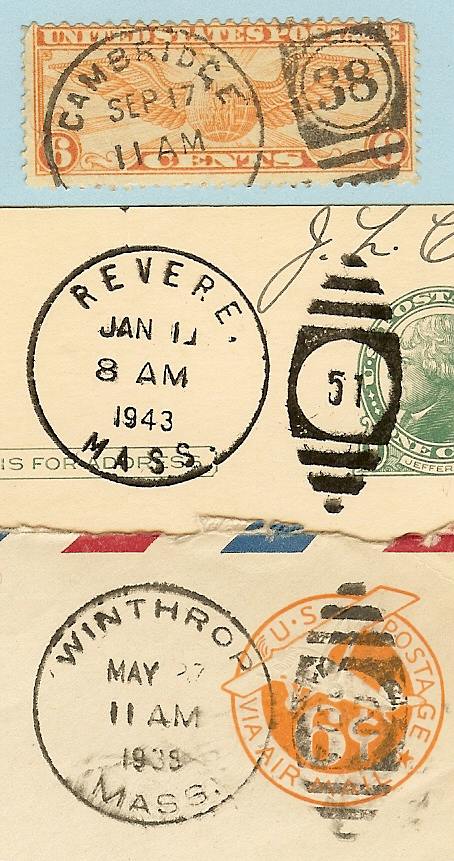
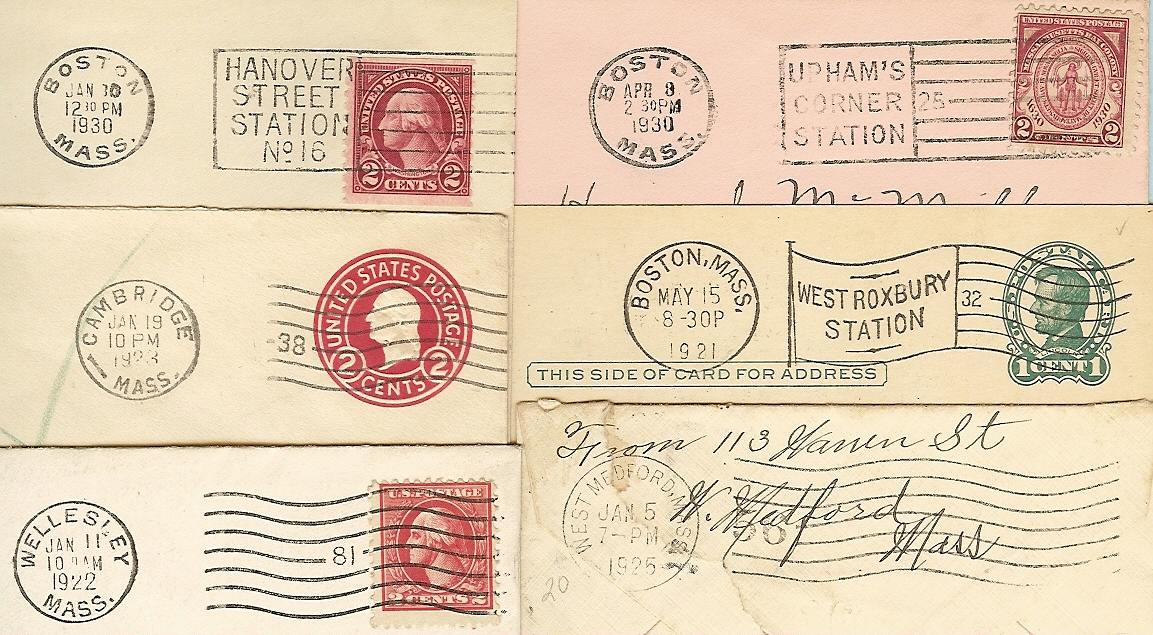
Short answer: In this case, 17=station identifier, R=machine identifier. Long answer: Your 17-R cancel shows a forerunner of the Zip Code system. About 1920, Boston numbered most of its city stations and nearby perimeter towns as a way to increase mail handling efficiency. Machines and handstamps contained the Zone System Number for various amounts of time thereafter. 16 = Hanoverr Street Sta 17 = Bay Bay Sta 18 = Station A 19 = Roxbury Sta, etc Numbers went up to 94 with some gaps. Here is Medford #55, where the machine (with "55" within the wavy bars) missed the stamp so it also got the Medford handstamp with a 55 in the killer (and a nice foreign destination to boot!) 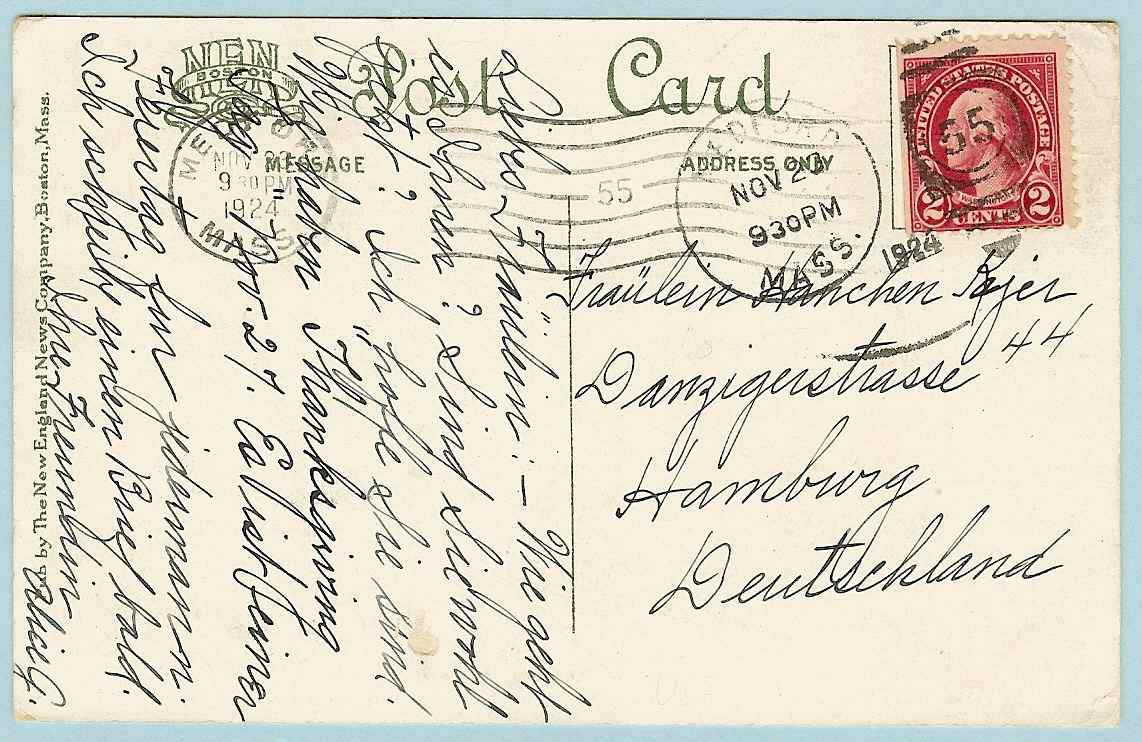 Boston was used as the model for the Zone Numbers introduced in 100+ larger towns in 1943, and which eventually was expanded further to the Zip Code of the 1960s. The Machine Cancel Society published Bart Billings' exhibit on "A Zone Number System for Boston" in 1994. I have heard that much of the Boston area still retains the 1920 Zone numbers as the last 2 digits of their current Zip Codes. For the alphabet letter. In the c1895-1913 era, the letters C=collect, D=drop, R=received, and T=transit were often used in cancelling machines depending on the type of mail being run through (This proved difficult and very often the same service letter was left in the machine for months, rather than changed-out. In Boston's case, I am fairly sure it was a machine identifier as I see in just a small group of covers here: G, H at South Postal Sta M, O at North Postal Sta P, Q, R at Back Bay Sta S at Essex Sta Some of the dials contained the letters too, usually matched to the same letter in the killer, but not always! |
|
Send note to Staff
|
| Edited by John Becker - 03/18/2015 01:27 am |
|
|
Pillar Of The Community
United States
672 Posts |
|
|
You guys are absolutely amazing with your information. You are really firing my interest to learn more about cancels. |
|
Send note to Staff
|
|
|
Pillar Of The Community

United States
856 Posts |
|
|
Bedrock Of The Community
United States
12128 Posts |
|
|
Quote:
I have heard that much of the Boston area still retains the 1920 Zone numbers as the last 2 digits of their current Zip Codes. You are correct. Boston (Back Bay) is today 021 17 and Medford is 021 55, etc. |
|
Send note to Staff
|
|
|
Bedrock Of The Community
United States
12128 Posts |
|
|
Quote:
I am fairly sure it was a machine identifier as I see in just a small group of covers here:
G, H at South Postal Sta
M, O at North Postal Sta
P, Q, R at Back Bay Sta
S at Essex Sta
Some of the dials contained the letters too, usually matched to the same letter in the killer, but not always! Here's an interesting series of Boston postmarks from the 1921-1923 era: 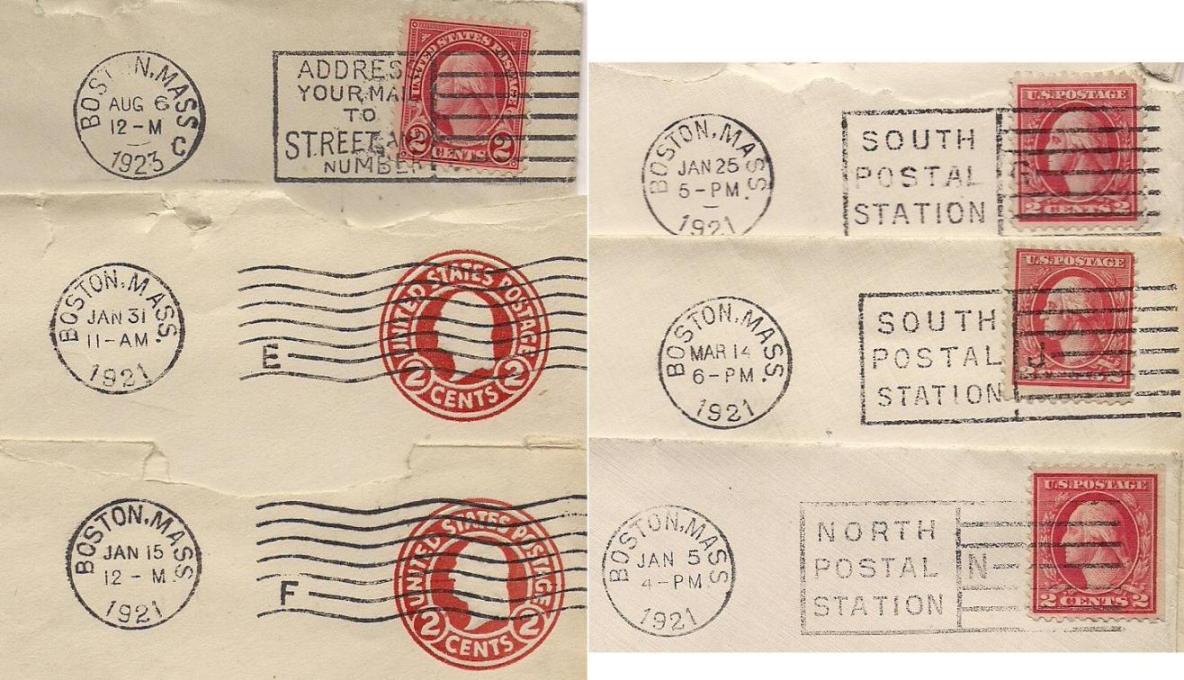 Note the latest (1923) moved the "C" to the dial rather than the killer part of the cancellation. The two 1921s on the left have letters "E" and "F" (which I assume to be machine identifiers). Just to add to the list, the two examples on the top right refer to South Postal Station with the letters "G" and "J". The bottom right example refers to the North Postal Station with the letter "N". Again, I would assume all the various letters refer to machine identifiers. |
|
Send note to Staff
|
| Edited by wt1 - 03/18/2015 12:44 pm |
|
|
Pillar Of The Community
6366 Posts |
|
|
I think those in the first column were likely from machines at the main PO - the early alphabet letters, and those in the second column showing the letters very shortly before they got the new killer with the station number. My own interest is in the Zone System era, so I have not focused on the slightly earlier ones you show. Anyone who can master Boston's postal history can tackle any city! Identifying a machine with a letter in the killer (or a number in many cities) would allow quick diagnostics of any machine needing its date corrected, more ink, etc. Having the identifier in the killer was fine if the killer stayed the same. The increased use of nationally distributed slogans in the 1920s (like the first one you show) meant it was more efficient to use dials with the identifiers, rather than the killer. So one can find Boston cancels with a letter in both the dial and the killer - sometimes matched, sometimes not. First column below are some more matched dial/killer pairs. The second column has a S-dial/17P-killer combo from 1928, yet the S-killer was at Essex Sta in 1922 (and should have had the S-dial there)! I suspect that by the late 1920s some machines were being replaced and various interchangeable parts were being reassigned around town and thus the original pairing scheme becoming more erratic. 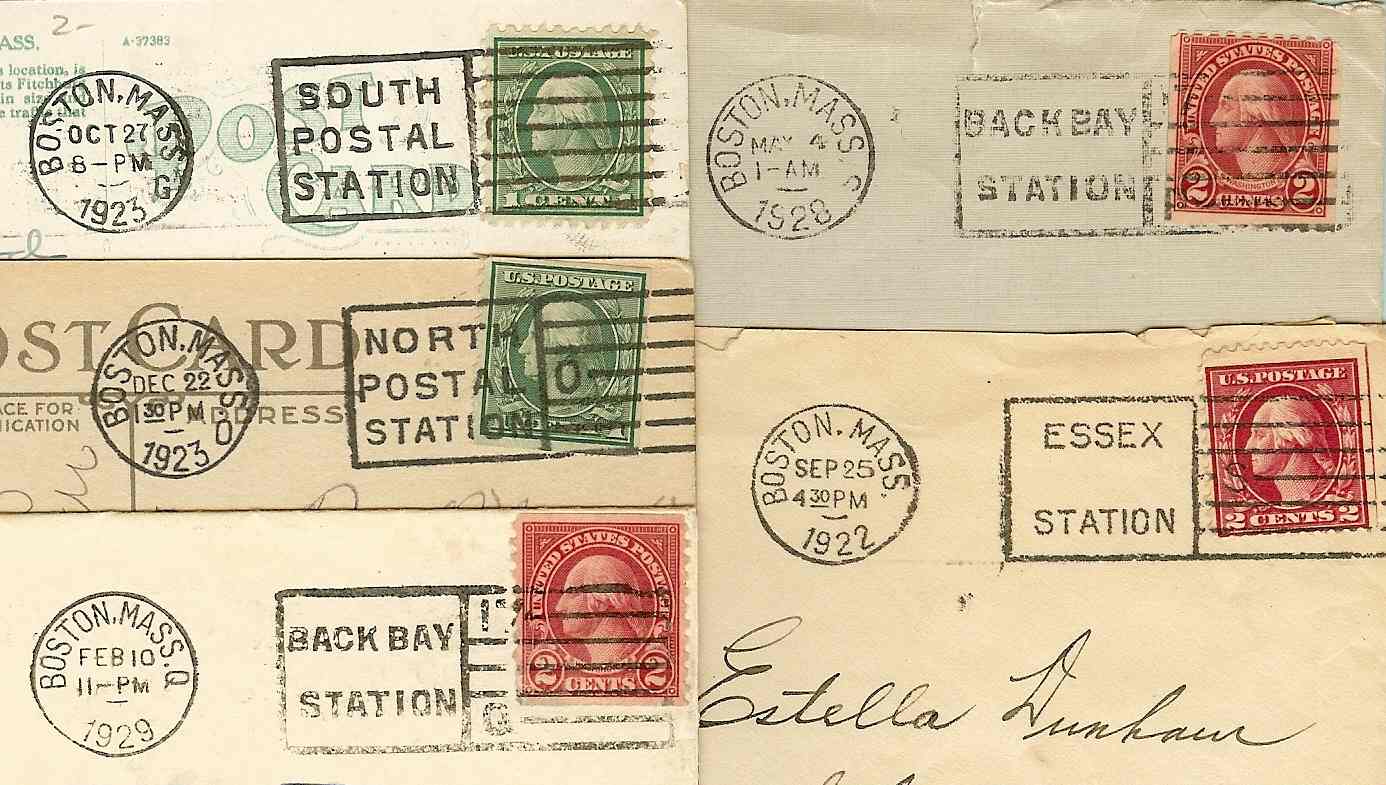 |
|
Send note to Staff
|
| Edited by John Becker - 03/18/2015 1:27 pm |
|
|
Bedrock Of The Community
United States
12128 Posts |
|
|
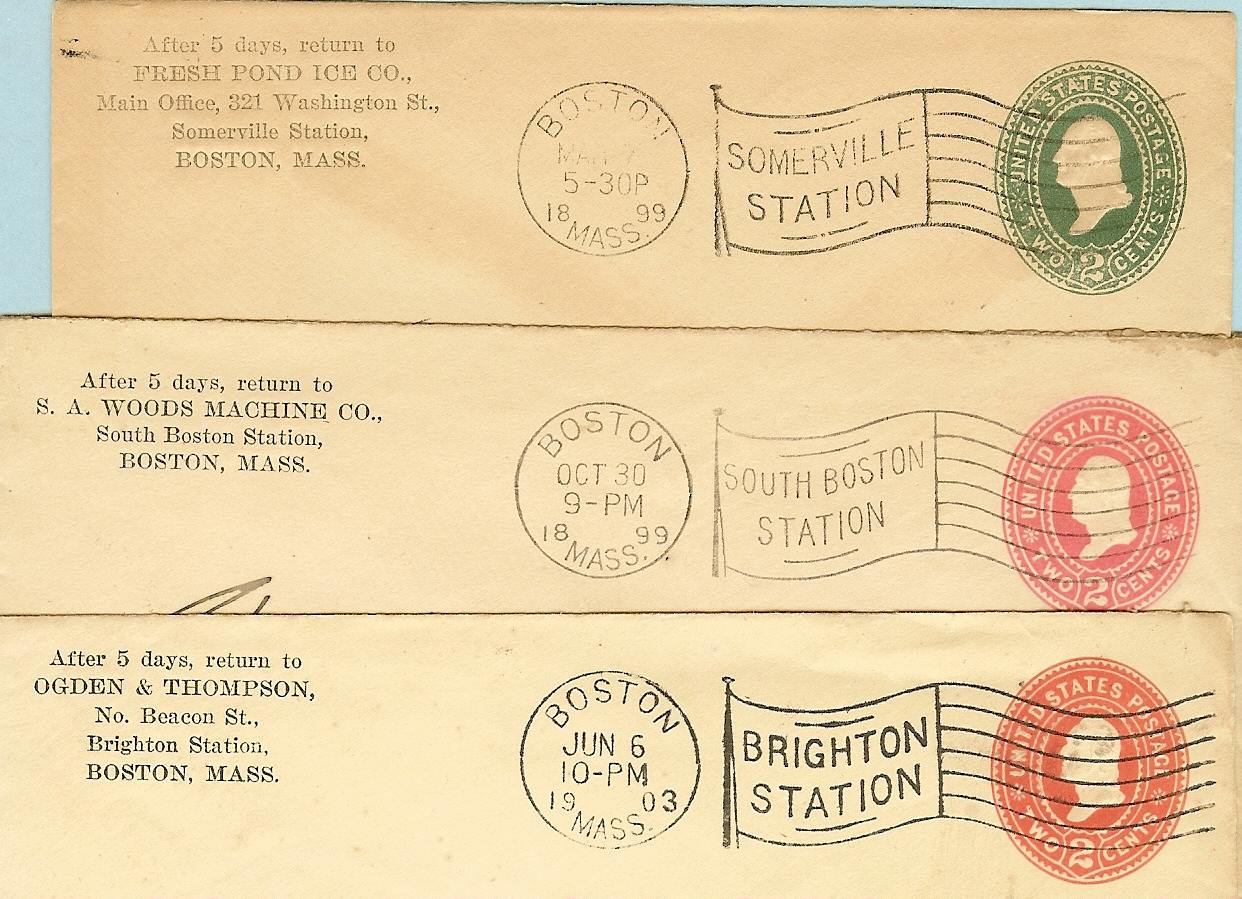
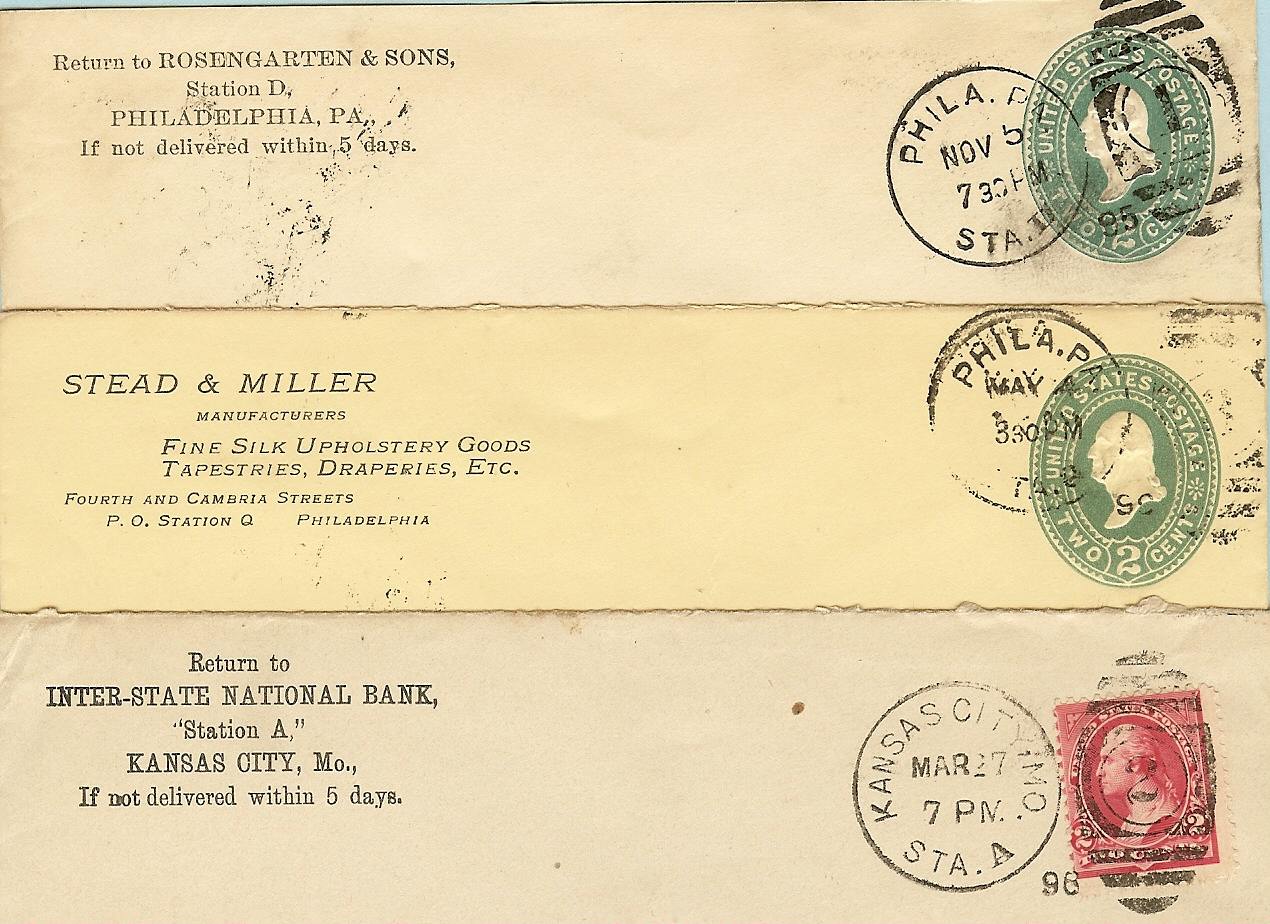
Although this predates the 1920s, here's an except from an 1895 Postal Bulletin that explains how the Stations (letters) and Substations (numbers) were identified: 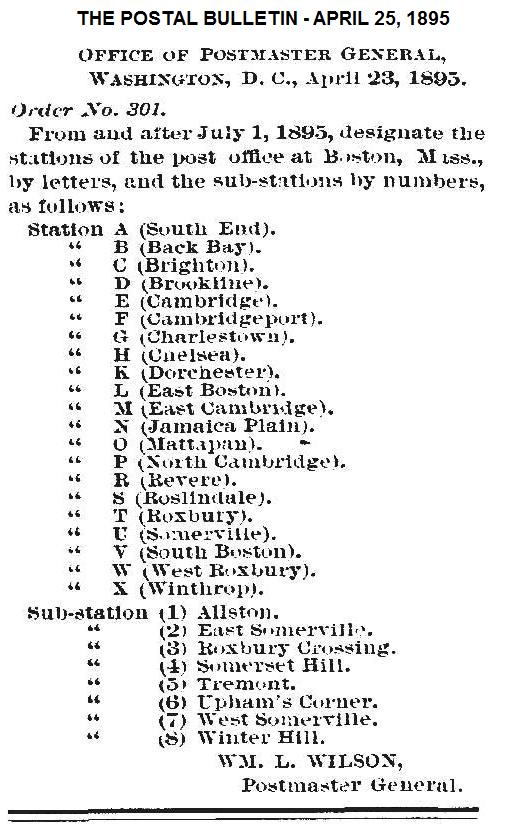 |
|
Send note to Staff
|
|
|
Pillar Of The Community
6366 Posts |
|
|
Pillar Of The Community
6366 Posts |
|
| |
Replies: 14 / Views: 2,501 |
|




 Posted 12/21/2010 10:22 am