
with Seahorse.
ebay is expensive, but you reach a wide audience that, through future contact or enclosed advertisements in your mailings, you lure to your own store or a cheaper site to sell on like BidStart or DelCampe.
On
ebay (and elsewhere also) include lots and lots of pictures, showing the stamps clearly and in zoomed-in -on detail almost. You do not have to make the scans high resolution or high detail, just 75 pixels per inch is enough for web presentation.
People like to see what they are buying and they feel better about you when they see you are showing them what they are buying (and especially when you tell them exactly that, that the stamps they see are the ones they will receive when they do buy this item).
Don't treat people with dis-respect but also don't assume they know all the abbreviations and terminology of stamp collecting, or even Australian terminology or US terminology or French terminology. You can use common abbreviations in the title (to keep the space used to a minimum (so you can include key, searched-for words), but spell it out in your descriptions.
Save templates of your descriptions to Word or Office or something. Learn HTML so you can write your own descriptions and, most importantly, include your own photos and not have to pay
ebay extra fees for hosting your photos beyond the minimum. (e-mail me about this)
The more photos you have (reasonable amount) the better your listing will sell (17%++) and the better buyers will feel about it.
Be nice, don't talk down to buyers. Be polite, say Thank You, you appreciate that they are here. Don't over-do it, just be sincere.
When Seahorse mentions about the possible hesitancy of listing for the lowest price, I agree with him. A few items listed as 'loss leaders' is OK. Not all. You've got quality stuff, tell people that. Tell people what's good about your stuff. The features of the stamps or this particular item, the benefits of buying from you. Include special bonuses when you ship, and make sure you let the buyer know that it is a special bonus with a Thank You note.
That sounds like a lot to 'get right' the first little while and it is. Take it slow, be sincere, respect people, be reasonable, don't cave in to buyers who prey on new sellers. Take your time, don't get angry, review, learn, be business-like and polite. Maintain calm. Practice meditation. Go outside and beat a big branch against the fence.

Plan out (this is so important) who you are and how you are going to present yourself and your business to buyers. Are you here for the long haul? Or are you just selling some stamps off. Do you have integrity and stand by your word? Can people trust you? Do you sound like it or are you just saying that? All this and more comes across in the words you choose and the attitudes you take (as evident in the email replies you send, the Thank You appreciation emails, the thinking that, hmmm, probably the buyer would want to know when I shipped that, that it is packaged securely, that it will travel to him safely, that you are looking after him 'after the sale'.
This after the sale thing is almost the most important aspect of selling. This brings people back as repeat customers. They come back because you have done things that they remember and like and want more of. After a while the price is not as important as your legendary service and compassion to their issues and problems. But don't be a sucker. Establish this all before you start out. Write it down even (good idea, I haven't done that yet!)
Attracting new buyers IS important, yes, but it is much more important to keep that one buyer that you have managed, by some magical heaven-sent means, to attract in the first place. Give him a discount on his second purchase. Send him a Christmas card (or something appropriate, a Thank You card). Maybe that is too much, but from your words, you are trying to plan long term and to 'hook people on your fishing line' (in a nice way, being attractive to them) and then, over time, inform them and educate them about the benefits and features of your stamps (some people really don't know why Australian stamps are so good, can you believe it?), let them know they are special. (Direct them (without using a direct URL link) to your SCF topics. Or copy some of it to your About ME Page.)
You do not have to say that you will look after them or their every need, at least I don't think so, just that they are special and appreciated, and by your simple words and obviously kind and caring actions, you do care about them. They are friends. Why is that so darn important? Because friends trust friends. Who is more likely to help you if you are in trouble? A friend, usually.
You don't have to really be a best friend to anybody. Just acting and talking friendly makes it obvious you are a friendly person. What do friends do? They 'look after' their friends, in the way that they think about them, can anticipate their needs or wants, and try to help in a way that they are able to and is reasonable.
Is all this evil or planned beforehand so thus Not really friendly? Nope. Not at all. All you are choosing to do here (and in your business and professional relations) is to be friendly and reasonable. That's all. What's so bad about that? It's not hard. It's easy.
There is always talk about sales being a numbers game, in some ways. I tend to think that sales is just being friendly and wanting to help people. The 'numbers' just come with that. Don't chase the numbers. Chase the people. Your customers are your greatest resource.
There will be a written test in three days.

(just kidding!)
Is that all too much? I should hope so. You have to learn all kinds of little things and the ways of selling and shipping and communications and etc etc from your own personal point of view and how you would do it. You can copy good ideas but it is you yourself and your way of doing things that you are ultimately selling in any transaction.
Make it a rule that once a week or month or some time period, you stop and review what you have done this last period and see how you can 'improve' or change or adapt to changing circumstances. Make new rules or guidelines to reflect these new thoughts and ways. Practice them during the next period and see how they succeeded or didn't. Change and adapt again. And again. Rinse and repeat. Simple.
Be Friendly. Be reasonable. Keep it Simple.
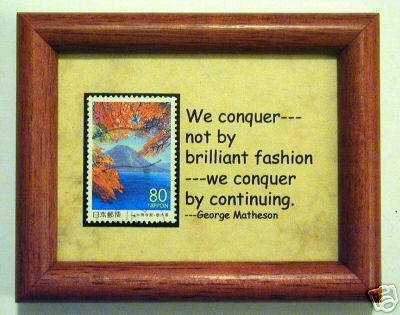
I like this saying that a fellow was selling, amongst others, on
ebay a while ago. To me it means life is not just a flash in the pan, it is what you do every day that is important.





 Posted 12/31/2010 05:19 am


 so now i'm legal


