Stamp Community Family of Web Sites
Thousands of stamps, consistently graded, competitively priced and hundreds of in-depth blog posts to read


Stamp Community Forum
 
Username:
Password:
Save Password
Forgot your Password?

This page may contain links that result in small commissions to keep this free site up and running.

Welcome Guest! Registering and/or logging in will remove the anchor (bottom) ads. It's Free!

Help 1c Franklin #3-4

Previous Page
 
To participate in the forum you must log in or register.
Author Previous TopicReplies: 23 / Views: 3,022Next Topic
Page: of 2
Pillar Of The Community
United States
2547 Posts
Posted 02/12/2011   7:13 pm  Show Profile Bookmark this reply Add Russ to your friends list  Get a Link to this Reply
otto, Its hard to tell from the scan, could you post a larger scan of the full stamp?
The curls were created when a small "thread" of metal was pulled off during the lay down of the postion. This thread was pressed into the entry by the transfer roll creating a depression that would hold the ink and transfer it to the stamp.
Sometimes the curl would be only in the one position such as below
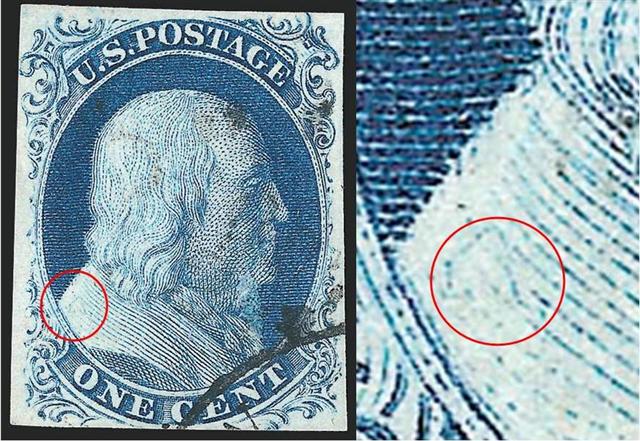

Type III (Scott 8) position 11R4 curl on the shoulder
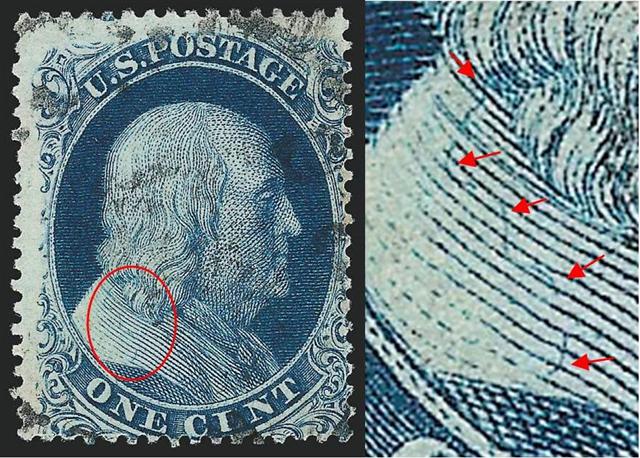

Type Ic (Scott 19b) position 81R4 curl on the shoulder

On other occasions the thread would stick to the transfer roll and be entered in multiple plate locations
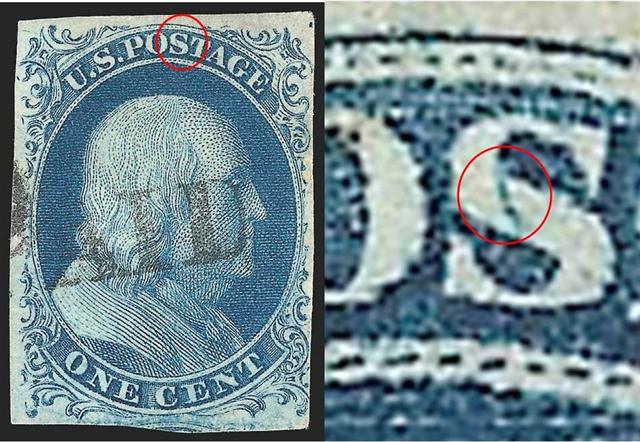

Type II (Scott 7) position 5L3 curl in the "S" of "POSTAGE"
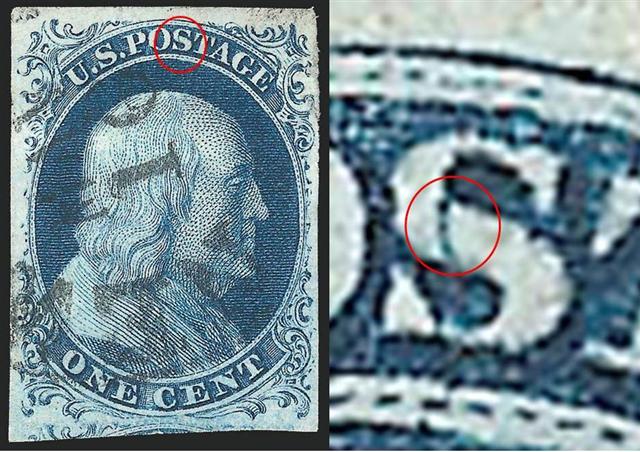

Type II (Scott 7) position 7L3 curl in the "S" of "POSTAGE"
This is the same thread that produced the curl in position 5L3 and it was entered into several other positions

Here are a few more examples
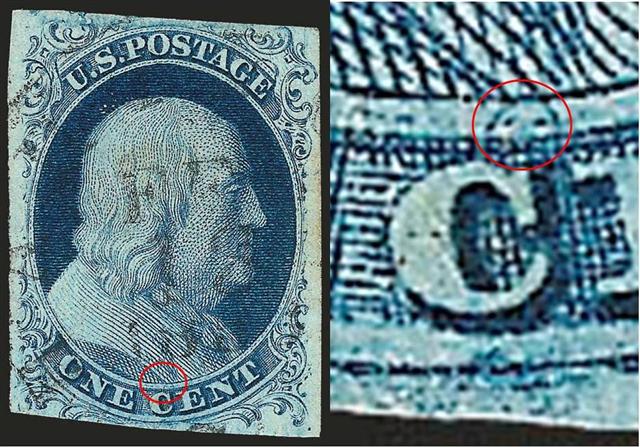
Type II (Scott 7) position 23R3 curl over "C" in "CENT"
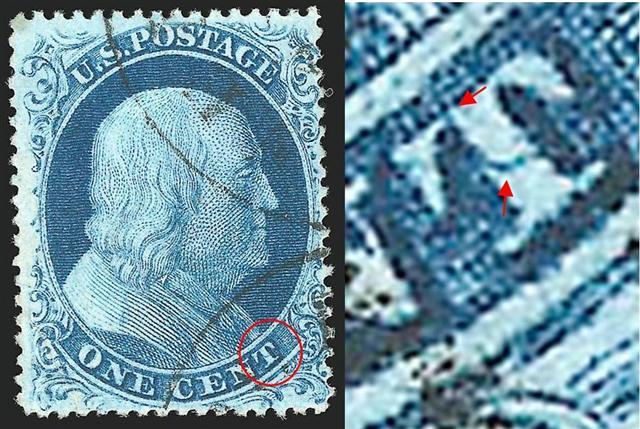

Type III (Scott 21) position 48L4 curl in "T" of "CENT"
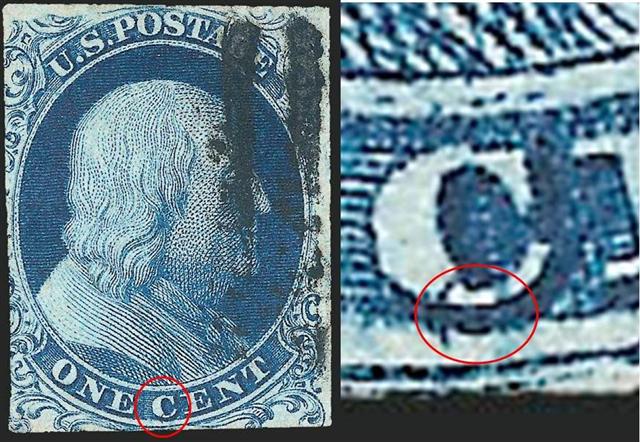

Type Ic (Scott 6b) position 96R4 curl in "C" of "CENT"

Hope this helps
Edit Typo
Send note to Staff  Go to Top of Page
Edited by Russ - 02/12/2011 7:14 pm
Pillar Of The Community
United States
7075 Posts
Posted 02/12/2011   7:28 pm  Show Profile Bookmark this reply Add Cjd to your friends list  Get a Link to this Reply
Anyone else see Kilroy in the 23R3 detail scan?
Send note to Staff  Go to Top of Page
Valued Member
United States
199 Posts
Posted 02/12/2011   11:38 pm  Show Profile Bookmark this reply Add otto to your friends list  Get a Link to this Reply
Thanks, Russ, for the thorough low down on the subject of curls. From that, I feel confident that the little extra bit of ink on Ben's shoulder on my stamp is not the "Curl on shoulder" mentioned in the catalogue. Here it is quite a bit larger:


Send note to Staff  Go to Top of Page
Pillar Of The Community
United States
2547 Posts
Posted 02/12/2011   11:54 pm  Show Profile Bookmark this reply Add Russ to your friends list  Get a Link to this Reply
otto, After looking closely at the scan I do not think it is a curl either. There is some inking anomaly but I can't tell for sure but I think it is plate contamination (dirty plate). It could also be plate damage such as a small "ding" type impression.
Send note to Staff  Go to Top of Page
Bedrock Of The Community
Australia
38679 Posts
Posted 02/13/2011   12:34 am  Show Profile Bookmark this reply Add rod222 to your friends list  Get a Link to this Reply
Yeah, I see Kilroy,
havn't seen him since the 1960's!
Send note to Staff  Go to Top of Page
Valued Member
United States
22 Posts
Posted 02/15/2011   11:14 pm  Show Profile Bookmark this reply Add alaskazagnut to your friends list  Get a Link to this Reply
It is amazing the odd varieties for this issue. Are there other U.S. stamps that track anomalies and miniscule plate variances like this?
Send note to Staff  Go to Top of Page
Valued Member
United States
199 Posts
Posted 02/16/2011   12:15 am  Show Profile Bookmark this reply Add otto to your friends list  Get a Link to this Reply
The 1851-61 issues, of which the 1c blue Franklin is one, have lots of designs with intriguing variations, as they were issued imperforate and perforate.

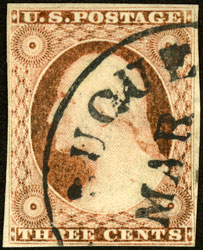
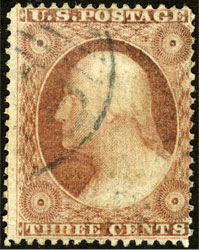
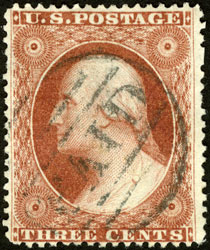
There's the 1851 3c Red Washington, numbers 10, 11, 25, 26 and 26A. Numbers 11, 25 and 26 are shown below, each one links to a different site about the design, the middle one a plating site.


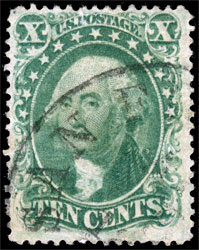
There's also the 1851 10c Green Washington which has a lot of the "how much of the image was scraped away" sorts of variations that the 1c blue has. Here's a 32 and a 35, again with links to some interesting information about the design:

Send note to Staff  Go to Top of Page
Pillar Of The Community
United States
2547 Posts
Posted 02/16/2011   12:58 am  Show Profile Bookmark this reply Add Russ to your friends list  Get a Link to this Reply
There are 4 types of the 10 cent 1851-61 and it is also both perf and imperf. On the 3 cent there is also a 10A and 11A with the recut inner framelines. The first (imperf) 3 cent stamp looks like it might have the recuts.
No stamp issue from the U.S. has as many types and varieties as the 1851-61 1 cent. There are 8 types of imperf, 10 types of perforated and one special printing. Plus the double transfers, triple transfers, inverted transfers, recuts, misplaced reliefs, cracks, short transfers. rolled out postions, swing positions, etc.
Send note to Staff  Go to Top of Page
Page: of 2 Previous TopicReplies: 23 / Views: 3,022Next Topic  
Previous Page
 
To participate in the forum you must log in or register.

Go to Top of Page

Disclaimer: While a tremendous amount of effort goes into ensuring the accuracy of the information contained in this site, Stamp Community assumes no liability for errors. Copyright 2005 - 2026 Stamp Community Family - All rights reserved worldwide. Use of any images or content on this website without prior written permission of Stamp Community or the original lender is strictly prohibited.
Privacy Policy / Terms of Use    Advertise Here
Stamp Community Forum © 2007 - 2026 Stamp Community Forums
It took 0.3 seconds to lick this stamp. Powered By: Snitz Forums 2000 Version 3.4.05